

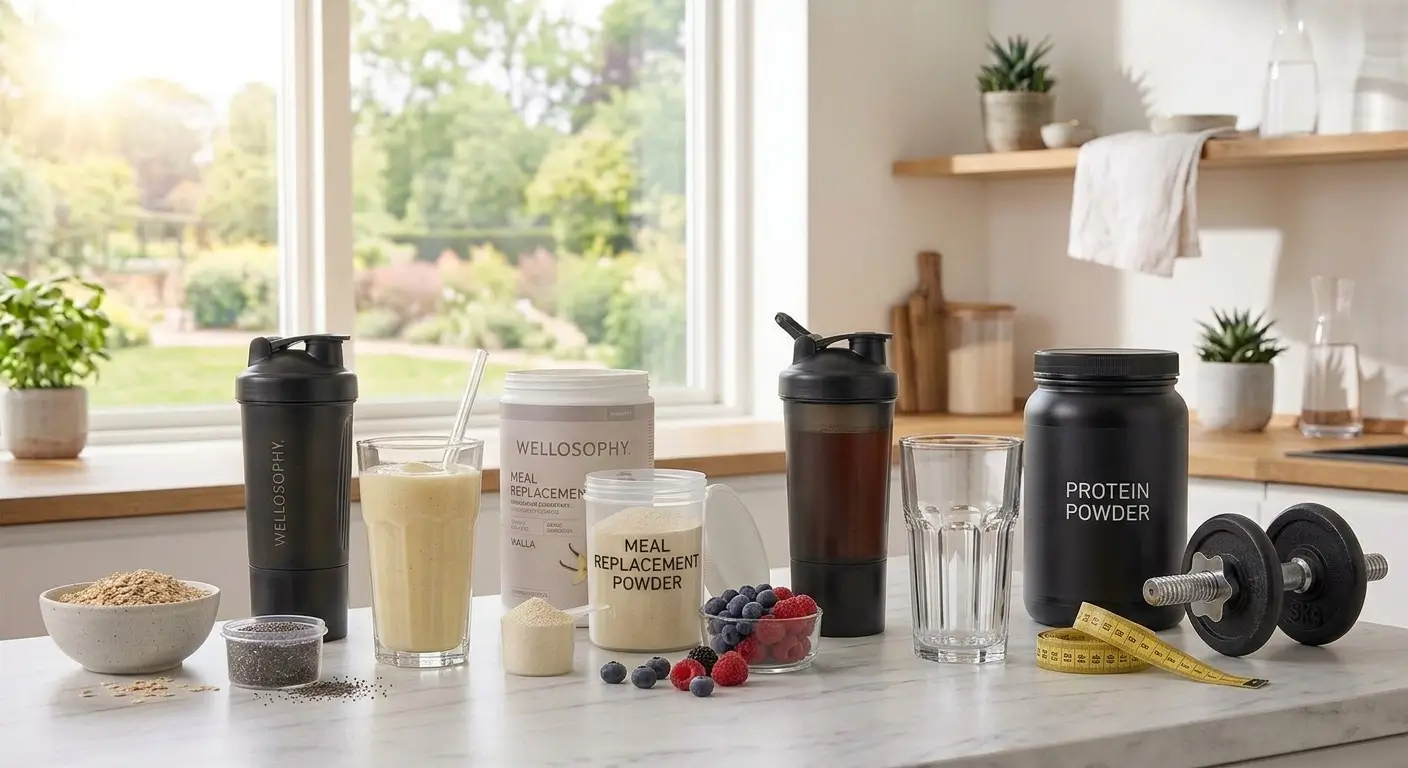

Meal Replacement Powder Vs Protein Powder: Key Differences
A meal replacement powder is a food product formulated to substitute for a complete meal. The defining characteristic is nutritional completeness; it must provide a balanced range of macronutrients and micronutrients in a single serving.
When you mix a meal replacement powder with water or milk, you get a drink that should deliver:
- 200–400 calories are enough to constitute an actual meal
- 15–30g of protein for satiety and muscle maintenance
- Complex carbohydrates for sustained energy
- Dietary fat for satiety and fat-soluble vitamin absorption
- 3–8g of dietary fibre for digestive health and blood sugar regulation
- Vitamins and minerals ideally at least 25–30% of daily reference intakes across a broad range
In the European Union, products specifically marketed as meal replacements for weight control must meet the standards set in EU Regulation 609/2013, requiring minimum protein content of at least 25% of energy, defined calorie ranges, and meaningful micronutrient coverage. This regulatory standard exists because a genuine meal replacement is substituting for a meal, and the nutritional completeness of that substitution matters.
When Is Meal Replacement Powder Used?
Meal replacement powders are used:
- As a quick, structured breakfast for people who don’t have time to prepare a balanced morning meal
- To replace lunch when healthy options at work are limited
- As one structured, calorie-controlled meal within a weight management programme
- To provide nutritional completeness when dietary variety is otherwise limited
For a thorough guide on what meal replacements are, their types, and how to use them safely, see our complete article on what is meal replacement, benefits, types, safety, and how to choose.
What Is Protein Powder?
Protein powder is a dietary supplement designed to add protein to your diet. Nothing more, nothing less. When you mix protein powder with water or milk, you get a drink that typically contains:
- 100–200 calories per serving
- 20–40g of protein, usually from whey, casein, soy, pea, or rice protein
- Minimal carbohydrates, often 2–5g
- Minimal fat, often 1–3g
- Little to no dietary fibre
- Little to no meaningful vitamin and mineral content
Protein powders come in several forms depending on the source and processing method:
- Whey Protein Concentrate, the most common and cost-effective. Contains lactose. Best absorbed post-exercise.
- Whey Protein Isolate is more highly processed, lower in lactose, and higher in protein percentage. Better suited for lactose-sensitive individuals.
- Casein protein is slower digesting. Often used before bed to provide sustained amino acid release overnight.
- Plant-Based Protein (Pea, Rice, Hemp, Soy), suitable for vegans and vegetarians. Best plant-based options combine multiple sources for a complete amino acid profile.
When Is Protein Powder Used?
Protein powder is used:
- After resistance training to support muscle repair and growth
- To increase daily protein intake when dietary sources are insufficient
- Between meals, when additional protein is needed without additional carbohydrates or fats
- As part of a muscle-building nutritional strategy
Key Differences: Meal Replacement Powder vs Protein Powder
- Side-by-Side Nutritional Comparison
| Feature | Meal Replacement Powder | Protein Powder |
|---|---|---|
| Primary purpose | Substitute a complete meal | Supplement dietary protein |
| Calories per serving | 200–400 kcal | 100–200 kcal |
| Protein content | 15–30g | 20–40g |
| Carbohydrates | Moderate complex | Low to minimal |
| Dietary fat | Some healthy fat | Minimal |
| Dietary fibre | 3–8g | Often 0–1g |
| Vitamins and minerals | Comprehensive coverage | Minimal or absent |
| Satiety level | Highly designed to satisfy | Moderate protein satiety only |
| Best use timing | Instead of a meal | After training or between meals |
| Suitable for weight management | Yes, designed for it | Indirectly supports protein goals |
| EU regulatory standard | Yes, Regulation 609/2013 for meal replacements | No meal-specific standard |
- Nutrition Profile
This is the most important difference. A meal replacement is nutritionally complete; it provides everything a meal should. A protein powder provides one nutrient: protein.
When you replace a meal with a protein shake, you’re missing:
- The carbohydrates that provide sustained energy
- The fibre that slows digestion and moderates hunger
- The vitamins and minerals that support immunity, bone health, energy metabolism, and hundreds of essential biological processes
- Calorie Content
The calorie difference reflects the difference in purpose. Protein powder at 100–150 calories is designed to supplement a meal, not replace one. A meal replacement at 250–350 calories is designed to provide the caloric base of an actual meal within a controlled intake. For weight management, this matters. If you’re trying to replace lunch with a 130-calorie protein shake, you’ll be hungry within 90 minutes and significantly more likely to overeat at the next meal, potentially consuming more calories than a complete meal replacement would have provided.
- Satiety
Satiety, how full and satisfied you feel after consuming a product, is dramatically different between the two categories.
Meal replacements are designed for satiety. They combine:
- High protein, which triggers satiety hormones GLP-1 and PYY
- Dietary fibre, which slows gastric emptying and extends fullness
- Complex carbohydrates, which provide sustained energy without rapid blood sugar spikes
- Some fat, which contributes to satiety and extends meal satisfaction
Protein powder provides protein-based satiety only. Without fibre and the fuller macronutrient balance of a meal replacement, the satiety window is shorter; for someone using it to replace a meal, this means hunger returns sooner.
- Purpose and Design Philosophy
Meal replacement powder is designed around the question: “What does a nutritionally complete meal need to provide?”
Protein powder is designed around the question: “How do I increase my protein intake efficiently?”
Which Is Better for Weight Loss?
- The Evidence for Meal Replacements in Weight Loss
Multiple systematic reviews, including analyses published in Obesity Reviews and referenced by the National Institutes of Health (NIH), have found that structured partial meal replacement programmes produce significantly greater weight loss at 3 and 12 months compared to conventional calorie-restricted diets providing equivalent calories.
The reasons come back to the mechanisms already discussed:
- Precise, defined calorie intake at one or two meals per day eliminates estimation error
- High protein content supports satiety and lean muscle preservation during restriction
- Comprehensive nutrition prevents the micronutrient deficiencies that calorie restriction alone creates
- Structural simplicity improves dietary adherence, the most consistent predictor of weight management success
- Where Protein Powder Helps Indirectly
Protein powder can support weight loss goals indirectly through muscle preservation. When in a calorie deficit, the body can use muscle protein as an energy source if dietary protein is inadequate. Adequate protein intake, whether from food or supplements, protects lean muscle mass, which in turn supports metabolic rate. But protein powder used instead of a meal replacement for weight management doesn’t provide the calorie structure, fibre, or micronutrients that make the approach effective. Used alongside a weight management approach, as a post-training supplement, for example, it can complement the programme.
- The Simple Decision Rule
For weight management as the primary goal: Use a meal replacement powder for the meal(s) you’re replacing.
For muscle support and protein supplements around training: Use protein powder as a supplement to your existing meals.
Who Should Use What Meal Replacement Powder or Protein Powder?
- People Focused on Losing Weight
A meal replacement provides the calorie control, protein satiety, fibre, and nutritional completeness that structured weight management requires. Products like the Wellosophy Meal Replacement for Weight Control in Chocolate or Vanilla are formulated specifically to meet these requirements, providing balanced nutrition in a controlled calorie serving that may support healthy weight management when combined with a balanced diet and regular physical activity.
Using protein powder instead will leave nutritional gaps and is likely to produce lower satiety and poorer dietary adherence over time.
- Gym-Goers and People Building Muscle
For people whose primary goal is muscle growth and who eat adequate whole-food meals that provide sufficient total nutrition, protein powder is the right tool. It delivers the elevated protein intake that supports muscle protein synthesis without unnecessary additional calories or carbohydrates. If meal replacement is also relevant for a missed meal or calorie management, a meal replacement can be used separately.
- Busy Professionals Who Skip Meals
If you regularly skip breakfast or lunch because you don’t have time to prepare or eat a balanced meal, a meal replacement powder addresses the actual problem, providing complete nutrition quickly and conveniently for the meal you would otherwise miss. A protein shake doesn’t solve the problem of a missed meal. It provides protein without the broader nutritional content that the meal would have delivered.
- Fitness Beginners
For beginners, the most important question is: Am I trying to manage my weight (meal replacement) or supplement my training protein intake (protein powder)? If you’re not sure, meal replacement is usually the safer starting point; it’s harder to make significant nutritional errors with a product designed to be a complete meal.
- People With Active Training and Weight Management Goals
For people managing both calorie intake and active training demands, there can be a case for using a meal replacement for structured meals alongside protein powder around training sessions. This approach should be guided by a registered dietitian who can ensure total protein, calorie, and nutritional targets are being met appropriately.
Comparison Summary Table
| Situation | Best Choice | Why |
|---|---|---|
| Replacing a meal to lose weight | Meal replacement powder | Complete nutrition within controlled calories |
| Post-workout muscle recovery | Protein powder | High protein, rapidly absorbed |
| Skipping breakfast due to time | Meal replacement powder | Prevents a nutritional gap from missed meals |
| Increasing daily protein as an athlete | Protein powder | Targeted protein without extra carbs/calories |
| Structured weight management programme | Meal replacement powder | Designed for this exact purpose |
| Vegetarian/vegan needing a protein supplement | Plant protein powder | Targeted protein supplementation |
| Reducing hunger between meals | Meal replacement powder | Higher satiety from fibre + protein + fat |
Conclusion
Meal replacement powder and protein powder are both legitimate nutritional products. The problem is not either product; it’s using one when the other is what’s needed. Use meal replacement powder when your goal is to replace a meal: for weight management, for structured eating, for convenient, complete nutrition when you can’t prepare a balanced meal. Use protein powder when your goal is to supplement protein intake: for muscle support around training, for increasing daily protein without significant additional calories, as a targeted nutritional supplement alongside adequate whole-food meals.
For people focused on weight management who want a well-formulated meal replacement powder, the Wellosophy Meal Replacement for Weight Control in Chocolate and Vanilla provides balanced macronutrient and micronutrient profiles in a convenient, calorie-controlled serving, formulated around the nutritional completeness that distinguishes a genuine meal replacement from a protein supplement.
To explore the full context of meal replacement nutrition, see our pillar guide: What Is Meal Replacement? Benefits, Types, Safety & How to Choose the Right One. And for specific product comparisons and weight management guidance, see our article on the best meal replacement shakes for weight loss.