

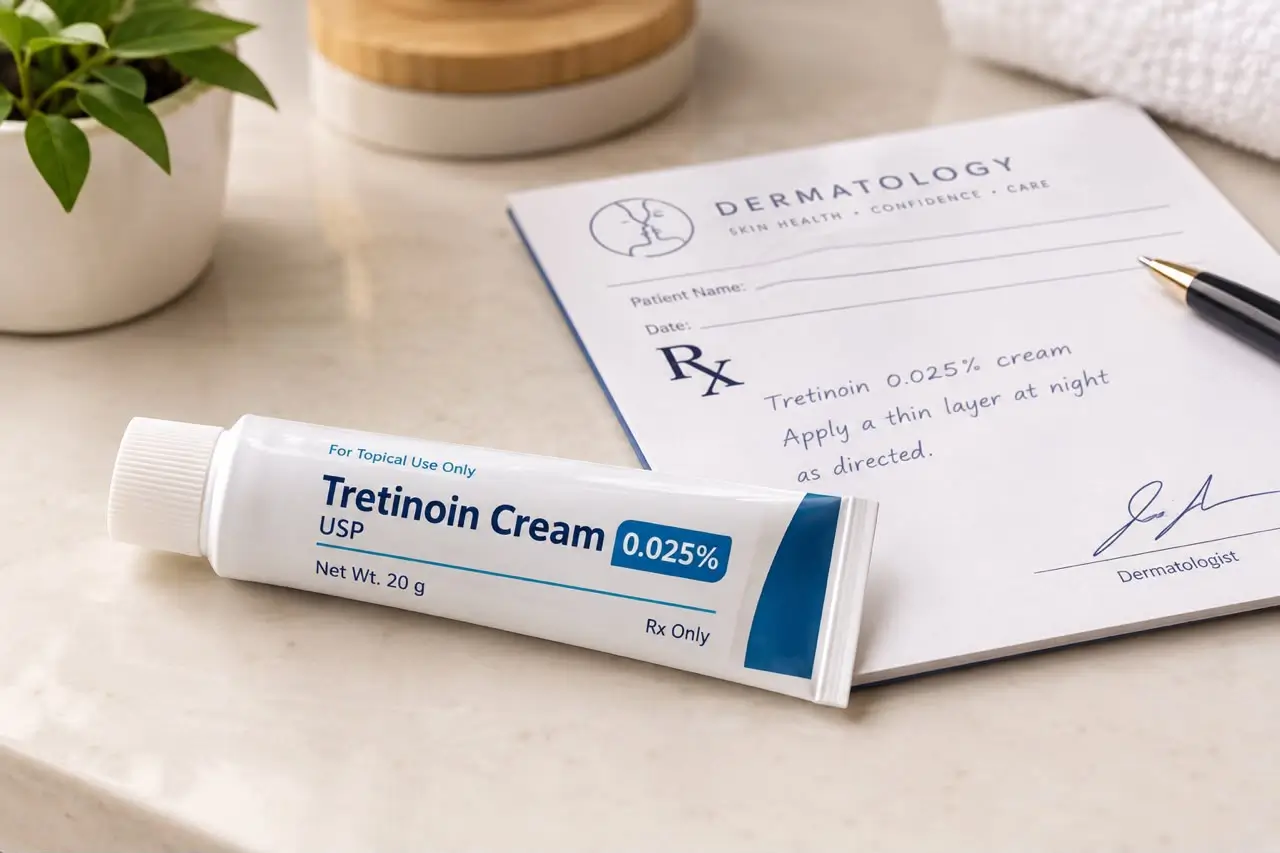

Does Tretinoin for Stretch Marks Really Work? What Science Says
Tretinoin is one of the most evidence-backed topical treatments for early red stretch marks. Clinical trials have demonstrated measurable reductions in the length and width of red stretch marks and improvements in skin texture with consistent daily application over 16–24 weeks. It does not remove stretch marks completely and is significantly less effective for mature white marks. It must be avoided during pregnancy and breastfeeding.
What Is Tretinoin?
Tretinoin is all-trans retinoic acid, the biologically active form of vitamin A. It is ready to bind to retinoic acid receptors in skin cells from the moment of application. This is why it is more potent than retinol and why its clinical results are faster and more pronounced.
In most countries, including the UK, US, Australia, and much of Europe, tretinoin requires a prescription. It is approved by regulatory bodies for acne treatment and photoaged skin. Its use for stretch marks is off-label, meaning dermatologists prescribe it for this purpose based on clinical evidence and professional judgment, but it is not the labelled indication on the product. This off-label status does not reduce its legitimacy for stretch mark treatment. Off-label prescribing is a standard, evidence-based medical practice. It does mean that patients receive it through a healthcare provider rather than over-the-counter, which, in the context of a medication that must be avoided during pregnancy, is a reasonable safeguard.
Tretinoin creams and gels are typically available in concentrations of 0.025%, 0.05%, and 0.1%. For stretch mark treatment, 0.1% has been used in the most cited clinical trials, but starting at 0.025% reduces initial irritation during skin acclimatisation.
See our related guide on Retinol for Stretch Marks for a comparison of retinol and tretinoin and guidance on OTC options.
How Stretch Marks Form
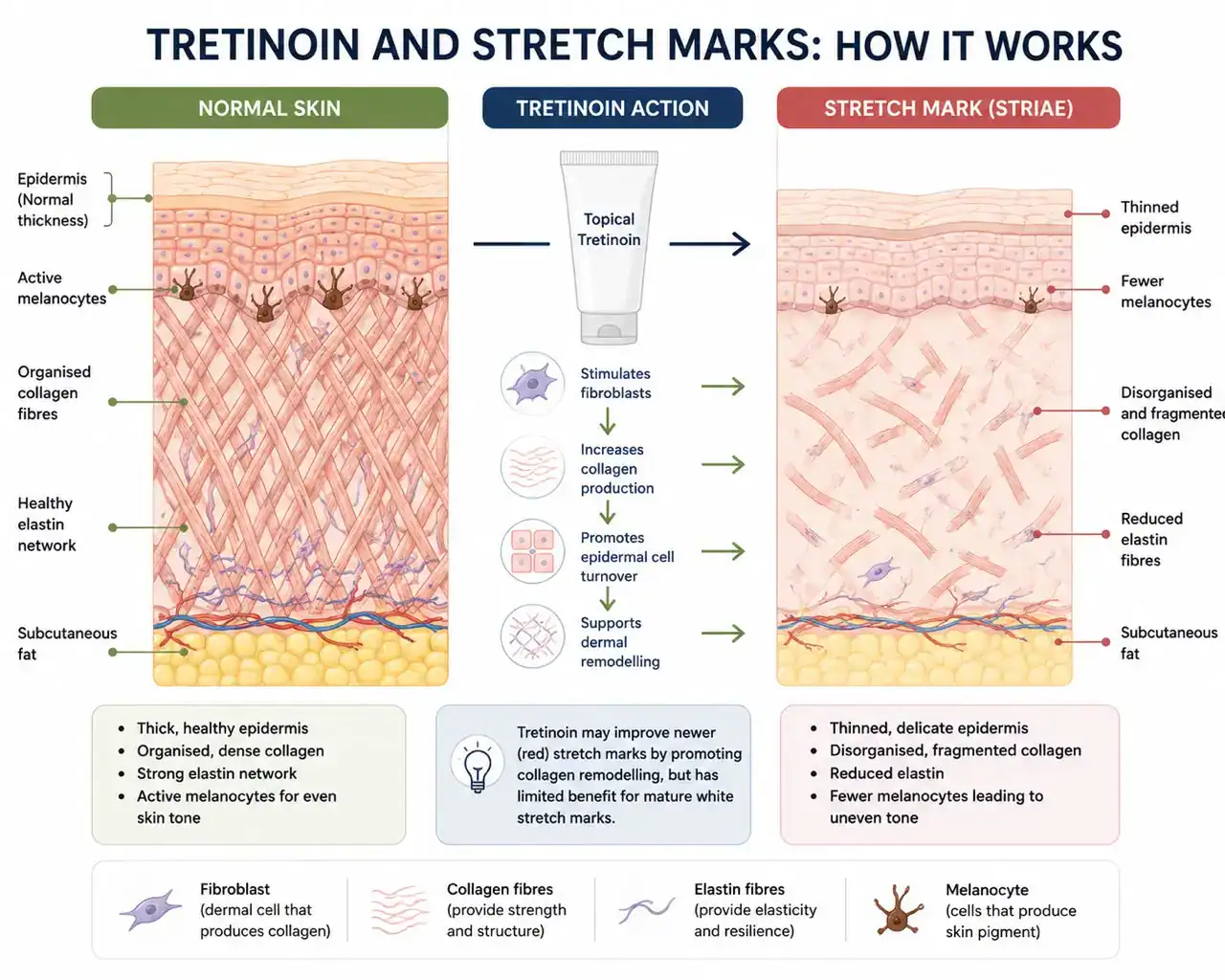
Stretch marks, striae distensae, are dermal scars. They form in the dermis, the middle layer of skin, where a dense network of collagen and elastin fibres gives skin its tensile strength and elasticity. These fibres are produced and maintained by fibroblasts, specialised cells that are continuously active in healthy dermis. When the skin stretches faster than fibroblasts can compensate, the fibres tear. The inflammatory healing response that follows, involving blood vessel dilation, fibroblast recruitment, and collagen deposition, produces the red or purple marks visible at the earliest stage.
Cortisol plays a specific role in stretch mark formation by suppressing fibroblast activity. Elevated cortisol, from pregnancy, prolonged stress, or systemic corticosteroid medication, reduces the skin’s capacity to produce adequate collagen precisely when the dermis is under greatest strain. This is part of why stretch marks can form during pregnancy despite apparently good skincare habits, and why genetic susceptibility to elevated cortisol response is a strong risk factor.
See our guide on Red Stretch Marks vs White Stretch Marks for a full explanation of the biological stages and what each means for treatment.
How Tretinoin Works
Tretinoin binds directly to retinoic acid receptors (RARs), nuclear receptors inside skin cells. This receptor binding changes gene expression, activating programmes that control cell production, collagen synthesis, and tissue remodelling.
The specific effects relevant to stretch marks:
- Fibroblast activation: Tretinoin prompts fibroblasts to increase their production of new collagen and fibronectin, an important structural glycoprotein in the dermis. Histological studies, where biopsied skin samples are examined under a microscope, have confirmed measurable increases in collagen density in stretch mark areas treated with tretinoin versus untreated controls.
- Epidermal thickening: Stretch marks are often associated with a thinned epidermis overlying the damaged dermis. Tretinoin increases keratinocyte proliferation, the cells that form the epidermis, thickening this layer.
- Collagen remodelling: Tretinoin modulates matrix metalloproteinases (MMPs), the enzymes that control collagen breakdown and turnover. Shifting the balance toward productive remodelling rather than breakdown, it helps gradually replace the disorganised repair collagen in stretch marks with more organised fibre structures.
- Glycosaminoglycan production: Tretinoin increases the production of hyaluronic acid and other glycosaminoglycans in the dermis, improving skin water-binding capacity and plumpness.
- Melanocyte stimulation: In some studies, tretinoin has shown some ability to stimulate melanocytes in stretch mark areas, potentially improving the colour difference between marks and surrounding skin, though this effect is variable.
What the Scientific Evidence Shows
The evidence base for tretinoin and stretch marks is more robust than for any other single ingredient. The most frequently cited research in this area comes from studies by Kang and colleagues, published in peer-reviewed dermatology journals in the 1990s and early 2000s. These studies applied 0.1% tretinoin cream nightly to red stretch marks and measured outcomes through clinical assessment, patient-reported outcomes, and skin biopsies.
Key findings from these studies:
- Statistically significant reductions in stretch mark length and width compared to vehicle-treated controls
- Histological evidence of increased epidermal thickness and new collagen deposition in treated areas
- Improvement in the appearance of stretch marks on clinical assessment scales
- Patients who used tretinoin consistently for 24 weeks showed greater improvement than those who used it for shorter treatment periods
Limitations of the evidence:
- Most studies focused on red stretch marks, the early, active stage. Evidence for white marks is considerably weaker.
- Study populations were generally small, typically 20–50 participants, which limits the generalisability of findings.
- Studies were primarily conducted on women with pregnancy-related stretch marks — the evidence is strongest for this context, though the biological mechanisms apply to stretch marks of any cause.
- Long-term follow-up data are limited; most studies measured outcomes at 24–36 weeks, with less data on how improvements hold up over several years.
- Some studies were funded or conducted in contexts that may have involved some methodological bias, though the histological evidence is harder to argue with than self-reported improvement scores.
The American Academy of Dermatology includes tretinoin among the treatments dermatologists most commonly recommend for early stretch marks, with the strongest topical evidence among current options.
The Mayo Clinic similarly identifies prescription tretinoin as an option with clinical support for improving the appearance of newer stretch marks.
Tretinoin for Red Stretch Marks
Red stretch marks represent the optimal treatment window for tretinoin, and understanding why helps set the right expectations for what consistent treatment can achieve. At the red stage, the dermis is biologically active. Fibroblasts are working. Blood vessels are present and supplying the area. The inflammatory cascade is ongoing. Tretinoin’s mechanism, amplifying fibroblast activity and directing collagen production toward more organised structures, has the most to work with in this environment.
Expected improvements with consistent use:
- Measurable reduction in the length and width of individual marks demonstrated in controlled trials
- Visible reduction in the red/purple colour as epidermal thickening reduces the visual contribution of the underlying vascular activity
- Improved surface texture as epidermal cell turnover increases, and the skin above the mark becomes smoother
- Better collagen organisation in the underlying dermis, which affects how the mark presents long-term as it matures
Tretinoin for White Stretch Marks
White stretch marks are a substantially more challenging treatment target, and it is important to be direct about this. Once stretch marks have fully matured to the silver or white stage, the tissue has settled. Fibroblast activity is minimal. Blood vessels have contracted. The collagen is stable if structurally abnormal. The inflammatory signals that tretinoin’s mechanism works most powerfully with are absent.
Some dermatologists include tretinoin in long-term management regimens for white marks, applied regularly over a year or more. The collagen stimulation mechanism does not switch off entirely, and there is some evidence of gradual texture improvement with sustained use. However, the degree of improvement is substantially less than for red marks, and the timeline is considerably longer.
How to Use Tretinoin Safely for Stretch Marks
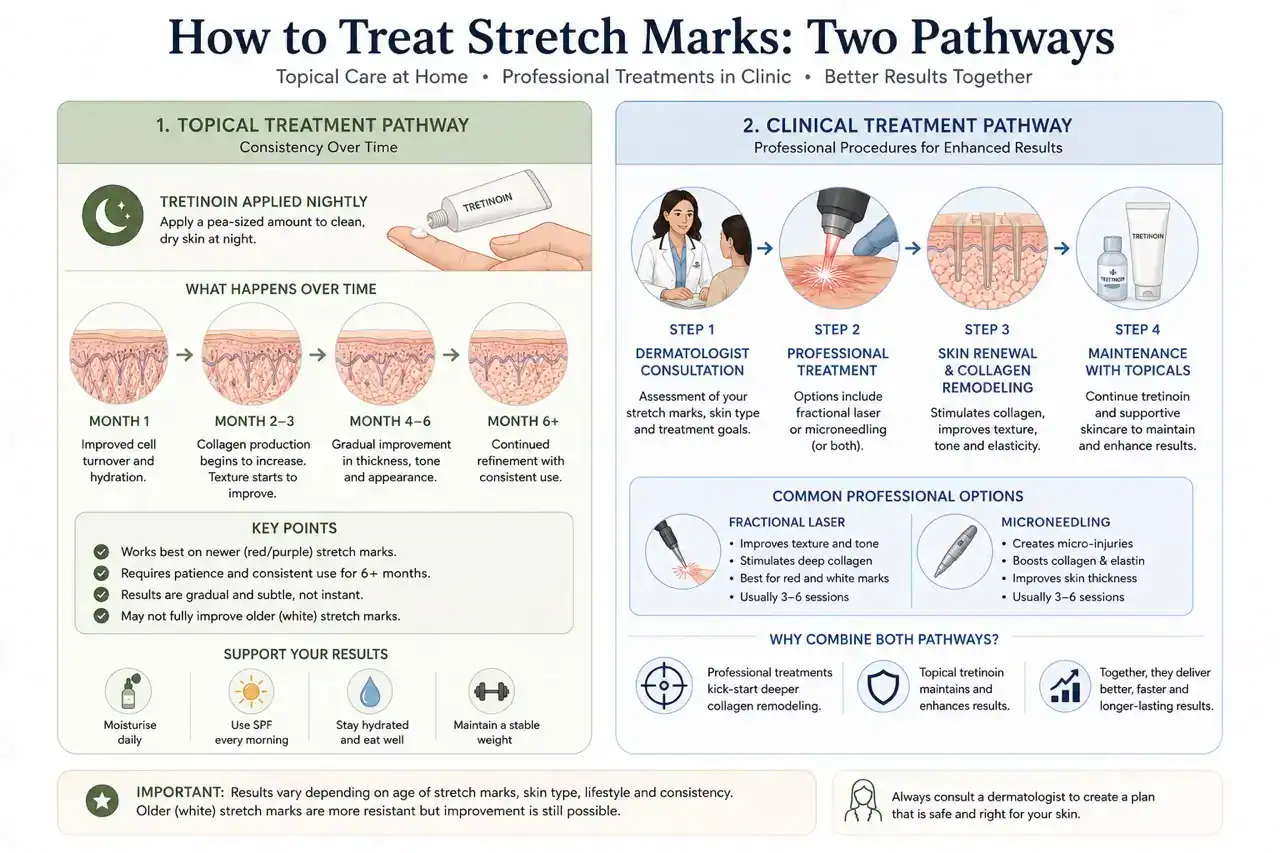
The misuse of tretinoin causes unnecessary irritation that leads people to abandon effective treatment. Used correctly, the side effects are manageable, and the treatment is sustainable over months. Tretinoin is photosensitive and photosensitising. It degrades in sunlight and increases UV damage risk during the day. Always apply at night. Apply broad-spectrum SPF to any treated skin exposed to sunlight the following day, consistently, not occasionally. A pea-sized amount is sufficient for a small area; use slightly more for large body areas like the abdomen or thighs. More is not better; excess tretinoin does not accelerate results and increases irritation.
Side Effects: What to Expect and How to Manage Them
- Retinoid dermatitis (the “tretinoin purge”):
In the first 2–6 weeks, many people experience dryness, flaking, redness, and tightness, sometimes called the “tretinoin purge” or retinoid dermatitis. This reflects the skin adapting to accelerated cell turnover. It typically resolves as the skin acclimatises. Reducing application frequency and using a supportive moisturiser usually manage it.
- Dryness and peeling:
Common throughout treatment, particularly in drier climates or during winter. A consistent moisturising routine, applied in the morning, separate from evening tretinoin, is the main management strategy.
- Redness and irritation:
Often a sign that the concentration is too high for the current tolerance level, the application is too frequent, or the skin is being applied too soon after washing.
- Photosensitivity:
Tretinoin-treated skin is more vulnerable to UV damage during the following day. This is not optional knowledge; it is a clinical requirement of safe tretinoin use. Broad-spectrum SPF 30 or higher, applied every morning to treated areas, is non-negotiable.
Pregnancy and Breastfeeding: A Firm Clinical Position
Tretinoin is contraindicated during pregnancy and breastfeeding. This is not precautionary hedging. Systemic retinoids, oral vitamin A derivatives such as isotretinoin, are known teratogens with documented foetal developmental abnormalities. Tretinoin has lower systemic absorption, but absorption is not zero, and no safe level of retinoid exposure during pregnancy has been established. Multiple professional dermatology bodies, including the AAD and RCPE, consistently advise avoiding all topical retinoids during pregnancy and breastfeeding. Hyaluronic acid, Centella asiatica, sweet almond oil, avocado oil, and shea butter are all appropriate for stretch mark care during pregnancy. None produce collagen-stimulating effects equivalent to tretinoin, but they support skin hydration and comfort during a period when safety is the primary constraint.
See our complete pregnancy skincare guide on Stretch Marks During Pregnancy for safe options during this period.
Supporting Your Skin During Tretinoin Treatment
The dryness tretinoin causes, particularly in the first weeks of use, is the most common reason people reduce or abandon the treatment before results appear. Managing this proactively keeps the routine sustainable. A gentle, fragrance-free moisturiser or nourishing body oil applied to the treated area helps restore the barrier after overnight tretinoin use and provides hydration through the day.
The Love Nature Nourishing Body, Face & Hair Oil with Organic Avocado Oil is a morning complement to an evening tretinoin routine. When applied to slightly damp skin after your morning shower, as a separate, morning-only step, it provides sustained moisturisation through its oleic acid content, supports the skin barrier, and helps counteract the dryness that tretinoin produces overnight. Apply the avocado oil in the morning, separately from your evening tretinoin application. Applying oil immediately before or after tretinoin affects its penetration and absorption; keep them in different parts of the day. The oil does not enhance tretinoin’s mechanism or produce additional stretch mark improvement beyond its general moisturising contribution. Its role is comfort and barrier support for a more sustainable long-term treatment routine.
Tretinoin vs Retinol: The Key Differences
| Feature | Retinol | Tretinoin |
|---|---|---|
| Prescription required | No | Yes |
| Active form | No, two conversions are needed | Yes, directly retinoic acid |
| Potency | Moderate | Strong |
| Conversion steps in skin | Two | Zero |
| Evidence for stretch marks | Moderate (inferred from mechanism) | Strong (RCTs with histological confirmation) |
| Speed of visible results | Slower (6–12 months) | Faster (4–6 months) |
| Irritation profile | Milder | More pronounced initially |
| Cost | Low–Moderate (OTC) | Moderate (prescription and consultation) |
| Pregnancy safety | Not safe | Not safe |
| Best for | Accessible starting option | Most effective topical approach with fastest results |
See our guide on Retinol for Stretch Marks for detailed guidance on OTC options.
Tretinoin vs Other Stretch Mark Ingredients
| Ingredient | Evidence for Stretch Marks | Collagen-Stimulating Mechanism | Pregnancy Safe | Prescription Required |
|---|---|---|---|---|
| Tretinoin | Strong (RCTs, histological) | Yes, direct via RAR binding | No | Yes |
| Retinol | Moderate | Yes, indirect (conversion) | No | No |
| Centella asiatica | Moderate | Yes (collagen synthesis) | Yes | No |
| Hyaluronic acid | Moderate | Indirect (hydration + some support) | Yes | No |
| Shea butter | Limited | No | Yes | No |
| Almond oil | Limited–Moderate | No | Yes | No |
| Avocado oil | Limited | No | Yes | No |
| Coconut oil | Limited | No | Yes | No |
| Aloe vera | Limited | No | Yes | No |
See our ingredient guides on Shea Butter for Stretch Marks, Aloe Vera for Stretch Marks, Coconut Oil for Stretch Marks, Avocado Oil for Stretch Marks, Vaseline for Stretch Marks, and Almond Oil for Stretch Marks.
Who Should Avoid Tretinoin?
- Eczema and other inflammatory skin conditions: An already-compromised skin barrier responds poorly to tretinoin’s additional cell turnover demands. Speak with a dermatologist about whether tretinoin can be safely introduced after the skin condition is well controlled.
- Very sensitive skin: People with fragrance sensitivities, multiple contact allergies, or a history of reacting to skincare ingredients should begin with the lowest available concentration (0.025%) under dermatological supervision.
- Damaged skin barrier: If the skin is already dry, fissured, or irritated from eczema, wound healing, or other causes, introducing tretinoin before the barrier is repaired will worsen irritation without producing the stretch mark benefits.
- Certain concurrent medications: Some antibiotics, tetracyclines in particular, increase photosensitivity, making the combination with tretinoin’s own photosensitising effect more significant. Some medications with comedolytic properties can also interact. Always inform the prescribing doctor of your full medication list.
- Rosacea: Tretinoin can exacerbate rosacea flares in some people. A dermatologist familiar with your skin can advise whether the potential stretch-mark benefit outweighs this risk.
When Professional Treatments Are the Better Choice
Tretinoin is the most effective single option for early stretch marks, but there are clear situations where clinical procedures produce results it cannot match.
- For white stretch marks: Fractional CO₂ laser and radiofrequency microneedling produce significantly more visible improvement than any treatment for mature marks. A dermatology consultation is the appropriate next step when marks are already white and significant improvement is desired.
- When faster results are needed, tretinoin requires months of consistent daily use. Clinical procedures produce more rapid visible change, relevant for those with a specific timeline, such as post-pregnancy marks before a significant life event.
- For extensive or deep marks: Large areas of significant stretch marks typically benefit more from clinical procedures, which can be targeted and titrated in ways that topical treatment cannot.
- Combination approaches: The most effective stretch mark management protocols often combine tretinoin with clinical procedures, using the prescription cream between clinic sessions to maintain and amplify the collagen-stimulating effect. This is the approach some dermatologists use for significant cases.
- Microneedling, particularly RF microneedling, is the most widely used clinical complement to topical retinoid treatment. The micro-channels created by needling transiently increase the skin’s permeability to topical products, making the combination period immediately after a session an opportunity for enhanced topical absorption.
- Fractional CO₂ laser remains the most powerful single procedure for white stretch marks, though its side effect profile and recovery time are greater than those of microneedling.
See our complete guide on Stretch Mark Treatment Options for full clinical procedure details.
Conclusion
Tretinoin occupies a legitimate, well-earned position at the top of the stretch mark treatment hierarchy. White marks are largely resistant to treatment of any kind. Even red marks treated optimally with tretinoin will improve but not disappear. And the treatment requires months of consistent nightly application with active management of its side effects; it rewards patience and discipline rather than providing quick or dramatic results. For someone with red stretch marks who is not pregnant, not breastfeeding, and willing to commit to a properly supervised prescription treatment over six months or more, tretinoin is the strongest option. For everyone else- pregnant women, those with mature white marks, those wanting faster, significant improvement- the treatment landscape looks different, and a dermatologist consultation is the most valuable first step.
How to Prevent Stretch Marks | Red Stretch Marks vs White Stretch Marks | Stretch Mark Treatment Options → Retinol for Stretch Marks for OTC alternatives → Stretch Marks During Pregnancy for safe alternatives during pregnancy