

Does Aloe Vera for Stretch Marks Work? Benefits & Best Uses
Aloe vera may help improve the comfort, hydration, and texture of stretch-marked skin. It soothes inflammation, supports the skin barrier, and may assist wound healing. However, current scientific evidence does not support the claim that aloe vera alone can significantly reduce or remove stretch marks, which are structural changes within the dermis.
What Is Aloe Vera?
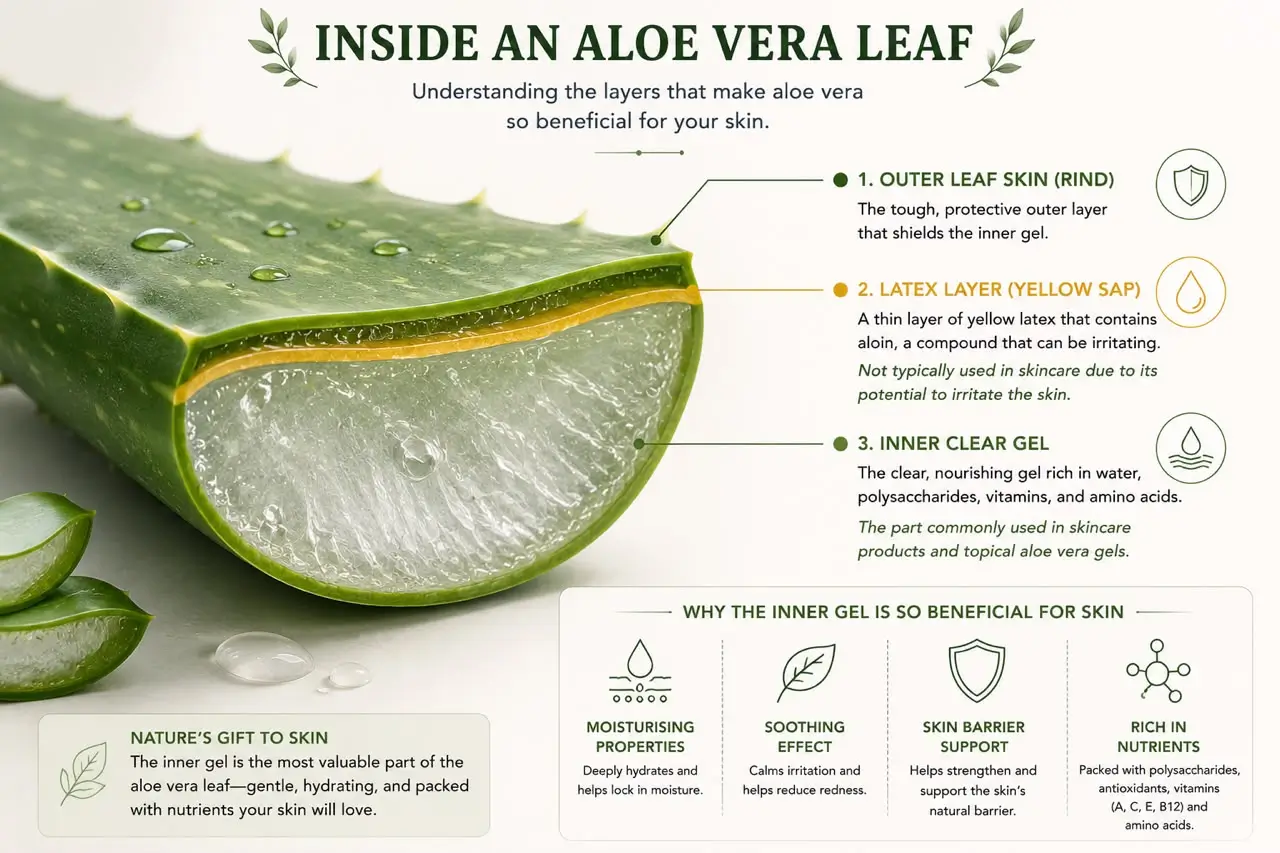
Aloe vera, Aloe barbadensis Miller, is a succulent plant native to the Arabian Peninsula, now cultivated globally. The thick, fleshy leaves contain a clear gel that has been used medicinally and cosmetically for thousands of years across Egyptian, Greek, Chinese, and Ayurvedic traditions. The gel is composed largely of water, over 99% by weight, but its remaining fraction contains a remarkably diverse range of bioactive compounds:
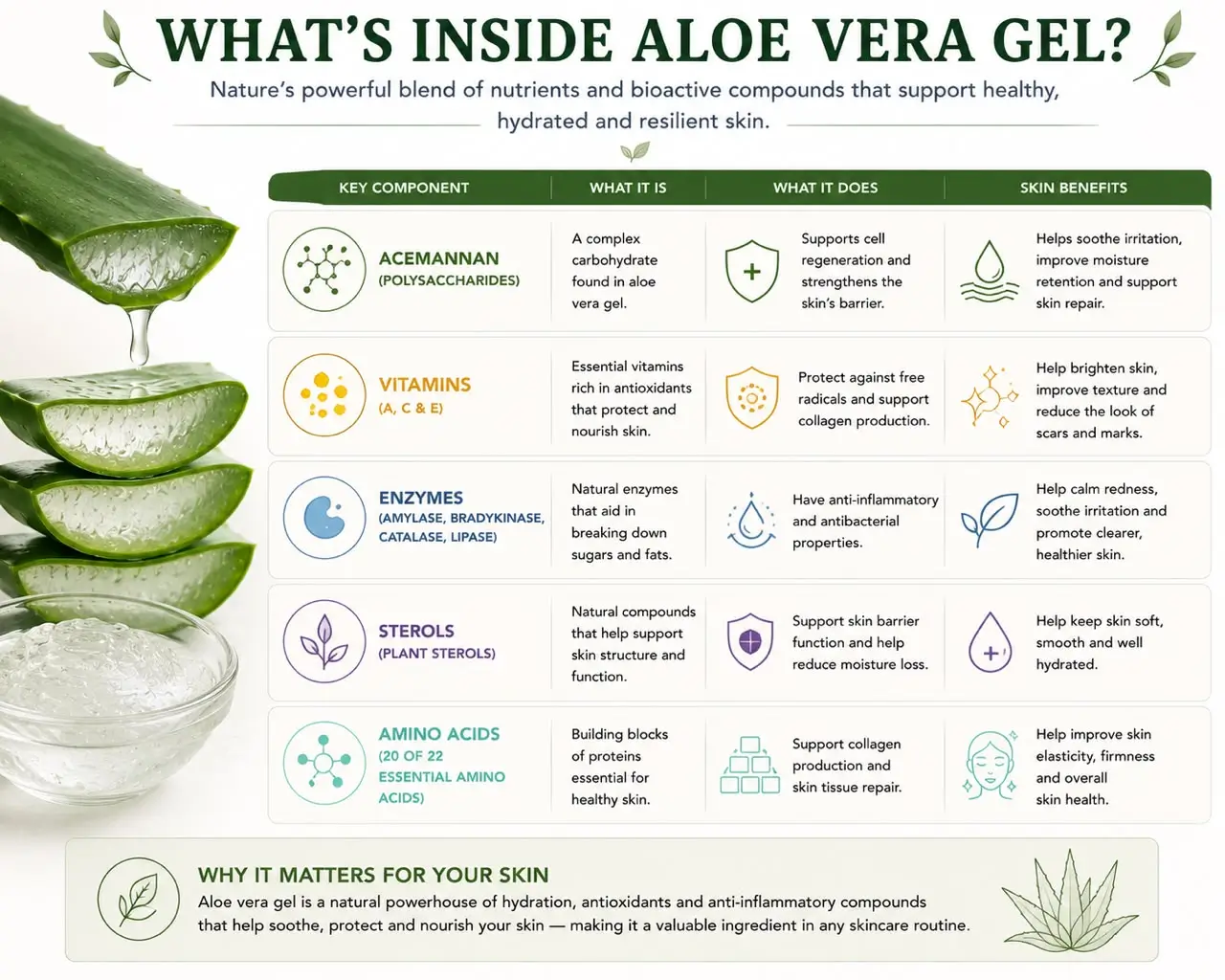
Polysaccharides, particularly acemannan, a long-chain carbohydrate with demonstrated wound-healing, anti-inflammatory, and immunomodulatory properties. This is the most pharmacologically active component of aloe gel.
Vitamins: aloe gel contains vitamins A (beta-carotene), C, and E, all antioxidants that protect against oxidative damage to skin cells. It also contains vitamins B1, B2, B3, B6, and B12 and folic acid, though at modest concentrations.
Minerals, calcium, magnesium, zinc, selenium, and potassium are present in small amounts and contribute to overall skin health.
Amino acids: Aloe contains 20 of the 22 human-required amino acids, including 7 of the 8 essential ones. Amino acids are the building blocks of proteins, including collagen.
Enzymes, bradykinases, reduce skin inflammation when applied topically. Other enzymes in aloe help break down dead skin cells and support healing.
Anthraquinones, compounds with antimicrobial and analgesic properties, primarily found in the latex layer beneath the skin of the leaf, not in the inner gel, so they are generally not present in well-purified gel products.
Sterols, campesterol, β-sitosterol, and lupeol have anti-inflammatory and analgesic properties.
How Stretch Marks Develop
Stretch marks, clinically called striae distensae, form when the skin stretches faster than its structural fibres can accommodate. The key structures involved are collagen and elastin, proteins produced by fibroblasts in the dermis, the middle layer of skin. These fibres give skin its tensile strength and elasticity. When the skin stretches rapidly, during pregnancy, puberty, rapid weight gain, or intensive muscle building, the dermis fibres tear. The body heals this damage by laying down new collagen, but this repair collagen is structurally different from the original: it lacks the normal basket-weave architecture, contains fewer melanocytes (pigment cells), and results in the linear streaks we recognise as stretch marks.
Early stretch marks are red or purple; the colour reflects active blood vessels and the inflammatory repair response. Over time, those vessels contract and the marks fade to silver or white, settling into stable scar-like tissue. Because stretch marks exist within the dermis, below the epidermis that topical products interact with, no surface application, including aloe vera, can fully reverse them. What topical products can do is support the skin’s health above those marks, improve hydration and barrier function, and create a better environment for natural fading.
See our detailed guide on Red Stretch Marks vs White Stretch Marks for a full breakdown of how stretch mark biology changes over time.
Can Aloe Vera Help Stretch Marks?
The evidence base for aloe vera in dermatology is reasonably strong for wound healing, burns, psoriasis, and general skin hydration. For stretch marks specifically, high-quality independent clinical trials are limited. A study published in the Journal of Ethnopharmacology found that aloe vera combined with vitamin E produced some improvement in stretch mark appearance, but the contribution of each ingredient independently was not isolated, and the study was small. Research on aloe vera for surgical scarring has produced mixed results.
The National Center for Complementary and Integrative Health (NCCIH) notes that while aloe vera has established moisturising and wound-healing properties, the evidence for more specific skin applications, including scar and stretch mark treatment, is limited and requires further research.
Where aloe vera does genuinely help:
- Hydration: Aloe vera is an effective humectant; it draws moisture into the skin and helps retain it. Hydrated skin has better texture and a more even tone.
- Soothing new stretch marks: The anti-inflammatory properties of aloe gel make it well-suited to calming the itch, redness, and tightness that often accompany new red stretch marks.
- Supporting the skin barrier: Aloe’s polysaccharides and sterols support the skin’s outer barrier function, reducing moisture loss and maintaining overall skin health.
- Wound healing support: The acemannan in aloe has demonstrated wound-healing properties in clinical studies. While stretch marks are not wounds in the traditional sense, the healing environment aloe supports is relevant to the skin’s response to dermal damage.
Where aloe vera falls short:
- It cannot penetrate the dermis in a meaningful enough way to stimulate significant collagen remodelling in stretch mark tissue.
- It does not replace the structural collagen and elastin that tore when stretch marks formed.
- It has no established mechanism for producing the kind of significant visible improvement that clinical treatments (retinoids, laser, microneedling) can achieve.
Aloe Vera Benefits for Skin Health
Beyond stretch marks specifically, aloe vera’s broader skin benefits are better-established and worth understanding because these are the legitimate reasons it belongs in your skincare routine.
- Hydration
Aloe vera gel is one of the more effective natural humectants. It draws moisture into the epidermis and helps the skin retain it, resulting in improved plumpness, texture, and surface tone. This effect is well-documented and consistently shown in studies on skin moisturisation.
- Barrier Repair
The polysaccharides and sterols in aloe vera support the skin’s lipid barrier, the outer layer that prevents water loss and keeps irritants out. A well-maintained barrier means more hydrated, more resilient skin.
- Calming Inflammation
Aloe gel contains multiple anti-inflammatory compounds, including bradykinase, salicylic acid, and the sterols lupeol and β-sitosterol. Applied topically, these reduce redness, swelling, and irritation. This is why aloe is so effective for sunburn relief and why it can soothe the itch and tightness of new stretch marks.
- Supporting Wound Healing
Acemannan, the key polysaccharide in aloe, has been shown in multiple studies to accelerate wound healing by stimulating fibroblast proliferation, the cells that produce collagen, supporting new blood vessel formation, and reducing inflammation. This is the mechanism most relevant to why aloe might support skin recovery after dermal damage.
- Antioxidant Protection
The vitamins A, C, and E in aloe contribute antioxidant protection, reducing oxidative damage to skin cells from UV exposure and environmental stressors. Over time, oxidative stress contributes to skin ageing and reduced collagen quality.
Aloe Vera for Red Stretch Marks
Red stretch marks are the most promising target for aloe vera’s benefits, and the stage where it is most likely to contribute meaningfully to a skincare routine. When stretch marks are still red, the tissue beneath is biologically active. Fibroblasts are producing new collagen. Blood vessels are present and supplying the area. Inflammation, which aloe is specifically good at calming, is an active feature of the tissue.
When applied to red stretch marks, aloe vera can:
- Soothe the itch and tightness that commonly accompany new marks
- Reduce surface redness through its anti-inflammatory action
- Maintain skin hydration in the surrounding area
- Support the skin’s healing environment
What it will not do, even for red marks, is produce the kind of collagen remodelling that retinoids or clinical procedures can stimulate. But as a soothing, hydrating daily companion to more active treatments, or as a standalone home care option for those not yet ready for clinical treatment, it is a sensible choice for this stage.
See our guide on Red Stretch Marks vs White Stretch Marks for a full explanation of the biological difference and treatment implications.
Aloe Vera for White Stretch Marks
White stretch marks present a different challenge. The tissue has settled into a stable, scar-like state. Blood vessels have contracted. Fibroblast activity has significantly reduced. At this stage, the primary role of aloe vera is as a skin conditioning and comfort agent rather than a stretch mark treatment in any clinical sense:
- It keeps the skin around and over the marks hydrated and soft
- It may improve the surface texture modestly over a long period of consistent use
- It does not stimulate meaningful collagen remodelling in stable white scar tissue
For established white stretch marks, clinical procedures, particularly fractional laser and radiofrequency microneedling, produce far more significant improvement than any topical ingredient, including aloe vera. Aloe is worth including in a daily routine for its general skin health benefits, but expectations should be appropriately modest at this stage.
How to Use Aloe Vera for Stretch Marks
- Fresh Aloe Vera
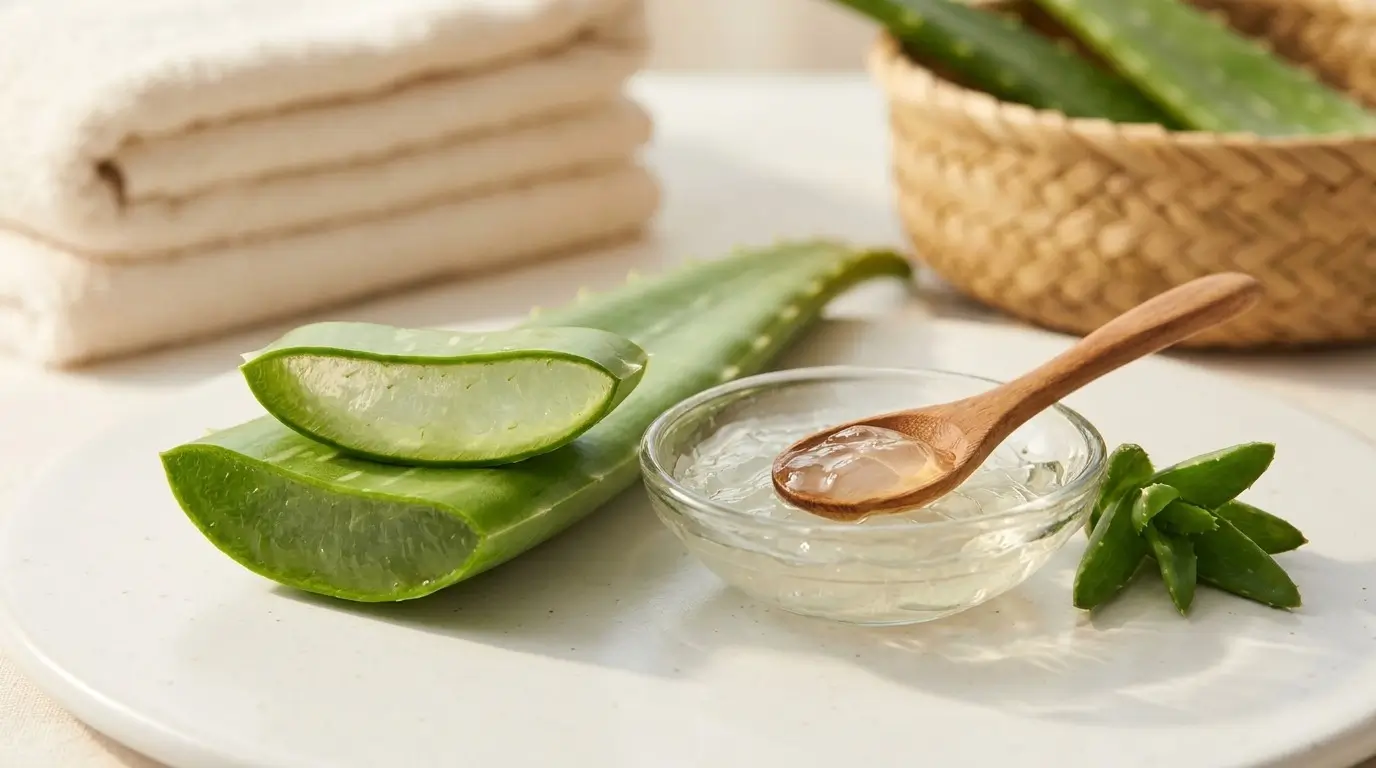
Using the gel directly from an aloe vera plant gives you the most unadulterated form of the ingredient: no preservatives, no additives, no dilution.
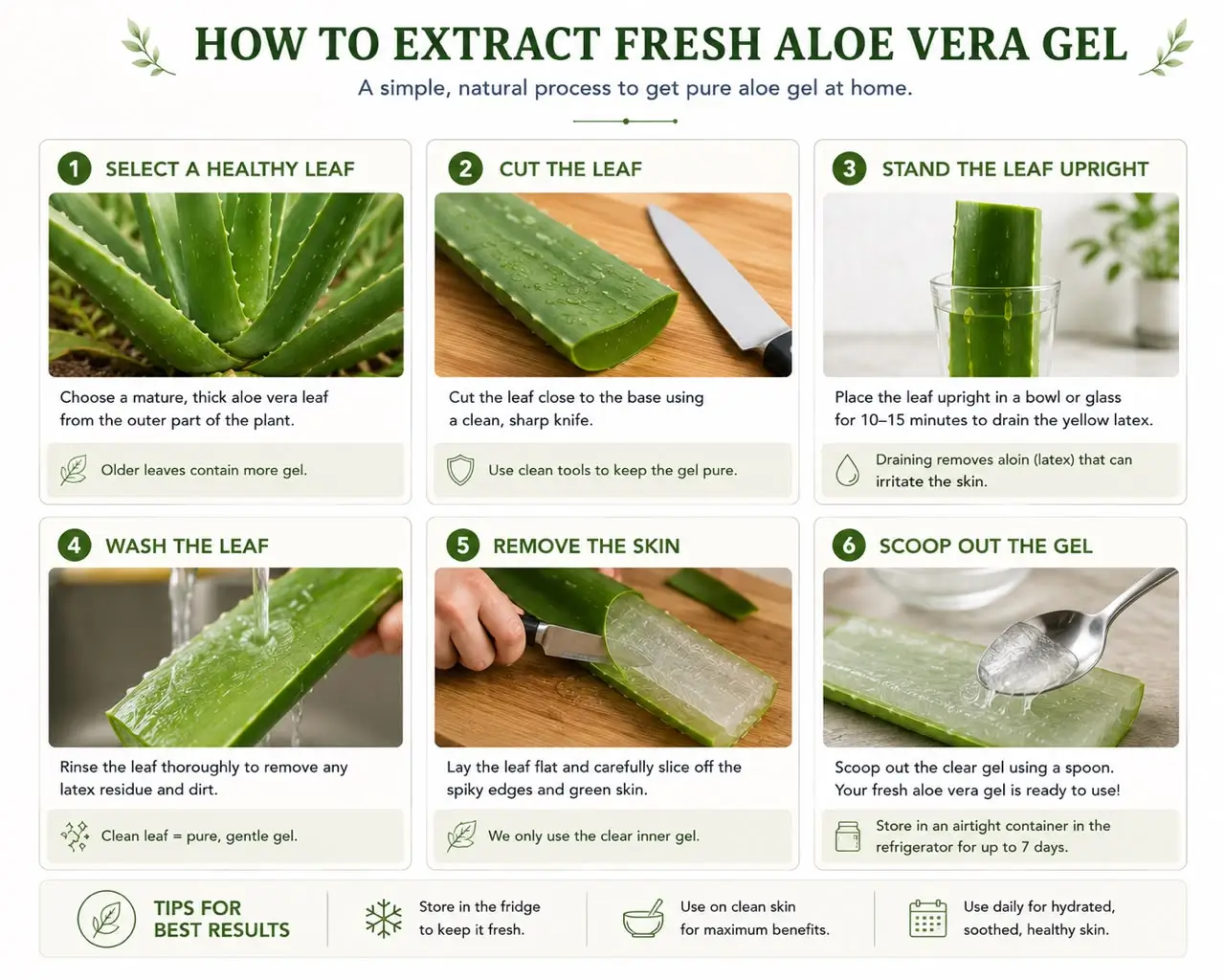
How to extract fresh gel:
- Select a mature, thick leaf from the outer ring of the plant.
- Cut the leaf close to the base with a clean knife.
- Stand the cut end in a cup for 10–15 minutes to allow the yellow latex sap to drain out; this layer can be irritating to skin.
- Lay the leaf flat, trim off the edges, and slice horizontally to open it.
- Scoop out the clear inner gel with a spoon.
The fresh gel can be applied directly to skin, kept refrigerated, and used within a few days. The cooling effect from refrigerated gel can also help with the itch of new marks.
- Commercial Aloe Vera Gel
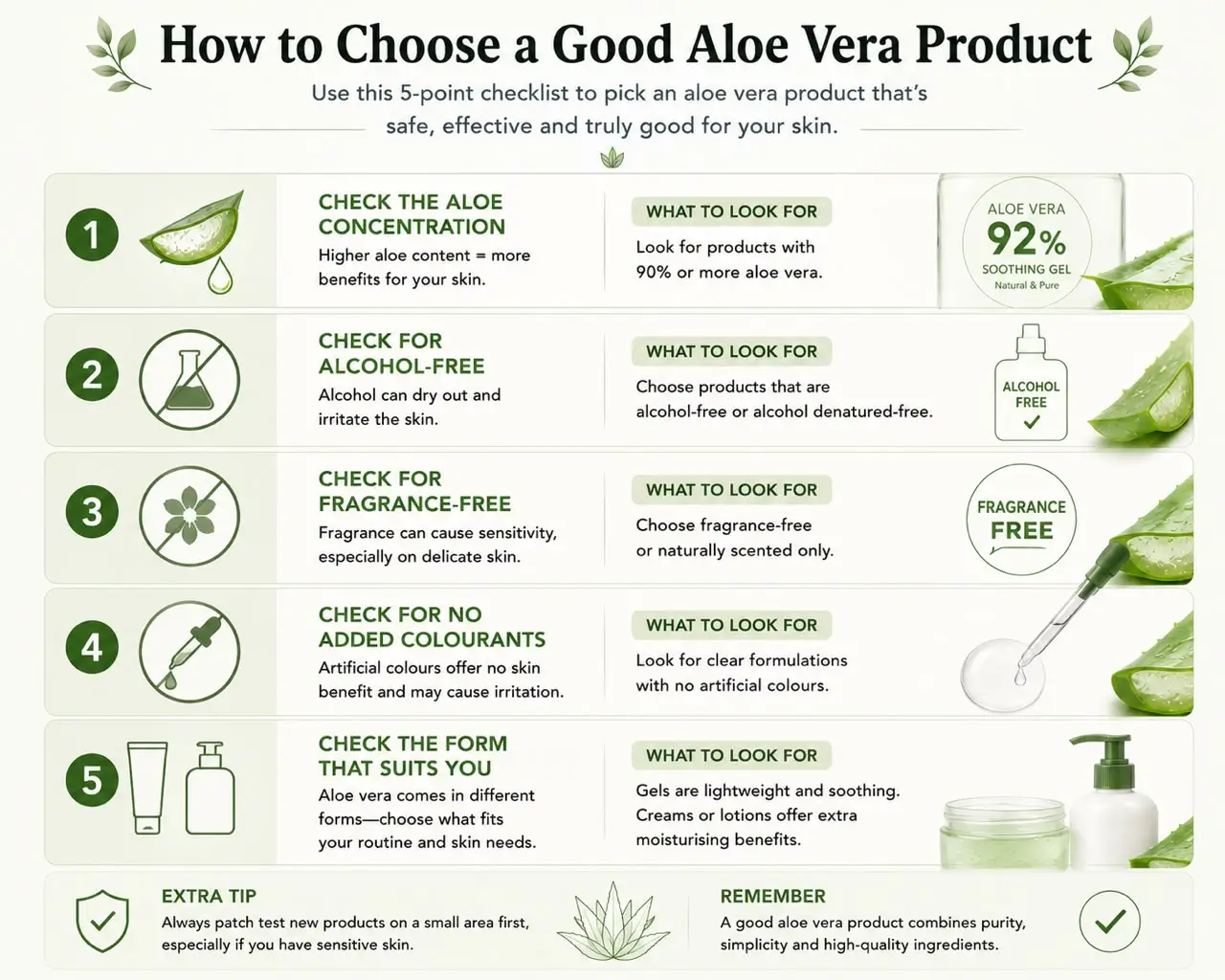
Pre-prepared aloe vera gels are convenient and shelf-stable. Look for:
- High aloe concentration, 99% or above, for the purest formulations
- Alcohol-free; some commercial gels use alcohol to preserve them, which can be drying
- Fragrance-free if possible, particularly for use on sensitive skin during pregnancy
- Minimal additional ingredients that might cause irritation
Avoid products where aloe vera appears far down the ingredient list; it means the concentration is minimal and any benefit is primarily from other ingredients.
Application Steps
- Cleanse the area first with a gentle, non-stripping body wash
- Pat dry, leaving skin slightly damp, to help humectants like aloe work more effectively
- Apply a thin layer of aloe gel to the stretch mark area, using fingertips
- Massage gently using circular motions for 1–2 minutes; this stimulates blood flow and helps absorption
- Allow to absorb; aloe gel absorbs quickly and leaves a light, non-greasy finish
- Follow with a richer moisturiser or body oil; aloe gel alone may not provide sufficient occlusive moisture for very dry skin; layering a cream or oil on top seals in the hydration
- Frequency
Apply once or twice daily. Morning application after bathing is practical; evening application gives the skin overnight time to benefit from the hydration. Consistent daily use over weeks and months is what produces any meaningful improvement.
- Massage
The massage step deserves emphasis. Spending 1–2 minutes massaging the gel and any following oil or cream into the stretch mark area stimulates local blood flow and lymphatic drainage. Studies on massage for scar tissue suggest it improves tissue pliability over time. This is a real benefit that exists independently of whichever product is being applied.
- Patch Testing
Before applying any new ingredient across a large area, apply a small amount to the inner forearm and wait 24 hours. Aloe vera is generally very well-tolerated, but contact allergy is possible, particularly in people with latex sensitivity, as aloe and latex share some cross-reactive compounds.
Can Aloe Vera Be Used During Pregnancy?
Aloe vera gel is generally considered safe for topical use during pregnancy. Applied to the skin, it does not carry the safety concerns associated with ingredients like retinoids, all of which must be avoided during pregnancy. Its anti-inflammatory and moisturising properties make it a gentle and helpful option for the itchy, stretched skin of the second and third trimesters.
Practical guidance for pregnancy:
- Use aloe vera gel, not oral aloe vera supplements or juices, which are not recommended during pregnancy
- Perform a patch test before applying over large areas, as skin can be more reactive during pregnancy
- Choose alcohol-free, fragrance-free formulations for maximum gentleness
- If you are uncertain about any ingredient, check with your midwife or GP before use
See our complete pregnancy skincare guide on Stretch Marks During Pregnancy: Prevention and Safe Treatment Options.
Aloe Vera vs Other Natural Remedies
How does aloe vera compare to other popular natural ingredients for stretch mark care?
| Ingredient | Evidence for Stretch Marks | Best Benefit | Pregnancy Safe |
|---|---|---|---|
| Aloe vera | Limited | Soothing, hydration, comfort | Yes (topical) |
| Shea butter | Limited | Deep moisturisation, barrier | Yes |
| Cocoa butter | Very limited | General moisturising | Yes |
| Coconut oil | Limited | Emollient, moisture sealing | Yes |
| Avocado oil | Limited (growing) | Skin nourishment, anti-inflammatory | Yes |
| Centella asiatica | Moderate | Collagen support, wound healing | Yes (check formulation) |
| Hyaluronic acid | Moderate–Strong | Deep hydration, skin elasticity | Yes |
Aloe vera sits in a similar evidence bracket to shea butter and coconut oil, genuinely useful for skin health and hydration, but without the collagen-stimulating mechanisms of Centella asiatica or hyaluronic acid. For the most evidence-backed natural approach, combining aloe vera with Centella asiatica and hyaluronic acid covers a broader range of skin benefits than any single ingredient alone.
See our complete guide on Natural Remedies for Stretch Marks for a full evidence comparison.
Aloe Vera and Stretch Mark Creams
Aloe vera gel can be a useful standalone step, but it works best as part of a layered skincare routine that combines multiple ingredients with complementary mechanisms. Aloe excels at hydration and soothing, but it does not provide occlusive moisture sealing, which oils and butters do; it does not stimulate collagen in the way retinoids or Centella asiatica do, and it does not build the same skin barrier support as ceramides. A well-formulated stretch mark cream addresses these gaps.
- Aloe vera + peptides: Aloe hydrates and soothes; peptides signal collagen production; together, they cover hydration and collagen support
- Aloe vera + ceramides: Aloe humectant moisture + ceramide barrier sealing = sustained hydration through the day
- Aloe vera + vitamin E: Both contribute antioxidant protection; vitamin E provides additional emollient benefit
- Aloe vera + plant oils: Aloe provides light surface hydration; a body oil massaged over the top seals it in and adds nourishing fatty acids
The most effective daily routine layers aloe gel with a richer moisturising product, either a body oil or a cream containing evidence-backed actives, rather than relying on aloe alone.
See our guide on Do Stretch Mark Creams Really Work? to understand which cream ingredients have the strongest evidence.
Choosing a Good Aloe Vera Product
High aloe concentration: the label should list aloe vera near the top of the ingredient list. Products listing it as “aloe vera extract” or placing it mid-to-late in a long ingredient list contain minimal active aloe.
Alcohol-free: some gels use alcohol (ethanol) as a preservative and texture agent. While effective as a preservative, alcohol can be drying and irritating on stretched, sensitive skin.
Fragrance-free or minimally scented, particularly important during pregnancy, for sensitive skin, and for use on areas prone to irritation.
No artificial colourants; pure aloe gel is clear to very faintly yellowish. Bright green colour is artificial and unnecessary.
Check the form: Pure aloe gel, aloe vera juice, and aloe vera concentrate are all different things. For topical application to stretch marks, high-purity aloe vera gel, not juice, is the most appropriate form.
Recommended Aloe Vera-Inspired Skincare Routine
Aloe vera gel works best as part of a layered approach rather than as a standalone treatment. Combining it with a nourishing body oil adds the occlusive moisture sealing and fatty acid nourishment that aloe gel alone does not provide.
Love Nature Nourishing Body, Face & Hair Oil with Organic Avocado Oil is a well-suited complement to an aloe vera routine. Applied immediately after aloe gel, while the skin is still slightly damp, it seals in the hydration that aloe has drawn into the skin, while adding nourishing oleic acid, vitamins A, D, and E, and plant sterols from the avocado oil. The oil also provides an effective medium for the daily massage step, which independently supports tissue health through improved circulation. This combination- aloe gel for soothing hydration, avocado oil for nourishment, and occlusive sealing- provides a more complete skin care step than either product alone.
As always, neither aloe vera nor any body oil removes stretch marks. The goal of this routine is to support skin health, comfort, and hydration, the foundation of any evidence-based stretch mark management approach.
See our guide on Best Oils for Stretch Marks for a full comparison of body oils and what the evidence says.
Key Takeaways
- Aloe vera is a well-established skincare ingredient with genuine hydrating, soothing, anti-inflammatory, and wound-healing properties.
- It does not remove stretch marks; no credible clinical evidence supports this claim.
- Its most useful roles in stretch mark care are: soothing new red marks, maintaining skin hydration and comfort, and supporting the skin barrier.
- Fresh aloe vera gel and high-concentration commercial gels are both effective; the key is using alcohol-free, high-purity formulations.
- Aloe vera is generally safe for topical use during pregnancy. Avoid oral aloe products during pregnancy.
- It works best as part of a layered routine, combined with a richer moisturiser, a body oil, or an active cream containing centella asiatica, hyaluronic acid, or peptides.
- For established white stretch marks, clinical treatments produce far more significant improvement than any topical ingredient, including aloe vera.
- Consistency over months, rather than occasional application, is what produces any meaningful change in skin texture and hydration around stretch marks.
Conclusion
Aloe vera has earned its place in natural skincare, but it has not earned the stretch mark cure reputation that popular advice sometimes assigns it. What it genuinely does- hydrating, soothing, supporting barrier function, calming inflammation- is real and relevant to stretch mark care. These are meaningful contributions. They just do not add up to removal or a significant visible reduction of established marks.
Aloe vera is a practical and accessible component of a thoughtful approach to stretch mark skin care. It is gentle enough for daily use, safe during pregnancy, widely available, and pleasant to use. Expect it to support your skin’s comfort and health. Build your routine around it rather than relying on it alone. And if you want more significant visible improvement, particularly for older white marks, explore the clinical options available through a dermatologist.
How to Prevent Stretch Marks Before They Appear → Stretch Mark Treatment Options → Do Stretch Mark Creams Really Work? → Stretch Marks During Pregnancy