

Best Oil for Stretch Marks: Top Natural Options & Science
No oil can completely remove stretch marks. However, oils such as sweet almond oil, rosehip oil, and vitamin E-rich oils may help maintain skin hydration, support the skin’s natural elasticity, and improve overall skin condition when used consistently. Evidence is limited compared with clinical treatments, and results are typically better when oils form part of a broader daily skincare routine, including massage.
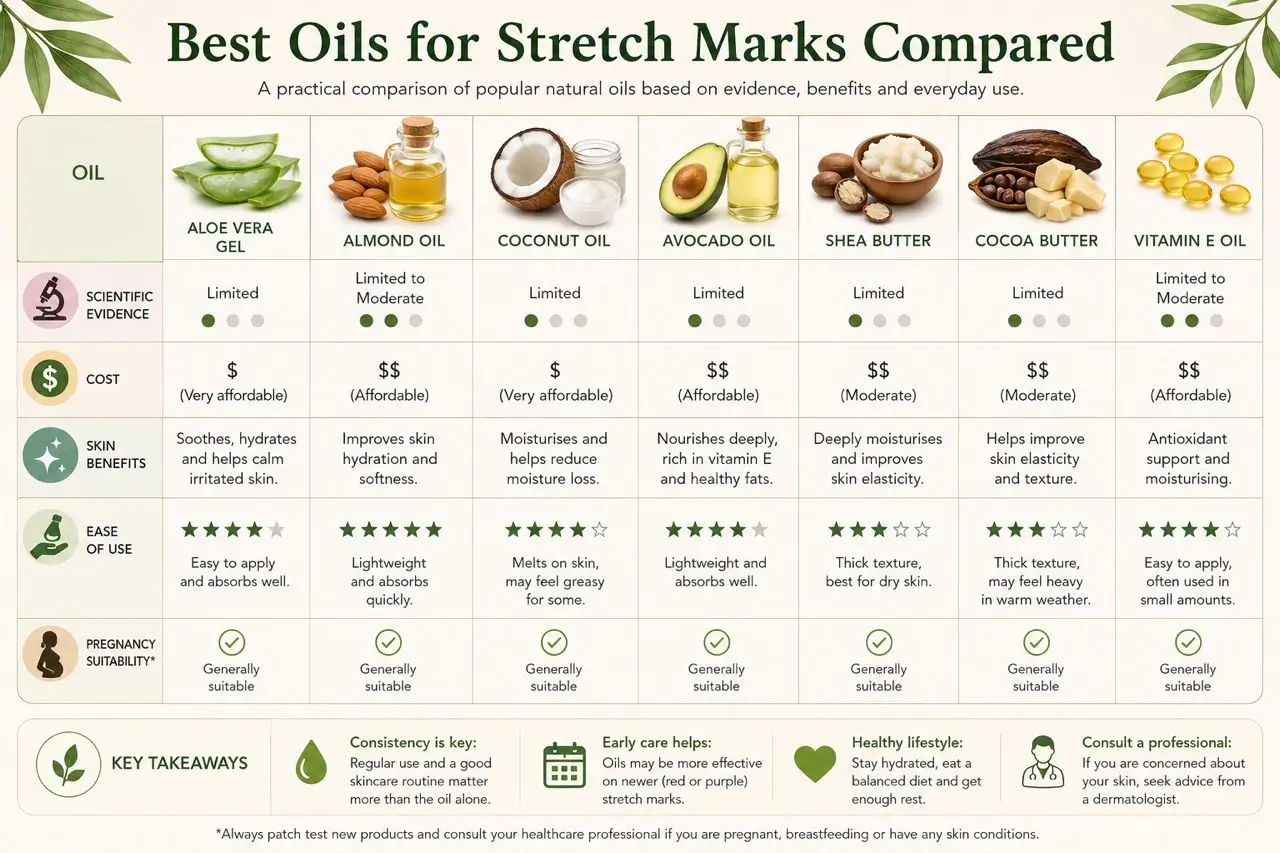
Can Oils Really Remove Stretch Marks?
Stretch marks are structural changes within the dermis, the middle layer of skin, positioned beneath the epidermis, which you can see and touch. They form when collagen and elastin fibres in the dermis tear due to rapid stretching. The resulting marks are, in essence, internal scarring. Oils interact almost entirely with the epidermis and the very upper layers of the dermis. They cannot penetrate deeply enough to reach and reverse the structural changes that stretch marks represent. This is not a limitation specific to oils; it applies to virtually all topical products, including creams, serums, and gels.
What oils can do is genuinely useful and different from removal:
- Keep the skin surface and upper layers consistently hydrated
- Strengthen the skin’s barrier function, reducing moisture loss
- Deliver fat-soluble vitamins, particularly vitamin E, to the skin
- Support the skin’s natural repair environment
- When applied with massage, stimulate circulation and lymphatic flow in the treated area
- Make stretch marks feel more comfortable and look smoother in texture
These are legitimate, evidence-informed benefits. They simply do not add up to removal, and any product claiming otherwise is overstating what oils can achieve.
See our guide on Stretch Marks: Causes, Types, Prevention & Treatments for the complete overview. → See our guide on Can Stretch Marks Be Removed Permanently? for an evidence-based answer.
Why Skin Hydration Matters
Skin that is consistently well-hydrated is more elastic, meaning it can stretch further before its structural fibres are strained. The dermis relies on adequate moisture to maintain the flexibility of its collagen and elastin network. Chronically dry skin has reduced elasticity and may be more prone to tearing when stretched rapidly. In practical terms, regularly moisturised skin entering a period of rapid change (pregnancy, weight gain, growth) may be somewhat more resilient than dry skin, and any stretch marks that do develop may be less severe.
This is the core mechanism through which oils contribute to stretch mark care. Not by reversing existing marks, but by supporting the skin’s elasticity and resilience during the periods when it matters most.
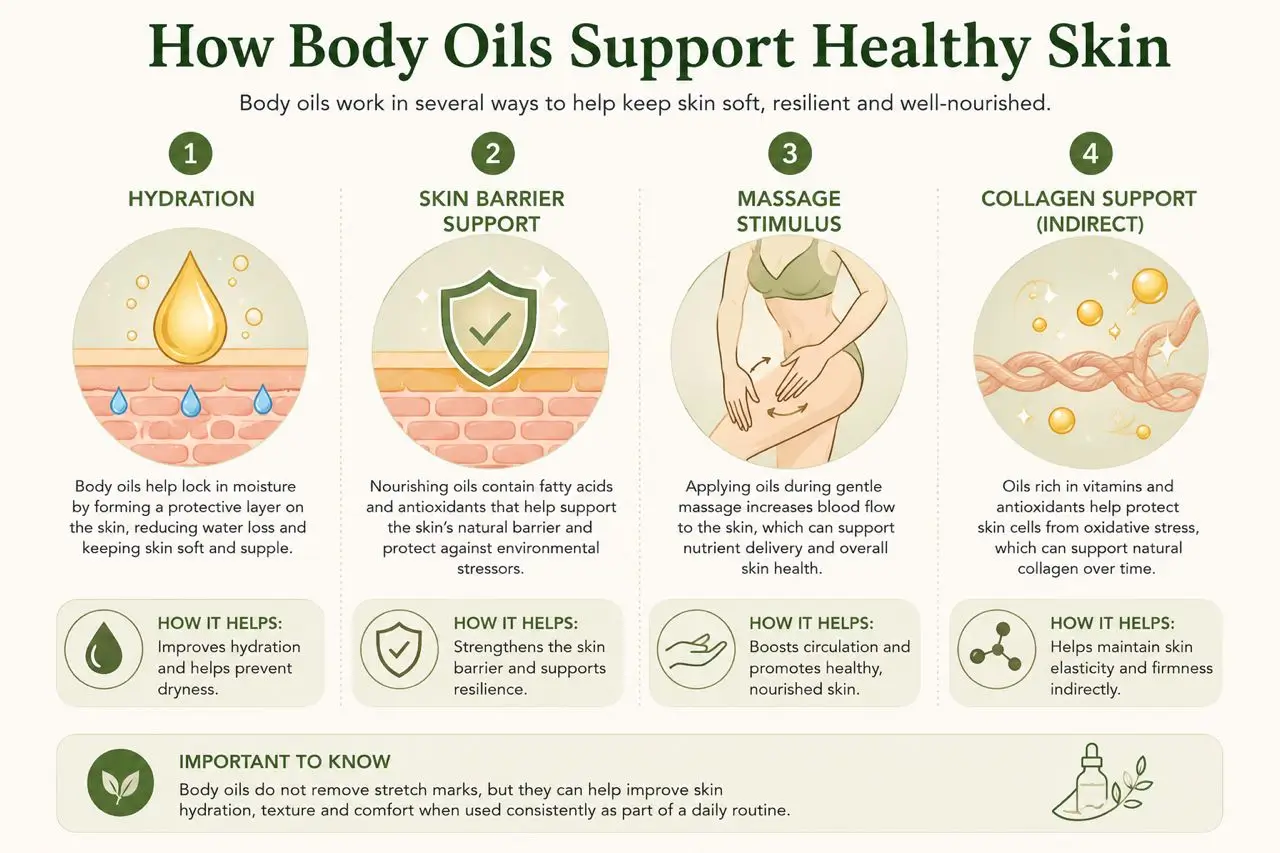
How Oils May Improve Skin Appearance
- Occlusive moisture sealing: Many oils create a light occlusive layer on the skin surface that slows transepidermal water loss, keeping the skin plumper and more hydrated for longer after application.
- Fat-soluble vitamin delivery: Vitamin E (tocopherol) and natural vitamin A precursors found in rosehip oil are fat-soluble, meaning they are best delivered to the skin in an oil carrier. These antioxidants support skin repair and protect against oxidative damage.
- Essential fatty acids: Linoleic acid and oleic acid, found in most plant oils, are components of the skin’s lipid barrier. Topical application helps replenish this barrier, particularly in dry or damaged skin.
- Massage effect: Perhaps the most underappreciated contribution. The act of massaging oil into the skin stimulates local blood flow, supports lymphatic drainage, and may improve tissue pliability over time. Studies on massage for scar tissue suggest it can improve softness and texture, which has direct relevance to stretch-mark appearance.
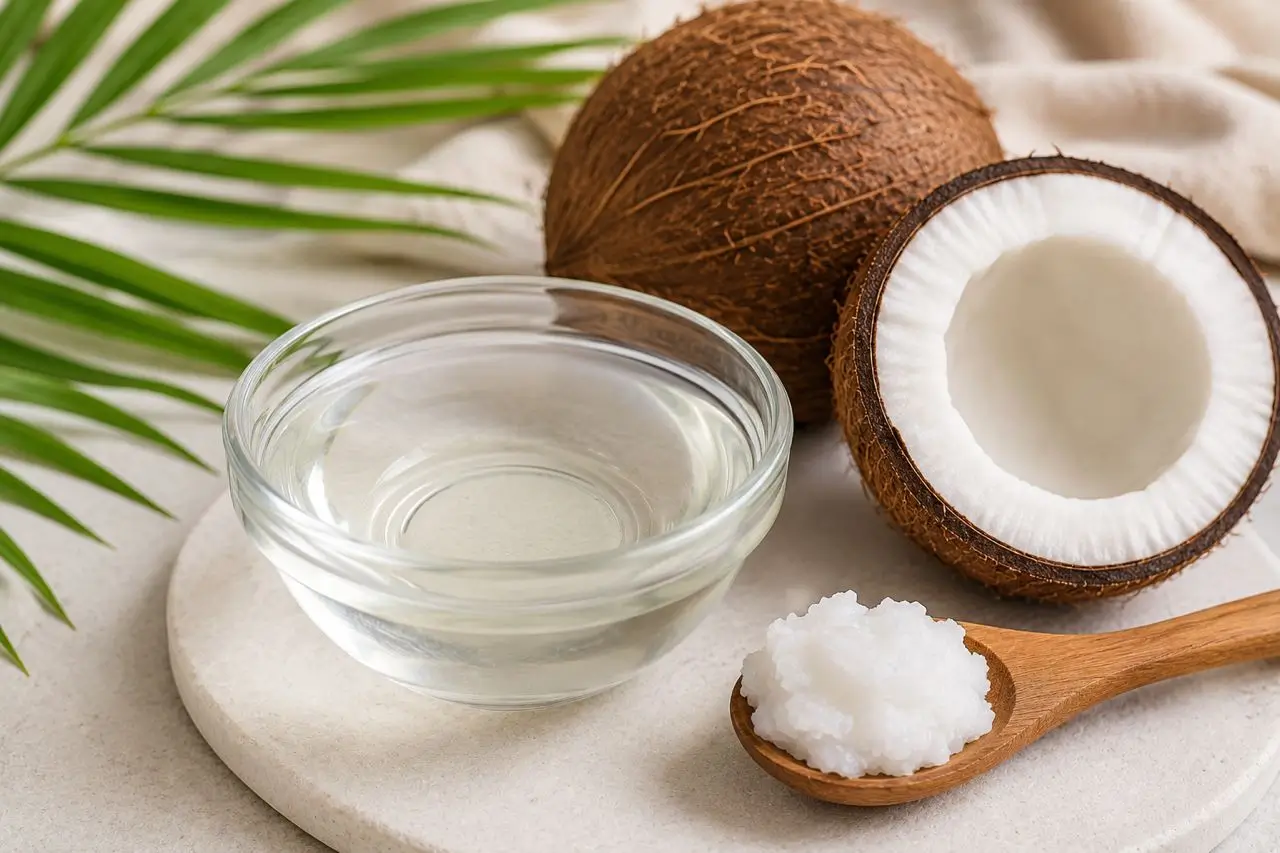
Almond Oil for Stretch Marks
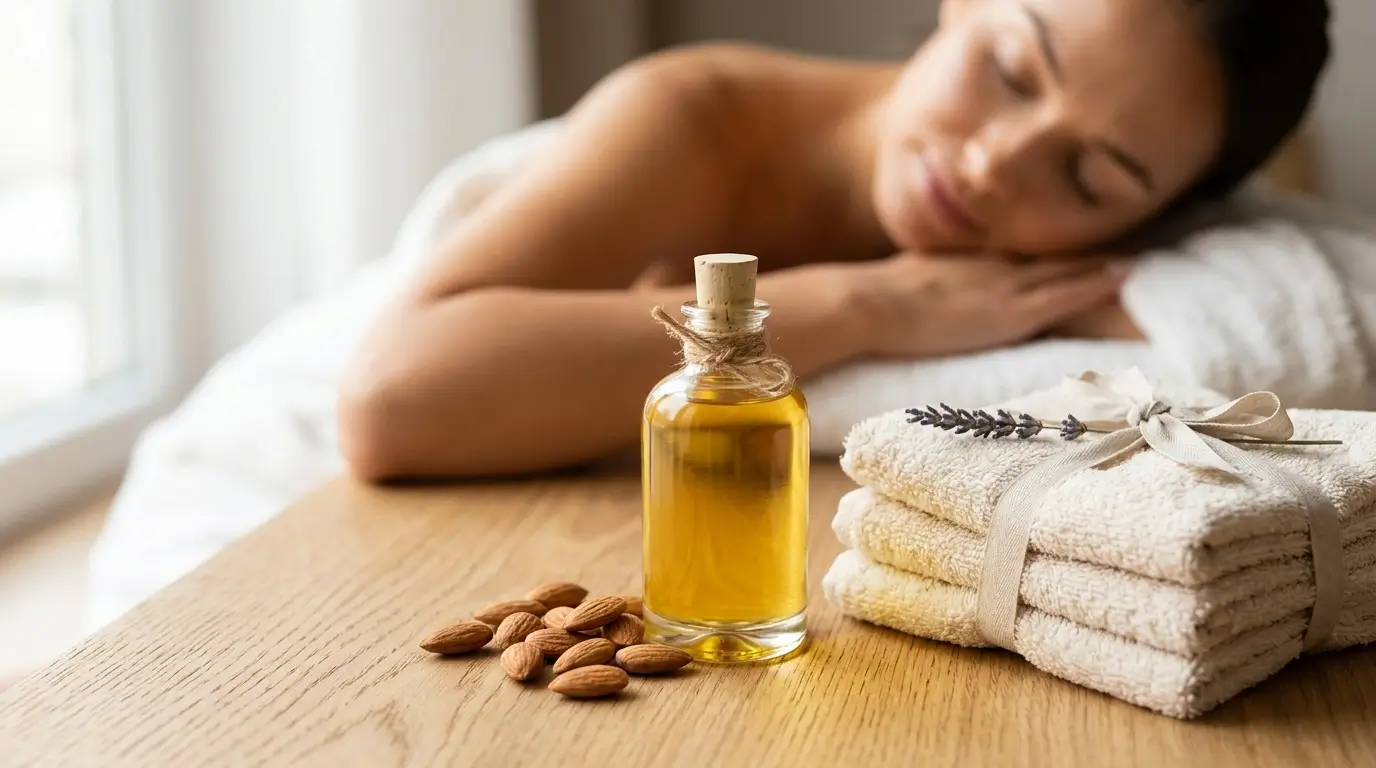
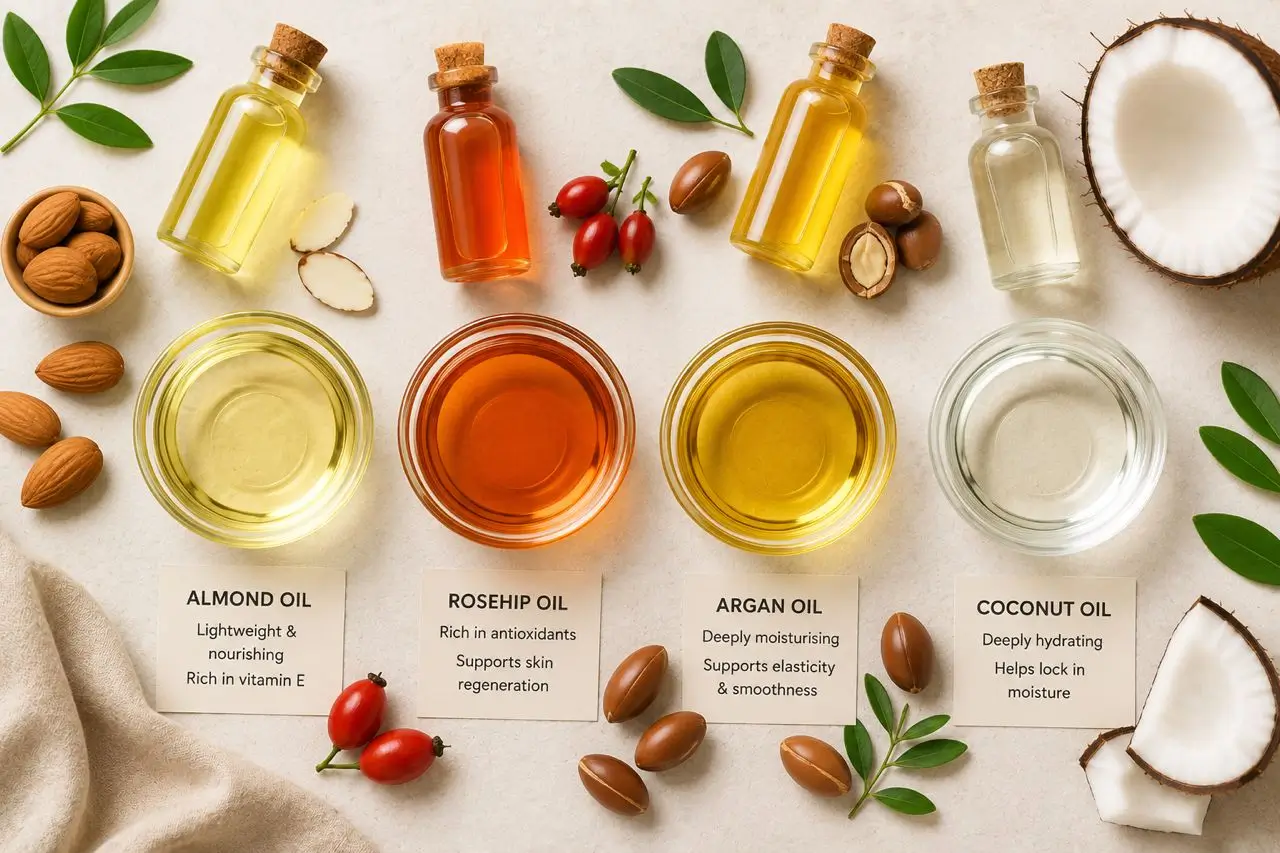
Sweet almond oil has some of the most interesting early evidence among natural oils for stretch mark care, and it is the best-researched oil in a pregnancy context specifically. Sweet almond oil is rich in oleic acid (omega-9), linoleic acid (omega-6), and vitamin E (tocopherol). It is lightweight, fast-absorbing, and generally well-tolerated by sensitive skin. A randomised controlled trial, a more rigorous study design than most in this area, found that pregnant women who massaged sweet almond oil onto their abdomen had significantly fewer stretch marks compared to those who received no treatment. Notably, women who received massage without the oil also showed some benefit, suggesting that both the oil and the massage contribute independently.
Almond oil has a particularly pleasant texture, lightweight enough to absorb well without leaving heavy residue, but nourishing enough to provide real skin conditioning. It is one of the more practical daily oils for body use. It is generally considered safe for topical use during pregnancy. Always check with your midwife before introducing new products.
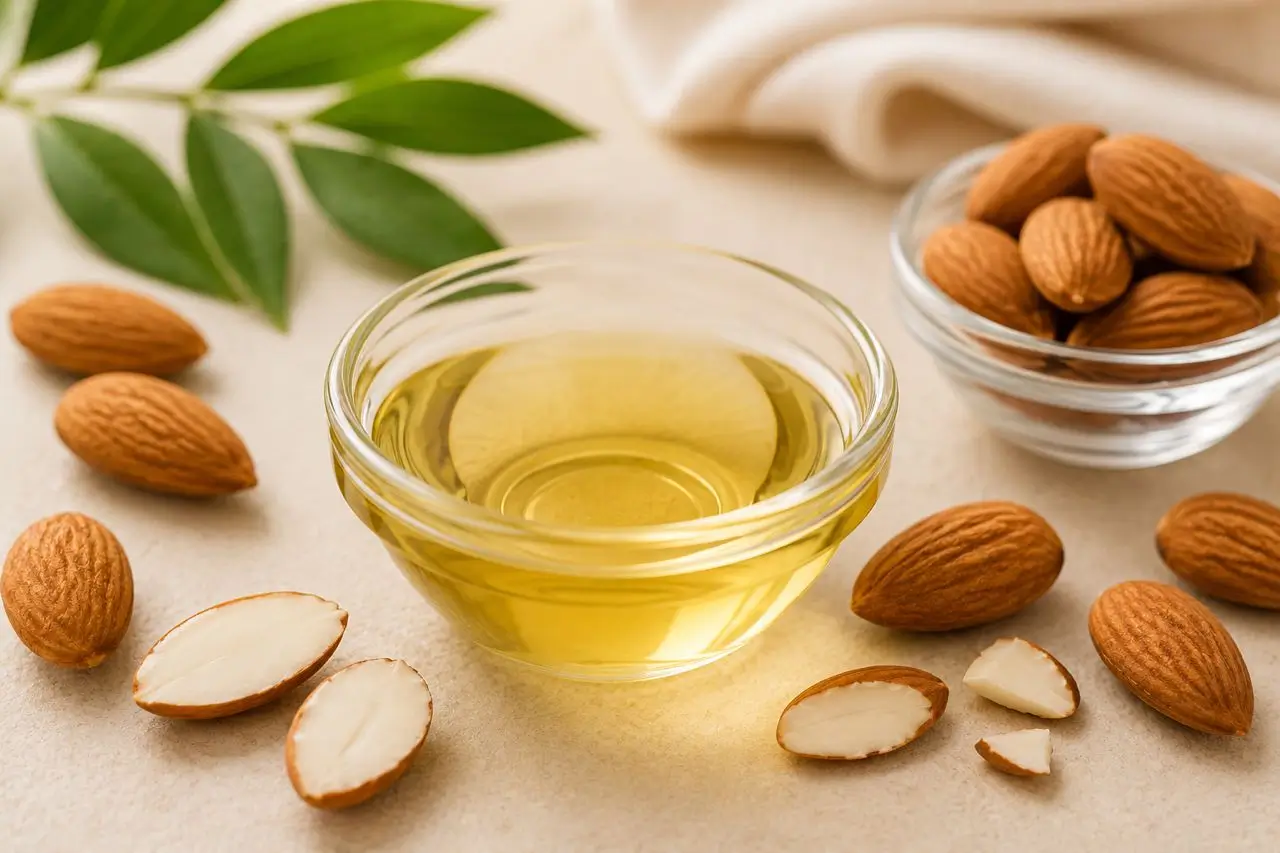
Coconut Oil for Stretch Marks
Coconut oil is one of the most widely used natural skincare oils globally, and it is an effective moisturiser. For stretch marks specifically, the evidence is limited. Virgin coconut oil is rich in lauric acid (a medium-chain fatty acid), capric acid, and caprylic acid. It has emollient properties, some evidence for antimicrobial activity, and has been shown to improve skin hydration in clinical studies. A 2010 study published in Dermatitis confirmed that coconut oil improves skin hydration and barrier function when applied regularly. However, studies specifically evaluating its effect on stretch marks are scarce. Its moisturising properties are genuine; its specific effect on stretch mark appearance is not well-established.
Coconut oil is moderately comedogenic; it may block pores in some individuals, particularly those with oily or breakout-prone skin. It also has a heavier texture that some people find uncomfortable in warm weather or for daytime use. It tends to work better as an evening application.
Bio-Oil for Stretch Marks
Bio-Oil occupies an interesting middle ground between natural oil and a formulated skincare product. Understanding what it is and what the evidence actually shows helps set appropriate expectations. Bio-Oil is a proprietary formulation containing vitamin A, vitamin E, calendula oil, lavender oil, rosemary oil, and chamomile oil in a mineral oil and isopropyl myristate base. It is not a pure plant oil; it is a carefully formulated product that uses oils as its carrier.
Bio-Oil has been studied in manufacturer-sponsored clinical trials showing improvement in the appearance of stretch marks, both in reducing redness and improving skin texture and tone. Independent peer-reviewed research is more limited. Some dermatologists include it among useful adjunct options; others are more cautious about the evidence quality. Bio-Oil is likely more effective than using a plain plant oil, primarily because it delivers active vitamins in a stable, well-absorbed formulation alongside skin-conditioning carrier oils. However, it does not remove stretch marks, and evidence for a significant reduction in older white marks is limited.
Bio-Oil’s vitamin A content (retinyl palmitate) is at levels generally considered low-risk for topical use, but some healthcare providers advise caution with vitamin A derivatives during pregnancy. Bio-Oil has been more systematically studied for skin appearance improvement than coconut oil, which has limited dedicated stretch mark research.
Vitamin E Oil for Stretch Marks
Vitamin E oil is perhaps the most historically associated ingredient with scar and stretch mark care, and one of the most frequently misunderstood. Vitamin E (tocopherol) is a fat-soluble antioxidant. In its oil form, it is typically pure tocopherol or vitamin E diluted in a carrier oil. Despite decades of popular use, clinical trials evaluating vitamin E for scar and stretch mark improvement have produced mixed results. A frequently cited study on surgical scars found that vitamin E offered no significant benefit over plain moisturiser and caused contact dermatitis in a notable proportion of participants.
Vitamin E’s real value is as an antioxidant that protects skin cells and supports the skin’s repair environment. As a component of a well-formulated oil or cream, alongside other active ingredients, it contributes meaningfully to overall skin health. As a standalone treatment, the evidence does not support its reputation for removing stretch marks. Dilute in a carrier oil; almond oil works well, rather than applying neat. High concentrations of undiluted tocopherol can irritate some individuals.
Rosehip Oil for Stretch Marks
Rosehip oil is one of the more biologically interesting natural oils in this category, primarily because of what it contains rather than dedicated stretch mark research. Rosehip oil extracted from Rosa canina or Rosa rubiginosa seeds is rich in linoleic acid and linolenic acid and contains naturally occurring trans-retinoic acid, a naturally derived vitamin A compound. It also contains polyphenol antioxidants.
The presence of natural vitamin A derivatives makes rosehip oil one of the more compelling natural oils for skin remodelling. Vitamin A in its active forms is the basis of tretinoin, the prescription retinoid with the strongest evidence for stretch mark improvement. Rosehip oil’s natural retinoic acid content is much lower than prescription retinoids, but it may provide some mild remodelling effect over time. Clinical evidence specifically for rosehip oil and stretch marks is limited. Studies on scars and skin ageing are more common and generally positive. It represents a reasonable choice for a daily routine, particularly for newer, red marks.
Avocado Oil for Stretch Marks
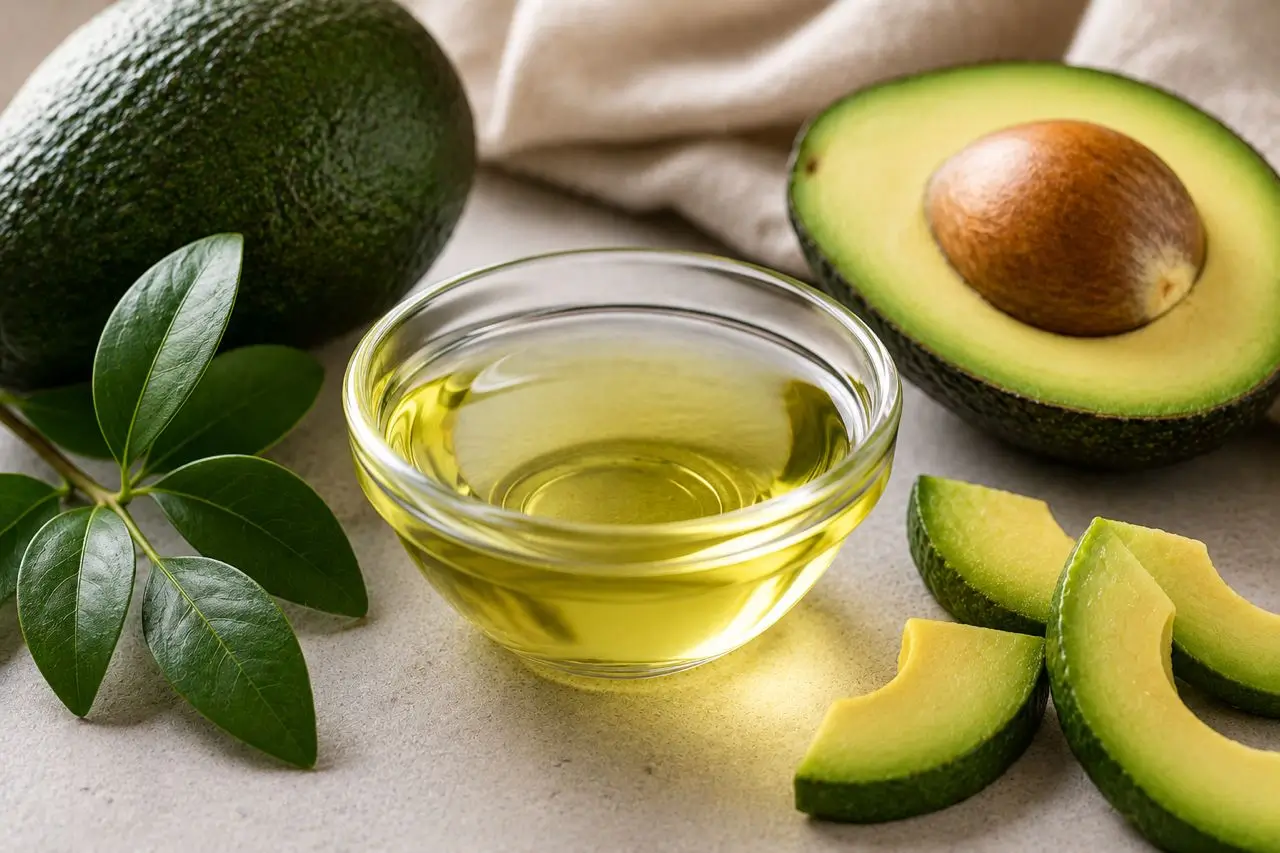
Avocado oil is rich in oleic acid, vitamins A, D, and E, and contains plant sterols, particularly beta-sitosterol and lecithin. It penetrates the skin well due to its fatty acid profile and has proven moisturising and mild anti-inflammatory properties. Research published in Dermatology Research and Practice found that a combination cream containing avocado oil improved wound healing and skin repair. Its sterol content may support collagen synthesis, directly relevant to stretch mark improvement. Its heavier texture makes it better suited to nighttime use or dry skin types.
The Love Nature Nourishing Body, Face & Hair Oil with Organic Avocado Oil is built around this ingredient, a vitamin E-rich, lightweight formula suited to daily body use. Massaged into stretch-mark-prone areas abdomen, hips, thighs, breasts as part of a morning or evening routine, it provides the kind of consistent daily nourishment that supports skin health over time. It is not a treatment for stretch marks in a clinical sense, but as the vehicle for a daily massage habit with a well-chosen oil, it is a sensible and accessible choice.
See our full evidence review on Natural Remedies for Stretch Marks. → See our guide on Pregnancy Stretch Marks for complete pregnancy skincare advice.
Argan Oil for Stretch Marks
Argan oil has established itself as one of the premium natural oils in mainstream skincare and has some of the more interesting evidence for skin elasticity specifically. Argan oil is rich in oleic and linoleic acids, tocopherols (vitamin E), and squalene. It has good evidence for improving skin hydration and elasticity. A clinical study published in Clinical Interventions in Aging found that women who consumed and applied argan oil showed improved skin elasticity compared to controls. Skin elasticity is directly relevant to stretch mark risk and appearance, making argan oil one of the more biologically relevant natural oils in this context. Its lightweight texture makes it well-suited to daytime use.
Olive Oil for Stretch Marks
Olive oil is frequently recommended as a stretch-mark home remedy, largely based on its general skin-nourishing reputation. The evidence tells a more complicated story. A study investigating oleic acid’s effect on the skin barrier found that olive oil, primarily oleic acid, may disrupt the skin’s barrier function with extended topical use, potentially increasing moisture loss rather than reducing it. This finding is not universally replicated, but it is worth noting.
For stretch mark care specifically, other oils, almond, rosehip, and argan, have more supporting evidence and a cleaner skin barrier profile. Olive oil is safe but not the most evidence-supported choice.
Which Oil Has the Strongest Evidence?
| Oil | Evidence for Stretch Marks | Key Benefit | Pregnancy Safe |
|---|---|---|---|
| Almond oil | Limited–Moderate | Hydration, vitamin E, massage vehicle | Generally yes |
| Rosehip oil | Limited | Natural vitamin A precursors, fatty acids | Generally yes |
| Argan oil | Limited | Skin elasticity support | Yes |
| Avocado oil | Limited | Skin repair, collagen support | Yes |
| Bio-Oil (formulated) | Moderate | Skin tone, texture improvement | Check with midwife |
| Vitamin E oil | Limited as a standalone | Antioxidant, barrier support | Generally yes |
| Coconut oil | Limited | General moisturising | Yes |
| Olive oil | Limited (barrier concerns) | General moisturising | Yes |
Oils During Pregnancy
Most plant oils are safe for use during pregnancy. Key considerations:
- Avoid high concentrations of vitamin A derivatives; synthetic retinoids should be avoided. Rosehip oil’s naturally occurring retinoic acid is at low levels and generally considered safe, but consult your midwife if uncertain.
- Avoid essential oils at high concentrations. Many pure essential oils are not recommended during pregnancy. Use formulated products with diluted plant extracts.
- Check formulated products, Bio-Oil, and similar products warrant a check with your healthcare provider due to their vitamin A content.
- Well-supported pregnancy oils: Sweet almond oil, argan oil, avocado oil, coconut oil, jojoba oil, and products specifically tested for pregnancy use.
- Start early: Begin in the first trimester, before the skin starts stretching significantly, and maintain the routine consistently through the third trimester. Consistency from early on is more valuable than starting late.
See our full guide on Pregnancy Stretch Marks for comprehensive trimester-by-trimester advice.
How to Apply Body Oil Correctly
How you apply oil is as important as which oil you choose.
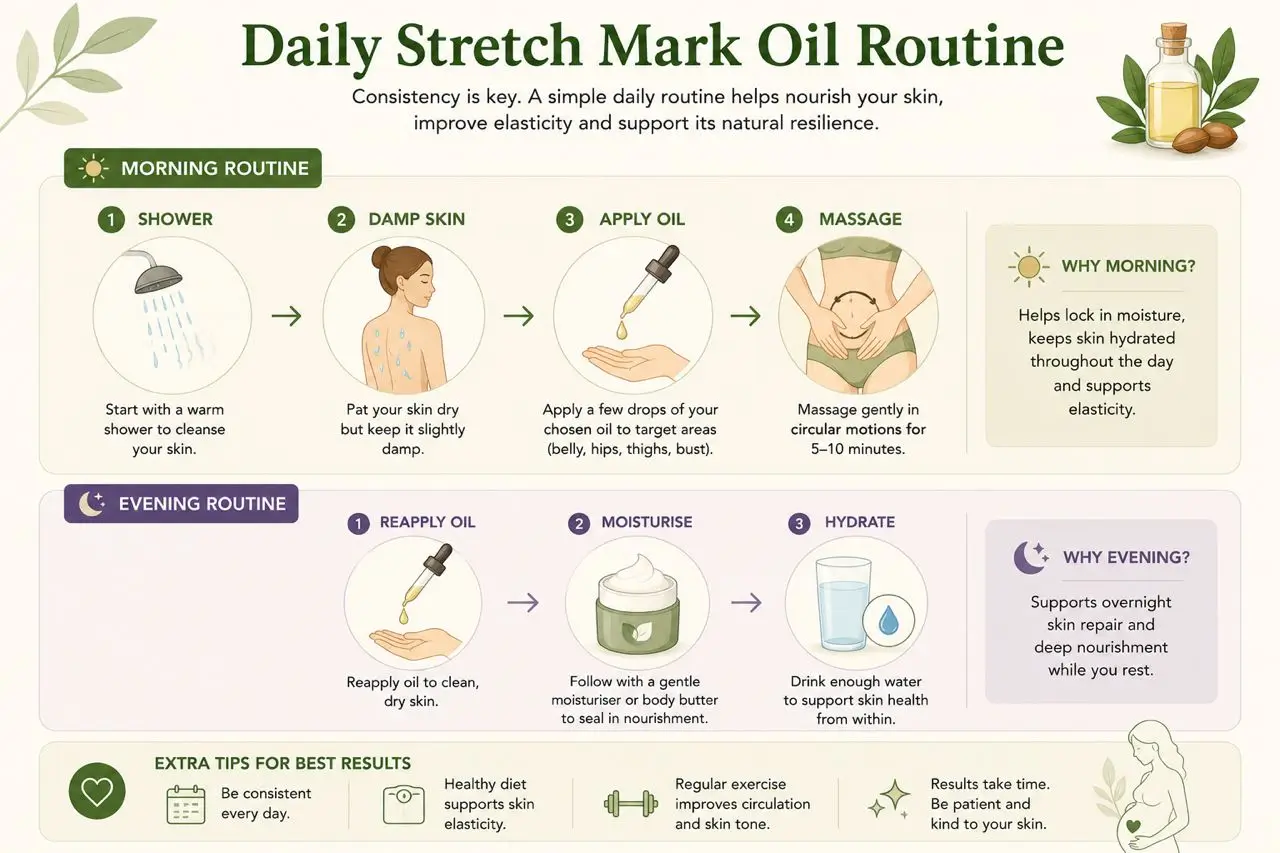
- Apply to damp skin: Immediately after bathing, while skin is slightly damp. Oil seals in the residual moisture for better hydration than dry-skin application.
- Warm first: Warm the oil briefly between your palms before applying; it absorbs more readily at skin temperature.
- Massage deliberately: Spend 1–2 minutes per area using firm circular motions. Apply enough pressure to feel mild resistance. This is where much of the benefit comes from, independently of the oil.
- Layer if needed: For very dry skin, apply a body cream over the oil after it has partially absorbed; oil under cream is more effective than cream under oil.
- Be consistent: Daily use, morning and/or evening, produces significantly better results than occasional application.
Common Mistakes With Body Oils
- Applying to dry skin is the most common mistake. Damp skin absorbs oil significantly better.
- Skipping the massage, the circulation and tissue benefit from massage is meaningful and independent of the oil. Don’t rush this step.
- Inconsistent use of oils needs sustained daily application over months to produce visible improvement. A few uses per week will not be sufficient.
- Expecting rapid results, visible improvement typically takes 8–12 weeks of consistent daily use. Take reference photos at the start to track gradual change.
- Choose by fragrance or packaging based on fatty acid profile and evidence, not marketing aesthetics.
- When using concentrated essential oil blends during pregnancy, fragrance-free or lightly scented formulations are safer during pregnancy.
When Oils Are Not Enough
Oils cannot meaningfully reverse this. A consistent oil routine maintains skin softness and comfort around them, but significant visual improvement of mature white marks requires clinical intervention.
When to consider clinical treatment:
- White marks present for more than a year with no improvement from topical care
- Significant emotional distress related to stretch marks
- Wanting faster, more substantial results
The American Academy of Dermatology notes that clinical procedures, particularly laser and microneedling, produce significantly more improvement for established stretch marks than any topical product.
The Mayo Clinic identifies prescription retinoids and laser procedures as the treatments with the strongest evidence for visible stretch-mark improvement.
See our guide on How to Remove Stretch Marks for a full breakdown of clinical treatment options.
Complementing Your Oil Routine With a Stretch Mark Cream
For many people, using a body oil alongside a targeted stretch mark cream produces better results than either alone:
- Body oil (morning): Daily moisture sealing, massage vehicle, fat-soluble vitamin delivery, barrier support
- Stretch mark cream (evening): Active ingredients: retinol, Centella asiatica, hyaluronic acid, peptides, working at a slightly deeper level
A practical two-step routine: Love Nature Nourishing Body, Face & Hair Oil with Organic Avocado Oil in the morning as a post-shower massage step; Body Edition Anti-Stretch Mark Body Concentrate in the evening as the primary treatment step. This maintains consistent hydration throughout the day while delivering active ingredients overnight.
Best Stretch Mark Cream: the most effective ingredients explained. → Body Edition Anti-Stretch Mark Body Concentrate
Key Takeaways
- No oil can remove stretch marks; they are structural changes within the dermis that oils cannot reach or reverse.
- Oils contribute genuinely through consistent hydration, barrier support, fat-soluble vitamin delivery, and the massage benefit of daily application.
- Sweet almond oil has the most direct clinical evidence for stretch marks. Rosehip and argan oils have the strongest supporting skin biology. Bio-Oil has the most clinical trial data as a formulated product.
- Coconut oil is a good moisturiser with limited specific stretch mark evidence. Olive oil may be less effective than alternatives.
- Apply to damp skin, with deliberate massage, daily; consistency is the most important factor.
- Start early for the best preventive benefit, in the first trimester of pregnancy.
- For older white stretch marks, clinical treatments produce more meaningful results than any oil.
- A morning oil + evening cream routine provides a more complete approach than either product alone.
Conclusion
Finding the best oil for stretch marks is less about finding a miracle ingredient and more about choosing a well-suited oil you will actually use consistently and applying it well. The evidence for oils as stretch mark treatments is honest but modest. They support skin health in genuine ways: hydration, barrier support, massage benefits, and vitamin delivery. They do not reverse dermal scarring. Understanding that distinction allows you to get real value from a daily oil routine, rather than being disappointed by results that were never achievable from a jar.
Sweet almond oil, used daily with deliberate massage, is the most evidence-supported starting point. Argan and rosehip oils are strong alternatives. For anyone pregnant, starting an oil routine from the first trimester gives it the best possible chance to support skin resilience during a demanding period.
Explore the guides below to build a complete, evidence-based stretch mark routine.
Natural Remedies for Stretch Marks → Best Stretch Mark Cream → How to Remove Stretch Marks → Pregnancy Stretch Marks → Red Stretch Marks vs White Stretch Marks → Stretch Marks on Thighs, Breasts, Arms, and Buttocks