


Stretch Marks During Pregnancy: Causes, Prevention & Safe Remedies
Stretch marks during pregnancy are very common but not universal. They develop as the skin stretches rapidly and hormonal changes affect the collagen and elastin fibres in the dermis. While they cannot always be prevented, keeping the skin well moisturized, maintaining steady healthy weight gain, and following a consistent skincare routine may help reduce their severity.
Why Do Stretch Marks Develop During Pregnancy?
Pregnancy stretch marks are not the result of a single cause; they are the product of several interacting biological processes happening simultaneously.
- Rapid skin stretching
The most obvious factor is physical. As the uterus expands to accommodate a growing baby, the skin on the abdomen stretches significantly over a relatively short period of months. The skin is a remarkable organ capable of considerable stretching, but there is a rate beyond which the collagen and elastin fibres in the dermis, the skin’s middle layer, cannot adapt without tearing. When those fibres tear, stretch marks form. The resulting marks are essentially a form of internal scarring, which is why they can be so persistent.
- Hormonal influences
Pregnancy involves significant hormonal changes, and several of these directly affect the skin’s structural resilience.
Relaxin, a hormone produced throughout pregnancy to help loosen ligaments and prepare the pelvis for birth, also affects the skin’s connective tissue, making it less resistant to tearing under stretch. Oestrogen fluctuations influence skin hydration and barrier function. Cortisol levels also rise during pregnancy and, at elevated levels, suppress the activity of fibroblasts, the cells that produce collagen and elastin, reducing the skin’s capacity to keep pace with stretching demands. This hormonal picture partly explains why some women who moisturise diligently still develop stretch marks, and why genetics plays such a significant role.
- Collagen and elastin changes
Collagen provides the dermis with tensile strength. Elastin gives it flexibility and snap-back ability. Both are produced continuously by fibroblasts in the skin. During pregnancy, the combined demand of rapid growth and hormonal suppression of fibroblast activity means the supply of these structural proteins may not match the rate at which they are needed.
- Genetics
Of all the factors involved in pregnancy stretch marks, genetics may be the most influential. If your mother developed stretch marks during pregnancy, your risk is meaningfully higher. If she did not, your risk may be lower, though it is not zero, because other factors also contribute. Inherited skin characteristics, including baseline collagen density, fibroblast activity, and skin elasticity, all influence how resilient your skin is during periods of rapid change.
- Healthy pregnancy weight gain
The amount and pace of weight gain during pregnancy influence stretch mark risk. A higher overall weight gain or a more rapid weight increase in the second and third trimesters means the skin is under greater and faster stretch. This does not mean limiting weight gain below healthy levels; appropriate gestational weight gain is important for both maternal and foetal health. It simply means that the rate and extent of physical change is a real contributing factor.
See our complete guide on What Causes Stretch Marks? for a full biological and risk factor breakdown.
When Do Pregnancy Stretch Marks Usually Appear?
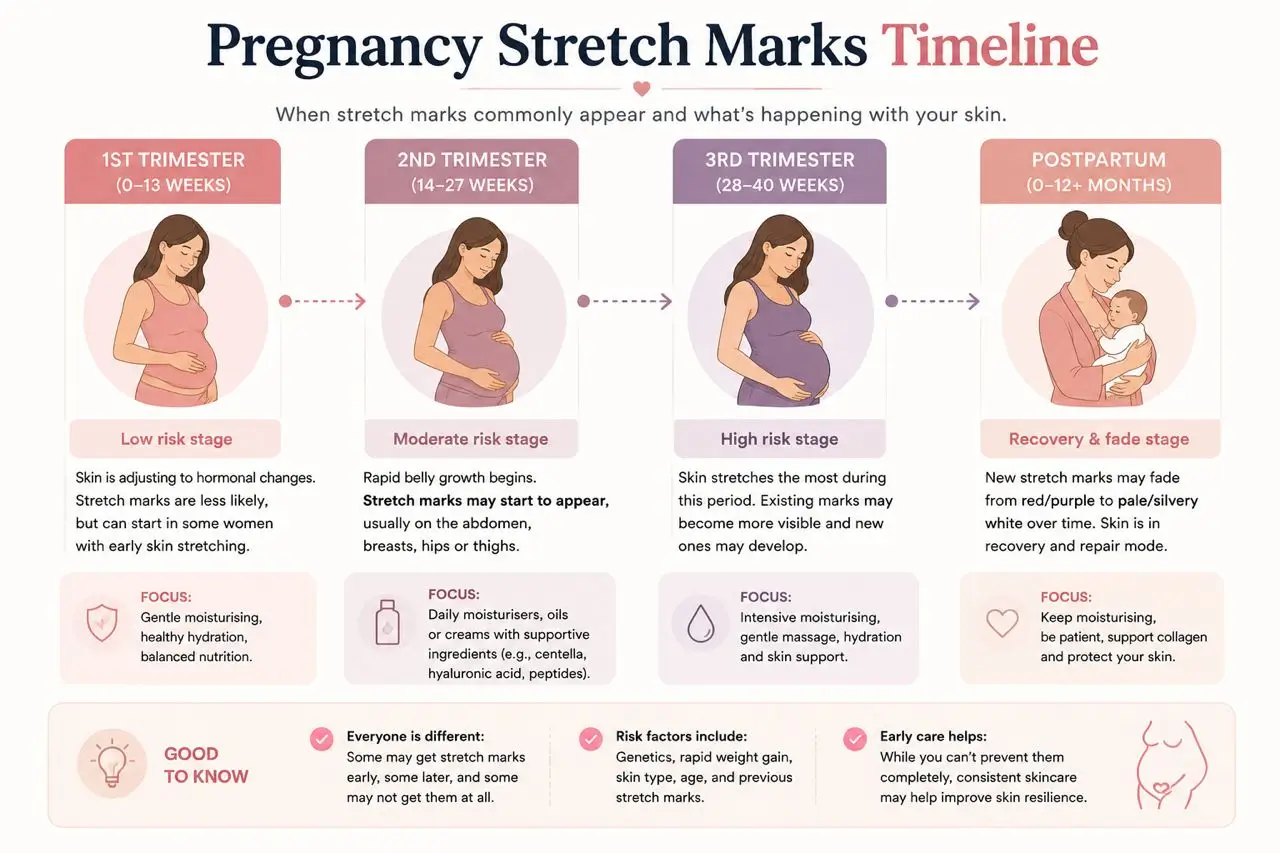
- First trimester
For most women, the first trimester brings relatively little visible stretching of the abdomen; the uterus is still small. However, breast changes begin early: breasts often increase significantly in size in the first trimester as they prepare for lactation, and stretch marks on the breasts can appear from this point. Hormonal shifts in the first trimester also begin changing skin characteristics, even before visible stretching occurs. This is a good reason to begin a moisturising routine early, establishing the habit before your skin is under significant strain.
- Second trimester
The abdomen begins to show more noticeably from around 16–20 weeks for most women. As the bump becomes visible and grows, the skin on the abdomen starts to stretch. Some women notice the first abdominal stretch marks in the second trimester, particularly those carrying multiple babies, those with a higher pre-pregnancy BMI, or those gaining weight relatively rapidly.
- Third trimester
This is when most pregnancy stretch marks appear, specifically in the sixth and seventh months, when foetal growth is most rapid, and the abdomen is expanding most significantly. The skin on the abdomen is under its greatest strain in these final weeks, and this is when the biological factors discussed above converge most powerfully. Many women find the skin becomes tighter, itchier, and more sensitive in the third trimester as it stretches. This itchiness, while uncomfortable, is a normal response to skin stretching and increased blood flow to the area, not a medical concern in itself.
- Postpartum
After birth, the skin begins a gradual process of contraction and change. Stretch marks that were red or pink during pregnancy typically begin fading through the colour progression toward silver and white over the following months and years. Some women notice new marks appearing in the immediate postpartum period as the body shifts and adjusts, particularly if breastfeeding brings changes to breast size.
Where Do Pregnancy Stretch Marks Commonly Appear?
Pregnancy stretch marks most commonly develop where the skin experiences the greatest rate of stretching.
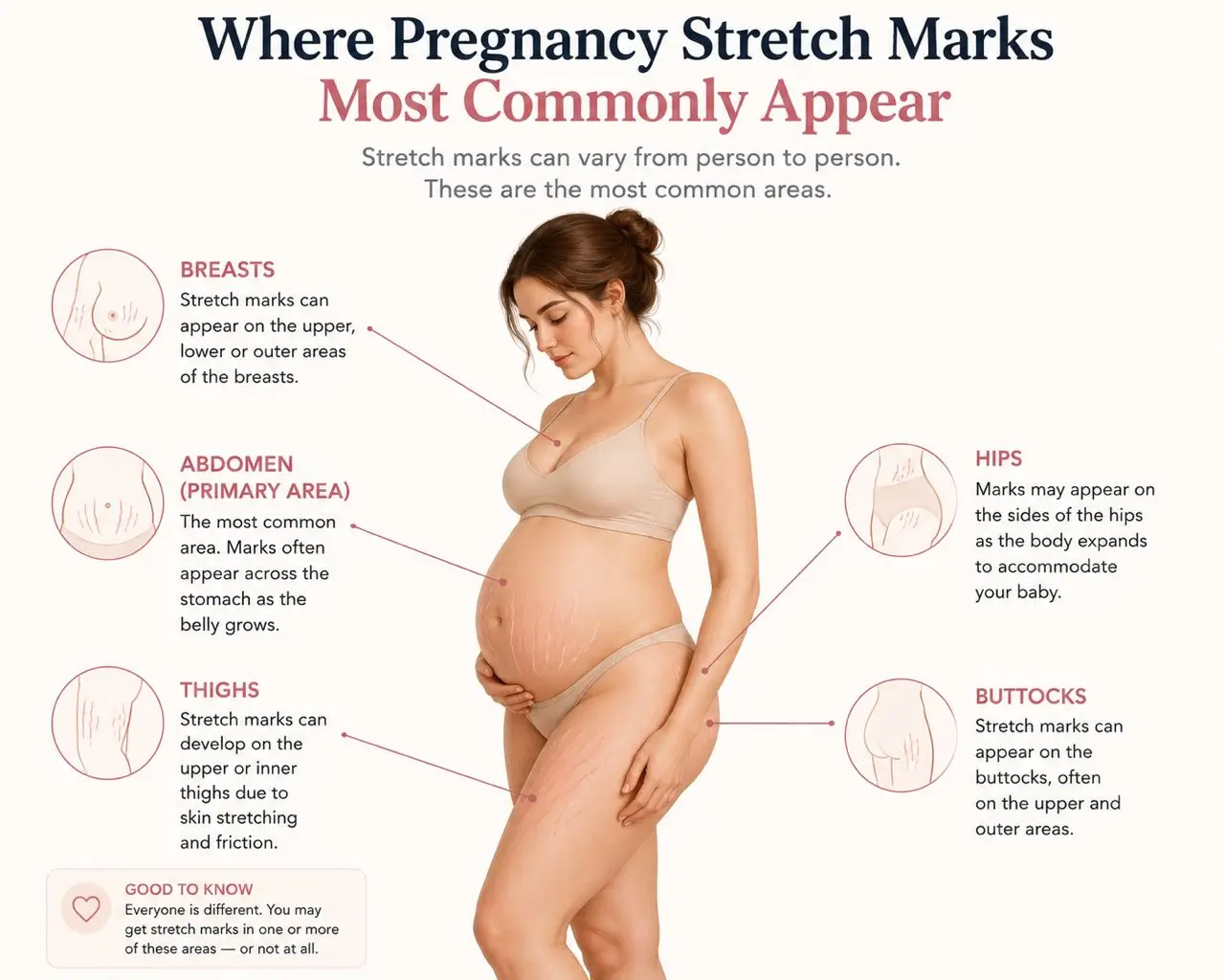
- Abdomen. The most common site. As the uterus grows, the skin across the entire abdomen stretches significantly. Marks typically appear on the lower and sides of the abdomen first, spreading upward as pregnancy progresses. The area around and below the navel is particularly common.
- Breasts. Breasts often increase two or more cup sizes during pregnancy and early lactation. This rapid growth can cause stretch marks, particularly on the sides and underside of the breast, from as early as the first trimester.
- Hips and buttocks. As the pelvis widens in preparation for birth and the body’s overall weight distribution shifts, the skin on the hips and buttocks may also stretch and develop marks.
- Thighs. The inner and outer thighs are common sites, particularly for women who gain more weight in the lower body.
- Lower back. Some women develop stretch marks on the lower back, particularly in the third trimester, as abdominal growth changes posture and puts additional strain on surrounding skin.
Can Pregnancy Stretch Marks Be Prevented?
This is the question most pregnant women want answered, and the most honest response is: not with certainty. Because genetics play such a significant role, some women will develop stretch marks despite doing everything right, while others will sail through multiple pregnancies with no visible marks at all. That is not a failure of skincare; it is biology. There is genuine reason to believe that consistent skincare during pregnancy may reduce the severity of stretch marks that do develop, help maintain skin suppleness and comfort, and support the fading process after birth.
- Moisturising consistently
Hydrated skin has more elasticity than dry skin. Applying a moisturiser or body oil to the abdomen, breasts, hips, and thighs regularly, ideally daily from the first trimester, keeps the skin supple and may help it accommodate stretching more gracefully. The evidence that any specific product prevents stretch marks is limited. But the evidence that hydrated, consistently moisturised skin is more elastic and less prone to severe tearing is well-supported.
- Using nourishing body oils with a massage
Daily massage with a body oil adds a second layer of benefit; the massage stimulates blood flow and lymphatic drainage in the area, which may support tissue health independently of the oil being applied. Some small studies, including a randomised controlled trial on almond oil, suggest that oil massage during pregnancy may reduce stretch mark development compared to no treatment.
- Nutrition for skin health
A diet rich in vitamin C for collagen synthesis, zinc for wound repair, protein for collagen production, and omega-3 fatty acids for skin membrane integrity supports the skin from within. No diet can prevent stretch marks entirely, but nutritional adequacy is a legitimate contributing factor to skin resilience.
- Hydration
Adequate water intake supports skin elasticity at a cellular level. While drinking water alone does not prevent stretch marks, consistent hydration as part of an overall skin health approach is worthwhile.
- Starting early
This is perhaps the most practical and underutilised piece of advice. Many women begin moisturising in the third trimester when stretch marks are already forming. Starting in the first trimester, before the skin is under significant stretch, gives consistent skincare the best possible opportunity to make a difference.
See our guide on How to Get Rid of Stretch Marks Naturally for a full breakdown of evidence-based home care.
Safe Stretch Mark Creams During Pregnancy
Choosing a stretch mark cream during pregnancy requires extra care because some ingredients found in standard skincare formulations are not appropriate during pregnancy.
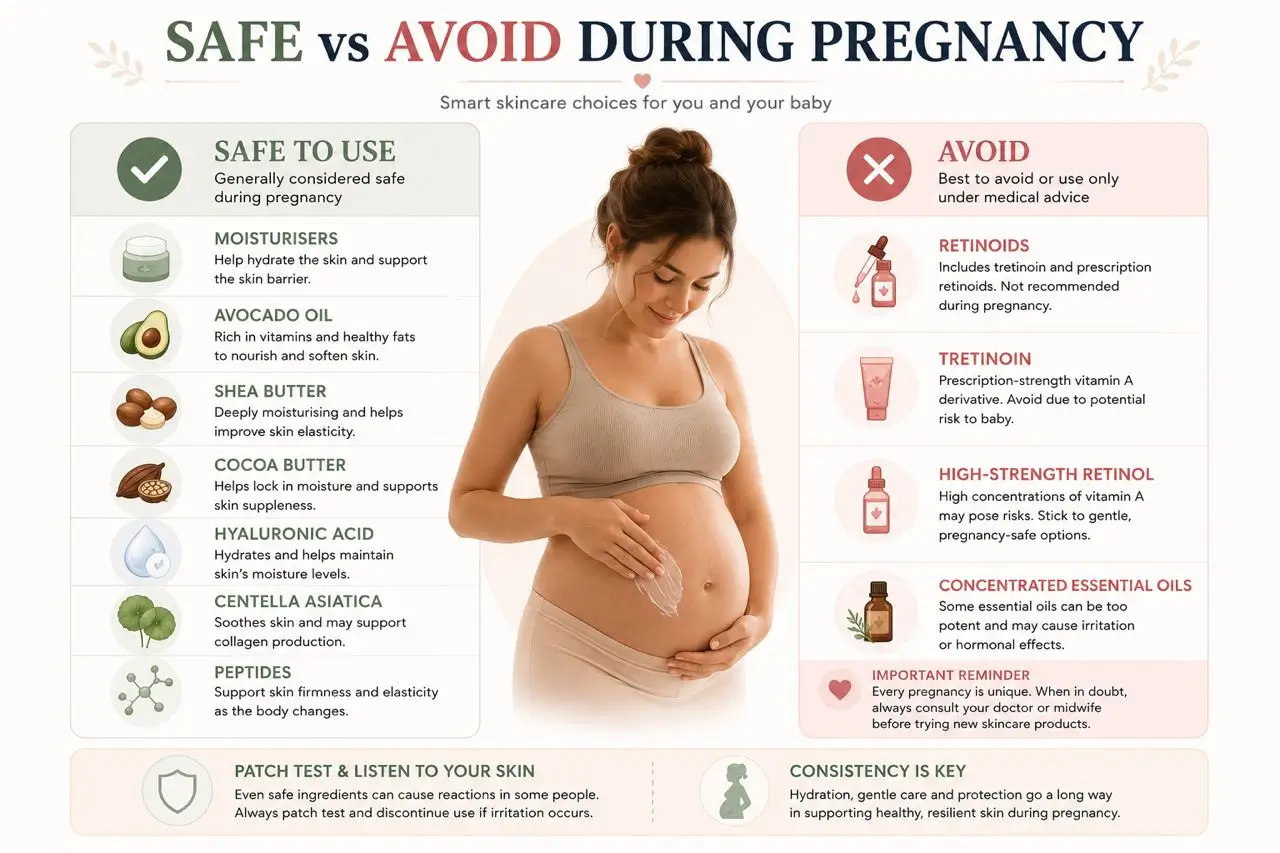
- Hyaluronic acid is one of the most effective moisturising ingredients available and is completely safe during pregnancy. It draws moisture into the skin, improves plumpness and elasticity, and supports the skin’s hydration through all three trimesters. An excellent ingredient to look for in any pregnancy skincare product.
- Centella Asiatica (Cica) has evidence supporting collagen synthesis and wound healing, and has been specifically studied in pregnancy skincare contexts. Some clinical formulations containing Centella asiatica have shown meaningful results in reducing stretch mark development compared to placebo. Generally considered safe during pregnancy; confirm with your midwife if uncertain.
- Shea butter a deeply nourishing emollient that keeps skin soft and well-moisturised. Safe throughout pregnancy and one of the most effective natural moisturisers available. Rich in fatty acids that support the skin barrier.
- Cocoa butter another well-established emollient widely used during pregnancy. While its evidence for specifically preventing stretch marks is limited, a clinical trial found no significant difference compared to plain moisturiser; it is safe and provides good moisturisation and skin comfort.
- Peptides support collagen production and are generally considered safe during pregnancy. A useful active ingredient in a stretch mark cream when used in a pregnancy-appropriate formulation.
- Vitamin E (tocopherol) an antioxidant that supports skin repair, typically safe during pregnancy in the concentrations found in cosmetic products.
The Body Edition Anti-Stretch Mark Body Concentrate contains moisturising and nourishing ingredients designed to support skin elasticity and hydration as part of a daily routine. During pregnancy, it can be used as a consistent daily moisturiser for the abdomen, hips, thighs, and breasts, areas most prone to stretch mark development. Used regularly from the first or second trimester, it supports the kind of sustained skin hydration that may help the skin remain supple during stretching. As with any topical product, it should be understood as a supportive skincare tool, not a guarantee of prevention.
See our complete guide on the Best Stretch Mark Cream for a full ingredient comparison. → See our product page Body Edition Anti-Stretch Mark Body Concentrate
Safe Body Oils During Pregnancy
- Avocado oil
Avocado oil is rich in oleic acid, vitamins A, D, and E, and plant sterols. It is deeply nourishing, absorbs well into the skin, and has mild anti-inflammatory properties that are particularly useful when the skin is under stretch-related stress. It is widely used in pregnancy skincare and is generally considered safe for topical application.
The Love Nature Nourishing Body, Face & Hair Oil with Organic Avocado Oil provides a nourishing daily oil option for use during pregnancy. Applied with gentle massage to the abdomen, breasts, hips, and thighs, it supports daily skin hydration and helps maintain the skin’s softness and comfort through the changes of pregnancy. It is a supportive skincare choice, not a product that prevents or removes stretch marks, but as part of a consistent daily routine, it contributes meaningfully to skin health.
- Sweet almond oil
One of the most researched oils in the stretch mark context. A randomised controlled trial found that pregnant women who were massaged with sweet almond oil experienced fewer stretch marks than those who received no treatment. Its lightweight texture makes it well-suited to daily use on the body.
- Coconut oil
A widely used moisturising oil, safe for topical use during pregnancy. Its emollient properties help keep skin soft and hydrated. Dedicated stretch mark evidence is limited, but it is a safe and accessible option for daily moisturising.
- Rosehip oil
Contains naturally occurring vitamin A precursors and essential fatty acids. Generally considered safe for topical use in pregnancy, though the natural vitamin A content means some healthcare providers prefer to advise caution. If you wish to use rosehip oil during pregnancy, confirm with your midwife or GP first.
How you apply an oil matters. Spend 2–3 minutes massaging into each area using gentle, circular motions, firm enough to stimulate circulation but not so vigorous as to be uncomfortable. Avoid very firm pressure directly over the abdomen, particularly in the third trimester. Massage is generally safe during pregnancy, but if you have any concerns or complications, check with your midwife before establishing a massage routine.
Gentle self-massage for skin care is generally considered safe during a healthy pregnancy. If you have been advised to avoid physical activity or have pregnancy complications, check with your healthcare provider first. Professional massage during pregnancy should always be performed by a therapist trained and experienced in prenatal care.
See our full guide on Best Oil for Stretch Marks for a complete evidence-based comparison.
What Ingredients Should Be Avoided During Pregnancy?
This is one of the most important sections in this guide because some of the most effective stretch mark ingredients are not appropriate during pregnancy. Retinoids: avoid all forms during pregnancy and breastfeeding
Retinoids are derivatives of vitamin A. They include:
- Tretinoin (prescription retinoid cream)
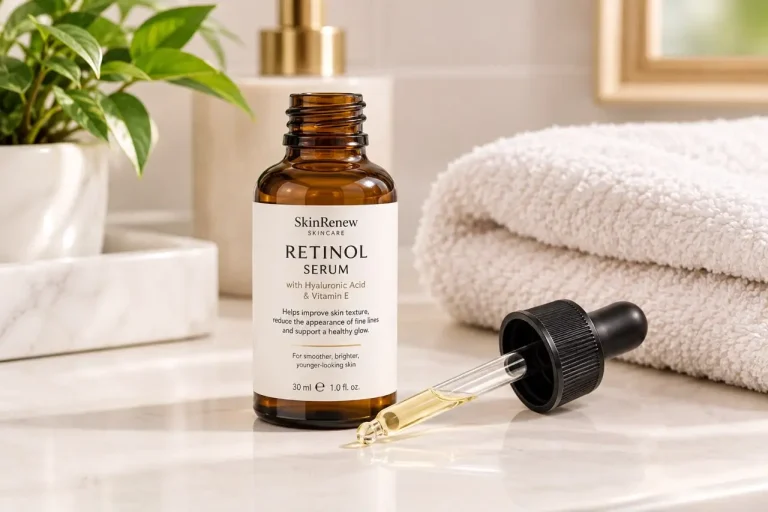
- Retinol (found in over-the-counter skincare products)
- Retinyl palmitate, retinaldehyde, and other vitamin A derivatives
Retinoids are among the most evidence-backed topical treatments for stretch marks; they stimulate collagen production and fibroblast activity in the dermis in ways that other ingredients do not. However, vitamin A in excess is teratogenic, meaning it can cause developmental harm to a developing baby. While the systemic absorption of topically applied retinoids is relatively low, the potential risk means that all dermatology organisations, the NHS, and most midwifery guidance consistently advise avoiding all retinoids during pregnancy and breastfeeding.
High-dose supplemental vitamin A. For the same reason, avoid vitamin A supplements at doses above the recommended daily intake during pregnancy. Note that vitamin C, vitamin E, and other vitamins are fine in appropriate doses; only vitamin A requires this specific caution.
Concentrated essential oils. Many pure essential oils, including clary sage, juniper, rosemary, and peppermint, are not recommended during pregnancy. Formulated products using diluted plant extracts at safe concentrations are generally fine; concentrated essential oils applied neat are not.
What Happens After Pregnancy?
Colour changes and natural fading. Stretch marks that appeared red or purple during pregnancy will typically begin fading in the weeks and months after birth. The inflammatory phase subsides, blood vessels contract, and the marks gradually shift toward pink, then silver, then white. This natural fading process can take anywhere from several months to a couple of years. Many women find that by 12–18 months postpartum, their stretch marks have faded considerably compared to how they looked in the third trimester. They are rarely invisible, but the improvement is often meaningful.
Postpartum skincare. Continuing a consistent moisturising routine after birth supports the natural fading process. The skin is adjusting, the hormonal environment is shifting, and sustained hydration helps maintain skin comfort and suppleness during this transition.
Breastfeeding considerations. During breastfeeding, the same restrictions on retinoids apply as during pregnancy; avoid all forms of retinoids until you have finished breastfeeding. Continue with safe moisturisers, body oils, and pregnancy-appropriate formulations.
Once you have finished breastfeeding and your doctor confirms it is appropriate, you can begin exploring more intensive stretch mark treatments if you wish:
- Prescription tretinoin the most evidence-backed topical treatment, now safe to use
- Microneedling effective for both remaining red/pink marks and early white marks
- Laser therapy, particularly pulsed dye laser, for any remaining pink marks, and fractional laser for improving texture and colour
- Retinol-containing creams available again and worthwhile for maintaining skin improvements
The moment after breastfeeding, when the marks may still be in the pink or early silver phase rather than fully white, is a valuable treatment opportunity. Starting clinical treatment at this stage tends to produce better results than waiting years until marks are fully mature white.
See our guide on Red Stretch Marks vs White Stretch Marks for a full breakdown of what each stage means for treatment. → See our guide on How to Remove Stretch Marks for post-breastfeeding treatment options.

Daily Pregnancy Stretch Mark Skincare Routine
A consistent daily routine is the most practical thing you can do for your skin during pregnancy. Here is how to structure it.
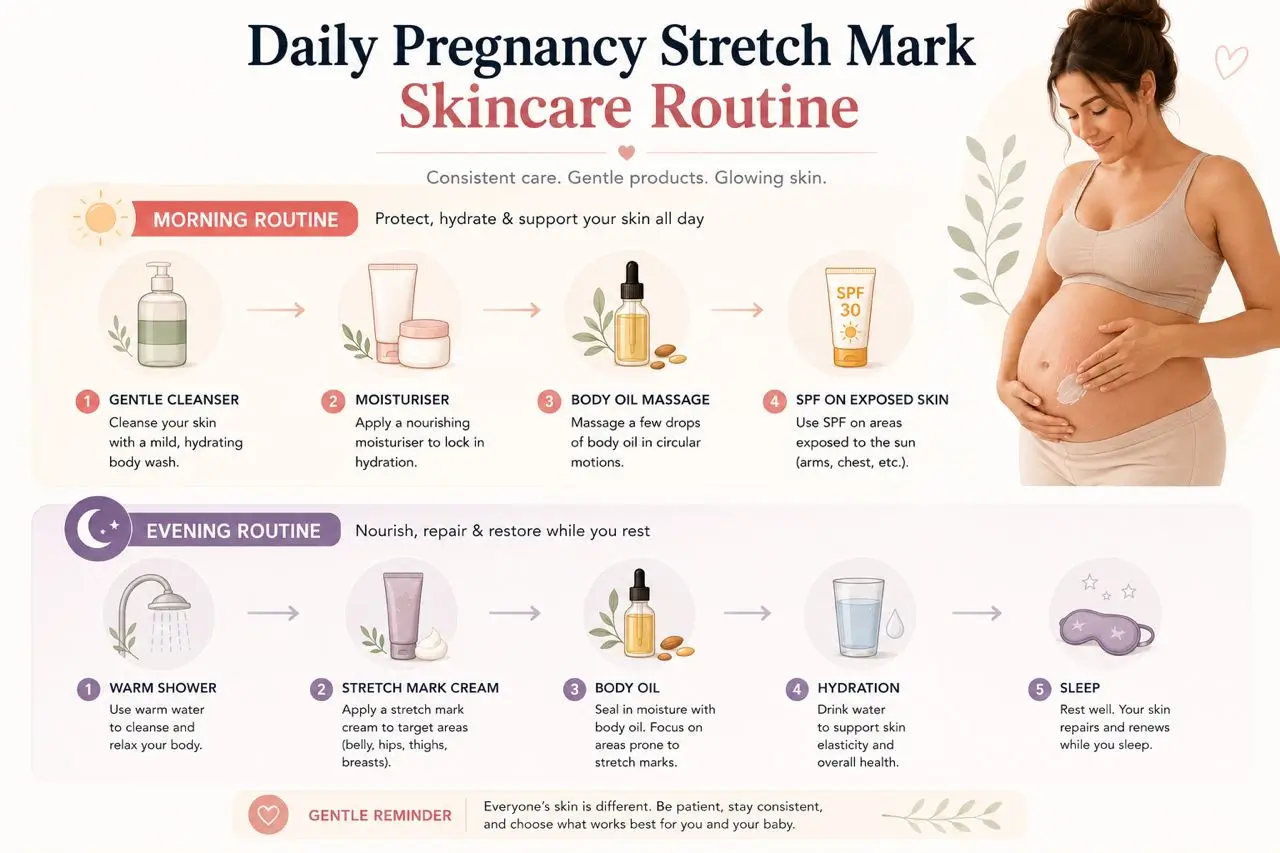
Morning:
- Gentle cleansing: Use a mild body wash that does not strip the skin’s natural oils
- Moisturise damp skin, apply your stretch mark cream or moisturiser immediately after patting the skin dry while still slightly damp, for maximum absorption. Focus on the abdomen, breasts, hips, and thighs
- Body oil massage followed by a few drops of a nourishing body oil like the Love Nature Nourishing Body, Face & Hair Oil with Organic Avocado Oil, and spend 2 minutes massaging gently into the skin in circular motions
- SPF on exposed areas, if your stretch marks will be visible in clothing, e.g., on the upper thighs, apply a broad-spectrum SPF to protect from UV exposure
Evening:
- A warm (not hot) shower helps open pores and relax the skin before product application
- Apply stretch mark cream to damp skin. The Body Edition Anti-Stretch Mark Body Concentrate, applied consistently in the evening, provides a daily dose of moisturising, skin-supportive ingredients
- Follow with a body oil layer; avocado oil on top if the skin feels particularly dry or tight
- Drink a glass of water, simple but consistently overlooked
- Rest and sleep allow the skin’s natural repair processes to work overnight
When Should You Speak to a Healthcare Professional?
The vast majority of pregnancy stretch marks are harmless and require no medical attention. But there are situations where speaking to your midwife, GP, or a dermatologist is the right call.
Severe or unusual itching. Localised itching around stretch marks is normal; it reflects skin stretching and increased blood flow to the area. However, severe, widespread itching, particularly affecting the palms and soles of the feet, can be a symptom of obstetric cholestasis, a liver condition that requires prompt medical assessment. Do not wait to mention unusual itching to your midwife.
Sudden, widespread stretch marks without an obvious cause. If stretch marks appear rapidly across unusual areas of the body and you are not currently pregnant or going through another obvious period of rapid change, discuss this with your GP. Rarely, sudden, widespread stretch marks can be associated with hormonal conditions.
Skin changes alongside other symptoms. If stretch marks appear alongside unexplained weight changes, skin thinning elsewhere, unusual fatigue, or other systemic symptoms, these should be assessed by a healthcare provider.
Planning postpartum treatment. If you are thinking ahead to more intensive postpartum stretch mark treatment, microneedling, laser, or prescription retinoids, a dermatology consultation after you have finished breastfeeding is a sensible starting point. A dermatologist can assess your specific marks and recommend the most appropriate approach for your skin type and stretch mark stage.
The NHS advises pregnant women to mention any significant skin changes or concerns to their midwife at regular appointments.

Key Takeaways
- Stretch marks during pregnancy are very common, affecting 50–90 per cent of pregnant women, and are not a sign of doing anything wrong.
- They develop primarily in the third trimester, though breast stretch marks can begin in the first trimester.
- Genetics is one of the strongest predictors of whether you will develop them; some women will develop marks despite consistent skincare, and some will not develop them despite minimal care.
- Consistent moisturising from the first trimester, using pregnancy-safe products, may help reduce the severity of stretch marks, but cannot guarantee prevention.
- Avoid all retinoids during pregnancy and breastfeeding, including retinol, tretinoin, and all other vitamin A derivatives in topical products.
- Safe and effective options during pregnancy include: hyaluronic acid, Centella asiatica, shea butter, cocoa butter, avocado oil, sweet almond oil, and peptide-containing formulations.
- After birth, stretch marks naturally fade from pink and silver toward white over months and years. The most intensive treatment options, prescription retinoids, laser, and microneedling, become available once breastfeeding is complete.
- Severe or unusual itching, particularly of the palms and soles, should always be mentioned to your midwife promptly.
Conclusion
Pregnancy stretch marks are one of the most common skin changes in the world, and one of the most misunderstood. They are not a reflection of how diligently you moisturised or how carefully you ate. They are the body’s response to a rapid and profound physical transformation, and genetics will often determine their severity more than any product or routine. That said, consistent skincare during pregnancy is genuinely worthwhile. It supports skin health, comfort, and resilience during a demanding period. It creates good habits that carry into postpartum care. And it may meaningfully influence how severely stretch marks develop and how quickly they fade in the months after birth.
Start early. Be consistent. Choose pregnancy-safe products. And when your baby has arrived and you have finished breastfeeding, know that the full range of evidence-based treatment options will be available to you if you wish to pursue them. In the meantime, be gentle with yourself. Your body has done something extraordinary, and the marks it carries are part of that story.
Stretch Marks: Complete Guide → How to Remove Stretch Marks: Post-Pregnancy Treatment Options → Red Stretch Marks vs White Stretch Marks: What Stage Are Yours? → Best Stretch Mark Cream → Best Oil for Stretch Marks → Natural Remedies for Stretch Marks → Stretch Marks on Thighs, Breasts, Arms, and Buttocks