

Does Shea Butter for Stretch Marks Really Work? (Raw vs Refined)
Shea butter is an effective emollient that deeply moisturises the skin, supports the barrier, and improves skin softness and comfort. Clinical evidence that it specifically reduces or removes stretch marks is limited. It cannot reverse the structural changes stretch marks represent, but when used consistently as part of a daily skincare routine, it may support overall skin health and improve the appearance of stretch-marked skin through sustained hydration.
What Is Shea Butter?
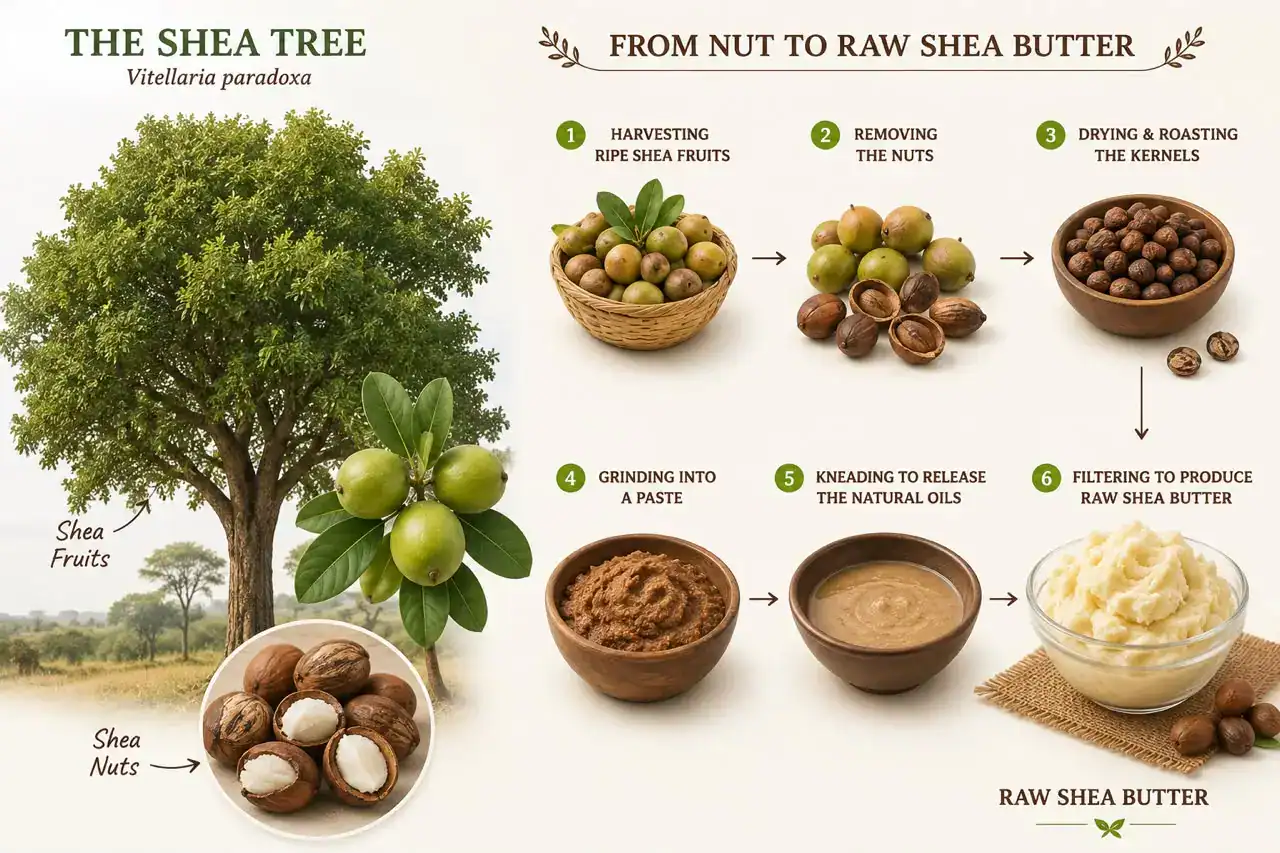
Shea butter is extracted from the seeds commonly called nuts of the Vitellaria paradoxa tree, the shea tree, which grows across the savannah belt of West and Central Africa. The production of shea butter has been central to the economies and traditions of countries including Ghana, Burkina Faso, Nigeria, and Mali for centuries.
The extraction process determines the quality of the final product:
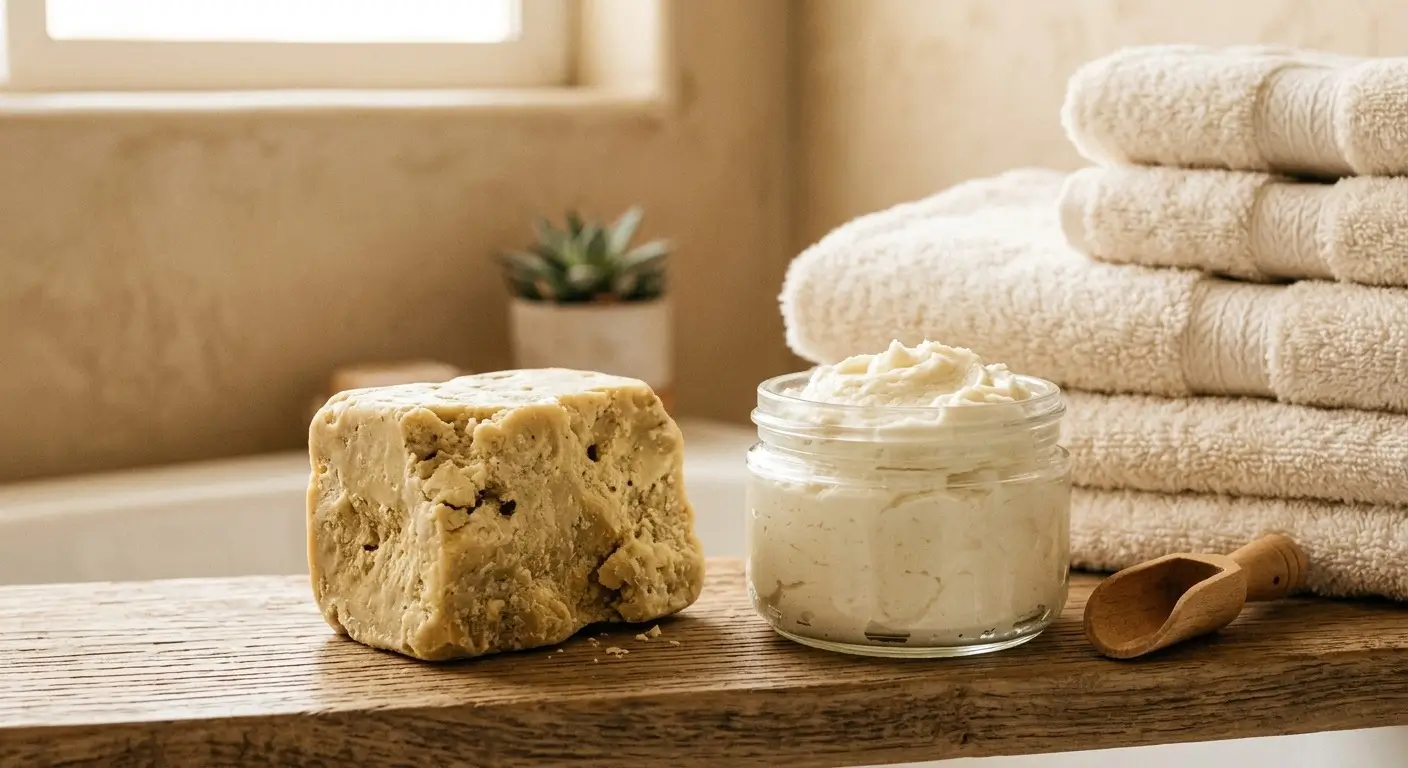
- Unrefined (raw) shea butter is cold-processed; the nuts are dried, cracked, roasted, ground, and the fat is extracted with water. The result is an off-white to pale yellow or beige butter with a characteristic mild, slightly nutty scent. This traditional form retains the full spectrum of nutrients present in the nut.
- Refined shea butter is processed with solvents or heat and filtered to produce a uniform white product with a neutral scent. Processing removes some of the natural antioxidants, plant sterols, and volatile compounds, though the primary fatty acid composition remains largely intact.
Shea butter has an unusual fatty acid profile compared to most plant fats; it is roughly half oleic acid, a monounsaturated fatty acid that penetrates the skin well, and half stearic acid, a saturated fatty acid that provides its solid texture and deep occlusive properties.
- Oleic acid (omega-9), approximately 40–60%, penetrates the skin, improving deep moisturisation
- Stearic acid, approximately 35–45%, occlusive, seals moisture in, gives shea its characteristic richness
- Linoleic acid (omega-6), approximately 3–8%, component of the skin’s lipid barrier
- Palmitic acid, approximately 3–7%
Vitamins and bioactive compounds:
- Vitamin E (tocopherols), antioxidant protection for skin cells
- Vitamin A (as retinol precursors) supports skin cell turnover
- Vitamin D, skin immune function
- Vitamin F is a term for essential fatty acids, linoleic and alpha-linolenic acids combined
- Triterpene alcohols (lupeol, β-amyrin, butyrospermol), these are the most pharmacologically interesting components of shea butter; they have demonstrated anti-inflammatory activity in multiple studies and are not present in most other plant fats
- Allantoin, a compound with soothing, skin-repair-supporting properties, is associated with wound healing
What Causes Stretch Marks?
Stretch marks form not on the surface of the skin but within the dermis, the middle layer, positioned between the outer epidermis and the subcutaneous fat below. The dermis is the structural layer: it houses the collagen network that gives skin tensile strength and the elastin fibres that allow it to stretch and return to shape. When the skin expands faster than fibroblasts, the cells that produce collagen and elastin, can compensate; during pregnancy, a growth spurt, rapid weight gain, or significant muscle building, the fibres in the dermis tear. The body heals this damage, but the repair tissue differs structurally from what was there before. It lacks the melanocytes, pigment cells, present in normal dermis, which is why stretch marks appear lighter than surrounding skin when mature.
See our guide on Red Stretch Marks vs White Stretch Marks for a detailed explanation of the biological stages and what each means for treatment.
Why People Use Shea Butter for Stretch Marks
In the African communities where it originated, shea butter has long been applied to pregnant bodies as a protective ritual, not as an evidence-based medical intervention, but as a deeply moisturising, skin-conditioning practice passed between generations. This traditional use preceded modern understanding of stretch mark biology by centuries, but the underlying logic- that keeping skin moisturised and supple supports it during stretching- has some validity. More recently, shea butter’s particular combination of deep emolliency from stearic acid, skin-penetrating moisturisation from oleic acid, and anti-inflammatory triterpenes has made it a natural fit in formulated stretch mark products. The texture alone invites regular massage; thick enough to stay on the skin, smooth enough to spread easily, and massage, as we understand it now, has an independent benefit for skin tissue.
Does Shea Butter Really Work for Stretch Marks?
Studies confirm it improves skin hydration, reduces transepidermal water loss, the rate at which skin loses moisture to the environment, and supports the skin’s barrier function. The triterpene alcohols in unrefined shea butter have demonstrated anti-inflammatory activity in laboratory and clinical contexts. Shea butter has also been included in clinical studies on stretch mark formulations, but almost always as a component of a multi-ingredient product rather than as an isolated treatment, making it difficult to attribute specific results to shea alone. No independent, high-quality clinical trial has demonstrated that shea butter alone significantly reduces the appearance of existing stretch marks, either red or white. The evidence for it as a standalone stretch mark treatment is categorised as limited by most dermatology review literature.
A well-designed study published in the American Journal of Obstetrics and Gynecology evaluated cocoa butter cream versus placebo during pregnancy and found no significant difference in stretch mark development between the two groups. While this was cocoa butter, not shea butter, they share similar fatty acid profiles and evidence profiles; the finding applies by extension to shea’s specific anti-stretch-mark claims. Shea butter cannot remove stretch marks. It cannot reverse the structural changes within the dermis. What it can do, and does well, is maintain skin in the best possible hydrated, supple condition, which may support skin resilience during periods of change and may modestly improve how stretch marks look and feel over time. The American Academy of Dermatology notes that while moisturising regularly may improve the comfort and appearance of stretch-marked skin, no topical ingredient has been proven to remove them.
Shea Butter for Red Stretch Marks
Red stretch marks are the newest and most active stage. The dermis beneath is still inflammatory, fibroblasts are working, blood vessels are present, and the tissue is more biologically responsive than it will be later.
Here are the genuine shea butter’s contributions:
- Hydration: The oleic acid in shea penetrates beyond the surface, providing sustained moisture in the upper dermis. Consistently hydrated skin around new stretch marks maintains better elasticity and surface texture than dry, tight skin.
- Barrier maintenance: Stearic acid’s occlusive properties seal the skin surface effectively, reducing the moisture loss that leaves skin taut and uncomfortable during the stretching phase.
- Anti-inflammatory support: The triterpene alcohols in unrefined shea have documented anti-inflammatory activity. Whether this translates to meaningful clinical improvement in stretch mark redness is not established in large trials, but for the itch, tightness, and irritation that accompany new marks, a product with some anti-inflammatory activity is a sensible choice over a product with none.
Red stretch marks are also the stage where more active treatments, retinoids not during pregnancy or breastfeeding, Centella asiatica-containing creams, and clinical procedures produce the most meaningful improvement. Shea butter complements these; it does not replace them.
Shea Butter for White Stretch Marks
White stretch marks have fully matured into stable, scar-like tissue. The inflammatory phase is over, blood vessels have contracted, and fibroblast activity has significantly reduced.
At this stage, shea butter’s role shifts toward maintenance rather than active treatment:
- Keeps the skin around the marks hydrated and soft, maintaining overall skin condition
- May very gradually improve surface texture with sustained long-term use
- Does not stimulate meaningful collagen remodelling in dormant scar tissue
For significant visible improvement of white stretch marks, clinical procedures, such as fractional CO₂ laser and radiofrequency microneedling, produce results that no topical ingredient can approach. Shea butter is not a treatment for mature white marks; it is a long-term maintenance habit for skin that also happens to have them.
See our complete guide on Stretch Mark Treatment Options for clinical approaches appropriate for white marks.
Skin Benefits of Shea Butter
Understanding what shea butter actually does well for skin, independent of stretch marks, helps clarify when and why it belongs in a routine.
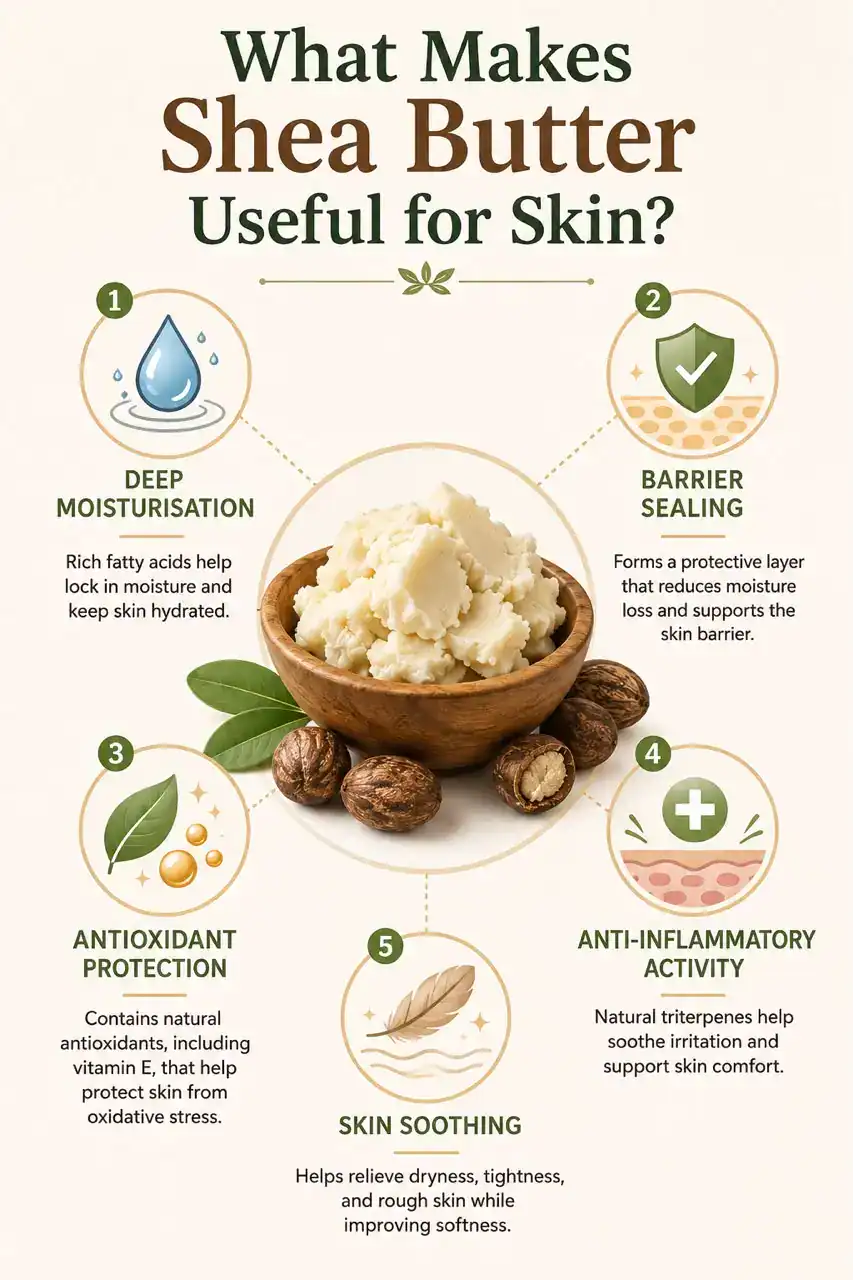
- Deep moisturisation: The combination of oleic acid’s penetrating moisturisation and stearic acid’s occlusive sealing makes shea one of the richest natural emollients available. Few plant butters match it for sustained skin conditioning in dry or very dry skin.
- Barrier repair and protection: Shea butter physically seals the skin surface, significantly reducing transepidermal water loss. For skin under stretching stress, maintaining the barrier is not cosmetic; it is fundamental to the skin’s ability to tolerate the demands placed on it.
- Reducing dryness and roughness: Shea butter transforms rough, tight, scaly skin, with results most people notice within days of consistent use, not months. This speed of visible improvement in dry skin is one reason it has such loyal users.
- Antioxidant activity: Vitamin E and the polyphenol compounds in unrefined shea protect skin cells from oxidative damage. Repeated UV exposure and environmental stressors gradually degrade collagen quality; antioxidant protection is a long-term investment in skin structural health.
Raw vs Refined Shea Butter: Which Is Better?
| Feature | Raw (Unrefined) Shea Butter | Refined Shea Butter |
|---|---|---|
| Processing | Cold-processed, minimal | Heat/solvent treatment, filtered |
| Colour | Off-white, beige, or pale yellow | Pure white |
| Scent | Mild nutty/earthy characteristic | Neutral/odourless |
| Triterpenes | Retained | Reduced/removed |
| Vitamin E | Retained | Partially reduced |
| Vitamin A | Retained | Partially reduced |
| Allantoin | Retained | Reduced |
| Texture | Slightly grainier | Smoother, uniform |
| Shelf life | Shorter (12–18 months) | Longer (2+ years) |
| Best for | Skincare where a full nutrient profile matters | Those preferring neutral scent, cosmetic formulations |
Is Shea Butter Safe During Pregnancy?
Shea butter is widely used during pregnancy and is generally considered safe for topical application. It contains no retinoids, no concentrated essential oils, and no ingredients with established contraindications for pregnancy. Its richness makes it particularly practical for the later trimesters when skin becomes very dry, very stretched, and often itchy, symptoms shea butter addresses effectively.
A few considerations:
Shea nut allergy: Shea butter comes from a tree nut. Tree nut allergy, specifically to shea, is rare, but theoretically possible. People with multiple tree nut allergies should discuss with their midwife or GP before using shea butter.
Oral shea products: Some pregnancy nutrition products contain shea; these are different and are not addressed here.
Start early: The same logic that applies to all pregnancy moisturising applies here; beginning in the first trimester, before the skin is under significant stretching stress, is more effective than starting in the third trimester, when marks may already be forming.
See our complete pregnancy skincare guide on Stretch Marks During Pregnancy: Prevention and Safe Treatment Options.
How to Use Shea Butter Correctly
Morning routine
Apply a small amount of raw shea butter to slightly damp skin after your morning shower. The damp-skin step matters; shea butter’s occlusive properties work best when sealing in moisture already present on the skin rather than being applied to completely dry skin. Warm the butter between your palms until it softens and becomes more pliable, then apply using circular massage motions, spending 1–2 minutes per area. The massage step is not just about absorption; it stimulates blood flow and supports lymphatic drainage in the tissue.
Evening routine
Apply as a final evening step after any active skincare products. If you are using a cream with hyaluronic acid, Centella asiatica, or retinol, apply those first. Shea butter’s occlusive layer then seals in the active ingredients and provides overnight conditioning.
Shea Butter vs Other Natural Ingredients
| Ingredient | Evidence for Stretch Marks | Key Skin Benefit | Pregnancy Safe | Texture |
|---|---|---|---|---|
| Shea butter | Limited | Deep moisturisation, barrier sealing | Yes (patch test) | Very rich, thick |
| Almond oil | Limited–Moderate (pregnancy RCT) | Vitamin E, lightweight massage oil | Yes* | Lightweight, absorbs fast |
| Avocado oil | Limited (growing) | Deep hydration, phytosterols | Yes | Medium-rich, absorbs well |
| Coconut oil | Limited | Emollient, antimicrobial | Yes | Rich, occlusive |
| Aloe vera gel | Limited | Soothing, hydration, anti-inflammatory | Yes | Light, cooling |
| Cocoa butter | Very limited | General moisturising | Yes | Rich, pleasant scent |
Shea vs coconut oil: Both are rich emollients at a similar evidence level for stretch marks. Shea’s triterpene anti-inflammatory content gives it a slight biological edge over coconut’s primarily antimicrobial profile. Shea is also less comedogenic than coconut oil, making it a safer choice for people prone to skin congestion.
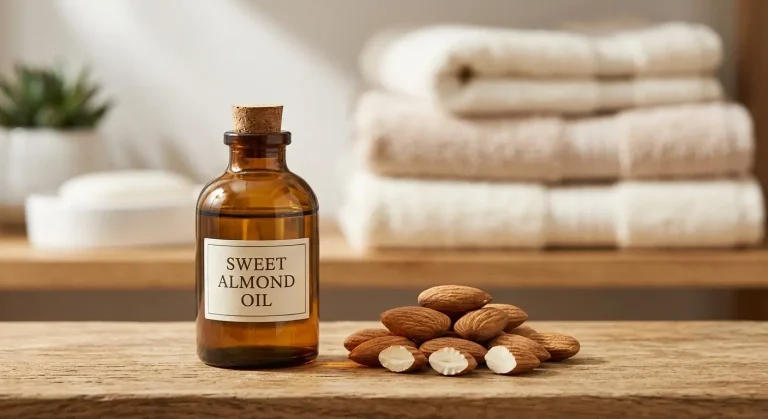
Shea vs almond oil: Almond oil has a more specific evidence base from the pregnancy study. It is considerably lighter, making it better for daytime use, while shea is the better evening option for very dry skin. They complement each other well in a morning-evening split routine.
Shea vs aloe vera: These are not direct substitutes; they have complementary functions. Aloe hydrates and soothes surface skin; shea seals and deeply conditions. Layering aloe gel first, then shea butter on top, produces better sustained hydration than either alone.
See our comparison guides on Aloe Vera for Stretch Marks, Almond Oil for Stretch Marks, Avocado Oil for Stretch Marks, and Coconut Oil for Stretch Marks.
Choosing a High-Quality Shea Butter
Unrefined or raw: This is the single most important specification for skin care. Look for “raw,” “unrefined,” or “cold-processed” on the label.
Minimal additional ingredients: Pure shea butter is ideal, no synthetic fragrances, no mineral oil dilution, no unnecessary additives. If you are purchasing a shea-based product rather than pure butter, check the ingredient list for these additions.
Colour and scent as quality indicators: Genuine unrefined shea ranges from off-white to pale yellow or beige, with a mild earthy scent. Bright white colour and zero scent in a product labelled “raw” or “unrefined” should be treated with scepticism.
Packaging: Opaque or dark packaging protects the butter from light degradation. Shea butter has a shelf life of approximately 12–18 months for unrefined versions; store away from sunlight and heat.
Certifications: For those with preferences around ethical sourcing, look for fair trade or organic certifications; these carry independent verification and support the West African communities where shea is produced.
Recommended Daily Body Oil Routine
The Love Nature Nourishing Body, Face & Hair Oil with Organic Avocado Oil offers a complementary texture profile; it absorbs more readily than shea butter, making it a practical morning or daytime application, while shea butter serves as the richer evening step. Apply the avocado oil in the morning as the post-shower massage step, and use raw shea butter in the evening as the final nourishing layer after any active skincare products.
Common Mistakes When Using Shea Butter for Stretch Marks
- Applying inconsistently. Three applications per week simply will not produce the kind of sustained skin conditioning that stretch mark care requires. Daily use is the minimum; twice daily is better.
- Expecting fast visible results. Skin responds to sustained care over months, not days. People who abandon a shea butter routine after two weeks because they see no improvement in stretch marks have not given it a fair trial. Hydration improves quickly; structural skin changes take far longer.
- Using refined shea and wondering why results are limited. If the specific benefits of triterpenes and vitamin A are part of why you chose shea, using a processed white shea butter with those compounds removed undermines your rationale.
- Applying to dry skin and wondering why it feels uncomfortable. Shea butter applied to completely dry skin can feel heavy and not be fully absorbed. Apply to slightly damp skin; the texture improves dramatically, and the moisturising effect is significantly better.
- Relying on shea alone for red stretch marks. New stretch marks respond to active treatment, retinoids, Centella asiatica, and clinical procedures in ways that shea butter simply cannot replicate. Using shea as the only response to fresh marks means missing the window when more effective options are available.
- Ignoring what you eat and drink. Topical skincare works from the outside in, but skin health also depends on adequate vitamin C, protein, zinc, and hydration from within. A daily shea butter routine alongside a poor diet and chronic dehydration will produce less than it would alongside a genuinely skin-supportive lifestyle.
Conclusion
Shea butter has been nourishing skin for generations, and that longevity reflects something real about its effectiveness as a moisturiser and skin conditioner. It does not need to be a miracle ingredient to be genuinely useful; being an exceptional emollient with anti-inflammatory properties and a rich vitamin profile is already more than most skincare ingredients offer. For stretch marks, it is a supportive player rather than a lead one. Applied daily with massage, starting before stretch marks appear wherever possible, and combined with active ingredients that address what shea cannot, it forms a valuable part of a thoughtful approach to skin care during and after periods of change.
How to Prevent Stretch Marks, a complete evidence-based guide → Stretch Mark Treatment Options for significant improvement beyond topical care → Aloe Vera for Stretch Marks | Almond Oil for Stretch Marks | Avocado Oil for Stretch Marks | Coconut Oil for Stretch Marks