

Red Stretch Marks Vs White Stretch Marks: Causes & Treatments
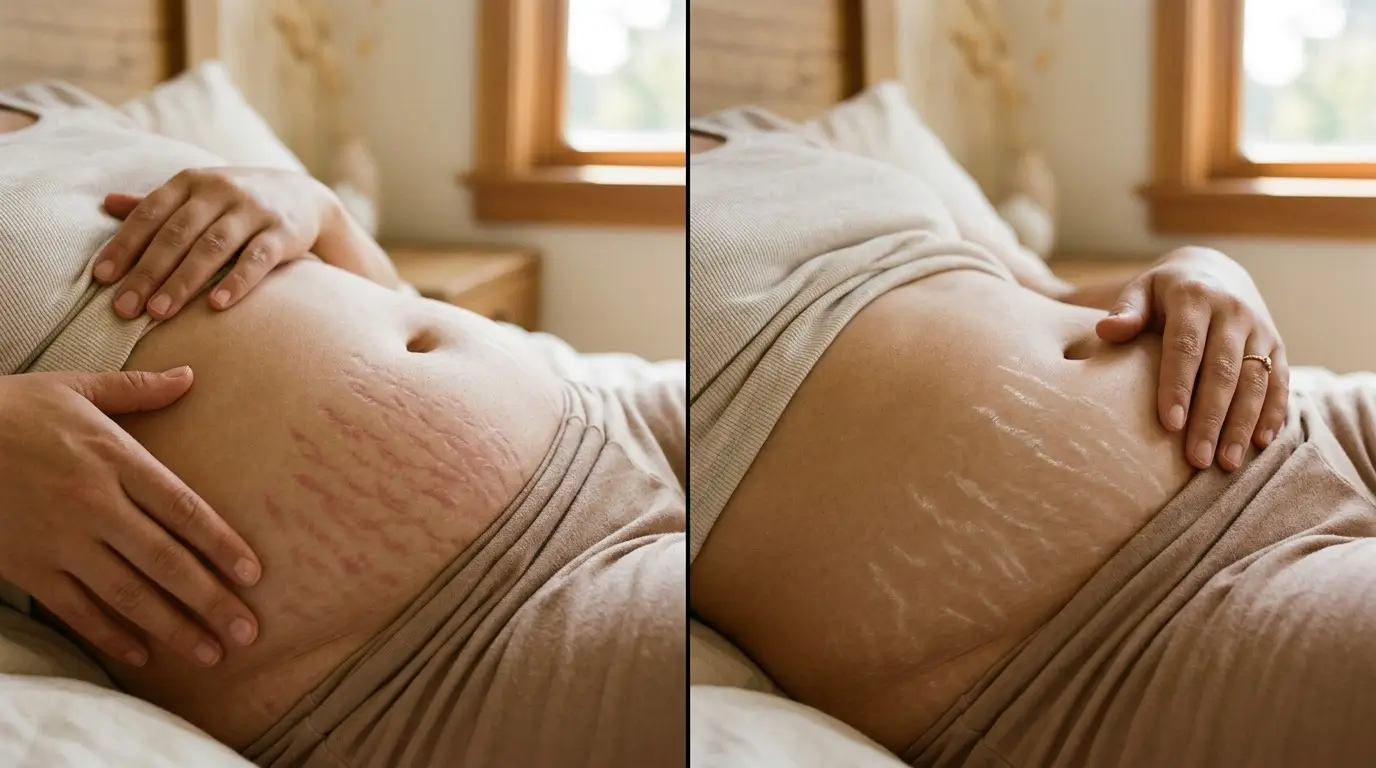
Red stretch marks are newer and still in an active inflammatory phase, with blood vessels present and tissue that remains responsive to treatment. White stretch marks are older, settled scar tissue with reduced blood supply and collagen activity. Both can be improved, but red stretch marks generally respond better and more quickly to treatment.
What Are Red Stretch Marks?
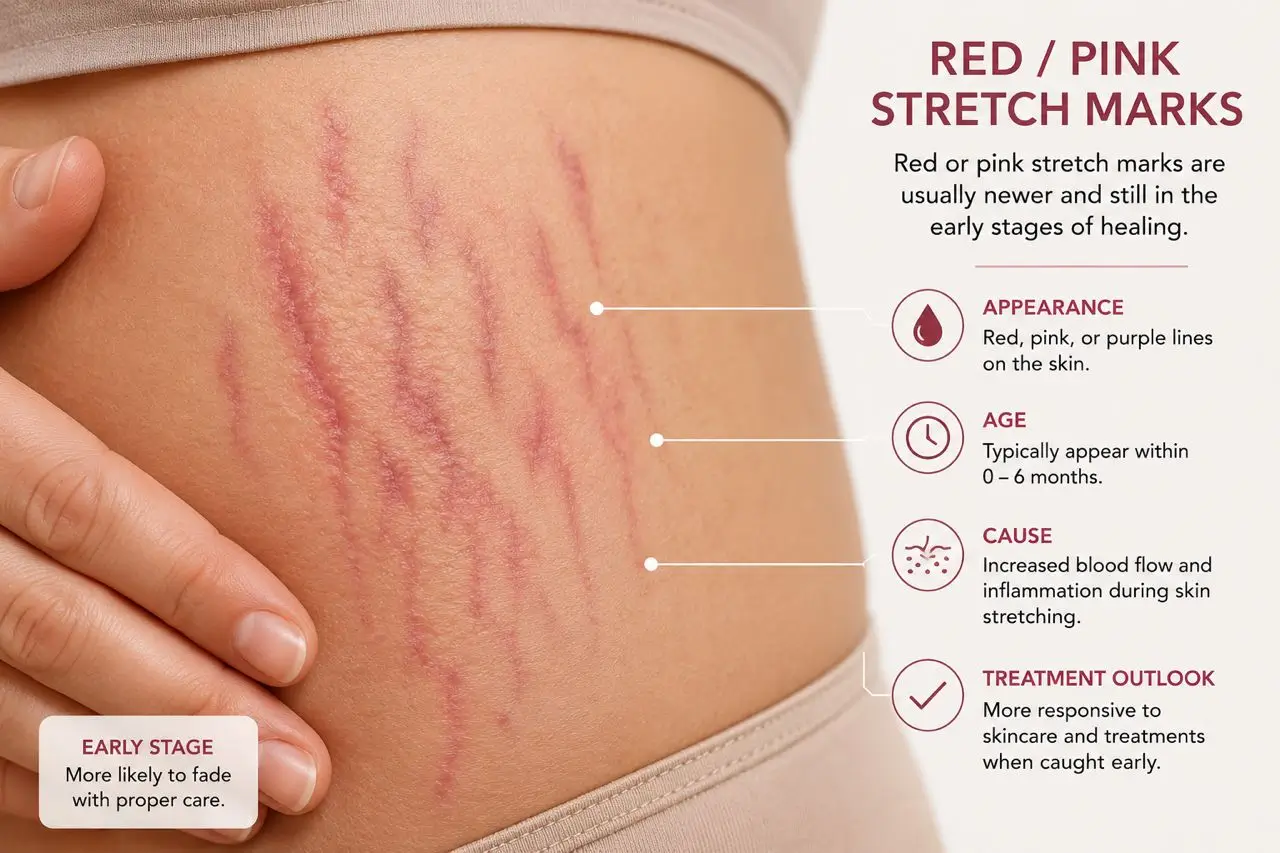
Red stretch marks, known clinically as striae rubrae, are fresh stretch marks. They are the newest version of what you will eventually recognise as a mature mark, and they look and behave quite differently from their older counterparts. When the skin stretches faster than it can accommodate, during pregnancy, a growth spurt, rapid weight gain, or intense muscle building, the collagen and elastin fibres in the dermis, the middle layer of skin, tear. The body responds immediately with an inflammatory healing process.
At this stage:
- Blood vessels in the area dilate and remain active, which is what gives the mark its red, pink, or purple colour. You are essentially seeing blood vessels through thinned and disrupted tissue.
- Fibroblasts, the cells responsible for producing new collagen, are working actively in the area, trying to lay down replacement tissue.
- The skin surface above the mark may feel slightly raised, itchy, or tender. This is normal inflammation, not damage to be alarmed about.
- The tissue is still relatively metabolically active and responsive to external influences.
Because the tissue is still active, it is more receptive to interventions that stimulate or support collagen remodelling. Topical treatments that reach the upper dermis, such as retinoids, Centella asiatica-containing creams, peptide, have more to work with here than on stable scar tissue. Clinical treatments like laser and microneedling also produce their best results at this stage. Your stretch marks are red because they are new. The redness reflects active blood vessels in the healing tissue. As those vessels contract and the tissue settles, the colour will shift through pink and silver toward white. This is normal, and it typically takes anywhere from several months to a couple of years.
Common locations for red stretch marks:
- Abdomen, particularly during pregnancy, typically in the third trimester
- Thighs and hips during puberty or weight changes
- Chest and upper arms during muscle building or puberty in boys
- Breasts during pregnancy or puberty
- Lower back and buttocks during rapid weight gain
See our guide on What Causes Stretch Marks? for a full breakdown of triggers.
What Are White Stretch Marks?
White stretch marks, known clinically as striae albae, are mature stretch marks. They have been through the full healing cycle and settled into their long-term, stable state. Once the initial inflammatory response has subsided and the body has finished its primary repair work, the tissue in a stretch mark changes significantly:
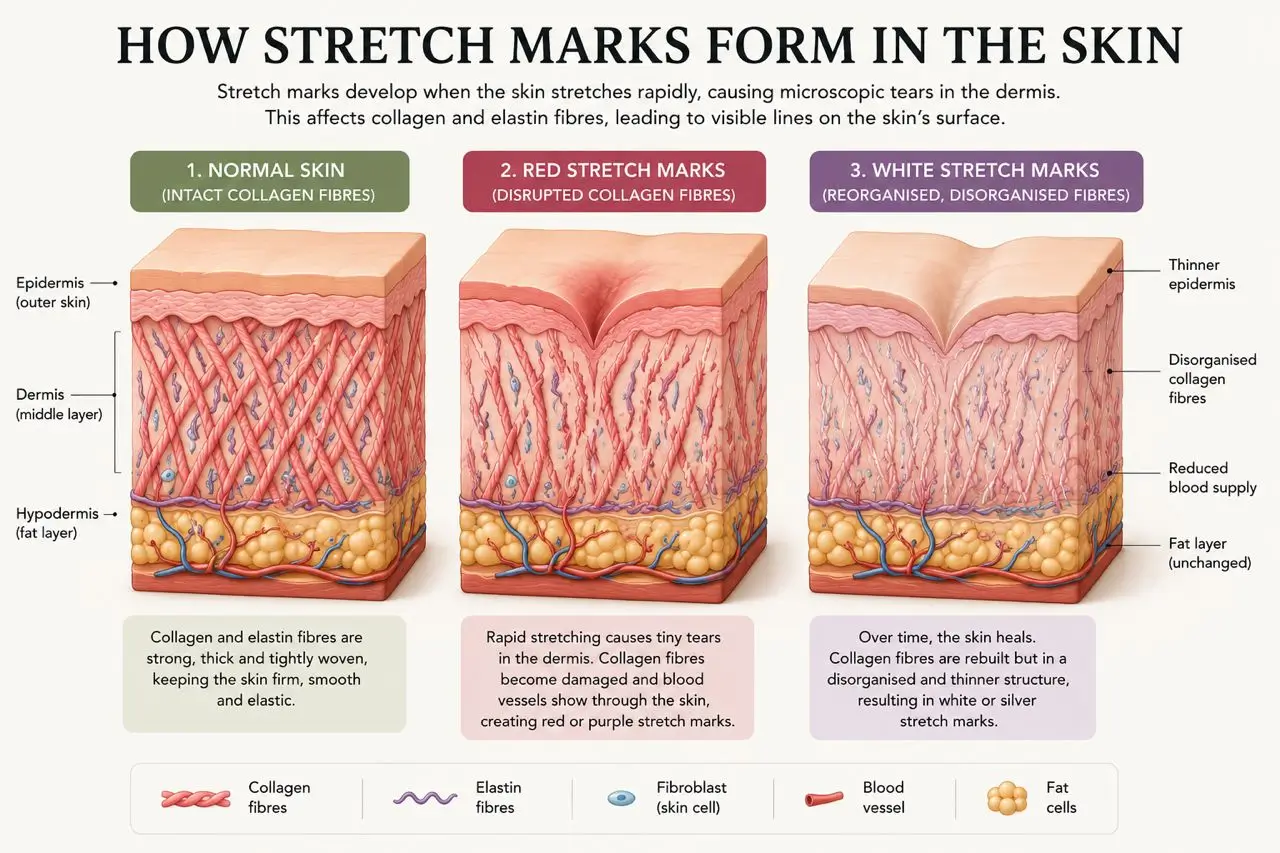
- Blood vessels have contracted, which is why white stretch marks lack the pink or red colour of newer ones. The mark appears pale, silver, or white because the tissue beneath is no longer supplied by active vessels that would give it colour.
- Collagen has been laid down in a disorganised pattern, structurally different from the healthy basket-weave arrangement of undamaged dermis, creating the characteristic linear, slightly grooved appearance.
- Melanocytes, the pigment-producing cells responsible for skin colour, are fewer in number or less active in the stretch mark area, which is why marks appear lighter than the surrounding skin.
- The tissue is now relatively stable and less metabolically active, more like scar tissue than healing wound tissue.
Because the tissue is no longer in an active repair phase, treatments that work by stimulating the inflammatory and repair cascade, which is the mechanism of most effective stretch mark treatments, have less to work with. There are fewer fibroblasts actively producing collagen, fewer blood vessels delivering treatment signals, and a tissue structure that is more fixed. This does not mean white stretch marks cannot be improved; they can. But it requires more targeted clinical intervention, and the degree of improvement is generally more modest and takes longer to achieve.
The shift from red to white reflects the completion of the healing process. As the acute inflammatory phase resolves, blood vessels contract and the tissue stops being actively remodelled. The resulting scar-like tissue lacks the active pigmentation and vascularity of normal skin, which is why it appears pale or silver against the surrounding skin.
Why Do Stretch Marks Change Colour?
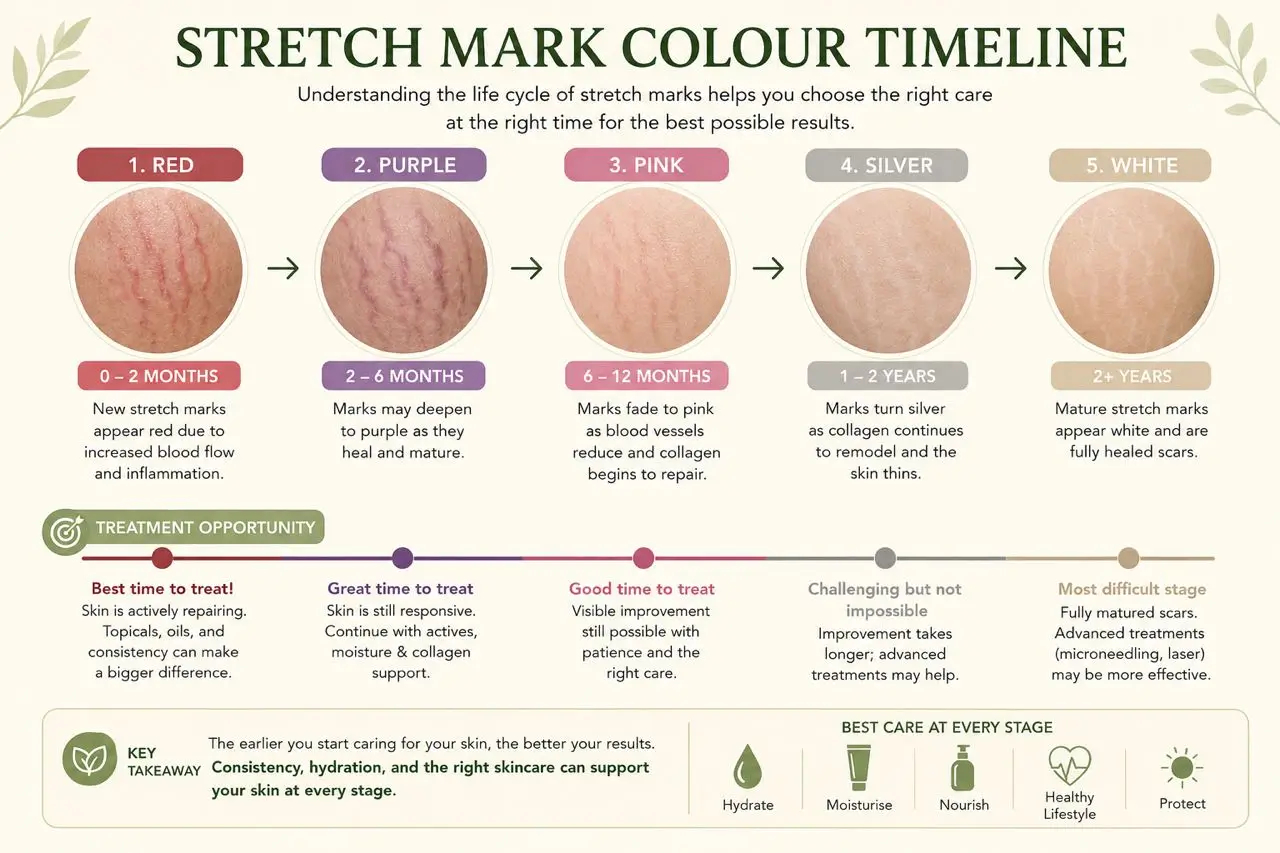
The colour progression of stretch marks is a direct reflection of the skin’s biological healing process. Understanding it helps explain why treatment timing matters so much.
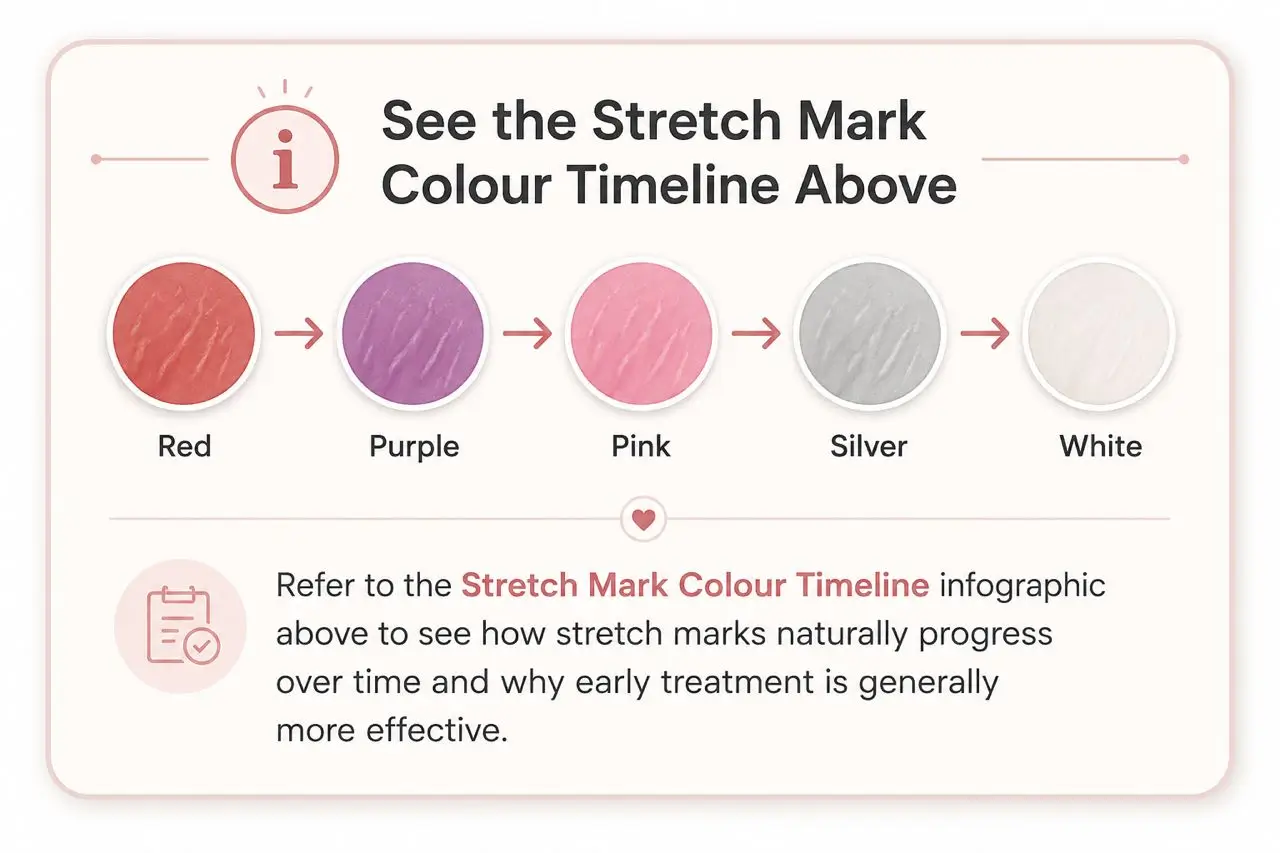
Stage 1: Red or dark pink (Striae rubrae). Typical timeframe: 0–3 months. The dermis has just been stretched and torn. Blood vessels are dilated and active, fibroblasts are producing new collagen, and the immune system has signalled an inflammatory response to initiate repair. The overlying skin is thin, and the vascular activity beneath shows through as red or dark pink. This is the most treatment-responsive stage. The biological activity in the tissue makes it susceptible to both topical active ingredients and clinical stimulation.
Stage 2: Purple or dark red. Typical timeframe: 1–4 months. In people with deeper skin tones, stretch marks may progress through a more pronounced purple or dark red phase rather than a bright red one. The underlying biology is the same; this reflects the vascular activity of healing tissue seen through more melanin-rich skin.
Stage 3: Pink or fading red. Typical timeframe: 3–6 months. The inflammatory response is beginning to resolve. Blood vessels are starting to contract. The tissue is still moderately active, and treatment remains meaningful at this stage, though the response may be somewhat slower than in the earliest phase.
Stage 4: Silver or light pink. Typical timeframe: 6–12 months. The stretch mark is transitioning toward its mature state. Blood vessels have largely contracted. The collagen remodelling phase is winding down. Treatment can still produce improvement, but clinical procedures tend to be more appropriate than topical-only approaches at this point.
Stage 5: White, silver, or pale grey (Striae albae). Typical timeframe: 12+ months. The stretch mark has fully matured into stable scar-like tissue. It is now at its most treatment-resistant. Topical products can maintain skin health and comfort, but significant visual improvement typically requires clinical procedures such as fractional laser or microneedling.
Red Stretch Marks vs White Stretch Marks: A Direct Comparison
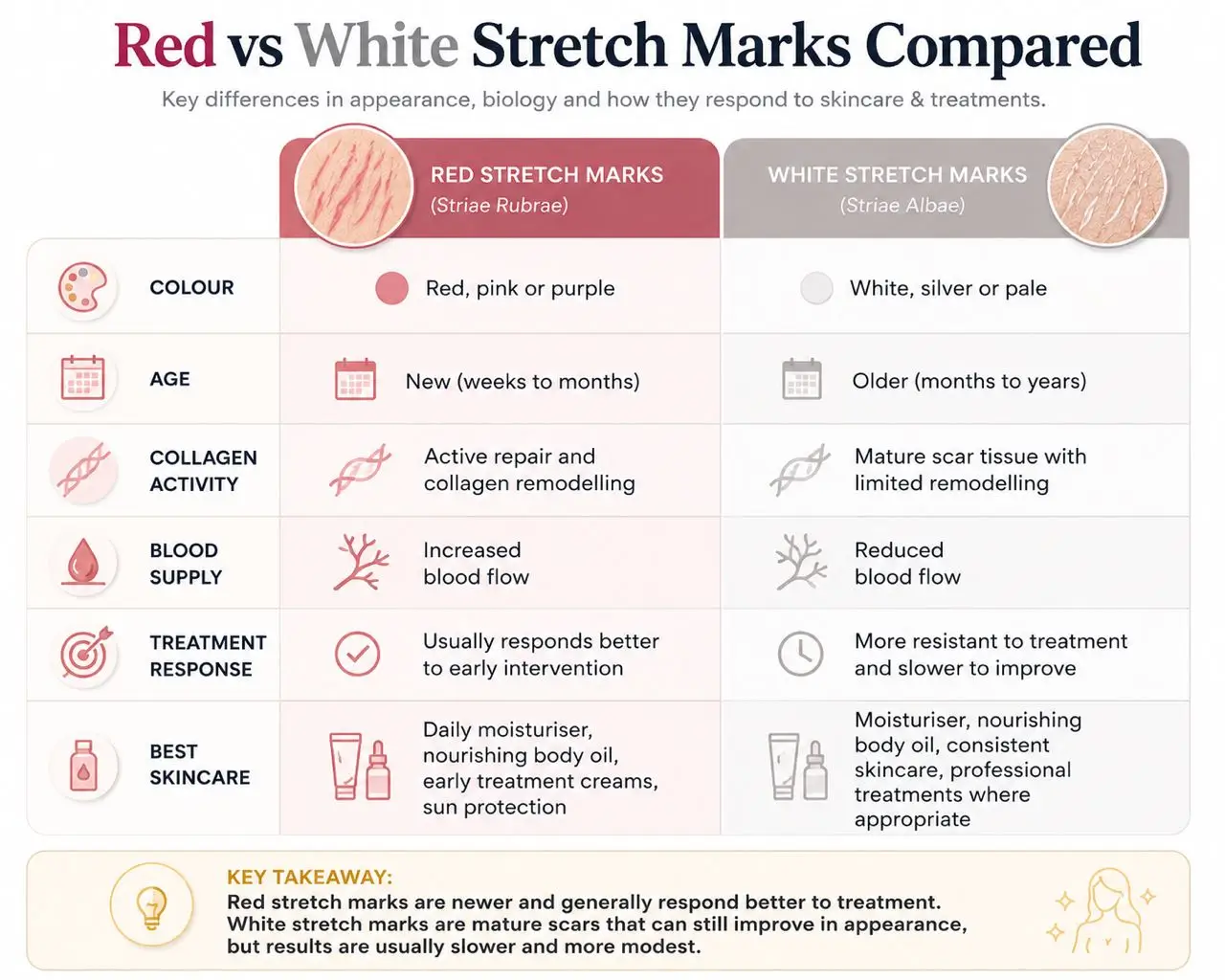
| Feature | Red Stretch Marks | White Stretch Marks |
|---|---|---|
| Clinical name | Striae rubrae | Striae albae |
| Typical age of marks | Weeks to months old | One year or older |
| Colour | Red, pink, purple | White, silver, pale grey |
| Texture | Slightly raised, may feel itchy | Flat or slightly indented, smooth |
| Blood vessel activity | High vessels dilated and active | Low vessels contracted |
| Collagen activity (fibroblasts) | Active repair underway | Minimal tissue settled |
| Skin thickness over the mark | Thinned, more translucent | Normalised but structurally different |
| Response to topical treatment | Better tissue is receptive | More limited |
| Response to clinical treatment | Best results at this stage | Possible but requires more sessions |
| Best topical options | Retinoids, Centella asiatica, hyaluronic acid, peptides | Hyaluronic acid, moisturisers (maintenance) |
| Best clinical options | Pulsed dye laser, microneedling, retinoids | Fractional CO₂ laser, RF microneedling |
| Realistic prognosis | Significant improvement achievable with early treatment | Moderate improvement possible; complete removal unlikely |
Red stretch marks are significantly easier to treat than white ones. This is one of the most clinically consistent findings in dermatological research on stretch marks, and it has direct practical implications for anyone looking to improve their skin. Treatment modalities that produce the best stretch mark results retinoids, laser, and microneedling all work by stimulating the skin’s collagen-producing cells (fibroblasts) to increase their activity. In red stretch marks, those fibroblasts are already active. The treatment amplifies an existing process. In white stretch marks, the tissue has settled, and those cells are largely dormant, so the treatment has to first reawaken activity before it can direct it, which requires more sessions, more time, and produces more variable results.
- Topical Creams for Red Stretch Marks
Creams containing retinol or prescription tretinoin have the strongest topical evidence for stretch mark improvement, and they work best on red marks. Retinoids stimulate fibroblast activity and increase collagen production in the dermis. Studies have shown that tretinoin applied consistently to red stretch marks over 3–6 months can produce a measurable reduction in their length and width. Retinoids are not safe during pregnancy or breastfeeding. If you are pregnant, avoid all forms of vitamin A derivatives and discuss alternatives with your midwife.
Creams containing Centella asiatica have shown meaningful results in both the prevention and early treatment of stretch marks. Hyaluronic acid provides excellent hydration and supports skin elasticity, valuable at all stages, but particularly relevant when the skin is at its most stretched.
See our guide on Best Stretch Mark Cream for a full ingredient breakdown.
- Body Oils for Red Stretch Marks
Applied consistently with deliberate massage, nourishing body oils support skin hydration, barrier function, and the circulation that underpins tissue health. The massage component is independently beneficial; research on massage for scar tissue suggests it supports pliability and remodelling. For red marks, a daily oil massage routine is a practical and accessible step.
See our guide on Best Oil for Stretch Marks for evidence-based comparisons.
- Microneedling
Microneedling produces good results on red stretch marks and is one of the more versatile clinical options. It works across skin tones better than some laser treatments and stimulates meaningful collagen production in active tissue. For red marks, treatment can begin relatively early and typically produces visible improvement within 3–5 sessions.
- Laser Therapy
Pulsed dye laser (PDL) is particularly effective for red marks because it targets the active blood vessels that give them their colour. This reduces redness and stimulates some collagen remodelling simultaneously, making it well-matched to the biology of early stretch marks. Fractional lasers work on both red and white marks but tend to produce the most dramatic results when applied to marks still in the active phase.
- Topical Treatment for White Stretch Marks
For white marks, the most appropriate clinical options are fractional CO₂ laser and radiofrequency microneedling, both of which stimulate significant collagen remodelling even in relatively dormant tissue. Results take longer, typically require more sessions, 4–6 rather than 3–4, and produce more moderate improvement, but they are not negligible. Products maintain skin health and comfort around white marks, but should not be expected to produce dramatic visible change in established white marks on their own.
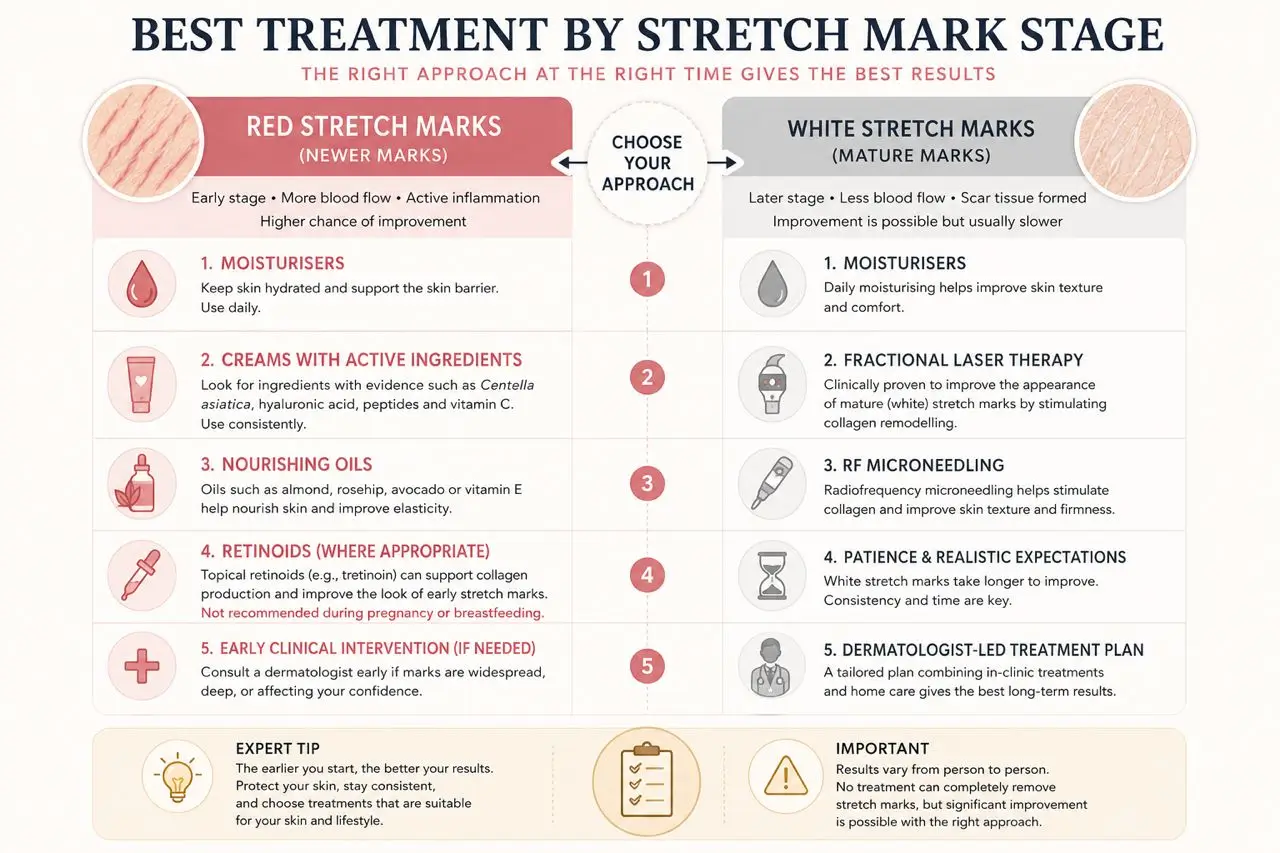
Best Skincare Routine for Red Stretch Marks
If your stretch marks are still in the red or pink stage, this is the window where consistent daily skincare makes the most difference. The earlier and more consistently you act, the better the outcome you can achieve.
Morning routine:
- Gentle cleansing with a mild body wash that does not strip the skin’s natural oils
- Apply moisturiser or stretch mark cream to damp skin immediately after bathing while skin is slightly damp, for maximum absorption. Look for formulations containing hyaluronic acid, Centella asiatica, or peptides
- Massage deliberately for 60–90 seconds, massaging the product into each stretch mark area using firm, circular motions. This is not just about the product; the massage stimulates blood flow and tissue pliability independently
- Apply SPF to exposed areas. UV exposure can darken the surrounding skin without tanning scar tissue, making the contrast worse. Keep stretch-marked skin protected if it will be in sunlight
Evening routine:
- Apply a nourishing body oil to stretch mark areas, massaged in after bathing
- If using a retinol-containing product, apply it in the evening; retinol increases photosensitivity, so evening use reduces UV exposure risk. Avoid retinoids during pregnancy
- Follow with a heavier cream or butter if the skin feels dry after the oil
Supporting habits:
- Drink adequate water throughout the day; hydrated skin is more elastic
- Eat for skin health: vitamin C, collagen synthesis, zinc, wound repair, protein, collagen building block, omega-3s, anti-inflammatory.
- Avoid smoking, as it impairs collagen production and skin healing
- Maintain a stable, gradual rate of body change where possible
The Body Edition Anti-Stretch Mark Body Concentrate can serve as a daily moisturising treatment step, applied to stretch mark areas morning and evening as part of a consistent routine. It is formulated to support skin hydration and elasticity, which is meaningful at the red mark stage when the tissue is still active and responsive. It will not remove stretch marks, but used consistently as part of the routine above, it forms a reasonable everyday foundation.
For the oil step, the Love Nature Nourishing Body, Face & Hair Oil with Organic Avocado Oil provides a nourishing, skin-conditioning option for the massage step. Avocado oil is rich in oleic acid, vitamins A, D, and E, and plant sterols with mild anti-inflammatory properties, all relevant to supporting skin health during the active stretch mark phase. Again, it is a supportive element within a routine, not a standalone treatment.
See our product page: Body Edition Anti-Stretch Mark Body Concentrate. → See our complete guide on Natural Remedies for Stretch Marks.

Caring for White Stretch Marks
White stretch marks require a different mindset. This is not defeatism; it is realism, and realism is what leads to good decisions. The tissue has settled. The biological activity that made red marks so receptive to treatment is gone. Any improvement from topical care alone will be gradual and modest. Clinical treatments can produce meaningful change, but they require multiple sessions over several months. Results build slowly.
What you can realistically expect from topical care:
- Improved skin softness and hydration around the marks
- A slight improvement in surface texture over time with consistent use
- Reduction in the itchy or tight feeling, if present
- Maintaining the overall health and appearance of the skin
What topical care is unlikely to achieve for mature white marks:
- Significant reduction in the size or depth of marks
- Noticeable colour change toward the surrounding skin tone
- Complete fading to invisibility
For anyone with white stretch marks who wants more than maintenance, a dermatologist consultation is a sensible step. Fractional CO₂ laser and RF microneedling are the most appropriate starting points. Both stimulate collagen remodelling even in stable tissue, can improve texture and contrast, and have meaningful evidence for white stretch marks specifically. Multiple sessions will be needed, and results develop over months rather than weeks.
The NHS notes that while stretch marks are harmless, professional treatment is available for those who wish to explore clinical options.
When Should You See a Dermatologist?
Most stretch marks, red or white, are harmless and can be managed at home with consistent skincare. But there are specific situations where professional advice is genuinely valuable.
See a dermatologist or your GP if:
- Stretch marks appear suddenly and without obvious cause, not related to pregnancy, puberty, weight change, or exercise. Unexplained stretch marks, particularly if widespread, can occasionally indicate hormonal conditions such as Cushing’s syndrome.
- They are accompanied by other unexplained symptoms, such as unexplained weight gain around the face and abdomen, fatigue, and skin changes elsewhere, which may point to an underlying condition.
- You are on long-term corticosteroid therapy and want advice on skin care and minimising side effects.
- You are pregnant and want personalised advice on safe skincare for stretch mark prevention and management.
- If you want to explore clinical treatment options for stretch marks that are causing significant distress, a dermatologist can advise on the most appropriate procedures for your skin type, skin tone, and stretch mark stage.
- You are unsatisfied with topical results after several months of consistent care; this is the point where clinical options are likely to produce better returns on investment.
The American Academy of Dermatology recommends that anyone seeking clinical treatment for stretch marks should ensure the most appropriate procedure is selected for their skin type and stretch mark characteristics.
The Cleveland Clinic adds that while stretch marks are cosmetically bothersome to many people, dermatologists have multiple effective tools available, and a tailored approach produces significantly better results than a generic one.

Key Takeaways
- Red stretch marks are newer, biologically active, and significantly more responsive to treatment than white ones.
- White stretch marks are mature scar-like tissue, harder to treat but not impossible to improve with appropriate clinical procedures.
- The colour of stretch marks reflects their age and biological stage, not severity or health status.
- The shift from red to white typically takes 6–18 months and reflects the natural completion of the skin’s healing process.
- The single most important practical takeaway: treat stretch marks early. The window when marks are still red or purple is when every treatment, topical and clinical, works best.
- Topical care, moisturisers, body oils, and active creams are most valuable in the red/pink stage. Clinical treatments, such as fractional laser and RF microneedling, are more necessary for white marks.
- Realistic expectations matter: improvement, not complete removal, is the achievable goal for most people.
- Sun protection helps prevent the colour contrast between marks and surrounding skin from worsening.
Conclusion
Red stretch marks and white stretch marks are the same thing at different points in time, but that difference in timing changes almost everything about how they respond to treatment. If your marks are still red or purple, act now. This is your most valuable treatment window. A consistent daily routine, a good moisturising cream, a nourishing oil, deliberate massage, and adequate nutrition, combined with clinical treatment if desired, give you the best realistic chance of minimising how visible these marks become as they mature.
If your marks are already white, that means nothing can be done. It means the approach needs to be more targeted, primarily on clinical procedures rather than topical products, and the expectations need to be calibrated accordingly. Improvement is achievable; complete removal is rarely so. Either way, understanding what stage your stretch marks are at is the foundation of making sensible decisions about how to care for them.
Explore the guides below to go deeper into specific treatments, products, and approaches.
Stretch Marks: Complete Guide → How to Remove Stretch Marks: What Really Works → Best Stretch Mark Cream: Ingredients That Matter → Best Oil for Stretch Marks → Natural Remedies for Stretch Marks → What Causes Stretch Marks? → Stretch Marks on Thighs, Breasts, Arms, and Buttocks