

Best Stretch Mark Cream: Top Dermatologist-Approved Picks
No cream can completely remove stretch marks, but those containing evidence-supported ingredients, such as retinoids avoid during pregnancy, centella asiatica, hyaluronic acid, peptides, and vitamin E, offer the most potential for improving the appearance of newer stretch marks. Consistent daily use over several months matters more than any single product.
Can Creams Actually Remove Stretch Marks?
Stretch marks are structural changes within the dermis, the middle layer of skin, positioned beneath the epidermis, which you can see and touch. They form when collagen and elastin fibres in the dermis tear due to rapid stretching. The resulting marks are, in essence, a form of internal scarring. Creams, however well-formulated, cannot fully penetrate to the dermis in sufficient concentration to reverse that structural damage. They interact primarily with the epidermis and the upper layers of the dermis.
What good stretch mark creams can do:
- Keep the skin thoroughly moisturised, which improves texture and softness
- Deliver active ingredients that stimulate some degree of collagen remodelling in the upper dermis
- Reduce the itchiness and tightness that sometimes accompany new stretch marks
- Support the skin’s natural repair environment
- Used consistently from early on, potentially limit how severe new marks become
The American Academy of Dermatology is clear that while no topical treatment can eliminate stretch marks, consistent use of certain evidence-backed ingredients can make them less noticeable over time.
See our full guide on How to Remove Stretch Marks for a complete overview of treatments.
What Makes a Good Stretch Mark Cream?
The difference between a stretch mark cream worth using and one that is primarily a moisturiser in attractive packaging comes down to its active ingredients.
A genuinely useful stretch mark cream should:
- Deeply moisturise well-hydrated skin is more supple and elastic
- Support collagen and elastin production via ingredients that stimulate fibroblast activity in the dermis
- Improve skin texture and tone, reducing the visual contrast between stretch marks and surrounding skin
- Be safe and appropriate for your situation. Different formulations suit different stages of life: pregnancy, post-pregnancy, and general use
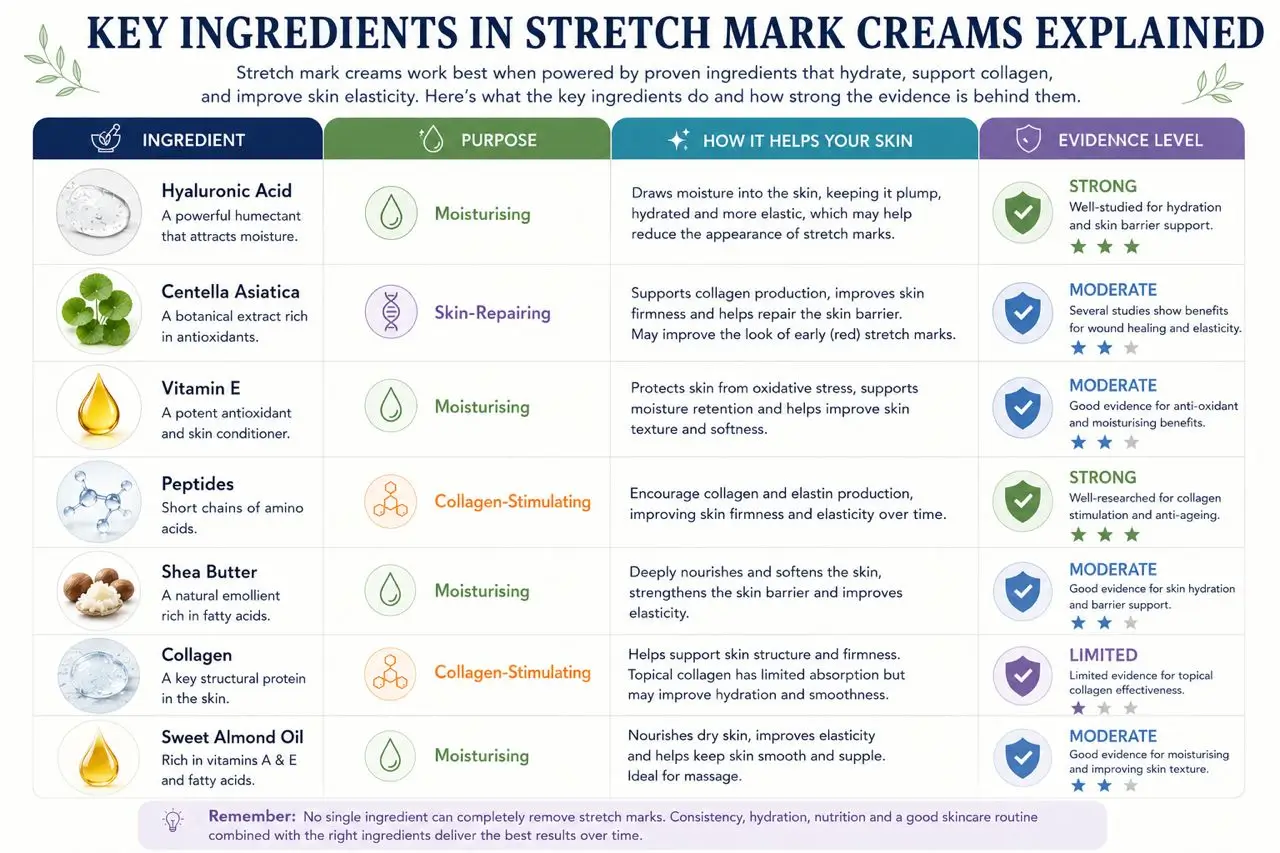
Ingredients Backed by Science
- Retinoids (Retinol and Tretinoin)
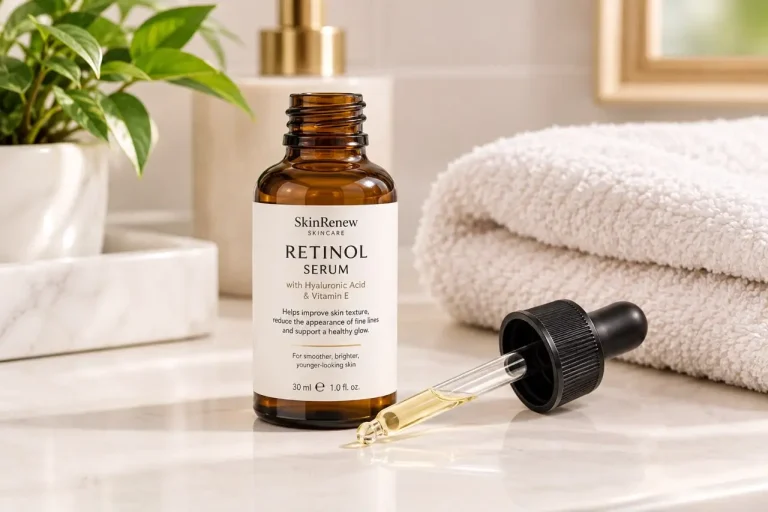
Retinoids are the most evidence-backed topical ingredients for improving stretch marks and for improving skin more broadly. Retinoids are derivatives of vitamin A. They bind to receptors in skin cells and increase the rate of cell turnover, stimulating fibroblasts to produce new collagen and remodel the dermis. Over time, this process can improve the texture, depth, and colour of stretch marks.
Tretinoin, prescription-only, also called retinoic acid, has the strongest clinical evidence. Studies have shown it can reduce the length and width of red stretch marks and improve their pigmentation when used consistently over several months.
Retinol works through the same pathway but more slowly, as it must first be converted to retinoic acid in the skin. It is a worthwhile ingredient in a stretch mark cream, particularly for those who cannot access or tolerate prescription tretinoin. Strong for red/early stretch marks. Limited to white/mature marks.
Retinoids of all types are not safe during pregnancy or breastfeeding. If you are pregnant, choose a retinoid-free formulation and return to retinol products after you have finished breastfeeding. The Mayo Clinic lists retinoids as among the most effective topical options for reducing the appearance of stretch marks, particularly when applied early.
- Hyaluronic Acid
Hyaluronic acid is one of the most effective moisturising ingredients available, and it is an important one in stretch mark formulations. Hyaluronic acid is a naturally occurring substance in the body that can hold up to 1,000 times its weight in water. Applied topically, it draws moisture into the skin and keeps it there, significantly improving hydration and skin plumpness.
In the context of stretch marks, well-hydrated skin is more elastic and resilient, and stretch marks that are kept consistently hydrated tend to improve in texture and appearance over time. Some research also suggests that hyaluronic acid may have a role in stimulating collagen production in the dermis. Strong for hydration and skin elasticity support, and moderate for direct stretch mark improvement. It’s safe during pregnancy. A particularly good ingredient to look for in pregnancy-safe formulations.
- Peptides
Peptides are short chains of amino acids, the building blocks of proteins, including collagen and elastin. In skincare, they are used to signal to fibroblasts that repair and collagen synthesis are needed. When applied topically, certain peptides penetrate the epidermis and act as messenger signals, encouraging the skin to produce more collagen and elastin. This can support the skin’s overall structural health and, over time, may help improve the firmness and texture of stretch mark areas.
There is good evidence for peptides in general skincare, with growing evidence for their role in stretch mark formulations specifically. It is generally considered safe during pregnancy. Check with your midwife or doctor if uncertain.
- Centella Asiatica (Cica)
Centella asiatica, sometimes called cica, tiger grass, or gotu kola, has become one of the more scientifically interesting ingredients in stretch mark skincare in recent years. Centella contains active compounds asiaticoside, madecassoside, and asiatic acid that have been shown to stimulate fibroblast activity and collagen synthesis, support wound healing, and reduce inflammation. It has a long history of use in wound care and scar treatment in Asian traditional medicine, and increasingly, clinical research is supporting those applications.
Interestingly, some clinical studies on pregnant women using centella-containing formulations have shown a meaningful reduction in stretch mark development compared to control groups. It is moderate, particularly for prevention and new stretch marks, and is considered safe. Look for products that have been specifically formulated and tested for pregnancy use.
- Vitamin E (Tocopherol)
Vitamin E is one of the most widely used ingredients in skincare and one of the most over-claimed. It is a powerful antioxidant that helps protect skin cells from free radical damage. It supports the skin barrier function and has moisturising properties. It is also anti-inflammatory, which may help with the redness and irritation associated with new stretch marks. Despite its long association with scar treatment, clinical evidence that vitamin E independently reduces scars or stretch marks is actually quite limited. Some studies have found it no more effective than plain moisturiser for scar improvement when used alone.
In combination, vitamin E is most useful in a stretch mark formulation as a supporting ingredient, enhancing the efficacy of other actives and maintaining skin barrier health. It should be part of a formula, not the headline ingredient. It is strong for antioxidant protection and moisturisation; limited as a standalone stretch mark treatment.
- Shea Butter
Shea butter is extracted from the nut of the shea tree and is one of the richest natural emollients available. Shea butter is exceptionally moisturising. It is rich in oleic acid, stearic acid, linoleic acid, and triterpene alcohols, compounds that support skin barrier function, reduce moisture loss, and improve skin softness and suppleness. It also has mild anti-inflammatory properties. It does not penetrate the dermis or stimulate collagen production. Its value in stretch mark creams is primarily as a high-performance moisturiser that keeps the skin soft and supple, which creates a better environment for healing and may help prevent the severity of new marks. It is safe and widely used during pregnancy.
- Avocado oil
Avocado oil is a nutrient-rich plant oil known for its high content of healthy fatty acids, vitamin E, and antioxidants. It is widely used in skincare to help moisturise, soften, and nourish dry skin. Although it has not been proven to remove stretch marks, regular use as part of a daily skincare routine may help maintain skin hydration and support overall skin health, making it a useful addition to a balanced stretch mark care routine.
- Cocoa Butter
Cocoa butter is another deeply moisturising emollient, and it is perhaps the most historically popular ingredient in stretch mark products. Like shea butter, cocoa butter is an excellent skin moisturiser. It is rich in fatty acids and absorbs well, leaving skin soft and smooth. Despite its popularity, the clinical evidence for cocoa butter as a stretch mark treatment is surprisingly weak. A well-designed study published in the American Journal of Obstetrics and Gynecology found no significant difference in stretch mark development between pregnant women who used a cocoa butter cream and those who used an unscented placebo lotion. This does not mean cocoa butter is useless; it is a genuinely good moisturiser, but it should be understood as a hydrating base ingredient rather than an active treatment.
- Ceramides
Ceramides are lipid molecules that form a critical part of the skin barrier, the protective outer layer that prevents moisture loss and keeps irritants out. Ceramides help restore and maintain the skin barrier in and around stretch-marked areas. Skin with an intact, healthy barrier retains more moisture, heals more efficiently, and tends to show better improvement with active treatments. They are particularly useful in formulations aimed at dry, damaged, or sensitive skin. It is strong for barrier support and skin health; indirect benefit for stretch marks and is safe and beneficial during pregnancy.
Ingredients With Limited Evidence
Some ingredients appear in stretch mark products regularly but have minimal or no clinical evidence specifically supporting their use:
- Olive oil good moisturiser, but no evidence of stretch mark reduction; one study actually found it may slightly worsen skin barrier function with extended use
- Coconut oil effective emollient; no credible evidence for stretch mark removal; it can be comedogenic for some
- Rose hip oil contains natural vitamin A precursors and linoleic acid; some evidence for general scar improvement, but limited for stretch marks specifically
- Beeswax is useful as an occlusive sealant; no active effect on stretch marks
- Caffeine is sometimes included in “firming” formulations; no credible evidence for stretch mark reduction
These are not harmful ingredients; many are reasonable moisturisers, but they are not the reason to choose a stretch mark cream.
The Evidence at a Glance
| Ingredient | Evidence Level | Pregnancy Safe? |
|---|---|---|
| Tretinoin (prescription) | Strong | No |
| Retinol (OTC) | Moderate–Strong | No |
| Hyaluronic acid | Moderate–Strong | Yes |
| Centella asiatica | Moderate | Yes, check the formulation |
| Peptides | Moderate | Yes |
| Vitamin E | Moderate as support | Yes |
| Shea butter | Strong moisturising | Yes |
| Cocoa butter | Weak stretch marks | Yes |
| Ceramides | Strong barrier | Yes |
| Coconut oil | Weak | Yes |
| Caffeine | Very weak | Yes |
How to Choose the Best Stretch Mark Cream for Your Situation
The “best” stretch mark cream is not universal; it depends on your specific circumstances. Here is how to match the right type of product to your situation.
| Cream Type | Pros | Cons |
|---|---|---|
| Retinol-containing cream | Strong evidence, widely available | Not safe in pregnancy; may irritate sensitive skin |
| Pregnancy-safe moisturising cream | Safe, nourishing, and supports skin elasticity | Less potent, no retinoids |
| Centella asiatica formulations | Good evidence for new marks, anti-inflammatory | Less effective for older white marks |
| Hyaluronic acid-rich cream | Excellent hydration, safe for all | Primarily supportive, not active |
| Premium peptide cream | Collagen support, well-tolerated | More expensive, results gradual |
| Budget moisturiser with shea/cocoa butter | Affordable, deeply moisturising | Little active stretch mark effect |
When Should You Start Using a Stretch Mark Cream?
Timing is one of the most under-appreciated aspects of stretch mark management. If you are pregnant, begin applying a good moisturiser or stretch mark cream from the first trimester, well before your skin starts to stretch significantly. Waiting until stretch marks appear, or until you are in your third trimester, means the skin is already under stress before you have established a routine. If stretch marks have already appeared, starting treatment while they are still red or purple gives you the best chance of meaningful improvement. This is the stage when the tissue is still active and most responsive to topical treatments.
White or silver stretch marks are harder to treat with topical products alone; at this stage, clinical procedures like microneedling or laser tend to produce better results. Creams can still support skin health and texture, but should not be expected to produce a dramatic change.
See our guide, Red vs White Stretch Marks, to understand treatment timing in depth.
Pregnancy Considerations
If you are pregnant, the most important rule is simple: avoid retinoids. Retinol and tretinoin are not safe during pregnancy or breastfeeding. Vitamin A in high quantities is associated with developmental risks, and while the absorption from topical retinoids is relatively low, dermatologists and midwives consistently advise avoiding them during this period.
What to use instead during pregnancy:
- Hyaluronic acid safe and excellent for hydration
- Centella asiatica is well-studied in pregnancy contexts
- Shea butter, cocoa butter, ceramides, safe, nourishing emollients
- Vitamin E safe in typical cosmetic concentrations
- Peptides generally considered safe; confirm with your midwife
Always check with your midwife or obstetrician if you are unsure about any ingredient during pregnancy.
See our comprehensive guide, Pregnancy Stretch Marks, for full trimester-by-trimester advice.
Common Mistakes When Buying Stretch Mark Creams
Mistake 1: Choosing by price rather than by ingredients. Expensive does not mean effective. Some premium-priced creams have ingredient lists dominated by emollients with no clinical active ingredients, while more modestly priced products contain genuinely useful compounds. Always read the label.
Mistake 2: Expecting fast results. Topical skincare works slowly. Improvements in stretch mark appearance from creams typically take 8 to 12 weeks of consistent daily use to become visible, and longer for mature white marks. If you abandon a product after two weeks because you have not seen results, you have not given it a fair trial.
Mistake 3: Using it inconsistently. This is probably the most common reason people are disappointed with stretch mark creams. One application every few days will not produce results. The routine matters as much as the product.
Mistake 4: Treating the symptom without addressing the cause. If you are in a period of rapid body change, pregnant, building muscle, gaining weight, and you are not also managing that change in a skin-supportive way, nutrition, hydration, rate of change, a cream alone will not be enough.
Mistake 5: Relying on a cream for old white stretch marks. White stretch marks require more targeted clinical intervention. If your marks have been white for years, a cream can support skin health but is unlikely to produce a dramatic improvement on its own. This is when it is worth exploring professional treatment options.
How to Use Stretch Mark Cream Correctly
How you apply a stretch mark cream matters almost as much as which cream you choose.
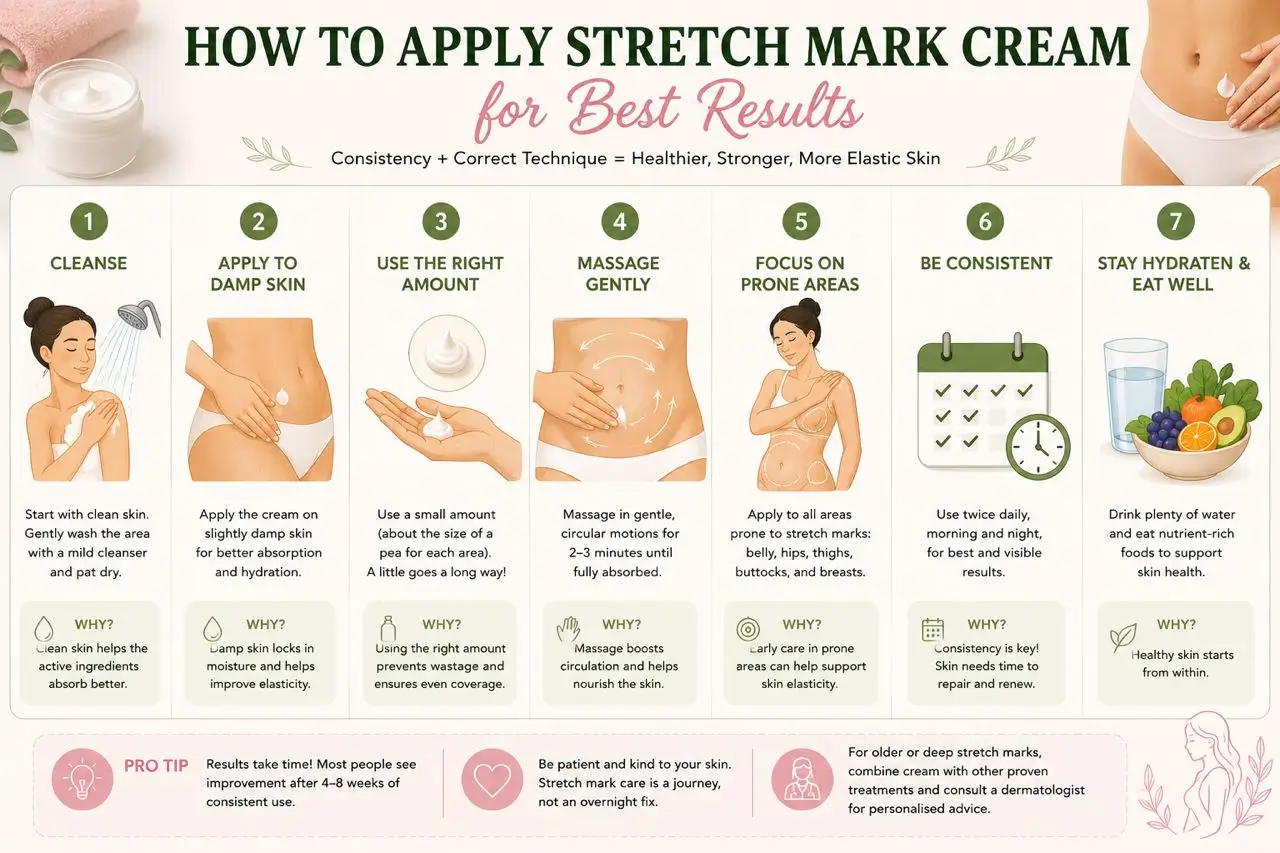
Step 1: Timing. Apply your cream immediately after showering or bathing, while the skin is still slightly damp. Damp skin absorbs moisturising ingredients more effectively than completely dry skin, and the cream helps seal in the water.
Step 2: Amount. Use a generous amount, enough to cover the area without rubbing it in aggressively. Stretch-prone areas benefit from thorough coverage.
Step 3: Massage. Spend 1–2 minutes massaging the cream into each area using firm, circular motions. This stimulates blood flow to the area, may support lymphatic drainage, and helps the product absorb more effectively. Massage also independently supports skin health and tissue maintenance.
Step 4: Frequency. Twice daily is ideal for most stretch mark creams, once in the morning and once in the evening. If you can only commit to once, make it consistent. Daily use over months is the goal.
Step 5: Patience. Stretch mark improvement is measured in months, not weeks. Commit to a routine for a minimum of 8–12 weeks before assessing results. Take reference photos at the start so you have an objective comparison.
The Body Edition Anti-Stretch Mark Body Concentrate is formulated to moisturise the skin and support its elasticity as part of a daily routine. It contains nourishing ingredients designed to help keep the skin soft and supple during periods of body change. For people looking for a pregnancy-safe daily moisturiser, or for those beginning a consistent skincare routine during or after pregnancy, weight change, or puberty, it represents an accessible, everyday option.
For complementary hydration, the Love Nature Nourishing Body Face & Hair Oil With Organic Avocado Oil works well alongside any stretch mark cream, particularly in the evening. Massaged into the skin after cream application, a nourishing oil helps seal in moisture and keeps the skin feeling soft and cared-for overnight.
See our product page: Body Edition Anti-Stretch Mark Body Concentrate
How Long Before You See Results?
| Timeframe | What to Expect |
|---|---|
| Weeks 1–2 | Skin feels more hydrated and less tight or itchy around new stretch marks |
| Weeks 3–4 | Improved skin softness and texture; no visible change to stretch marks yet |
| Weeks 6–8 | Some improvement in redness in new red marks may begin to show |
| Weeks 10–12 | Visible improvement in colour and texture possible with consistent use of active ingredients |
| 3–6 months | More meaningful improvement; marks may appear lighter and smoother |
| 6+ months | Best results for topical approaches; marks significantly faded in many cases |
When to Look Beyond Creams
There are situations where topical creams, however good, are unlikely to be sufficient on their own:
- Mature white stretch marks that have been present for more than a year or two
- Deep or wide stretch marks where the texture change is significant
- Cases where rapid visible improvement is a priority, for an event, for example
In these situations, clinical options, microneedling, fractional laser, or prescription tretinoin are likely to produce better results. A dermatologist can assess your specific marks and recommend the most appropriate combination approach.
The Cleveland Clinic notes that for stretch marks that cause significant distress or have not responded to topical treatment, a dermatologist consultation is a sensible step. And the NHS reinforces that while stretch marks are harmless, professional treatment is available for those who want to explore it.
Key Takeaways
- No cream can completely remove stretch marks; they are a form of dermal scarring.
- The best stretch mark creams contain evidence-backed ingredients: retinoids avoid in pregnancy, hyaluronic acid, centella asiatica, peptides, and vitamin E.
- Ingredients like cocoa butter and coconut oil are good moisturisers but have limited evidence as specific stretch mark treatments.
- Timing matters: start early in the first trimester for pregnancy; as soon as marks appear, treat marks while they are still red for best results.
- Consistency matters more than the product itself. Daily use over months is what produces results.
- Expensive does not mean better; read ingredient labels rather than being guided by price.
- For older white stretch marks, consider combining cream with a clinical treatment for better outcomes.
- Always check ingredients for pregnancy safety; avoid retinoids during pregnancy and breastfeeding.
Return to the Stretch Marks pillar page for the full overview. See our guide on Natural Remedies for Stretch Marks for home-based complementary options.
Conclusion
Finding the best stretch mark cream is less about discovering a single miracle product and more about understanding what works, why, and how to use it well. The creams most likely to make a genuine difference are those built around ingredients with real biological mechanisms: retinoids that stimulate collagen, hyaluronic acid that deeply hydrates, centella asiatica that supports repair. Used consistently, starting early, and combined with good overall skin health habits, these can produce meaningful improvement, particularly for newer, red stretch marks.
White stretch marks, older marks, and those wanting faster results may need to combine topical care with professional treatment. And that is fine; knowing what creams can and cannot do means you are spending your time, money, and effort in the right places.