

Astaxanthin Benefits for Skin: Anti-Aging, Glow & UV Protection
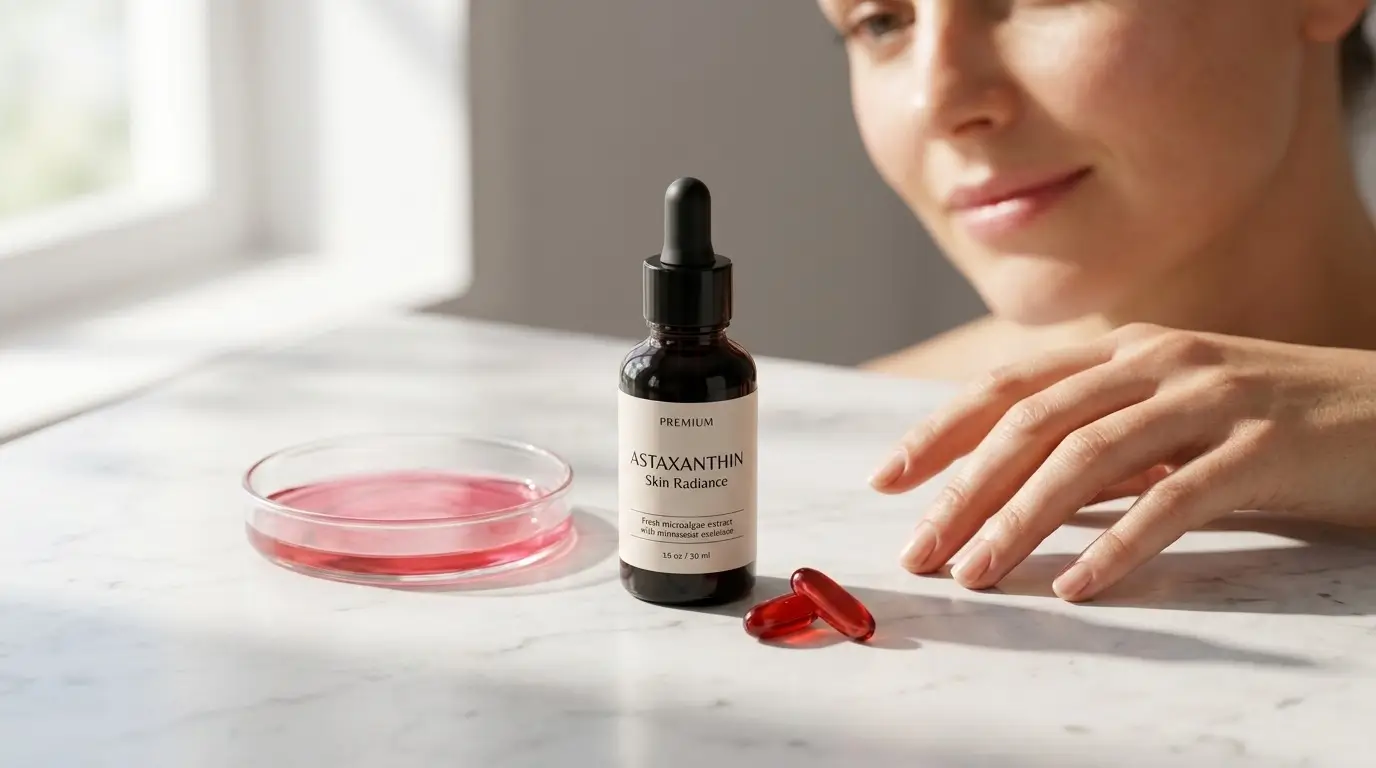
Astaxanthin is a natural antioxidant pigment. It belongs to the same family as the compounds that make carrots orange and tomatoes red, except astaxanthin is far more potent than any of its relatives in that group. It’s produced naturally by a type of freshwater microalgae called Haematococcus pluvialis. When this algae is stressed by intense sunlight or limited nutrients, it produces astaxanthin to protect itself. That’s essentially what it does for us too: it protects against the kind of oxidative damage that accelerates ageing.
Read our complete guide on What is Astaxanthin and how does it work?.
Wild salmon, shrimp, lobster, and krill all get their pinkish colour from this same compound. They absorb it from the food chain, accumulating it in their tissue. For supplements, it’s typically extracted directly from the algae, which produces the most concentrated form found anywhere in nature.
How Does Astaxanthin Work for Skin?
- It Targets Oxidative Stress
Every day, your skin is exposed to free radicals. These come from UV rays, air pollution, stress, blue light from screens, and even normal cellular processes. Free radicals damage skin cells at a molecular level, degrading the proteins that keep skin firm and contributing to the visible signs of ageing over time. Astaxanthin is an exceptionally powerful antioxidant. It neutralises free radicals at a rate that significantly outpaces most other antioxidants, including vitamin C and vitamin E. What makes it particularly effective is its molecular structure; it can sit across the full width of a cell membrane, protecting both the inner and outer surfaces simultaneously.
- It Reduces Skin Inflammation
Chronic, low-grade inflammation is one of the quieter drivers of accelerated skin ageing; it degrades collagen, disrupts the skin barrier, and contributes to conditions like redness, acne, and sensitivity. Astaxanthin has anti-inflammatory properties that are well-documented in clinical research. By reducing the inflammatory signals in skin tissue, it creates a more stable, less reactive environment in which skin can function and repair itself properly.
- It Protects Against UV Damage
UV radiation is responsible for the majority of visible skin ageing, the dark spots, the loss of elasticity, and the deepening lines. Astaxanthin has demonstrated the ability to reduce UV-induced DNA damage in skin cells and moderate the inflammatory cascade that follows sun exposure. It doesn’t replace sunscreen, nothing should, but it provides a meaningful layer of internal cellular protection that sunscreen, applied only to the surface.
- It Slows Collagen Breakdown
Collagen is the structural protein that keeps skin firm and plump. From your mid-20s, your body produces progressively less of it, and UV exposure, stress, and inflammation accelerate its breakdown. Astaxanthin inhibits a group of enzymes called matrix metalloproteinases (MMPs), which are responsible for degrading collagen and elastin. By suppressing MMP activity, it slows the structural breakdown that leads to visible signs of skin ageing.
Astaxanthin Benefits for Skin
- Skin Glow and Hydration
One of the most frequently reported benefits, both in clinical trials and from people who take astaxanthin consistently, is an improvement in skin glow and hydration. EPA and other fatty acid derivatives associated with astaxanthin-rich foods, alongside astaxanthin’s own role in supporting cell membrane integrity, contribute to the skin barrier’s ability to retain moisture. When the skin barrier is more intact, the skin naturally looks plumper and more luminous rather than dull and dehydrated.
In multiple randomised controlled studies, participants taking astaxanthin daily reported measurable improvements in skin moisture and overall skin appearance within 8 weeks.
- Improved Skin Elasticity
Elasticity, the skin’s ability to bounce back after movement and expression, depends on the health of the collagen and elastin network in the dermis. As that network degrades with age and oxidative stress, skin begins to lose its natural springiness. Astaxanthin’s protection of collagen from MMP-driven breakdown, combined with its antioxidant defence of the fibroblast cells that produce new collagen, supports the maintenance of skin elasticity over time, according to clinical research published in the dermatology literature. Clinical studies measuring skin elasticity have shown statistically significant improvements in participants taking 4–6mg of astaxanthin daily for 8–16 weeks compared to those taking a placebo.
- Reduced Fine Lines and Wrinkles
Fine lines typically deepen through a combination of repeated facial movements, collagen loss, and the oxidative degradation of the extracellular matrix, the structural mesh that keeps skin tissue organised and firm, according to clinical research published in the dermatology literature. Because astaxanthin addresses several of these mechanisms at once, inhibiting collagen degradation, reducing the oxidative damage to skin cells, and moderating the inflammatory processes that break down skin structure, it shows measurable benefits for fine line reduction with consistent use.
Results here are gradual and cumulative. This isn’t a product that plumps lines overnight. It’s one that, taken consistently over several months, contributes to visibly smoother, more refined skin texture.
- Dark Spots and Uneven Skin Tone
Dark spots, technically called hyperpigmentation, develop when melanin production is overproduced, usually in response to UV exposure, inflammation, or hormonal changes. Astaxanthin’s ability to reduce UV-induced inflammation and moderate oxidative triggers of melanin overproduction suggests it can help promote a more even skin tone over time. Some research has also found direct inhibitory effects on the enzyme tyrosinase that drives melanin synthesis. This is not an overnight transformation; existing dark spots take months of consistent antioxidant support to fade, and results vary significantly based on skin tone, the severity of pigmentation, and sun exposure habits. But for women, particularly those dealing with the sun-damage accumulation of years of outdoor exposure, the evidence for astaxanthin’s contribution to tone improvement is genuine.
How Long Does It Take to See Results?
This is probably the most important expectation to set correctly: astaxanthin is not a fast-acting supplement. It works by building up in tissue over time and creating sustained cellular protection.
2–4 weeks: Some people notice early improvements in skin hydration and a subtle improvement in skin texture. Eye fatigue from screen use often responds within this window, too.
4–8 weeks: More noticeable changes in moisture, skin tone brightness, and early improvements in fine line appearance begin to emerge at this stage.
8–16 weeks: This is the timeframe used in most clinical studies showing significant improvements in elasticity, fine lines, hyperpigmentation reduction, and overall skin appearance. If you’re going to see meaningful results, this is when they become visible.
Beyond 16 weeks: Continued improvement with ongoing use, and the protective effects for long-term skin ageing, collagen preservation, and UV protection continue to accumulate.
If you take it sporadically, you won’t build the tissue levels that drive the benefits. Daily consistency is the one non-negotiable.
Who Is Astaxanthin Best Suited For?
Astaxanthin can benefit most adults, but it’s particularly well-matched for:
- Dry skin: The barrier-supporting and moisture-retention benefits make a genuine difference for skin that struggles to stay hydrated despite using rich topical moisturisers.
- Mature or ageing skin: Whether you’re in your early 40s beginning to notice the first significant changes, or in your 50s managing more pronounced collagen loss and pigmentation, the combination of collagen protection, antioxidant defence, and UV damage modulation is directly relevant to the concerns of mature skin.
- Uneven skin tone and sun-damaged skin: If you’ve accumulated significant sun exposure over the years and are managing the dark spots and uneven skin tone that come with it, astaxanthin provides an internal support layer for your brightening skincare efforts.
- Women going through perimenopause: The decline in oestrogen accelerates collagen loss and reduces the skin’s natural antioxidant protection. Astaxanthin supplements provide external antioxidant support for the systems that oestrogen was previously helping to maintain.
- People who spend a lot of time in front of screens: The eye fatigue and blue light oxidative stress of screen-heavy lifestyles are directly addressed by astaxanthin’s accumulation in retinal and skin tissue.
Astaxanthin Supplement vs Skincare Creams
Skincare, your serums, moisturisers, and creams, work at the surface and, for penetrating actives, into the upper dermis. It can hydrate the skin surface, deliver antioxidant protection to the outermost layers, stimulate cellular activity with ingredients like retinol and vitamin C, and repair the barrier with ceramides and fatty acids. What products cannot do is influence what’s happening in the deeper dermis, where collagen and elastin are produced and maintained, or in the bloodstream-fed cellular environment that determines how skin cells are built in the first place.
Astaxanthin taken as a supplement enters the bloodstream and reaches the skin through circulation. It provides antioxidant protection to skin cells at the level where they’re formed, in the dermis, in the mitochondria, and in the cell membranes that make up the barrier.
Our Recommended Astaxanthin Supplement
If you’re looking for a straightforward, high-quality way to add astaxanthin to your daily routine, the Wellosophy Astaxanthin & Bilberry Extract is what we recommend here at Zenithkind.
It combines natural astaxanthin derived from Haematococcus pluvialis microalgae with bilberry extract, a rich source of anthocyanin antioxidants particularly valued for eye health and microvascular circulation. The two work well together: both reduce oxidative damage in skin and eye tissue, and bilberry’s specific contribution to circulation supports the delivery of nutrients to the skin cells astaxanthin is protecting.
The formulation uses an oil-based softgel, which significantly improves astaxanthin’s absorption compared to dry powder capsules, important because astaxanthin is fat-soluble and needs dietary fat present to absorb properly.
Take it with your main meal each day, keep a realistic expectation of the 8–12 week timeframe for visible results, and pair it with an SPF and a good skincare routine for the best visible results.
Are There Any Side Effects?
Astaxanthin is very well tolerated at the doses used in most supplements of 4–12mg daily. Clinical trials across multiple studies have not identified significant adverse effects at these levels.
The most commonly noted effects, which are mild and reversible, are:
- A slight pinkish or yellowish tint to the skin at higher doses of the same effect is seen when people eat very large amounts of carrots, called carotenodermia, harmless and reverses when you stop.
- Possible changes in stool colour due to the orange-red pigment.
- Very occasionally, mild digestive discomfort in the first days of use. Taking with food usually resolves this quickly.
If you’re on blood pressure medication or anticoagulants, blood thinners, it’s worth mentioning the astaxanthin supplement to your doctor before starting, as there are mild interactions worth being aware of.
Pregnant or breastfeeding women should consult their healthcare provider before starting any new supplement.
Conclusion
Astaxanthin isn’t a dramatic, overnight solution to skin ageing. Nothing that actually works is. But it’s one of the more genuinely evidence-backed supplements available for people who want to support their skin’s health from the inside out, addressing the oxidative damage, inflammation, collagen degradation, and UV sensitivity that drive the changes most of us are trying to slow.
The astaxanthin benefits for skin are real, they’re supported by multiple clinical trials, and they’re most meaningful for people who use it consistently over months rather than expecting quick results. Pair it with a thoughtful topical skincare routine and daily SPF, and you’re addressing skin health from both directions simultaneously.
If you’re not sure where your skin is right now or what it needs most, the ZenithKind Skin Test Quiz is a good place to start. It gives you personalised guidance on the routine and products most suited to your skin type, concerns, and goals, so you’re not guessing, you’re building something that fits.
And if you’re ready to start with astaxanthin specifically, the Wellosophy Astaxanthin & Bilberry Extract is available in our store for daily use. One product, multiple mechanisms, and results that come to people who give it the time it deserves. And if you’re building a broader wellness or skincare routine, our educational guides are a good place to start, covering everything from skincare routines, skincare problems, and wellness supplement routines to the specific concerns of skin health at different life stages.
Have a question about astaxanthin or skin health? Leave it in the comments; we’d love to help.