

Bilberry Benefits for Skin: Glowing, Youthful Anti-Aging Care
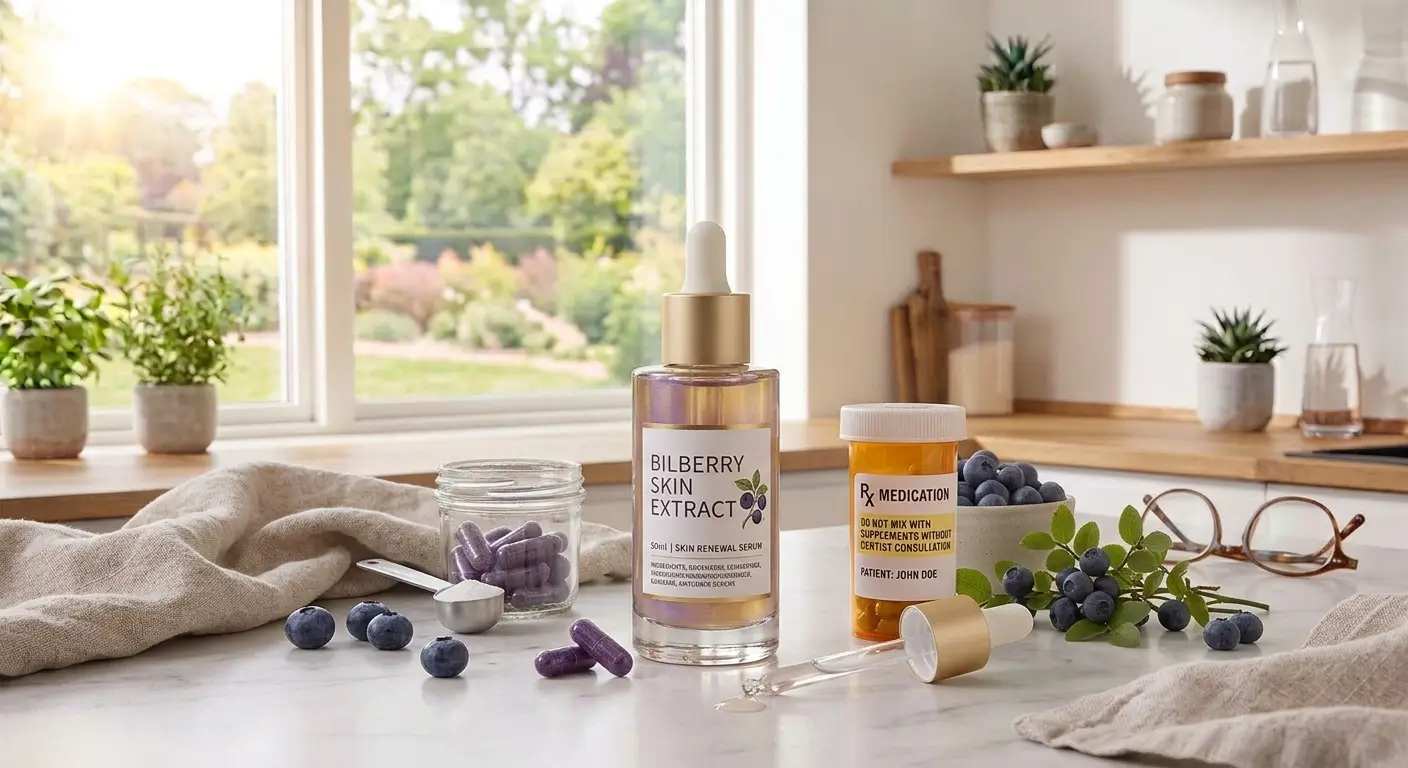
Bilberry is a small, dark-blue berry native to Northern Europe and parts of Asia. It produces an extract exceptionally rich in anthocyanins, plant-based antioxidant flavonoids that give bilberry its intense blue-purple pigment and are responsible for most of its health-supporting activity. Bilberry extract is made by concentrating these anthocyanins to a standardised, measurable level, typically 25–36%, making it suitable for consistent supplements in a way that simply eating the berries cannot be.
For a full explanation of what bilberry is, where it comes from, and how it compares to blueberry, see our complete article on what is bilberry extract and how it works.
Why Antioxidants Are Important for Skin Health
To understand why bilberry is relevant to skin, you first need to understand what free radicals and oxidative stress actually do.
- The Free Radical Problem
Free radicals are unstable molecules produced by UV radiation, air pollution, cigarette smoke, stress hormones, processed food, and even normal metabolic processes like breathing and energy production. They’re missing an electron, which makes them highly reactive; they “steal” electrons from nearby molecules, damaging cell membranes, proteins, and DNA in the process. When free radical production exceeds the body’s ability to neutralise them, the result is oxidative stress, a state of cellular damage that is now understood to be a primary driver of accelerated skin ageing, chronic inflammation, and the loss of the structural proteins that keep skin looking healthy.
- How Oxidative Stress Affects Skin Specifically
Collagen degradation: Oxidative stress activates matrix metalloproteinases (MMPs), enzymes that break down collagen and elastin fibres in the dermis. This structural breakdown leads to fine lines, sagging, and loss of the plumpness associated with younger skin.
Impaired barrier function: Free radical damage to cell membrane lipids, a process called lipid peroxidation, compromises the skin barrier’s ability to retain moisture. The result is chronic dryness that responds poorly to topical moisturisers because the structural problem is below the surface.
Hyperpigmentation: UV-triggered oxidative stress is one of the primary stimuli for excess melanin production, the mechanism behind dark spots, uneven tone, and the general “sun damage” effect that becomes more visible with age.
Reduced cell renewal: Oxidative damage to skin stem cells and the cellular machinery governing skin renewal slows the rate of cell turnover, contributing to the dullness and rough texture of oxidatively stressed skin.
Antioxidants address this problem at its root, neutralising free radicals before they cause downstream damage, reducing the inflammatory response that amplifies it, and protecting the enzymes and proteins that keep skin functioning well.
Bilberry Benefits for Skin
- Antioxidant Protection for Skin Cells
Bilberry’s primary contribution to skin health is its antioxidant activity, and it’s potent. Bilberry anthocyanins neutralise free radicals through direct electron donation, reducing the oxidative damage that drives most of the visible and invisible changes in ageing and stressed skin. But bilberry doesn’t just act as a direct free radical scavenger. Its anthocyanins also activate the Nrf2 pathway, a molecular switch that upregulates the body’s own production of antioxidant enzymes, including superoxide dismutase and glutathione peroxidase. This means bilberry amplifies internal antioxidant defences rather than simply supplementing them.
When taken as a daily supplement, these effects are systemic, reaching skin cells through circulation and providing protection at the level of cell membranes, mitochondria, and DNA across all layers of the skin.
- Support for Collagen Preservation
This is one of the most structurally important mechanisms through which bilberry supports skin health, and it’s worth being precise about what the evidence says. Bilberry doesn’t directly stimulate collagen production in the way that vitamin C or retinol do. What it does is protect collagen from degradation by inhibiting the collagenase and elastase enzymes that break collagen and elastin down. These enzymes are activated by UV exposure, oxidative stress, and inflammation, all of which bilberry’s antioxidant and anti-inflammatory mechanisms reduce. For a complete collagen-support strategy, bilberry works best alongside nutrients that actively stimulate collagen synthesis, vitamin C, and collagen peptides in particular, creating a two-sided approach of building new collagen while protecting existing collagen from breakdown.
- Support for Skin Hydration
Healthy skin hydration isn’t simply about drinking water or applying moisturiser; it’s fundamentally a question of barrier integrity. The skin barrier’s ability to retain moisture depends on the quality of its lipid layer, which in turn depends on the health of cell membranes and the absence of lipid peroxidation damage. Bilberry’s protection of cell membrane lipids from oxidative damage supports the structural integrity of the barrier that keeps moisture in. This internal support is different in nature from the humectant or occlusive effects of topical moisturisers; it addresses the underlying barrier function rather than the surface effect.
- Protection From Environmental Stress
Urban skin is under a different kind of oxidative pressure than the research on UV alone captures. Air pollution, particulate matter, ozone, nitrogen dioxide, and other industrial compounds generate free radicals on contact with skin and trigger an inflammatory cascade that accelerates ageing, worsens sensitivity, and disrupts barrier function. Bilberry’s antioxidant activity protects this environmental oxidative load from within, supplementing the external barrier’s ability to filter out pollutants with cellular-level free radical neutralisation in the dermal tissue beneath.
- Supporting a Brighter-Looking Complexion
Uneven skin tone and dullness are two of the most common aesthetic concerns, and both have significant oxidative and inflammatory drivers.
Hyperpigmentation: Bilberry anthocyanins have demonstrated inhibitory effects on tyrosinase, the enzyme responsible for melanin synthesis, in laboratory research. By moderating the melanin overproduction triggered by UV and oxidative stress, bilberry may contribute to a gradual improvement in skin tone evenness over consistent supplements.
Dullness: The accumulated surface of dead cells that haven’t turned over properly, combined with the reduced light-reflecting quality of oxidatively stressed skin, creates the flat, dull appearance that makes skin look older and less vital. Improving the oxidative environment within skin cells supports more efficient cell renewal and better surface quality over time.
- Improved Skin Microvascular Health
This mechanism is less commonly discussed in skin supplement contexts but is biologically significant. Skin health depends not just on cell chemistry but on the vascular supply that delivers oxygen and nutrients to skin cells and removes metabolic waste products. Bilberry has well-documented effects on capillary integrity and microvascular circulation, one of its most consistent findings across multiple research applications, including its eye health evidence. These vascular benefits translate directly to skin: better capillary health means better nutrient delivery to dermal fibroblasts, the collagen-producing cells, better oxygenation of skin tissue, and more efficient removal of inflammatory mediators.
- Healthy Ageing Support
Taken together, bilberry’s antioxidant, anti-inflammatory, collagen-protective, and vascular mechanisms provide a multi-pronged approach to slowing the visible and invisible effects of skin ageing. None of these effects reverses existing skin damage. But the weight of evidence from antioxidant research suggests that consistent antioxidant intake is associated with measurably slower skin ageing, and bilberry is among the better-evidenced botanical antioxidants for this application.
Bilberry and Skin Ageing
Skin ageing is driven by two converging forces: intrinsic ageing, the genetically programmed slowdown of cellular processes, and extrinsic ageing, the accumulated damage from environmental exposure, primarily UV radiation and pollution. Extrinsic ageing is substantially mediated by oxidative stress, making antioxidant support one of the most direct nutritional strategies for slowing its visible consequences. Studies on anthocyanin-rich diets and skin ageing indicators have found associations between higher dietary anthocyanin intake and reduced skin roughness, better elasticity, and lower levels of the inflammatory markers associated with skin ageing.
For women navigating the skin changes of perimenopause and post-menopause, where declining oestrogen removes a significant antioxidant-like protective influence on the skin, supplement antioxidant support becomes more important precisely when the body’s own defences are diminishing. Bilberry’s mechanisms are directly relevant to the accelerated collagen loss, increased sensitivity, and worsening dryness of this life stage, as published in the National Library of Medicine.
Bilberry and Collagen Support
It’s worth being clear about what bilberry can and cannot claim here, because the supplement industry sometimes overstates this connection.
What bilberry does for collagen:
- Inhibits collagenase, the enzyme that degrades collagen
- Inhibits elastase, the enzyme that degrades elastin
- Reduces the UV-induced and oxidative stress-driven activation of MMPs that accelerate collagen breakdown
- Protects fibroblasts, collagen-producing cells, from oxidative damage, supporting their ongoing ability to synthesise new collagen
What bilberry does not do:
- It doesn’t provide the direct cofactors like vitamin C needed for collagen synthesis
- It doesn’t supply the amino acid building blocks like glycine and proline that collagen is made from
- It doesn’t directly stimulate fibroblast activity in the way retinol or growth factors do
The most honest characterisation is that bilberry is a collagen preservative; it protects the structural proteins already present and reduces the rate of their breakdown, rather than building new collagen directly. This is a meaningful contribution, but it works best as part of a broader skin nutrition strategy that also addresses collagen synthesis through vitamin C, collagen peptides, and other relevant nutrients, research on anthocyanins and skin collagen.
Bilberry-Rich Foods
| Source | Availability |
|---|---|
| Fresh bilberries | Seasonal (summer), primarily in Northern and Central Europe |
| Dried bilberries | Year-round, retaining significant anthocyanin content |
| Bilberry jam | Widely available in Scandinavian and Eastern European countries |
| Bilberry juice | Commercial products available, with variable anthocyanin content |
| Wild foraged bilberries | Traditional in Scandinavian, Finnish, and Baltic regions |
Bilberry Supplements for Skin Health
- Look for Standardised Extract
The most important quality indicator for any bilberry supplement is standardisation, specifically, the anthocyanin percentage guaranteed per serving. Quality products are standardised to 25–36% anthocyanins. Without this specification, the active compound content is undefined and potentially negligible.
- Recommended Dosage
For skin health and general antioxidant support, 80–160mg daily of standardised bilberry extract 25% anthocyanins is in line with the doses used in research. Follow product label instructions, as they will be calibrated to the specific extract’s concentration.
- Quality Markers
- Standardised anthocyanin percentage clearly stated on the label
- Berry-derived extract is not the most studied form for skin and eye health
- Clean formulation without unnecessary fillers or artificial additives
- Third-party testing for purity, where available
- Combination Formulations
Bilberry pairs particularly well with astaxanthin for skin health, a combination that addresses skin ageing through more mechanisms simultaneously than either alone. Astaxanthin’s MMP-inhibiting and UV-protective effects are structurally complementary to bilberry’s collagenase inhibition and vascular support, creating a broader protective strategy across collagen preservation, barrier function, and cellular antioxidant defence.
Recommended Product
Wellosophy Astaxanthin & Bilberry Extract
For skin health support, we recommend the Wellosophy Astaxanthin & Bilberry Extract, a combination product designed around the complementary mechanisms of both compounds.
Bilberry extract contributes its anthocyanin antioxidant activity, collagenase and elastase inhibition, skin microvascular support, and the anti-inflammatory protection that reduces the reactive skin responses linked to environmental stress and ageing.
Astaxanthin adds a potent single-compound antioxidant that spans the full width of cell membranes, inhibits the MMP enzymes that accelerate UV-induced collagen breakdown, provides UV cellular protection from within, and reduces the systemic inflammation that drives accelerated skin ageing.
For skin specifically, the combination covers:
- Collagen protection from two angles: bilberry’s collagenase inhibition + astaxanthin’s MMP suppression
- Cellular antioxidant protection at multiple levels: bilberry’s anthocyanin activity + astaxanthin’s membrane-spanning antioxidant architecture
- UV defence from within: astaxanthin’s documented UV cellular protection + bilberry’s anti-inflammatory reduction of the post-UV damage cascade
- Microvascular skin support: bilberry’s capillary protective effects supporting nutrient delivery to the dermis
Conclusion
Healthy, resilient skin isn’t built only at the surface. The quality of your skin reflects the cellular environment in which it’s constructed, the balance of oxidative stress and antioxidant protection, the integrity of the collagen network, the health of the vascular supply that nourishes it, and the inflammatory tone that determines how it responds to daily challenge. The bilberry benefits for skin address several of these foundational factors simultaneously, through antioxidant protection, collagen preservation, microvascular support, and anti-inflammatory activity that works from within in ways topical skincare simply cannot reach.
Used consistently as part of a complete skin health approach- good SPF daily, targeted actives like vitamin C and retinol, adequate hydration, and a diet rich in antioxidant foods- the bilberry supplements add a meaningful internal dimension to what’s possible for skin health at any age.