

Astaxanthin Side Effects: Risks, Dosage Safety & Interactions
Astaxanthin is a natural pigment produced by a type of freshwater microalgae called Haematococcus pluvialis. It belongs to the carotenoid family, the same group of compounds that give carrots their orange colour and tomatoes their red. Astaxanthin itself is responsible for the pinkish colour of wild salmon, shrimp, and flamingos.
Read our complete guide on What is Astaxanthin and how does it work?.
It’s taken as a supplement primarily for its antioxidant properties. Research has linked consistent astaxanthin supplements to benefits for skin health, eye health, cardiovascular function, and exercise recovery, and it’s become one of the more studied natural antioxidants available. Most astaxanthin supplements are produced from algae rather than from seafood, making them suitable for vegetarians and vegans, which adds to their growing popularity.
Is Astaxanthin Safe?
For the majority of healthy adults, yes, astaxanthin has a well-established safety profile at the doses used in research and most commercial supplements. Natural astaxanthin derived from Haematococcus pluvialis has been granted GRAS status, Generally Recognised As Safe by the US Food and Drug Administration. It is also approved as a novel food ingredient in the European Union. These are meaningful regulatory acknowledgements that require a substantive body of safety data. Clinical trials using doses between 4mg and 40mg daily for periods of up to several months have not identified serious adverse effects. The most commonly used supplements range from 4 to 12mg daily, which is considered well within a safe and well-tolerated window.
Common Astaxanthin Side Effects
- Skin Discolouration at High Doses
At very high doses, typically above 40mg daily, significantly more than most commercial supplements contain, some people develop a slight pinkish or yellowish tint to their skin. This is called carotenodermia and is the same harmless effect seen in people who eat large quantities of carrots or other carotenoid-rich foods over an extended period. It’s purely cosmetic, carries no health risk, and fully reverses when the supplement is stopped or the dose is reduced.
Read our guide on astaxanthin benefits for skin.
- Stool Colour Changes
The red-orange pigment in astaxanthin can affect the colour of stools; this is simply the pigment passing through the digestive tract and is harmless. It’s similar to what happens when you eat a lot of beetroot.
- Digestive Discomfort
A small number of people report mild stomach discomfort, loose stools, or nausea when first starting the astaxanthin supplement. This is more common when the supplement is taken on an empty stomach, since astaxanthin is fat-soluble and absorbs best alongside dietary fat. Taking astaxanthin with a meal that contains some healthy fat, eggs, avocado, fish, or olive oil typically resolves this quickly.
- Low Blood Pressure
Some research suggests astaxanthin may modestly reduce blood pressure. For most people, this isn’t a concern, but for those who already have low blood pressure or are taking antihypertensive medication, it’s worth being aware of.
Who Should Avoid Astaxanthin
- Pregnant and Breastfeeding Women
There isn’t enough clinical research on astaxanthin use during pregnancy or breastfeeding to confirm its safety in these situations. For this reason, most guidance recommends that pregnant and breastfeeding women avoid astaxanthin supplements unless specifically advised by their healthcare provider.
- Children
Astaxanthin supplements haven’t been studied in children, and standard supplements are formulated and dosed for adults. Children should not take astaxanthin supplements unless under medical supervision.
- People With Shellfish Allergies
Astaxanthin supplements derived from algae don’t contain shellfish proteins. However, some people with shellfish allergies are sensitive to the carotenoid pigments found in shellfish rather than the proteins, and in rare cases, carotenoid supplements may trigger a reaction. If you have a known shellfish allergy, speak to your doctor before starting an astaxanthin supplement.
- People With Autoimmune Conditions
Astaxanthin has immune-modulating properties. In most people, this is beneficial; it helps regulate immune activity without suppressing or overstimulating it. However, people with autoimmune conditions who are taking immunosuppressant medications should discuss the astaxanthin supplement with their doctor, since any supplement that affects immune activity has the potential to interact with their treatment.
- People With Chronic Medical Conditions
If you’re managing any chronic health condition, particularly cardiovascular, hormonal, or metabolic conditions, it’s a good habit to mention any new supplement to your GP. This is sensible advice for any supplement, not a specific warning about astaxanthin.
Can Astaxanthin Interact With Medications?
- Blood Pressure Medications
Astaxanthin’s potential to modestly lower blood pressure means it could compound the effect of antihypertensive medications, leading to blood pressure dropping lower than intended. If you take medications to manage blood pressure, let your prescribing doctor know you’re considering an astaxanthin supplement.
- Blood Thinners
Astaxanthin has shown mild anticoagulant properties in some research, meaning it may slightly reduce blood clotting activity. For most people, this is not a concern, but for people taking prescription anticoagulants such as warfarin or other blood-thinning medications, combining them with astaxanthin could theoretically increase bleeding risk. This is worth discussing with your doctor before starting supplements.
- Immunosuppressant Medications
As mentioned in the autoimmune section above, astaxanthin’s immune-modulating effects mean that people taking medications that suppress or modify immune activity, such as those used after organ transplants or for autoimmune diseases, should discuss astaxanthin with their healthcare provider before use.
- Hormone-Sensitive Medications or Conditions
Astaxanthin doesn’t have documented oestrogenic activity, but it’s worth flagging that some carotenoids can influence hormonal pathways. Anyone taking hormone therapy, oral contraceptives, or managing hormone-sensitive conditions should mention astaxanthin to their prescriber.
Recommended Astaxanthin Dosage
| Dose Range | Typical Use |
|---|---|
| 4–6mg daily | General antioxidant support, skin health, eye health |
| 6–8mg daily | Active lifestyle and recovery support |
| 8–12mg daily | More targeted cardiovascular or performance support |
| Above 12mg | Typically, in clinical research settings, not standard daily supplements |
For most people using astaxanthin as a general wellness supplement, 4–6mg daily is a reasonable starting point. Quality supplements will specify their dosage clearly on the label. EFSA’s safety assessment of astaxanthin as a novel food ingredient
A Supplement Worth Considering
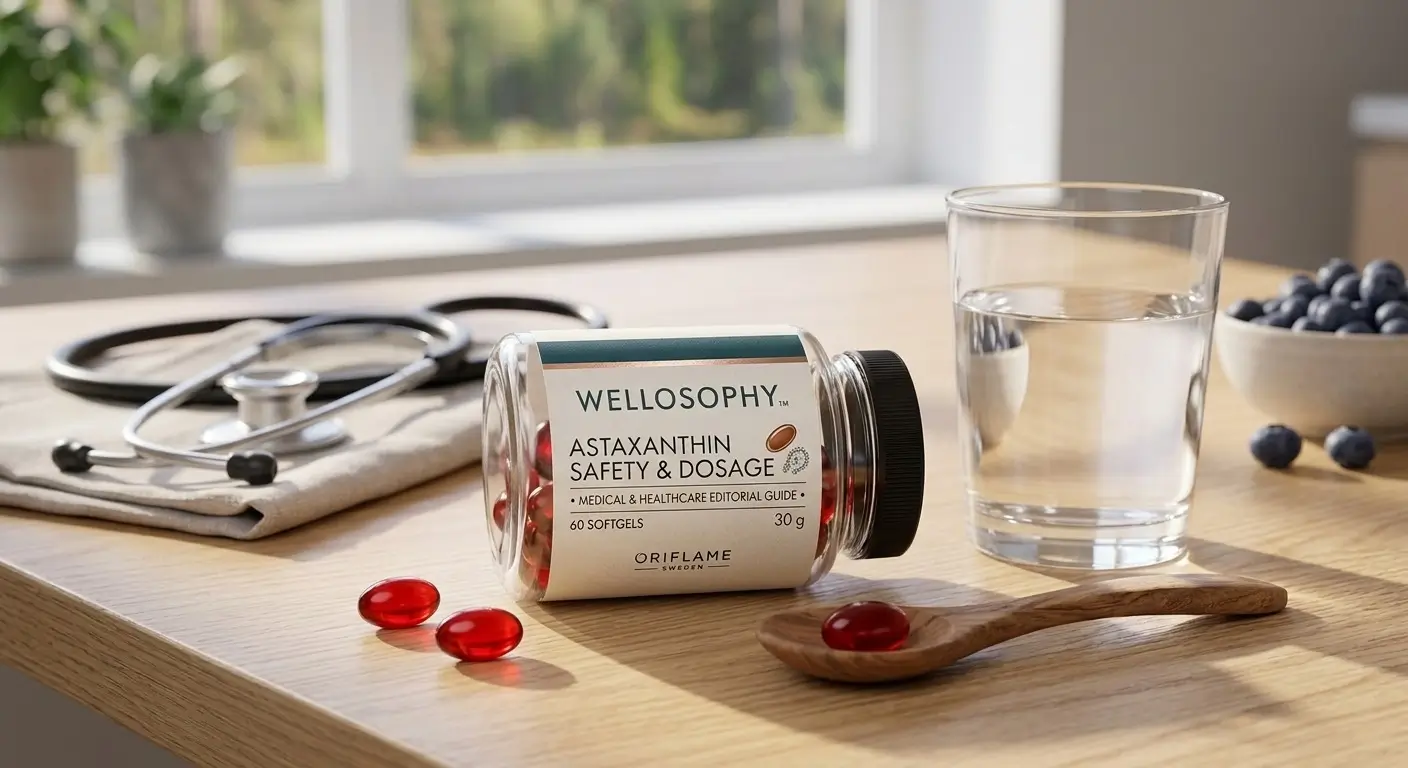
If you’re looking for a clean, well-formulated daily astaxanthin supplement, the Wellosophy Astaxanthin & Bilberry Extract is the product we recommend. It combines natural astaxanthin from Haematococcus pluvialis with bilberry extract, a rich source of anthocyanin antioxidants that complement astaxanthin particularly well for eye health and circulatory support. The two compounds address overlapping concerns through different but compatible mechanisms, making the combination more comprehensive than astaxanthin alone. The product uses an oil-based softgel format, which is important for absorption; astaxanthin in a dry powder capsule without an oil base absorbs significantly less efficiently. It’s designed for daily use, and it’s one of the cleaner formulations available in this category.
Conclusion
Astaxanthin has one of the better safety profiles in the supplement category. At the doses used in research and in quality commercial products, the vast majority of healthy adults can take it daily without meaningful concern. The side effects that have been documented are mild, uncommon, and reversible, and most of them are either dose-dependent or easily managed by taking the supplement with food. For those who can take it without these considerations, consistent daily supplements at 4–8mg alongside a fat-containing meal are both effective and well-supported by the available evidence.