


How Menopause Affects Your Skin: Hormones, Collagen Loss, and the Best Skincare Solutions
During perimenopause and menopause, your skin goes through some of the most significant changes of your adult life. The shift is hormonal, and it’s happening at a cellular level. But understanding what is happening is the first step toward doing something about it, and there is a great deal you can do.
- The Role of Oestrogen, and What Happens When It Drops
Oestrogen is far more than a reproductive hormone. It plays a central role in skin health, stimulating collagen production, maintaining skin thickness, regulating moisture levels, and supporting the skin’s natural repair processes. As you approach menopause, oestrogen levels begin to fluctuate and then decline significantly. Research suggests that skin loses approximately 30% of its collagen in the first five years after menopause. The effects of this loss compound year on year. After that initial period, collagen continues to decline at around 2% per year.
- Collagen Loss and Loss of Firmness
Collagen is the scaffolding of your skin. It gives your face its structure, its firmness, and that characteristic bounce that younger skin has. When collagen breaks down faster than it’s replaced, which is exactly what happens post-menopause, skin loses volume and begins to sag. The jawline softens. The cheeks lose their fullness. Nasolabial folds deepen. At the same time, elastin fibres (which give skin its elasticity) degrade too. Once springy skin becomes less able to snap back after expressions or movement, leading to more persistent lines.
- Thinning Skin and a Weakened Barrier
Oestrogen also helps maintain the skin barrier, the outermost protective layer that keeps moisture in and irritants out. As oestrogen drops, the skin barrier becomes compromised. Skin gets thinner, more translucent, and more reactive. You may notice that products you’ve used for years suddenly sting or irritate. Thinning skin is also more susceptible to bruising, sensitivity to temperature changes, and environmental stressors like wind and pollution.
- Reduced Hydration from Within
Oestrogen helps the skin retain hyaluronic acid, the molecule responsible for keeping skin plump and hydrated. Post-menopause, your skin’s natural hyaluronic acid content drops significantly. This is why dryness during menopause feels different from regular seasonal dryness. It goes deeper. No amount of drinking water fully compensates for this internal change.
Common Skin Concerns During Menopause
- Dryness and tightness even in women who previously had oily or combination skin
- Loss of firmness and facial contour, particularly around the jaw, cheeks, and neck
- Deepening wrinkles, especially around the mouth, eyes, and forehead
- Dullness and uneven skin tone from slower cell turnover and reduced circulation
- Increased sensitivity, redness, flushing, and reactions to previously tolerated products
- Adult breakouts and hormonal fluctuations can trigger unexpected acne in some women
- Dark spots and hyperpigmentation, sun damage accumulated over decades, become more visible as protective mechanisms weaken
Best Ingredients for Menopausal Skin
- Retinol
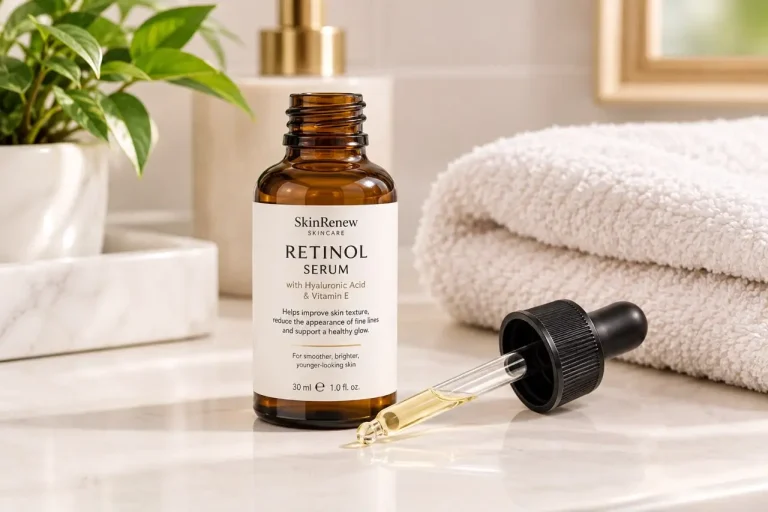
The most evidence-backed anti-ageing ingredient available. Retinol accelerates cell turnover, stimulates collagen synthesis, and visibly reduces fine lines and pigmentation. For menopausal skin, start with a low concentration (0.1–0.25%) and increase gradually. Use it at night only.
- Hyaluronic Acid
Essential for restoring the hydration that declining oestrogen takes away. Look for formulas with multiple molecular weights. Smaller molecules penetrate deeper layers of the skin, while larger molecules hydrate the surface.
- Peptides
Amino acid chains that signal fibroblasts (collagen-producing cells) to ramp up production. Peptides are gentle, effective, and work synergistically with both retinol and hyaluronic acid. Ideal for building firmness over time.
- Phytoestrogens
Plant-derived compounds that mimic the effects of oestrogen at the skin level. Soy isoflavones and red clover extract are the most studied. Some research suggests they can help improve skin thickness and hydration in post-menopausal women.
- Ceramides
Lipid molecules that repair and reinforce the skin barrier. Critical for addressing the sensitivity and thinning that comes with hormonal skin changes. Ceramides help seal moisture in and protect the skin from reactive episodes.
- Niacinamide (Vitamin B3)
A versatile ingredient that strengthens the barrier, brightens dull skin, reduces redness, and minimises the appearance of pores, addressing several menopausal skin concerns in one ingredient.
- Vitamin C
A brightening antioxidant that combats dullness, fades dark spots, and provides powerful protection against environmental damage. Best used in the morning, before SPF.
- SPF 30+ (Daily)
UV radiation accelerates every aspect of skin ageing, collagen loss, pigmentation, and barrier damage. During menopause, when skin is already more vulnerable, sun protection is non-negotiable. Every day. Without exception.
Recommended Skincare Routine for Menopausal Skin
Morning Routine
Step 1: Gentle Cream Cleanser. Cleanse without stripping. Choose a milky or cream formula free from sulphates and harsh surfactants. Lukewarm water only; hot water further disrupts an already compromised barrier.
Step 2: Hydrating Toner or Essence. A lightweight, alcohol-free toner containing hyaluronic acid or panthenol prepares skin to absorb what follows. This step amplifies everything that comes next.
Step 3: Vitamin C Serum. Apply to brighten, protect, and even out skin tone. This creates an antioxidant shield over the skin before it’s exposed to UV and environmental stressors throughout the day.
Step 4: Eye Cream with Peptides. The periorbital area (around the eyes) is the thinnest skin on the face and the first to show menopausal changes. A dedicated eye cream with peptides and hyaluronic acid addresses fine lines, puffiness, and hollowness.
Step 5 Rich Moisturiser: Choose a formula rich in ceramides, peptides, and humectants. This is not the step to compromise on. Menopausal skin needs significantly more nourishment than it did a decade ago.
Step 6: Broad Spectrum SPF 30+. Your most powerful anti-ageing tool. Apply generously to face, neck, and décolletage every morning.
Evening Routine
Step 1: Double Cleanse. If you’ve worn SPF or makeup, begin with a cleansing oil or balm to dissolve it completely before following with your cream cleanser.
Step 2: Gentle Exfoliation (2–3x per week). A low-percentage AHA (lactic acid or mandelic acid works especially well for sensitive, mature skin) dissolves dead surface cells, boosts radiance, and helps active ingredients absorb more effectively. Do not combine with retinol on the same night.
Step 3: Retinol Serum (alternate nights). Apply a pea-sized amount of retinol on nights when you haven’t exfoliated. Build frequency slowly: two nights per week for the first month, three for the second, and so on.
Step 4: Peptide or Hyaluronic Acid Serum. Layer over retinol after it has absorbed (around 20 minutes), or use as your primary active on non-retinol nights. This step is about deep hydration and collagen support.
Step 5: Nourishing Night Cream. A rich, reparative night cream containing ceramides, niacinamide, and peptides supports the skin’s natural regenerative cycle, which peaks during sleep.
Step 6: Face Oil (optional). A few drops of a non-comedogenic facial oil (Novage+ Intense Nourishment Facial Oil Capsules) pressed over your night cream provides an occlusive seal that locks everything in overnight.
A Complete Skincare Routine Designed for This Transition
Building an effective routine from scratch can feel like a full-time job, especially when you’re still working out what your skin needs at this stage. The Novage+ Restore Renewing Routine was developed specifically to address the skin changes that come with ageing and hormonal transition, targeting loss of firmness, reduced hydration, and skin density. Rather than mixing and matching products from different brands (where ingredients can conflict or underperform), a complete skincare regimen like Novage+ Restore ensures every step works together. The formulations are designed to layer intelligently, maximising the impact of each active ingredient across morning and evening use.
Tips to Support Healthy Skin During Menopause
Nutrition matters more than you think. Skin is an organ, and it responds to what you feed it. Focus on omega-3 fatty acids (oily fish, flaxseed, walnuts) to support the skin barrier, and antioxidant-rich foods (berries, leafy greens, colourful vegetables) to fight free radical damage.
Prioritise sleep. Growth hormone, which plays a role in skin repair, is secreted most abundantly during deep sleep. Chronic poor sleep accelerates collagen loss and increases cortisol, which breaks down collagen further.
Manage stress actively. Elevated cortisol is directly damaging to skin structure. Regular exercise, mindfulness, and time in nature aren’t just good for your mental health; they’re part of your skincare routine.
Stay hydrated, but manage expectations. Drinking water supports overall skin health, but it cannot replace the hyaluronic acid and ceramide loss caused by oestrogen decline. Topical products are essential, not optional.
Consider speaking to your GP about HRT. Hormone Replacement Therapy (HRT) has been shown to have measurable benefits for skin, improving thickness, moisture, and collagen content. It’s not right for everyone, but it’s worth a conversation with your doctor.
Also, read more on How Menopause Changes Your Skin
Conclusion
Menopause is a significant transition, and so is the shift your skin makes alongside it. But it doesn’t have to mean accepting dryness, dullness, or sagging as inevitable. With the right understanding, the right ingredients, and a consistent routine, menopausal skin can be healthy, hydrated, and genuinely radiant. Start with the basics, a gentle cleanser, a hydrating serum, a rich moisturiser, and daily SPF. Add retinol and peptides when you’re ready. Be patient; real results take 8–12 weeks of consistency. And if you want a streamlined, expertly formulated starting point, the Novage+ Restore Renewing Routine is worth exploring- a complete skincare routine designed for exactly this skin transition, so you can focus on results rather than research.
If you’re not sure where to start, following a Complete skincare routine for mature skin can help restore hydration, firmness, and overall skin health.