


How to Repair Tooth Enamel: Remineralization, Daily Habits, and Dental Treatments
Understanding Enamel Loss: Demineralisation vs. Erosion
What Is Tooth Enamel?
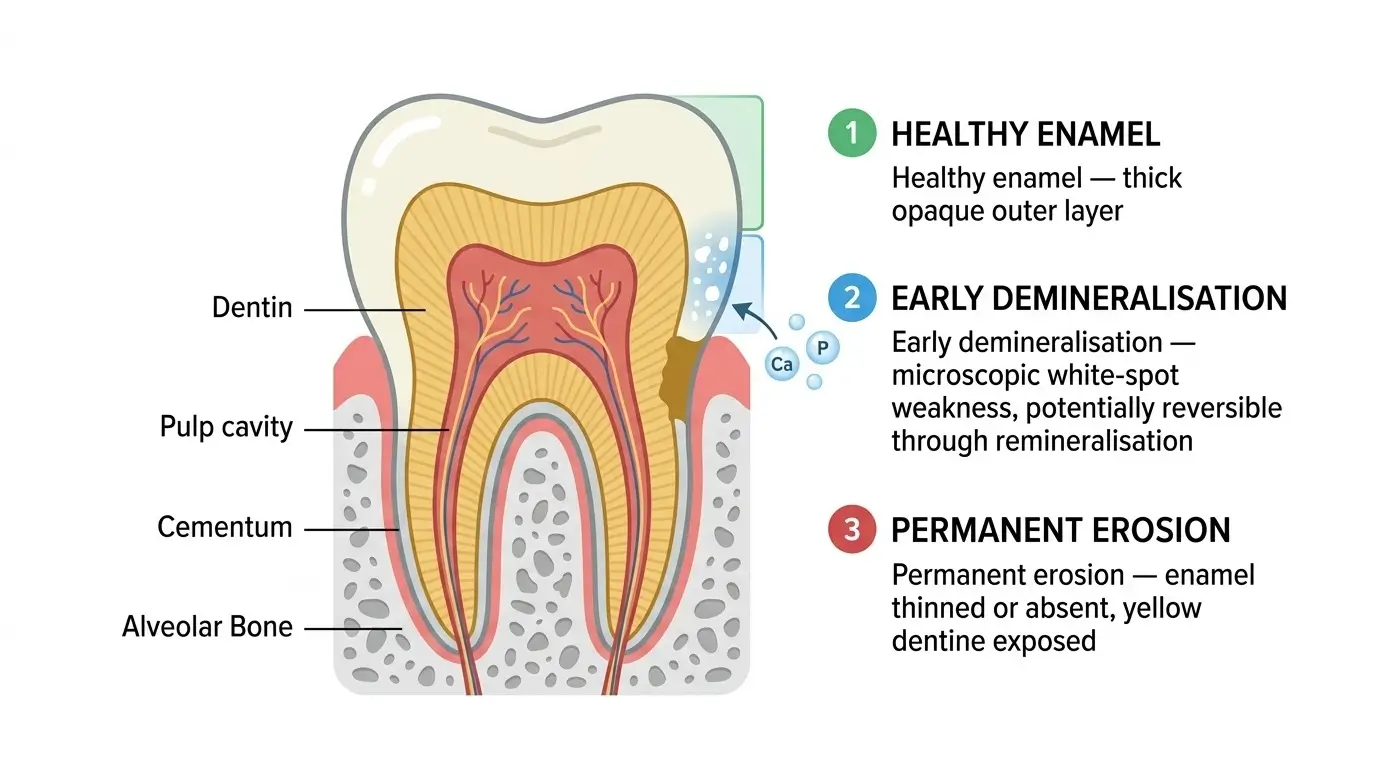
Tooth enamel is the hard outer layer that covers the visible part of every tooth. Its main mineral is hydroxyapatite, a calcium phosphate compound arranged in a tightly packed crystalline structure. This makes enamel the hardest tissue in the human body, even harder than bone. Despite its hardness, enamel is not indestructible. It protects the softer dentine layer beneath it, which surrounds the nerve-containing pulp at the centre of the tooth. When enamel weakens or wears away, this protection is reduced.
Stage 1: Demineralisation
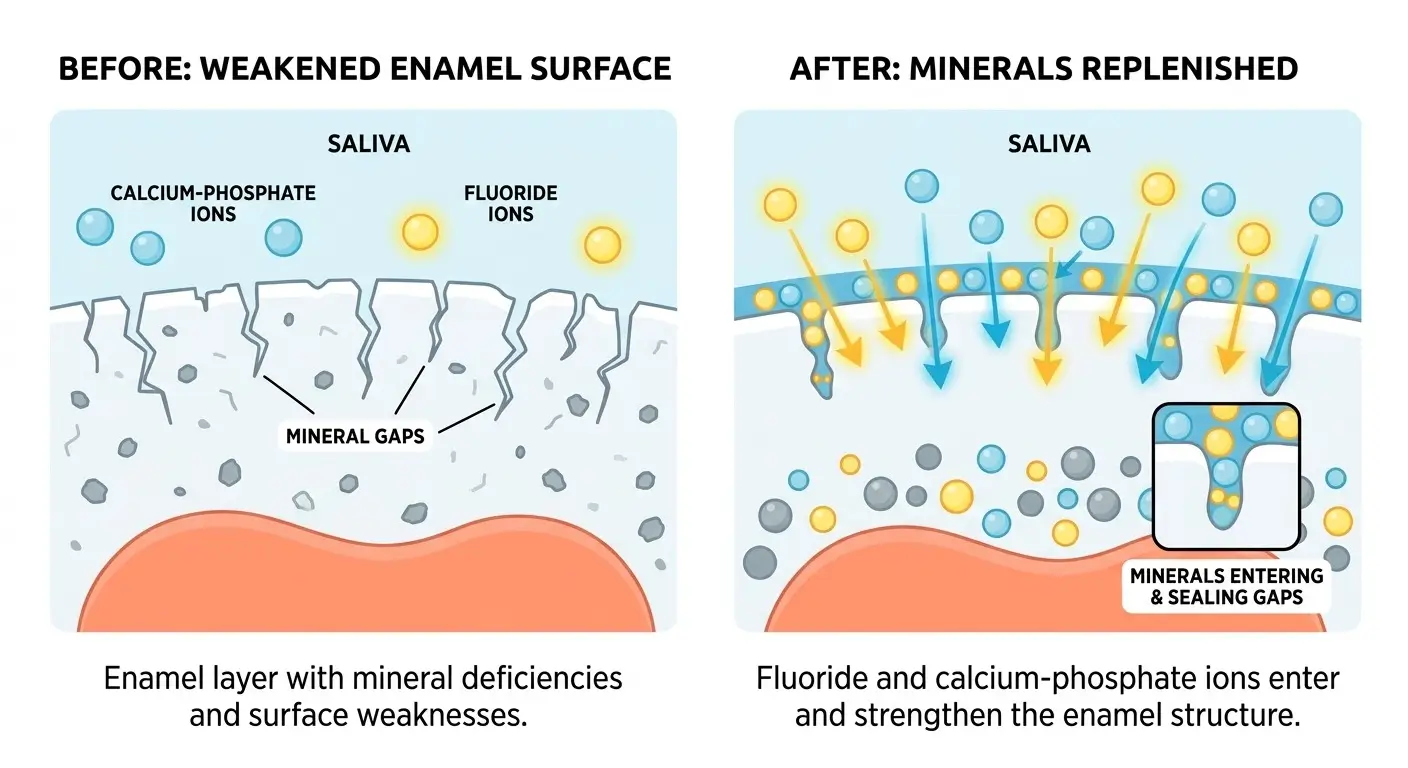
Whenever acids come into contact with your teeth, whether from food, drinks, or stomach acid, they can pull calcium and phosphate ions from the enamel surface. This creates tiny areas of weakness. If acid exposure is not too frequent, saliva helps neutralise the acid and gradually returns minerals to these weakened areas. This natural process of mineral loss and replacement happens in your mouth throughout the day. With the right habits, early-stage mineral loss can often be slowed, reduced, or partially reversed.
Stage 2: Permanent Erosion
When acid attacks are frequent or prolonged, or occur alongside physical abrasion, enamel can be permanently removed from the tooth surface. This is known as erosion, and it cannot be reversed. Once enamel is physically lost, the yellow dentine beneath it becomes more visible. Sensitivity may also increase because the microscopic dentinal tubules that connect to the nerve are no longer adequately insulated. At this stage, professional dental assessment and treatment are needed to protect your teeth and restore what you’ve lost.
Key Causes of Enamel Wear
- Frequent exposure to acidic foods and drinks: fizzy drinks, citrus fruits, sports drinks, and vinegar-based foods can lower the pH in your mouth and trigger acid attacks on enamel.
- Acid reflux or GORD (gastro-oesophageal reflux disease): stomach acid that regularly reaches the mouth can cause erosion, often affecting the inner surfaces of the upper teeth.
- Aggressive brushing and abrasion: brushing too hard or using stiff bristles, especially when enamel has already been temporarily softened by acid, can contribute to enamel wear over time.
- Bruxism (teeth grinding): repeated grinding places significant mechanical stress on enamel and can cause substantial wear, particularly at night.
- Dry mouth (xerostomia): saliva is an important defence against acid damage. When saliva flow is insufficient, the mouth loses much of its natural ability to neutralise acids and support remineralisation.
5 Proven Ways to Remineralise and Strengthen Tooth Enamel at Home
1. Brush With a Remineralising Toothpaste: Fluoride or Nano-Hydroxyapatite
Fluoride
Fluoride is the most clinically established ingredient for protecting enamel and preventing cavities. When present in the mouth, fluoride can combine with calcium and phosphate in demineralised enamel, helping to form fluorapatite, a mineral structure that is more resistant to acid attacks than the original hydroxyapatite. Fluoride does not rebuild enamel that has been physically lost. Its main benefit is protecting weakened areas and helping them resist further damage. Both the NHS and ADA recommend brushing twice daily with fluoride toothpaste, and the ADA provides guidance on choosing products with appropriate fluoride content.
Nano-Hydroxyapatite (nHAp)
Nano-hydroxyapatite is a synthetic form of the mineral naturally found in tooth enamel. It is used in a growing number of toothpastes and is intended to interact with the tooth surface and support remineralisation. Research into nHAp is promising and ongoing. Some studies suggest it may help reduce sensitivity and support mineral recovery in early demineralised areas. However, the evidence for nano-hydroxyapatite is still developing, and it does not yet have the same depth of long-term clinical evidence for cavity prevention as fluoride.
See our guide on WHITENING TOOTHPASTE ARTICLE for help reading toothpaste labels and understanding which ingredients to look for.
2. Optimise Your Saliva Production
Saliva is the mouth’s most important natural defence against enamel damage. It neutralises acids, washes away food residue, and supplies calcium and phosphate ions that support remineralisation. People with reduced saliva flow are at a significantly higher risk of enamel erosion and tooth decay.
Practical steps to support healthy saliva:
- Stay well hydrated throughout the day. Even mild dehydration can reduce saliva flow.
- Chew sugar-free gum after meals, particularly products containing xylitol, which may also help reduce levels of decay-causing bacteria. Chewing stimulates saliva production.
- Limit excessive caffeine and alcohol, as both can contribute to dry mouth.
- Seek professional assessment if dry mouth persists. It can be a side effect of certain medications or a sign of an underlying condition that may benefit from treatment.
3. Make Key Dietary Adjustments
Foods and nutrients that support dental health:
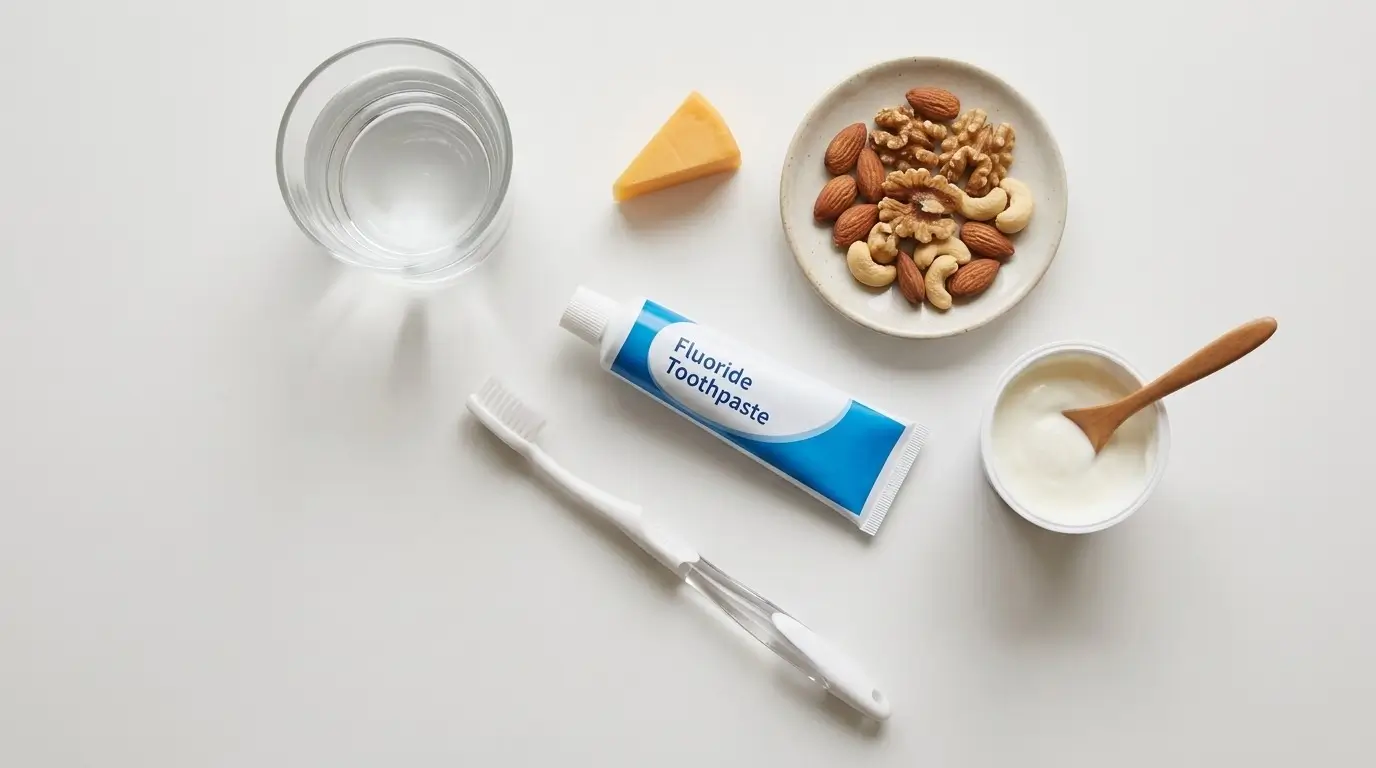
- Calcium-rich foods: Dairy products such as milk, cheese, and yoghurt are among the best sources. If you avoid dairy, calcium-fortified plant milks, tofu, and dark leafy greens such as kale and broccoli are useful alternatives.
- Phosphate: Found in meat, fish, eggs, dairy, nuts, and wholegrains, phosphate works alongside calcium to maintain the mineral balance around your teeth.
- Vitamin D: This vitamin is necessary for calcium absorption and overall bone and dental health. Oily fish, eggs, fortified foods, and appropriate sunlight exposure are among its main sources.
- Water: Fluoridated tap water provides a low level of ongoing fluoride exposure and helps rinse away food acids.
4. Master the “30-Minute Post-Acid Rule”
⚠️ Do not brush your teeth immediately after consuming acidic foods or drinks.
After exposure to acids, the tooth enamel surface becomes temporarily more vulnerable to physical abrasion. Brushing during this period may remove softened mineral from the enamel surface, turning a temporary effect of acid exposure into actual structural loss.
The recommended approach:
- Rinse your mouth with plain water to help dilute and clear the acid.
- Allow saliva approximately 30–60 minutes to neutralise the remaining acid and begin supporting the enamel surface.
- Then brush normally with fluoride toothpaste.
5. Switch to a Soft-Bristled Toothbrush and Gentle Technique
Aggressive brushing is a recognised and preventable contributor to tooth wear, particularly along the gum line and on the outer surfaces of teeth. The damage usually builds up gradually over the years, which is why many people do not notice it until it becomes visible.
Practical recommendations:
- Use a soft-bristled toothbrush; soft bristles clean effectively while applying less mechanical force to enamel and gum tissue than medium or hard bristles.
- Apply gentle, controlled pressure: if the bristles start spreading outward after a few weeks, this usually means you are brushing too hard. The bristles and toothpaste do the cleaning, not excessive pressure.
- Focus on technique rather than force: small circular motions or gentle back-and-forth strokes directed at all tooth surfaces and the gum line are more effective and less damaging than vigorous horizontal scrubbing.
- Consider an electric toothbrush with a pressure sensor: this feature can help you recognise when you are pressing too hard.
Best Toothpastes for Tooth Enamel Protection
Optifresh Pro White Toothpaste: Best for Everyday Brightness and Surface Stain Prevention
If your main concern is keeping teeth clean, bright, and free of everyday staining from coffee, tea, and food, Optifresh Pro White Toothpaste is your daily go-to. It is formulated to help remove surface staining through consistent twice-daily brushing, while supporting overall enamel care as part of a healthy oral hygiene routine.
This suits you if:
- Your teeth have gradually dulled from everyday eating and drinking
- You want to maintain a brighter smile as part of your daily routine
- You want a whitening-supportive toothpaste that does not aggravate sensitivity
Optifresh Sensitive Toothpaste: Best for Sensitive Teeth and Enamel Recovery
If you are experiencing tooth sensitivity, particularly sensitivity to cold, heat, or sweet foods, this is the toothpaste to reach for first. Optifresh Sensitive Toothpaste is specifically formulated for people with sensitive teeth. It supports daily cleaning while being gentle on enamel that may already be under stress.
This suits you if:
- You wince when drinking cold water or eating something sweet
- Previous whitening toothpastes have made your sensitivity worse
- You are in the process of remineralising weakened enamel and need a gentle daily option
- Your dentist has flagged early enamel wear
Tip: Many dental professionals recommend starting with a sensitive toothpaste for several weeks before transitioning to a whitening formula. This gives the enamel and dentine time to settle before introducing any additional active ingredients.
Optifresh Natural Oil Toothpaste: Best for a Natural Daily Oral Care Routine
For those who prefer naturally inspired ingredients in their oral care routine, Optifresh Natural Oil Toothpaste provides effective daily cleaning with a formula built around natural oil-based ingredients. Keeping teeth consistently clean and plaque-free is the foundation of any enamel protection plan. This toothpaste supports that daily baseline in a formula suited to those who prefer a more natural approach.
This suits you if:
- You prefer natural or botanical ingredients in your personal care products
- You want a gentle everyday toothpaste to pair with a targeted remineralising product
- You are building a cleaner, simpler oral care routine
Optifresh Maximum Fresh Toothpaste: Best for Fresh Breath and Complete Daily Care
Enamel erosion and acidic foods that harm your teeth also tend to affect your breath. Optifresh Maximum Fresh Toothpaste delivers powerful freshness alongside daily plaque control, making it a strong choice for those who want complete oral hygiene in one product.
This suits you if:
- Fresh breath is as important to you as enamel protection
- You want thorough daily cleaning and plaque control
- You eat or drink a lot of acidic or flavourful foods and want a toothpaste that handles the full picture
Professional Dental Treatments for Severely Damaged Enamel
Fluoride Varnishes and High-Concentration Gels
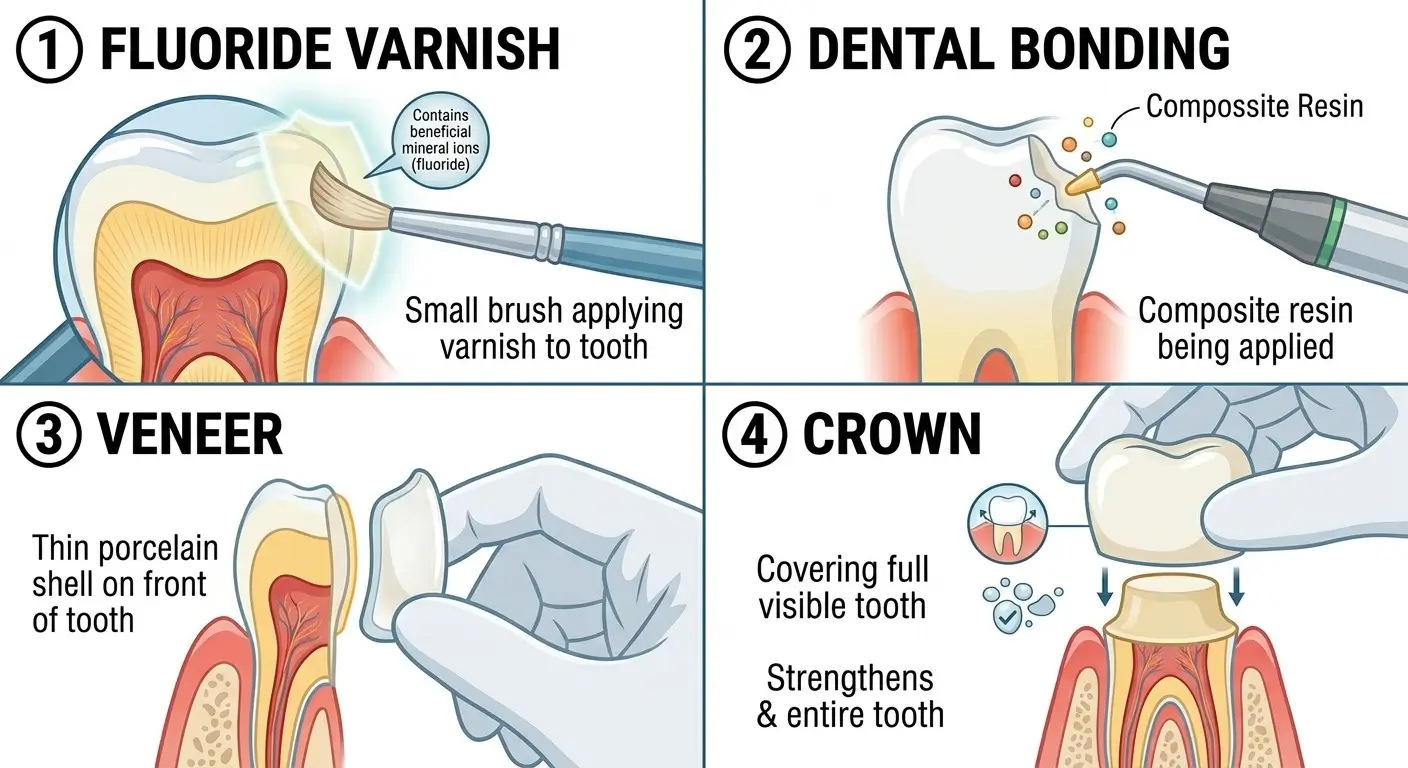
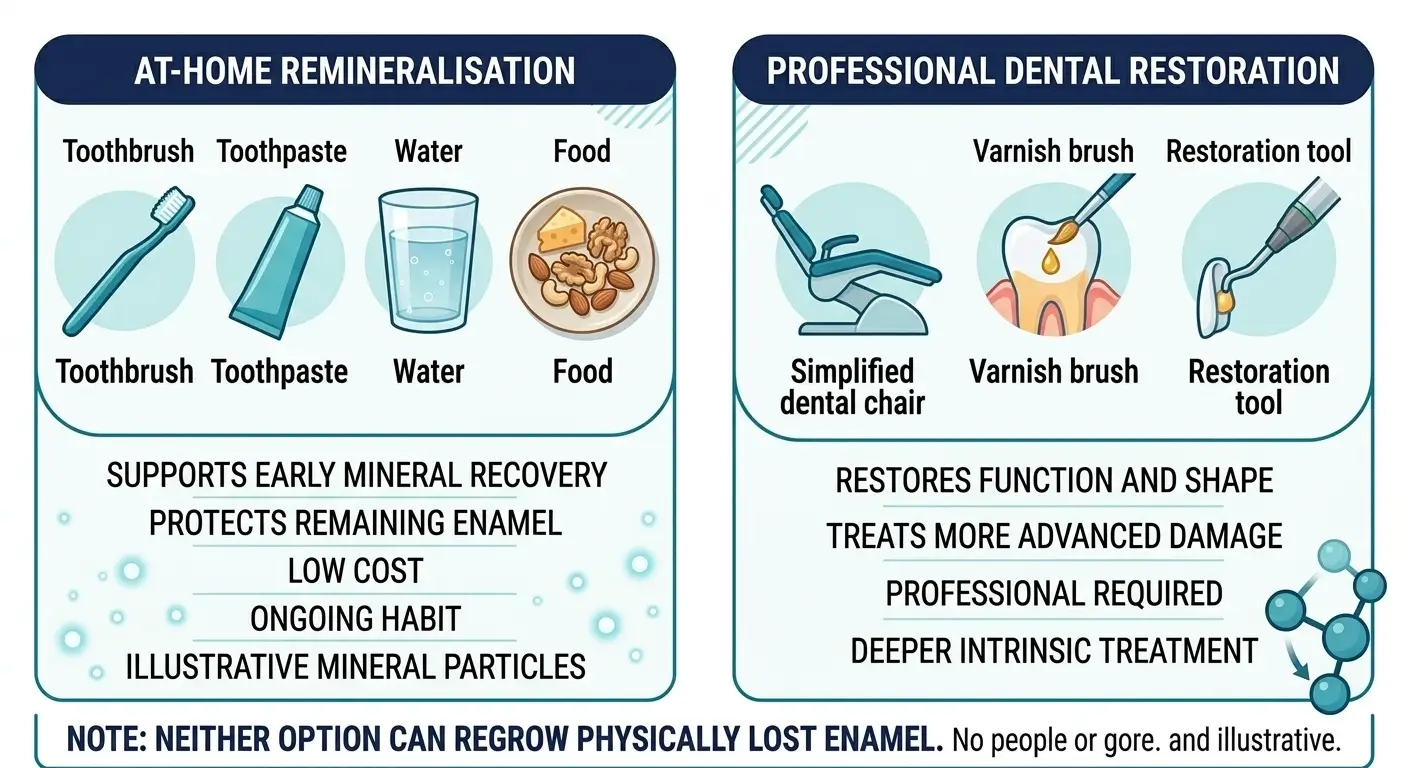
Professional fluoride treatments use higher concentrations of fluoride than ordinary consumer toothpaste. A dentist or hygienist applies the varnish or gel directly to the tooth surfaces, helping to maximise mineral uptake in vulnerable or weakened areas. These treatments support remineralisation in appropriate cases and can be a useful part of a preventive dental plan, particularly for patients showing early signs of erosion, experiencing dry mouth, or at high risk of tooth decay. They do not restore enamel that has already been physically removed.
Dental Bonding
When enamel erosion exposes dentine and causes sensitivity or cosmetic concerns on specific teeth, dental bonding can provide a minimally invasive solution. A dentist applies tooth-coloured composite resin directly to the affected surface to cover exposed dentine, reduce sensitivity, and improve appearance. Bonding is less invasive than veneers or crowns and can often be completed in a single appointment. It is durable, but it may need to be repaired or replaced over time, depending on its location and the forces placed on the tooth.
Dental Veneers and Crowns
For more extensive enamel loss, particularly when multiple teeth are affected, their structural integrity is compromised, or bonding is insufficient, a dentist may recommend veneers or crowns.
- Veneers are thin shells made from porcelain or composite material that are bonded to the front surfaces of teeth. They may be used when erosion has significantly affected the appearance and surface of several teeth.
- Crowns cover the entire visible part of a tooth and may be considered when substantial structural damage requires more complete protection.
At-Home Remineralisation vs. Professional Dental Restoration
Dangerous DIY Enamel Hacks to Avoid
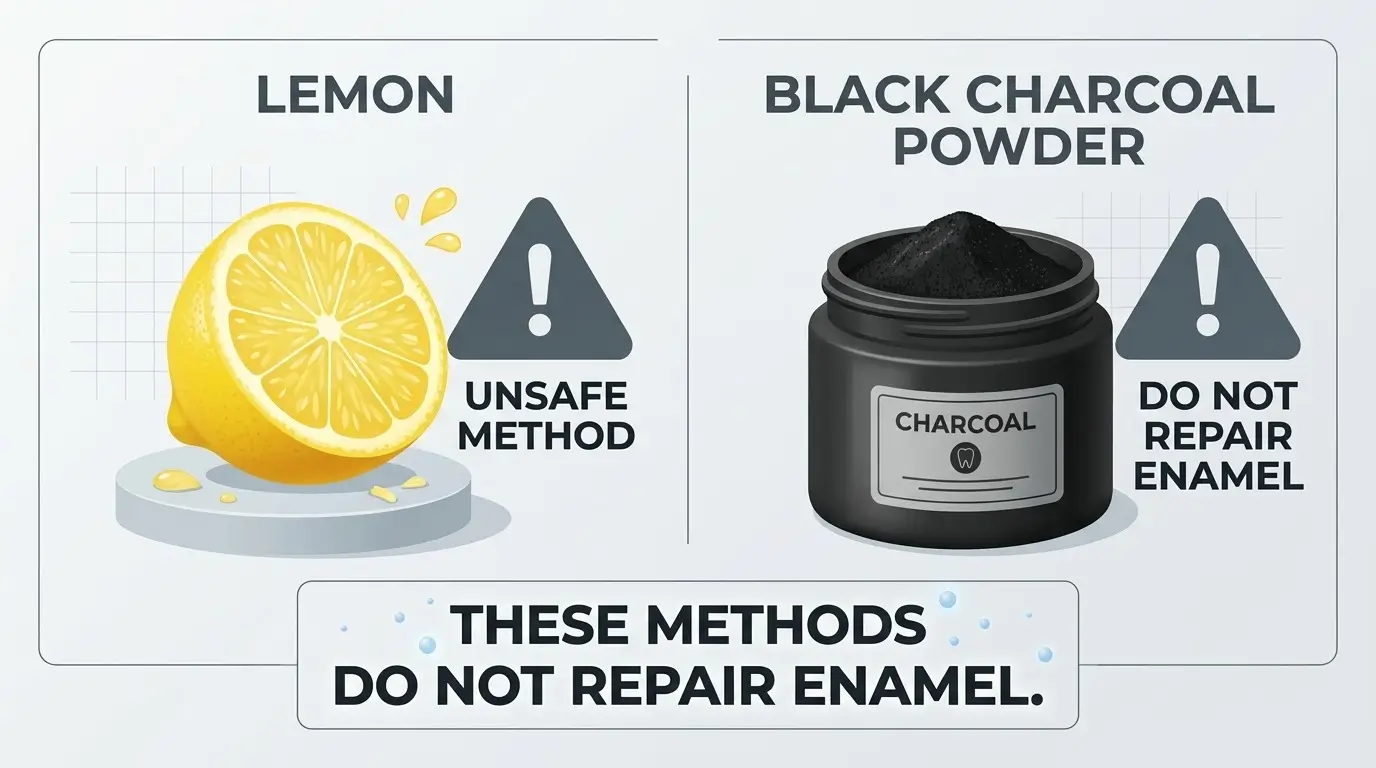
- Lemon Juice and Apple Cider Vinegar Rinses
Lemon juice and apple cider vinegar are highly acidic. Both have a pH well below neutral, making them among the more erosive substances that commonly come into contact with teeth. Applying either directly to your teeth or using them repeatedly as a mouth rinse exposes enamel to ongoing acid attacks. These methods are promoted online as natural whitening treatments or detox remedies. In practice, repeated exposure to these acids can contribute to enamel erosion, the very problem they are claimed to address. The NHS advises against applying acidic substances to teeth, while the ADA identifies frequent acid exposure as a primary cause of dental erosion.
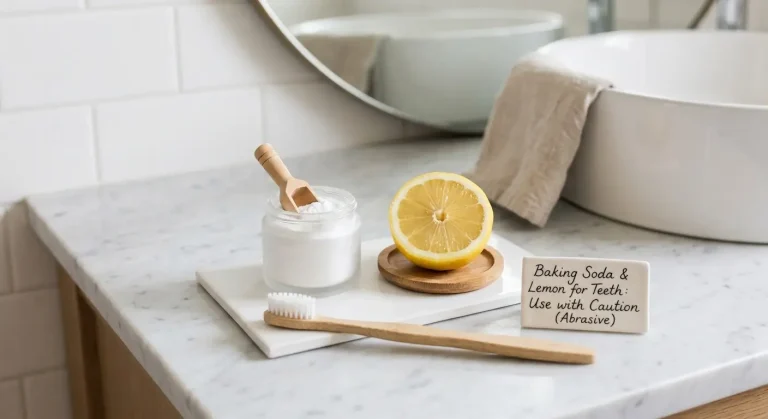
See our guide on LEMON AND BAKING SODA ARTICLE for a full explanation of why acidic DIY combinations can harm enamel.
Activated Charcoal and Unrated DIY Powders
Charcoal toothpastes and powders are widely marketed as natural enamel cleansers or whitening treatments. The ADA has stated that there is currently insufficient evidence to support the safety or effectiveness of activated charcoal products for dental use.
The main concerns are:
- Variable and sometimes high abrasivity: many charcoal products do not publish an RDA (Relative Dentin Abrasivity) value, making it difficult for consumers to assess how abrasive they are. Regular use of abrasive products can contribute to tooth surface wear.
- No fluoride: most charcoal products do not contain fluoride, leaving out a key ingredient for enamel protection and cavity prevention in your daily routine.
- No enamel-building function: charcoal may remove some surface stains through abrasion, but this is a cosmetic effect on the surface and is entirely different from repairing or remineralising the enamel beneath.
See our guide on WHITENING TOOTHPASTE ARTICLE for evidence-based alternatives for managing surface stains.
Conclusion
The most important thing to understand about tooth enamel is that once it has been physically lost, it cannot grow back. However, most people reading this may still have enamel worth protecting and early mineral loss worth addressing. The daily habits that make the most difference cost very little: using fluoride toothpaste consistently with a soft-bristled brush and gentle technique, staying adequately hydrated, limiting how often your teeth are exposed to acid and sugar, and avoiding brushing immediately after consuming acidic foods or drinks. Choose a toothpaste containing established ingredients, such as fluoride or, as an alternative to discuss with your dentist, nano-hydroxyapatite. Follow evidence-based oral hygiene advice and avoid harsh DIY trends that promise results they cannot deliver.