

Baking Soda for Teeth Whitening: Safe Methods & Dentist Advice
Baking soda can help remove surface stains from tooth enamel through its mild abrasive action. It works on extrinsic stains caused by coffee, tea, wine, and tobacco. However, it does not bleach the natural colour of your teeth the way professional peroxide-based whitening treatments do. The American Dental Association considers baking soda safe when used correctly, no more than 1–2 times per week.
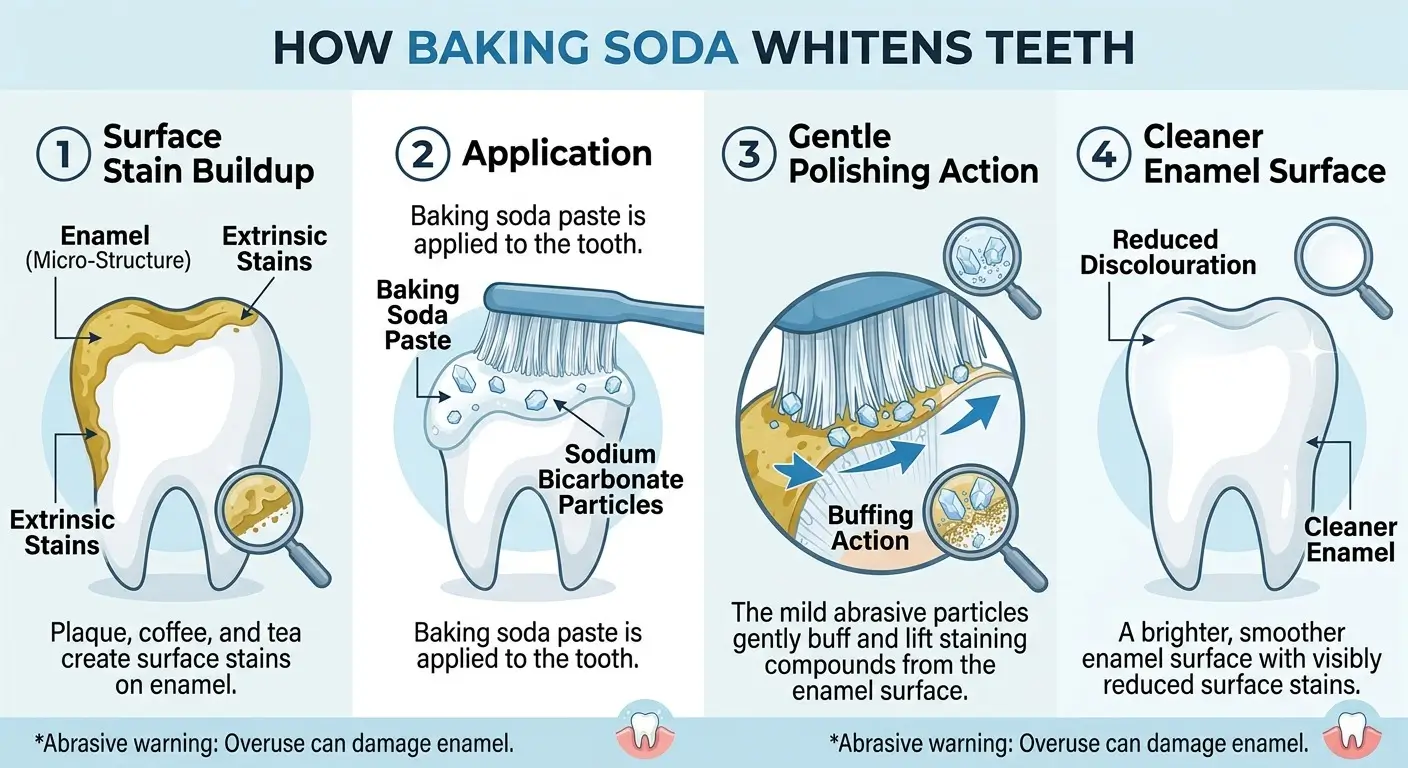
How Baking Soda Whitens Teeth
Baking soda, also known as sodium bicarbonate (NaHCO₃), is a naturally occurring mineral compound. It has been used in toothpaste formulas for more than a century, long before it became popular on social media. The science behind its use for teeth whitening is well established.
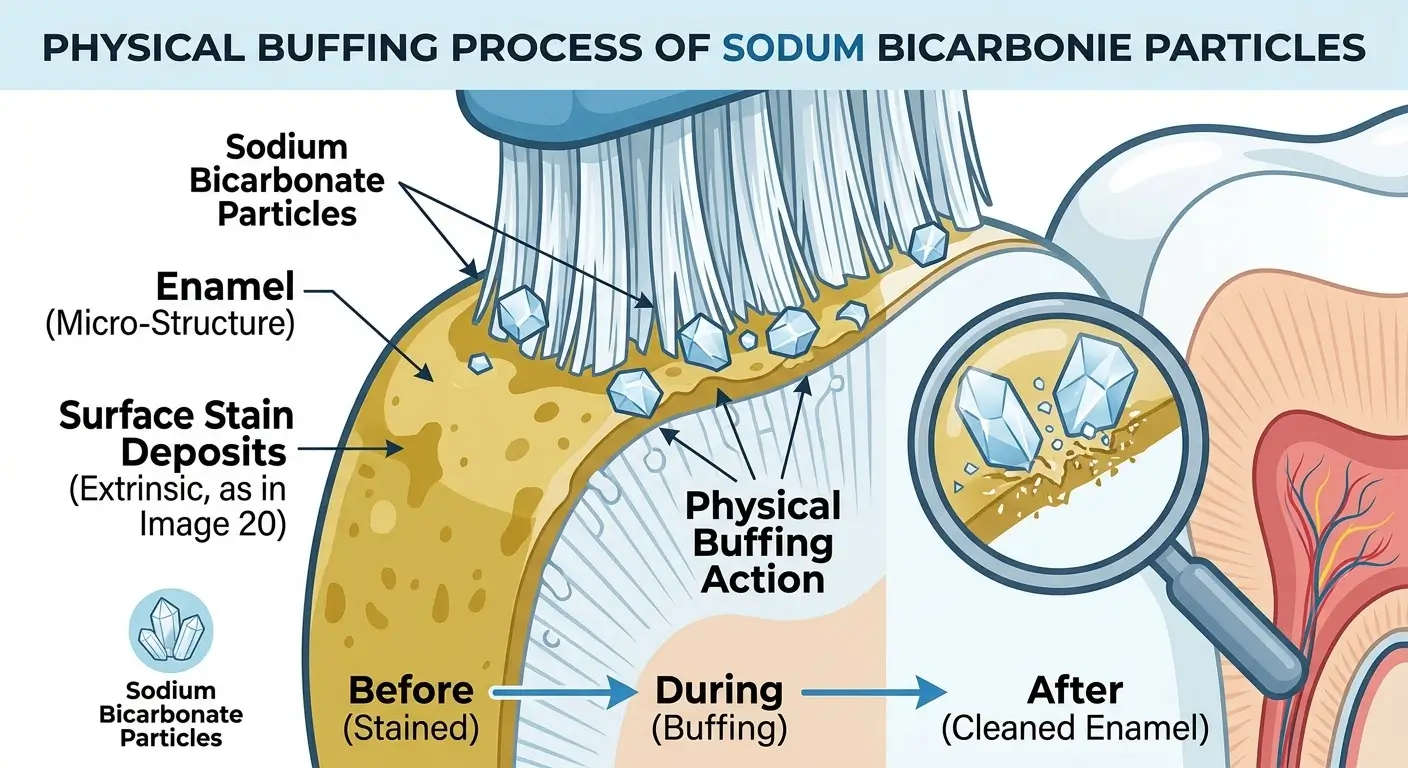
- Mild Abrasiveness: The RDA Value
All toothpastes clean teeth through a combination of chemical and abrasive action. The abrasiveness of a dental product is measured using a scale called Relative Dentine Abrasivity (RDA). The higher the number, the more abrasive the product. Baking soda has an RDA of approximately 7, which is extremely low. Most standard toothpastes fall between 50 and 100 RDA. The American Dental Association recommends products with an RDA of 250 or below for safe daily use, which places baking soda well within the safe range for occasional use. Its low abrasiveness is actually one of its strengths. It is gentle enough not to aggressively wear down enamel, yet effective enough to polish away surface stains caused by coffee, tea, red wine, and tobacco.
A study published in the Journal of the American Dental Association (JADA) found that toothpastes containing sodium bicarbonate were more effective at removing surface stains than toothpastes without it.
- Alkaline pH: Acid Neutralisation and Bacteria Reduction
Baking soda has a slightly alkaline pH of about 8.3. A healthy mouth is usually close to a neutral pH of 7. Many staining drinks, such as coffee and cola, are acidic and can temporarily lower the pH in the mouth, making enamel more vulnerable to staining. Because baking soda is alkaline, it helps neutralise these acids. Research published in the British Dental Journal found that sodium bicarbonate can help reduce acid-producing bacteria, including Streptococcus mutans, which contribute to plaque formation and tooth decay.
- Extrinsic vs Intrinsic Stains: What Baking Soda Can and Cannot Fix
This is the most important point to understand before trying baking soda for whitening.
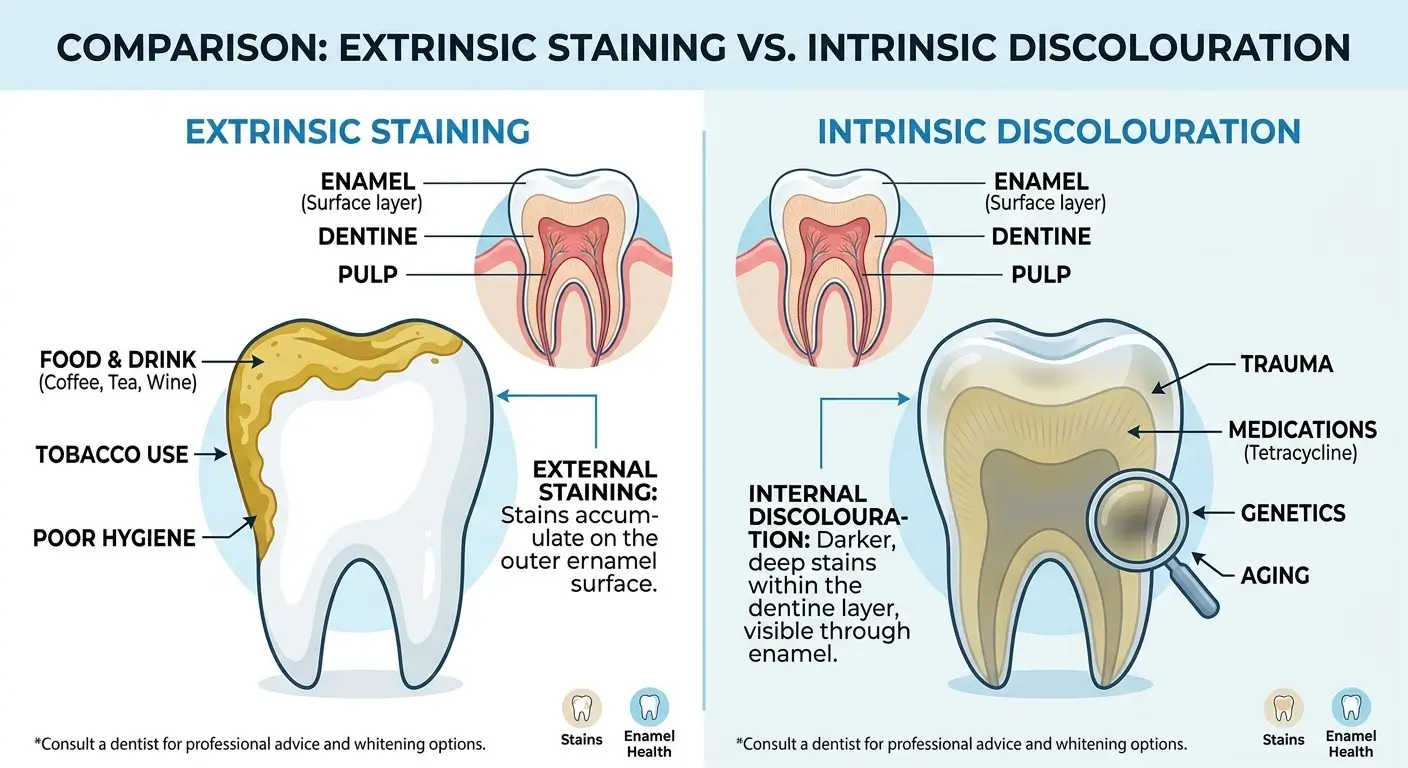
Extrinsic stains: This type of stain baking soda can help with;
- Caused by coffee, tea, wine, tobacco, and plaque buildup
- Found on the outer surface of the enamel
- Often appear as yellow, brown, or dark stains
- Respond well to polishing and surface cleaning
Intrinsic stains: This type of stain baking soda cannot fix;
- Found inside the tooth structure, within the enamel or dentine
- Caused by ageing, genetics, certain medications, fluorosis, or dental trauma
- Requires chemical bleaching treatments, usually peroxide-based products
See our complete guide for YELLOW TEETH ARTICLE for a full explanation of discolouration types and what each requires.
3 Safe DIY Baking Soda Recipes for Teeth Whitening
If you want to use baking soda at home, using it properly is important. Using it correctly can help remove stains safely, while improper use may increase the risk of enamel wear.
- Recipe 1: Baking Soda and Water Paste (The Standard Method)
This is the simplest and safest way to use baking soda for teeth whitening.
What you need:
- ½ teaspoon baking soda
- ½ teaspoon water (or enough to form a thick paste)
Method:
- Mix the baking soda and water in a small bowl until a smooth paste forms.
- Apply the paste to a soft-bristled toothbrush.
- Brush gently using small circular motions for no more than 2 minutes.
- Rinse thoroughly with water.
- Brush again with your regular fluoride toothpaste.
- Recipe 2: Baking Soda and Hydrogen Peroxide (The Extra-Strength Option)
This method combines the polishing action of baking soda with the mild bleaching effect of hydrogen peroxide.
⚠️ Important Safety Warning: Only use 1.5%–3% hydrogen peroxide for this recipe. The UK pharmacy standard (3%) is the maximum. Do not use industrial, concentrated, or food-grade hydrogen peroxide at higher concentrations. Higher concentrations can cause significant soft tissue burns and enamel damage.
What you need:
- ½ teaspoon baking soda
- A few drops of 1.5%–3% hydrogen peroxide
Method:
- Mix the ingredients until a paste forms.
- Apply the paste to a soft-bristled toothbrush.
- Brush gently for 1–2 minutes.
- Rinse thoroughly.
- Follow with your regular fluoride toothpaste.
Hydrogen peroxide helps break down stain molecules through oxidation, while baking soda removes surface stains. A Cochrane Review found that hydrogen peroxide can produce measurable whitening when used at appropriate concentrations.
See our full guide for HYDROGEN PEROXIDE ARTICLE for more information on hydrogen peroxide safety and effectiveness.
- Recipe 3: Baking Soda and Regular Toothpaste (The Easiest Alternative)
This method combines baking soda with the fluoride protection of your regular toothpaste.
What you need:
- Your regular fluoride toothpaste
- A small pinch of baking soda
Method:
- Put your usual amount of toothpaste on your toothbrush.
- Sprinkle a small amount of baking soda over the toothpaste.
- Brush normally for 2 minutes.
- Rinse thoroughly.
Dangerous DIY Hacks You Must Avoid
- Baking Soda and Lemon Juice or Vinegar: The Most Dangerous Combination
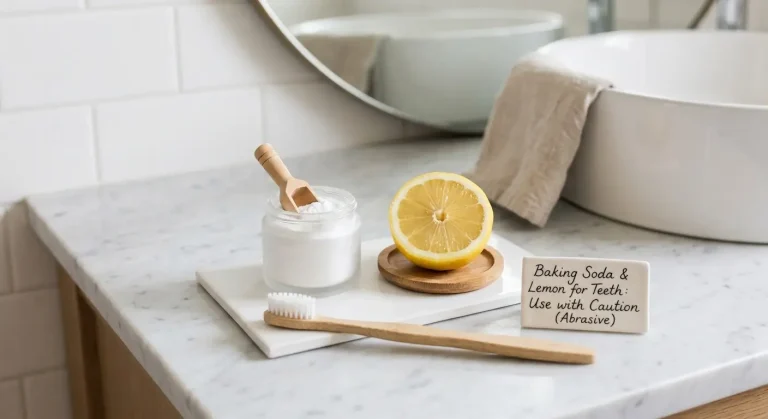
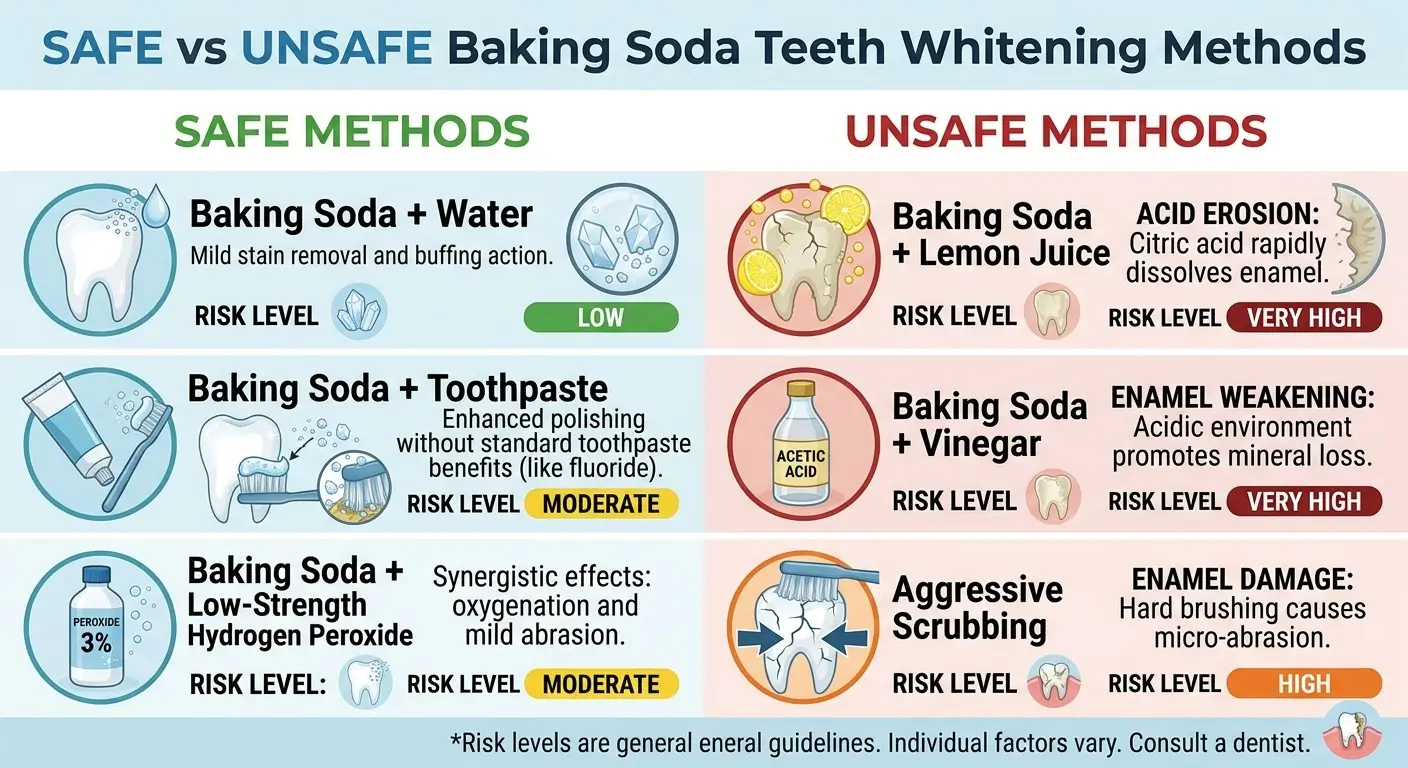
This mixture is often promoted online as a fast whitening solution, but it can seriously damage your teeth. The idea is that baking soda removes stains while lemon juice or vinegar breaks them down. In reality, the acid weakens the enamel, and the baking soda then increases the damage through abrasion.
What actually happens:
- Lemon juice has a pH of around 2.3, making it highly acidic.
- Apple cider vinegar has a pH between 2 and 3.5.
- These acids soften and dissolve enamel.
- Brushing softened enamel with an abrasive substance increases enamel loss.
- Lost enamel does not grow back.
The NHS warns against using acidic substances on teeth in this way. The Mayo Clinic also notes that acid erosion is a major cause of tooth sensitivity and long-term dental damage. While teeth may appear temporarily brighter, the long-term result is often increased sensitivity, greater risk of cavities, and more yellow-looking teeth as the dentine becomes more visible.
- Direct Hard Scrubbing
Baking soda can be helpful when used gently. However, brushing hard with baking soda increases its abrasive effect and can damage both enamel and gums.
The ADA recommends:
- Using a soft-bristled toothbrush
- Applying gentle pressure
- Using small circular motions rather than aggressive scrubbing
Brushing too hard can wear down enamel, damage the gum line, and increase tooth sensitivity over time.
[→ Internal link: See our guide on protecting and repairing enamel — [LINK TO TOOTH ENAMEL REPAIR ARTICLE].]
How Often Can You Safely Use Baking Soda on Your Teeth?
The evidence suggests that baking soda should be used once or twice a week, not every day. Although baking soda has a low RDA, its abrasive effect can build up over time. Daily use for weeks or months may gradually wear down enamel, leading to sensitivity and other noticeable changes.
Watch out for these warning signs if you have been using baking soda more often than recommended:
- Increased tooth sensitivity to hot, cold, or sweet foods and drinks
- Tender or receding gums where the gum line starts pulling away from the tooth
- A rough or chalky feeling on the enamel after brushing
- More yellow-looking teeth as enamel wears down, the yellow dentine underneath becomes more visible
- A higher risk of cavities because thinner enamel offers less protection
The Fluoride Gap: This is one of the most important things to understand: baking soda does not contain fluoride. Fluoride is one of the most effective ingredients for preventing tooth decay. It strengthens enamel and helps protect teeth from acid attacks that can lead to cavities. If you replace your regular toothpaste with baking soda, even occasionally, you reduce your fluoride protection. The simplest solution is to brush with a fluoride toothpaste after using baking soda, or use the baking soda and toothpaste method described earlier. The NHS recommends that adults brush twice daily with a fluoride toothpaste containing at least 1,000ppm fluoride.
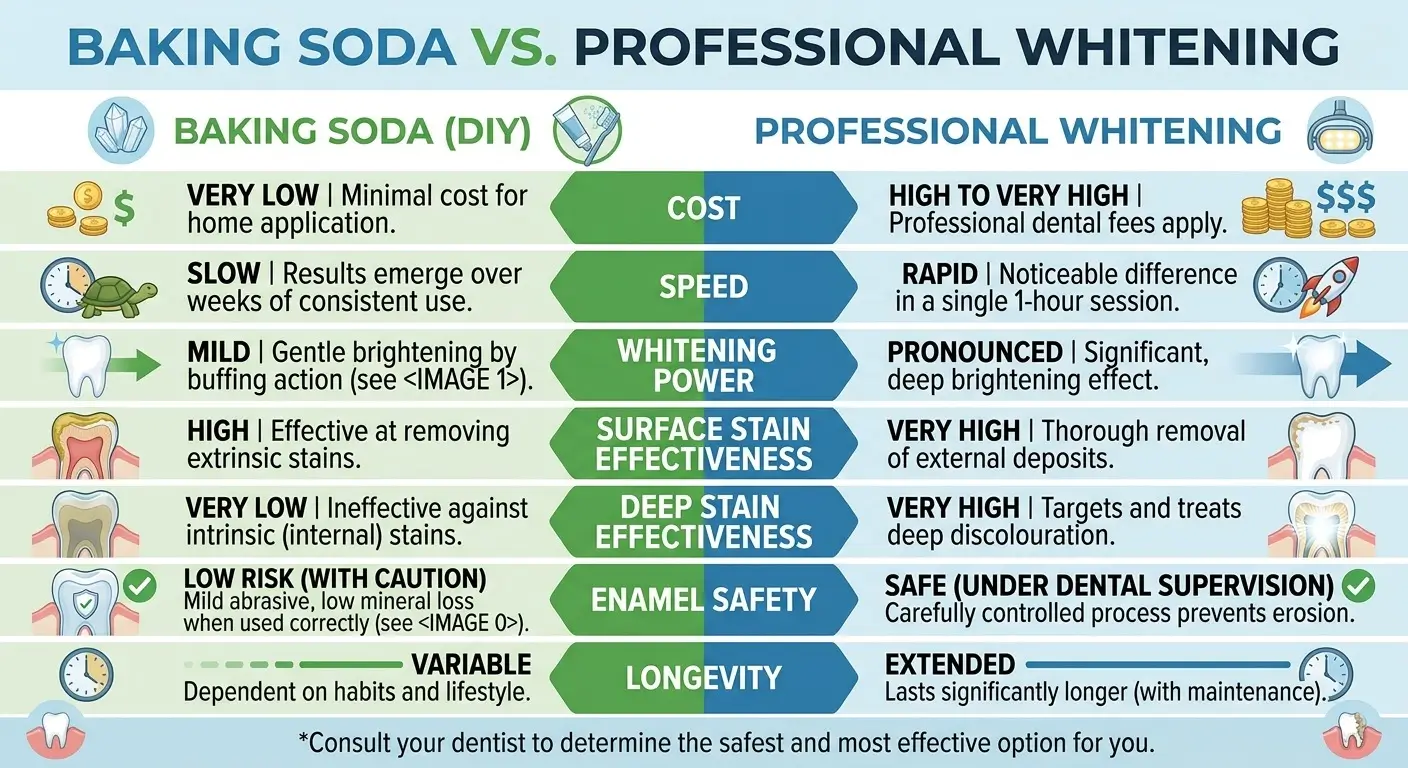
Baking Soda vs Professional Teeth Whitening
See our complete guide to all whitening options for HOME TEETH WHITENING ARTICLE. See our full teeth whitening guide for TEETH WHITENING GUIDE.
What Dentists Recommend
The American Dental Association (ADA) recognises sodium bicarbonate as a safe and effective ingredient for removing surface stains and improving the appearance of teeth. Toothpastes containing baking soda can earn the ADA Seal of Acceptance, showing they have been independently assessed for both safety and effectiveness. This endorsement applies to professionally formulated baking soda toothpastes. However, the same evidence behind their approval, including baking soda’s low abrasiveness and stain-removing ability, also explains why occasional DIY use can be effective when done correctly.
Dentists generally consider baking soda suitable for:
- People with healthy teeth and gums who want to reduce staining from coffee, tea, or tobacco
- Maintaining the results of professional whitening treatments
- Those who prefer a simple, natural approach to surface stain removal
- Occasional use alongside a fluoride toothpaste, not as a replacement
A dentist will usually recommend professional whitening if:
- The discolouration is caused by ageing, genetics, or medication
- You want a noticeably lighter shade rather than simply cleaner-looking teeth
- You have crowns, veneers, or other visible dental restorations that may create colour differences
- You already suffer from tooth sensitivity
The ADA, NHS, and dental researchers consistently agree on one thing: fluoride toothpaste should remain the foundation of your daily oral care routine. Baking soda can be a useful addition, but it should never replace fluoride toothpaste.
If you want to use baking soda safely, follow these simple rules:
- Limit use to once or twice per week
- Use a soft-bristled toothbrush
- Brush gently without applying pressure
- Follow with a fluoride toothpaste
- Never mix baking soda with lemon juice or vinegar
- Stop if sensitivity develops and seek dental advice
- Keep up with regular dental check-ups and professional cleanings
Toothpastes That Support a Brighter Smile
Baking soda works best when combined with a consistent daily oral care routine. The toothpaste you use every day plays an important role in keeping your teeth bright, protecting enamel, and preventing new stains from building up.
Optifresh Pro White Toothpaste is designed to help remove everyday surface stains while supporting a brighter-looking smile. Used twice daily, it helps reduce the build-up of stains from food and drinks between baking soda treatments.
If baking soda causes mild sensitivity, switching to a sensitivity-focused toothpaste can help. Optifresh Sensitive Toothpaste provides gentle daily cleaning while helping to reduce discomfort caused by sensitive teeth.
Optifresh Natural Oil Toothpaste offers a more naturally formulated approach to everyday oral care. It can be a good choice for those who prefer plant-based ingredients while maintaining good oral hygiene.
Many of the foods and drinks that stain teeth can also affect breath. Optifresh Maximum Fresh Toothpaste helps keep breath fresh while supporting daily plaque control and oral hygiene.
Conclusion
Baking soda is one of the few home remedies for teeth whitening that has genuine scientific support. It is effective at removing surface stains and can help restore a cleaner, brighter appearance when used correctly. The problem starts when people expect it to do more than it can. Baking soda will not dramatically whiten teeth, and using it too often or combining it with acidic ingredients can do more harm than good. A brighter smile with baking soda is possible, just not instantly, not dramatically, and never at the expense of your enamel.