

Lemon and Baking Soda for Teeth Whitening: Does It Work Safely?
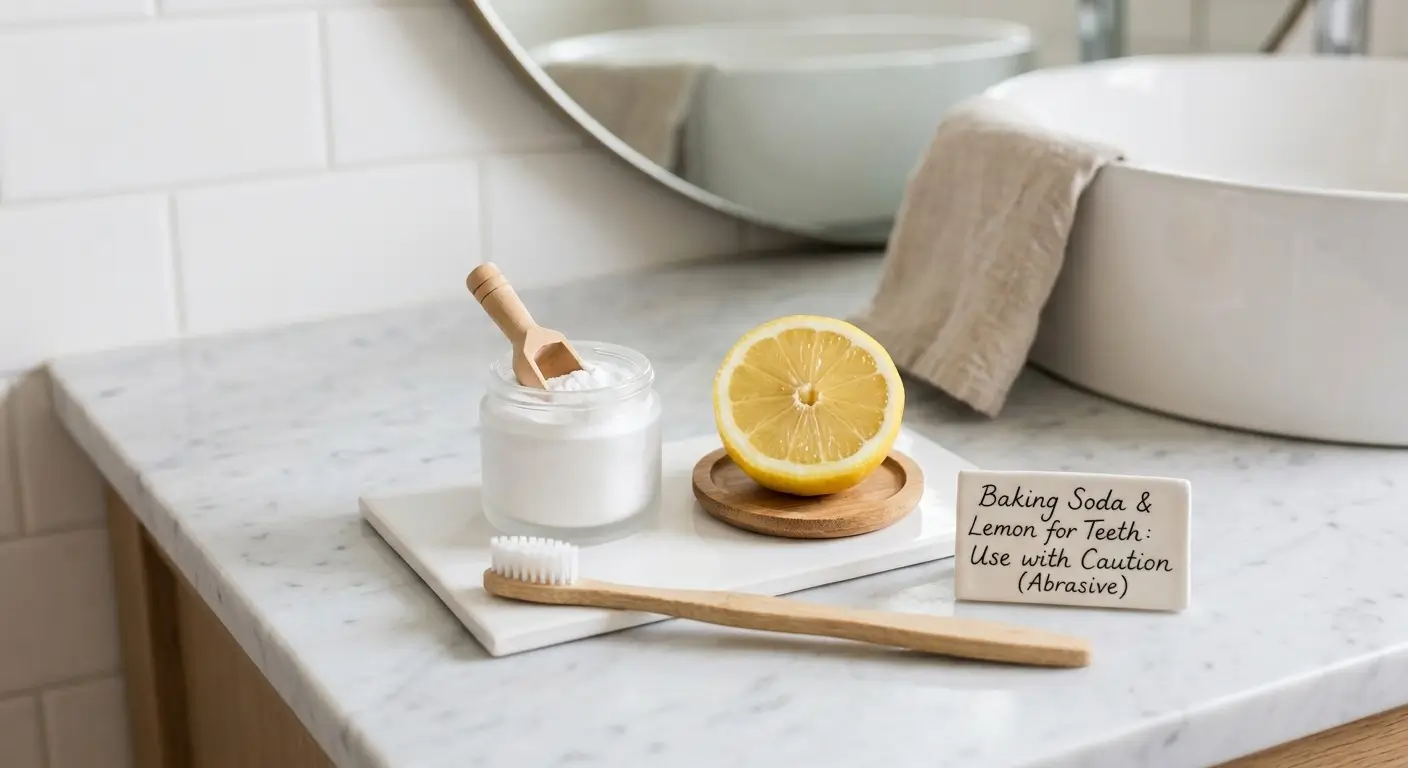
Understanding what happens when these two ingredients are mixed helps explain why the combination can be harmful to your teeth.
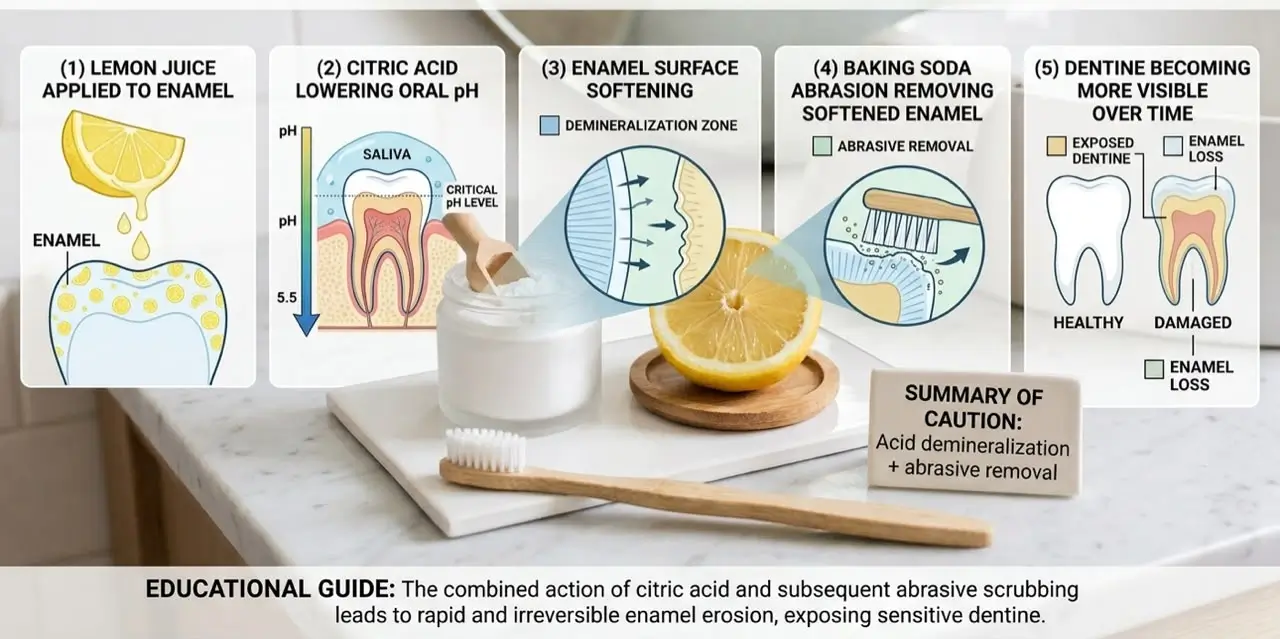
Baking soda is a mildly abrasive white powder with a Relative Dentine Abrasivity (RDA) of approximately 7, making it very gentle when used on its own with water. It works by physically polishing chromogens (stain-causing molecules from food, coffee, and tea) from the enamel surface. On its own, the American Dental Association considers sodium bicarbonate a safe ingredient in toothpaste and has awarded its Seal of Acceptance to toothpaste products that contain baking soda.
Lemon juice has a pH of around 2.0, making it highly acidic, similar to stomach acid and far more acidic than tooth enamel is designed to withstand. Its main active component is citric acid. When citric acid comes into contact with tooth enamel, which is mainly made of a mineral called hydroxyapatite, it triggers a process known as acid demineralisation. During this process, the acid dissolves calcium and phosphate minerals from the enamel surface, weakening and softening the tooth structure at a microscopic level. Research published in the British Dental Journal identifies citric acid as one of the most erosive acids commonly found in foods and drinks. The research notes that even short but repeated exposure can contribute to measurable enamel loss over time.
In a controlled laboratory environment, using precise measurements, mixing an acid with a base can produce a neutral pH. However, when the mixture is prepared at home and applied in the mouth:
- The ingredient ratios are rarely measured accurately.
- Excess citric acid often remains active after the baking soda has been used up.
- Even brief contact between enamel and a liquid with a pH of 2–3 can begin the demineralisation process.
- Saliva typically needs 20–30 minutes to start remineralising enamel after acid exposure, yet the abrasive action is often applied before this natural recovery process can occur.
In reality, the neutralisation is usually incomplete and inconsistent. When applied repeatedly to tooth enamel, even partial acid exposure can cause damage over time. Tooth enamel cannot regenerate, which is why regular use of this mixture carries significant risks.
Why Dentists Strongly Advise Against Using Lemon Juice on Teeth
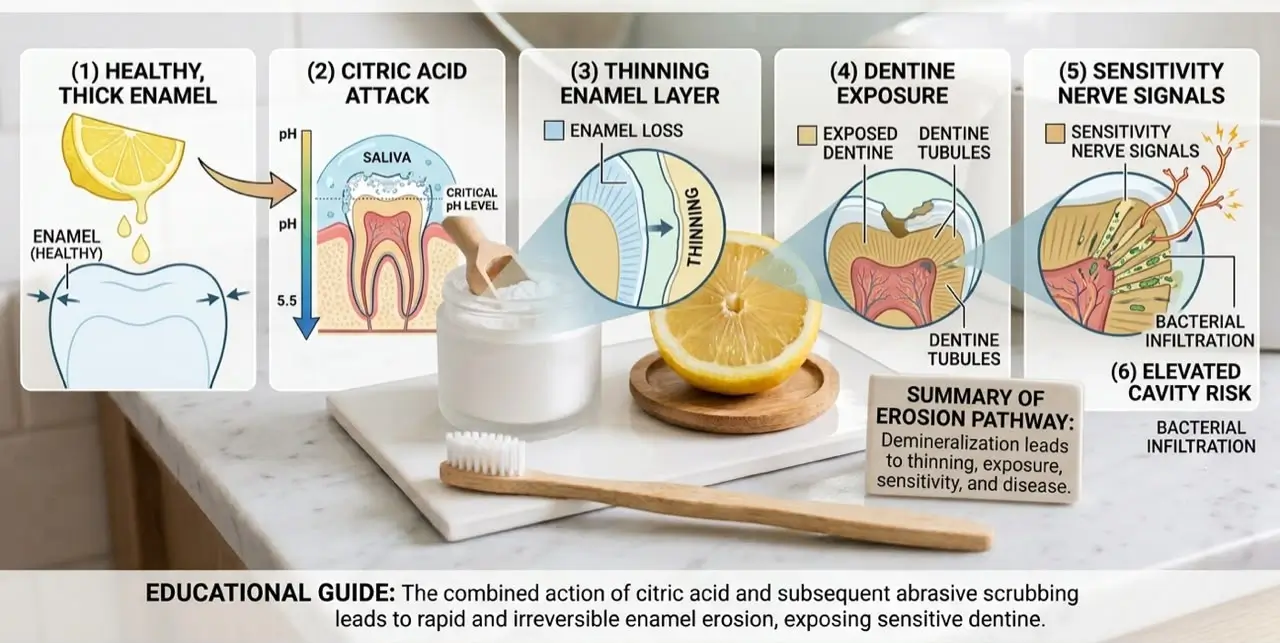
- Enamel Erosion
Tooth enamel is the hardest substance in the human body, but it cannot repair itself. Unlike bone, skin, or muscle, enamel contains no living cells capable of regeneration. Once enamel is lost, it is gone permanently. The Mayo Clinic identifies frequent acid exposure as one of the leading preventable causes of dental erosion and notes that enamel cannot grow back once it has been lost. The Cleveland Clinic also explains that enamel erosion is irreversible and that prevention is the most effective way to maintain healthy enamel thickness.
- Exposed Dentine
One of the biggest ironies of lemon and baking soda whitening is that regular use can eventually make teeth look more yellow, not whiter. The colour of your teeth is largely determined by the thickness and opacity of the enamel layer. Healthy enamel appears relatively white because it covers the dentine beneath, which is naturally yellow to yellowish-brown in colour. As acid and abrasion wear away enamel, less enamel remains to hide the dentine. As a result, the yellow dentine becomes more visible, causing teeth to appear increasingly yellow over time.
- Extreme Tooth Sensitivity
Enamel acts as a protective barrier over the dentine tubules, tiny channels that connect the outer tooth surface to the dental pulp and nerves. As enamel becomes thinner, these tubules become more exposed and sensitive. This often leads to sharp, sudden pain when eating or drinking something hot, cold, sweet, or even when breathing in cold air. The NHS identifies acid erosion as a major cause of tooth sensitivity and specifically advises against applying acidic substances directly to teeth.
- Increased Cavity Risk
Acid-softened enamel develops a rougher and more porous surface. This creates more places for harmful bacteria, including Streptococcus mutans, to attach and multiply. Repeated acid exposure, combined with the abrasive action of baking soda on weakened enamel, can create microscopic damage that increases the risk of tooth decay. A review published in the Journal of the American Dental Association (JADA) found a strong link between frequent acid exposure, enamel erosion, and a greater risk of dental caries.
Can Lemon and Baking Soda Remove Yellow Teeth?
The temporary whitening effect many people notice after using this mixture has a scientific explanation, but it is not the kind of whitening most people expect.
- Extrinsic Staining
Surface stains from coffee, tea, red wine, and tobacco are made up of chromogenic compounds that sit on or near the enamel surface. Baking soda can physically polish away some of these stains, while lemon juice may dissolve some organic staining compounds. As a result, teeth may appear brighter immediately after use because some surface staining has been removed.
- Intrinsic Discolouration
Lemon juice and baking soda do not affect intrinsic discolouration, which develops within the tooth structure itself.
Examples include:
- Ageing: natural darkening of dentine and thinning of enamel over time
- Genetics: naturally thinner or more translucent enamel
- Medication staining: especially tetracycline staining during tooth development
- Fluorosis: white spots or brown discolouration caused by excessive fluoride during development
- Dental trauma: a damaged tooth may darken as the pulp dies
See our complete guide on YELLOW TEETH for a full explanation of why teeth become yellow and which treatments are actually effective.
What to Do If You Have Already Used This DIY Mixture
If you have used lemon juice and baking soda on your teeth, even once, there are several steps you can take to reduce further damage and support enamel recovery.
⚠️ Important: A single use is not likely to cause major harm if handled correctly. The greatest risk comes from repeated use over time. Stop using the mixture immediately.
Step 1 — Do NOT Brush Immediately
Brushing immediately after acid exposure is one of the most damaging mistakes people make. Acid temporarily softens the enamel surface. Brushing during this period can physically remove the weakened enamel. Wait at least 30–60 minutes before brushing.
Step 2 — Rinse with Plain Water
Rinse your mouth thoroughly with water to dilute and wash away any remaining acid. This helps raise the pH level inside the mouth and reduces further acid exposure. Some people may benefit from using a fluoride mouthwash at this stage, but it is best to follow your dentist’s advice.
Step 3 — Allow Saliva to Do Its Job
Saliva plays a critical role in protecting teeth. It contains calcium and phosphate minerals that help repair minor acid damage through a process called remineralisation. This process typically begins within 20–40 minutes. Chewing sugar-free gum can help increase saliva production and support this natural repair process.
Step 4 — Brush with a Soft-Bristled Brush and Fluoride Toothpaste
After waiting 30–60 minutes, brush normally using:
- A soft-bristled toothbrush
- Gentle pressure
- A fluoride toothpaste
Step 5 — See a Dentist if Symptoms Develop
Arrange a dental appointment if you notice:
- Increased sensitivity to hot, cold, or sweet foods
- Pain when breathing in cold air
- Rough or uneven tooth surfaces
- Visible changes in tooth appearance
How Long Does Enamel Take to Recover After Acid Exposure?
After acid exposure, saliva begins restoring the mouth’s pH level to normal. Over the next 20–40 minutes, calcium and phosphate minerals in saliva start redepositing onto the enamel surface through a process known as remineralisation. Fluoride from toothpaste, mouthwash, and fluoridated water helps strengthen this process by forming fluorapatite, a mineral that is even more resistant to acid than natural enamel. The NHS recommends brushing twice daily with a fluoride toothpaste containing at least 1,000 ppm fluoride to help protect enamel.
If enamel has been physically worn away, whether by brushing acid-softened enamel or by repeated abrasion, those lost enamel structures cannot be replaced naturally. The cells responsible for forming enamel, known as ameloblasts, are active only during tooth development. Once permanent teeth have fully formed, these cells are no longer present. This is why prevention is so important. Minor acid damage may partially recover, but enamel that has been lost cannot grow back without dental treatment.
[→ Internal link: See our guide on protecting enamel — [LINK TO TOOTH ENAMEL REPAIR ARTICLE].]
Safe DIY Teeth Whitening Alternatives That Actually Work
- Baking Soda and Water Paste
This is the safest and most evidence-supported way to use baking soda. Without the acid component, baking soda’s low RDA (around 7) provides gentle surface polishing without causing acid-related enamel damage. Use it once or twice per week and follow with fluoride toothpaste. Most people notice gradual improvements in surface brightness over 4–6 weeks.
See our complete guide on BAKING SODA for safe DIY recipes and usage recommendations.
- Baking Soda and Hydrogen Peroxide (Maximum 3%)
Adding a small amount of hydrogen peroxide provides mild bleaching action alongside baking soda’s stain-removal effect. A Cochrane Review found that hydrogen peroxide at appropriate concentrations can produce genuine and measurable tooth whitening.
Safety requirements:
- Use a maximum concentration of 3% hydrogen peroxide
- Limit use to once per week
- Do not swallow the mixture
- Rinse thoroughly after use
- Avoid use during pregnancy or breastfeeding
See our complete guide on HYDROGEN PEROXIDE ARTICLE for safety information and usage instructions.
- Whitening Toothpaste With the ADA Seal of Acceptance
Whitening toothpastes are designed for daily use and are tested for safety and effectiveness. The American Dental Association (ADA) recommends products with an RDA below 250. Toothpastes carrying the ADA Seal of Acceptance have undergone independent evaluation.
These products whiten through:
- Surface stain removal using mild abrasives
- Low-level bleaching agents in some formulations
- Optical brightening ingredients such as blue covarine
- Over-the-Counter Whitening Strips
Whitening strips that contain hydrogen peroxide can provide real bleaching by lightening the tooth’s internal colour rather than simply removing surface stains. In the UK, consumer products are limited to 0.1% hydrogen peroxide, while dentist-prescribed products may contain higher concentrations.
Compared with lemon and baking soda, whitening strips offer:
- More noticeable whitening results
- Better scientific support
- Far lower risk of enamel erosion
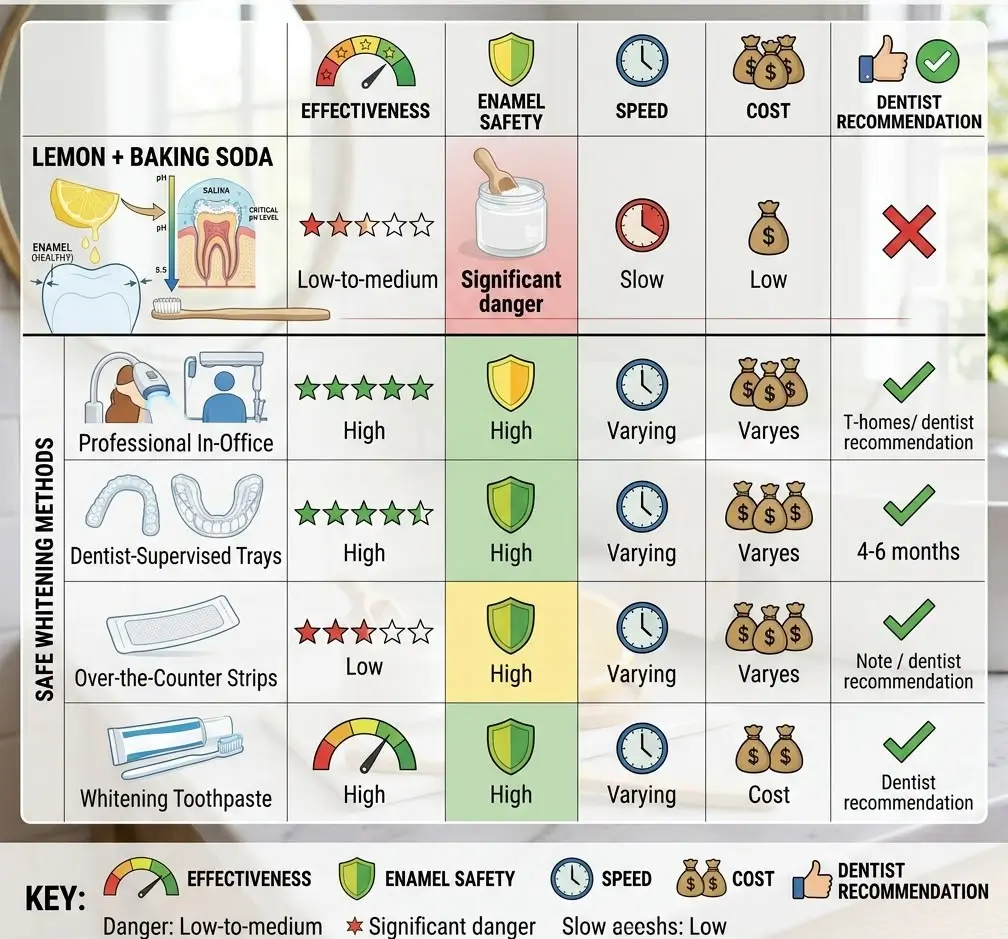
Comparison: Lemon + Baking Soda vs Safe Whitening Methods
What Dentists Recommend Instead
Professional Whitening
For people looking for noticeable and long-lasting whitening results, especially for intrinsic yellowing caused by ageing or genetics, professional whitening remains the best option. This may involve an in-office whitening treatment or a dentist-prescribed home tray system. The American Dental Association (ADA) recognises professional bleaching as one of the safest and most effective ways to achieve significant tooth whitening, using carefully controlled concentrations that protect both teeth and gums.
Whitening Strips
Research published in the Journal of the American Dental Association (JADA) has shown that whitening strips can provide genuine shade improvement when used correctly, without causing enamel damage at recommended concentrations.
Hydrogen Peroxide and Baking Soda
A carefully controlled combination of baking soda and low-concentration hydrogen peroxide is often viewed more favourably by dental professionals than acid-based DIY methods.
- Baking soda helps remove surface stains.
- Hydrogen peroxide provides mild bleaching action.
Without the addition of acidic ingredients such as lemon juice, this approach can be both effective and considerably safer.
Whitening Toothpaste for Maintenance
Whitening toothpaste is best used as a maintenance tool rather than a primary whitening treatment. Dentists often recommend ADA-approved whitening toothpastes after professional whitening or whitening strip treatments to help reduce new staining and maintain results.
Toothpastes That Support a Brighter Smile
Optifresh Pro White Toothpaste is formulated to help remove everyday surface stains and maintain a brighter smile through regular brushing. Used twice daily, it can help reduce the buildup of stains from coffee, tea, and everyday foods without exposing teeth to the risks associated with acidic whitening methods.
If you have experienced sensitivity from lemon-based whitening methods, professional whitening treatments, or any other whitening product, Optifresh Sensitive Toothpaste offers a gentler approach to daily oral care. It helps support good oral hygiene while minimising additional irritation to sensitive teeth.
Optifresh Natural Oil Toothpaste is designed for people who prefer naturally inspired oral care products with botanical or oil-based ingredients. Consistent daily brushing remains one of the most important foundations of a healthy and brighter-looking smile.
Optifresh Maximum Fresh Toothpaste helps support fresh breath and daily plaque control as part of a complete oral care routine. This can be especially helpful for people moving away from strong DIY treatments that may temporarily affect the natural balance of the mouth.
Conclusion
The lemon and baking soda whitening trend is often presented as a natural, inexpensive shortcut to a whiter smile. What many social media videos fail to mention is the long-term cost: thinner enamel, increased tooth sensitivity, and a greater chance of yellowing as the underlying dentine becomes more visible. Fortunately, there are safer and evidence-based alternatives. Baking soda with water, low-concentration hydrogen peroxide paste, whitening strips, and professional whitening treatments can all provide real improvements without the risk of permanent enamel damage.
For deeper or more stubborn discolouration, professional whitening remains the most effective option available. Your enamel cannot grow back. The choices you make today about how you whiten and care for your teeth will affect your oral health for years to come.
Explore More Oral Health Guides
- TEETH WHITENING GUIDE
- HOME TEETH WHITENING ARTICLE
- BAKING SODA ARTICLE
- HYDROGEN PEROXIDE ARTICLE
- TOOTH ENAMEL REPAIR ARTICLE