

Teeth Yellow Causes: How to Fix Stained Teeth Safely
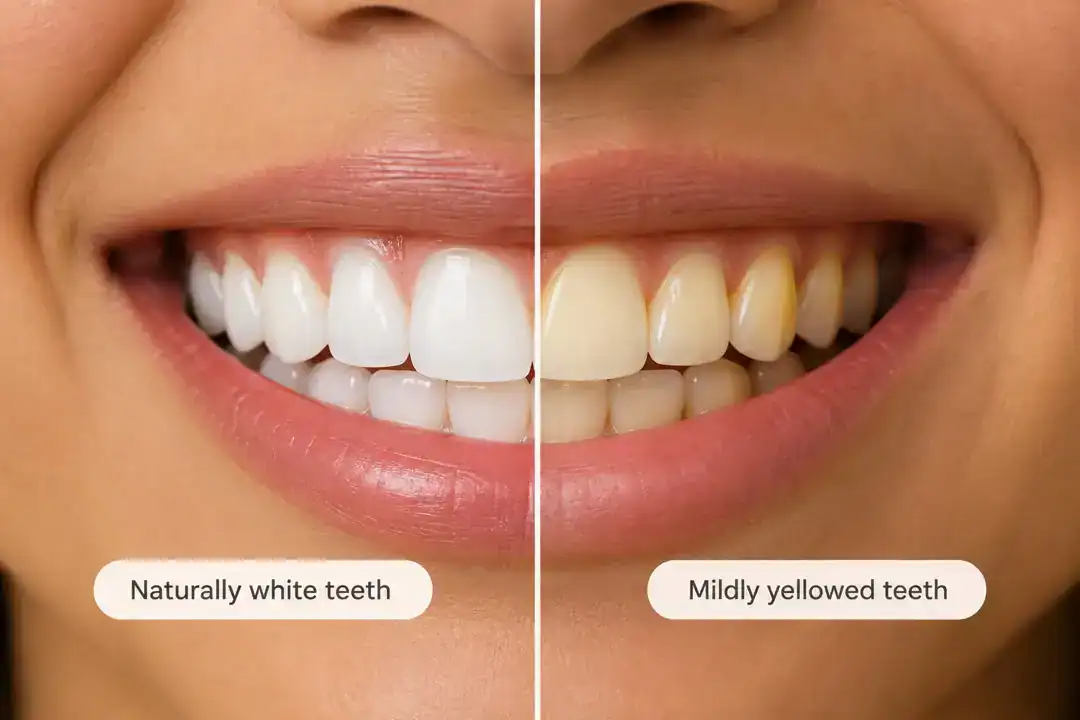
Yellow stains are usually due to eating and drinking dark-colored foods or beverages. The outer layer of your teeth, called enamel, is slightly transparent. Beneath the enamel is dentine, a layer that naturally has a yellowish or greyish colour. The colour of your teeth depends on how thick your enamel is and how much of the dentine shows through.
In dentistry, yellow teeth fall into one of two categories:
Extrinsic discolouration: This happens when stains build up on the outer surface of the teeth. It is often caused by coffee, tea, red wine, tobacco, certain foods, or plaque. Because these stains are on the surface, they are usually easier to remove.
Intrinsic discolouration: This type of staining happens inside the tooth itself, either in the enamel or the dentine. It can be caused by ageing, certain medications taken during childhood, some medical conditions, or previous tooth injuries. These stains are usually harder to treat and may not respond fully to regular whitening products.
Teeth can become yellow for many reasons. As we get older, the enamel naturally becomes thinner, making the yellow dentine underneath more visible. Surface stains from coffee, tea, tobacco, and red wine can also build up over time. Poor oral hygiene allows plaque and tartar to accumulate, which can make teeth appear darker. In some cases, certain medications, especially tetracycline antibiotics, can cause deep staining inside the teeth that is more difficult to remove.
Why Teeth Turn Yellow
As we get older, the enamel on our teeth naturally becomes thinner. This happens through everyday activities like chewing, grinding, and exposure to acidic foods and drinks. When the enamel becomes thinner, more of the yellow dentine underneath starts to show through. At the same time, dentine naturally becomes darker as we age. The combination of thinner enamel and darker dentine makes teeth look more yellow over the years. Because this type of yellowing happens inside the tooth, it usually needs whitening treatments rather than surface cleaning.
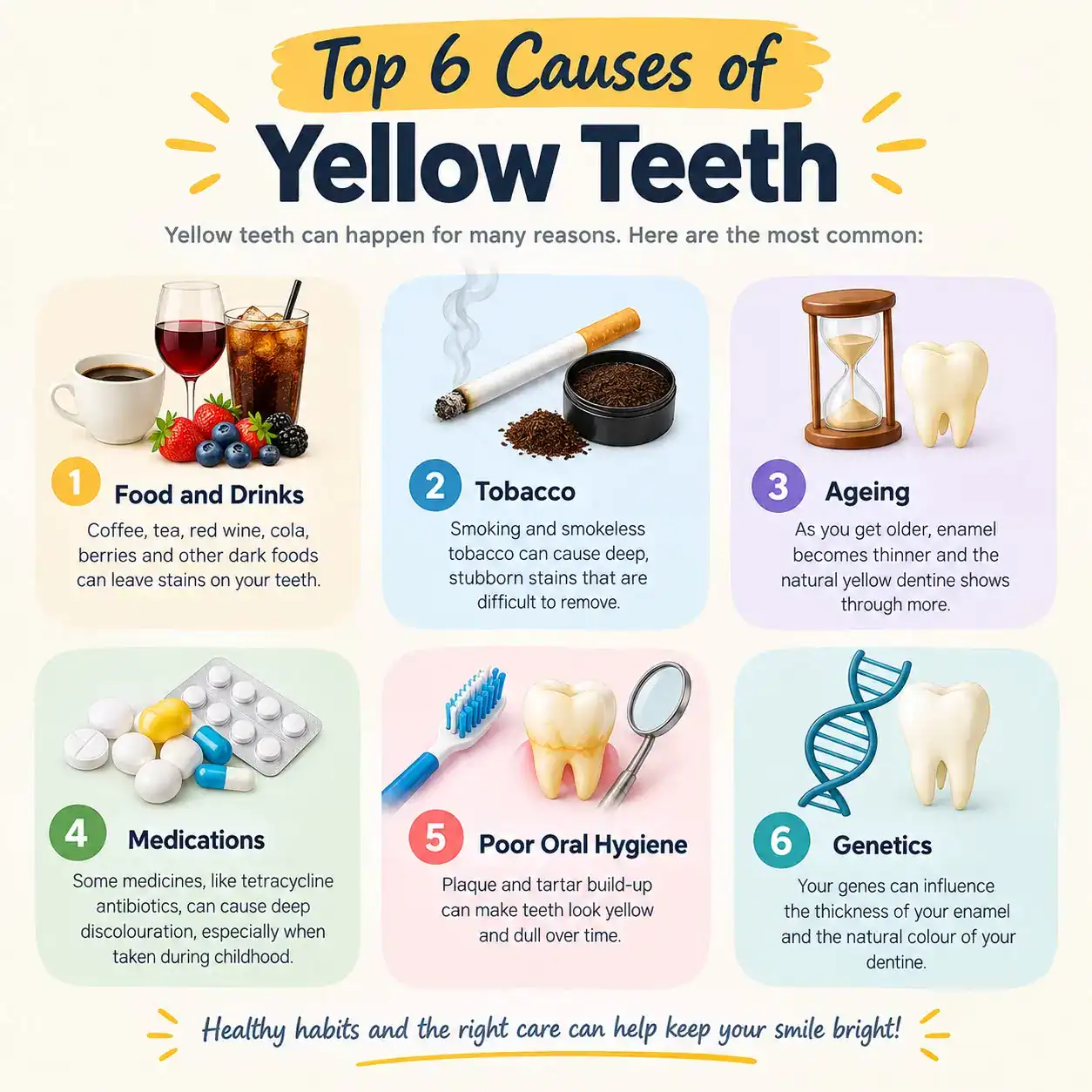
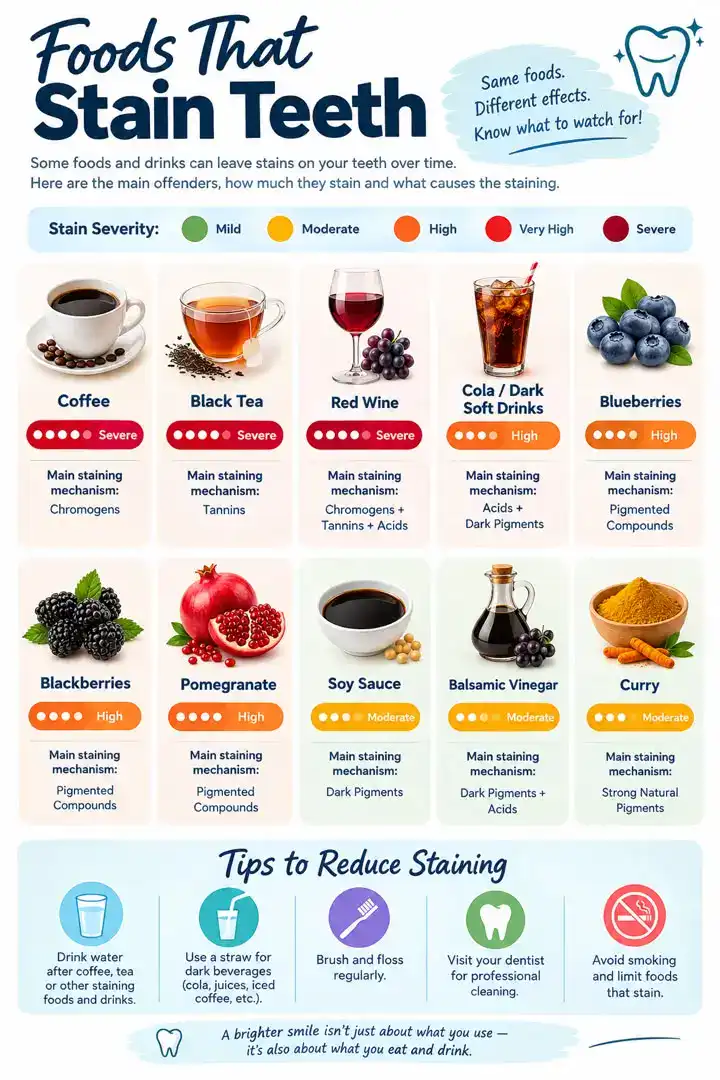
One of the most common causes of teeth yellowing is the food and drinks we consume regularly.
- Coffee: contains pigments that easily stick to tooth enamel.
- Tea: often stains teeth even more than coffee because of its high tannin content. Black tea is especially known for causing stains.
- Red wine: contains pigments, tannins, and acids that work together to stain teeth.
- Cola and dark soft drinks: their acids can weaken enamel, making teeth more likely to absorb stains.
- Berries: foods like blueberries, blackberries, and pomegranates are healthy but can leave strong colour stains on teeth.
- Soy sauce, balsamic vinegar, and curry: these highly coloured foods can contribute to staining when consumed regularly.
Both smoking and smokeless tobacco can cause deep and stubborn stains. Many people think nicotine causes the staining, but nicotine is actually colourless. The main problem is the tar in tobacco products, which leaves brown and black stains on the teeth. These stains can be difficult to remove and may not respond well to regular whitening products. Tobacco use also increases the risk of gum disease, oral cancer, and tooth loss, making it harmful to both the appearance and health of your mouth. When teeth are not brushed properly, plaque starts to build up on the surface. Plaque is a sticky film of bacteria that forms throughout the day. Over time, plaque can harden into tartar (also called calculus). Tartar is usually yellow or brown and cannot be removed by brushing alone. It needs to be removed by a dentist or dental hygienist during a professional cleaning. Good brushing habits, daily flossing, and regular dental check-ups help prevent plaque and tartar from building up. Some medications can affect the colour of your teeth. Tetracycline antibiotics are one of the best-known examples. When taken during childhood, while permanent teeth are still developing, they can cause deep yellow, grey, or brown staining inside the teeth. This type of staining is difficult to treat and often requires more than standard whitening treatments. The Mayo Clinic identifies tetracycline staining as one of the most challenging types of tooth discolouration to improve.
[→ Internal link: See our guide on — [LINK TO TOOTH ENAMEL ARTICLE] — for how enamel thickness affects tooth appearance and how to protect it.]
Can Yellow Teeth Become White Again?
Surface stains caused by food, drinks, and tobacco often respond well to professional cleanings, whitening strips, bleaching gels, and in-office whitening treatments. Since the stains are on the surface, whitening products can usually break them down effectively.
Age-related yellowing can also improve with whitening treatments. Whitening agents such as hydrogen peroxide and carbamide peroxide can penetrate the enamel and help lighten the darker dentine underneath. While noticeable improvement is possible, older teeth may not become extremely white because the enamel is naturally thinner.
Tetracycline staining is one of the most difficult types to treat. Whitening treatments may help improve the appearance, but complete whitening is rarely possible. In severe cases, veneers or composite bonding may be a better option for achieving a brighter smile.
Fluorosis can sometimes improve with whitening. Mild fluorosis may look more even after bleaching because the surrounding enamel becomes lighter. Moderate and severe fluorosis often require cosmetic dental treatments for the best results.
Crowns, veneers, and fillings do not respond to whitening products. These materials are made from ceramic or composite and do not change colour when exposed to bleaching agents. This means that whitening your natural teeth may make existing dental work look darker by comparison, creating a colour mismatch.
See the full breakdown of whitening methods and realistic expectations
How Dentists Remove Yellow Stains
- Professional Cleaning (Scale and Polish)
This is usually the first step for anyone with noticeable staining on their teeth. During a professional cleaning, a dentist or dental hygienist uses special tools to remove plaque, tartar, and surface stains that regular brushing cannot get rid of. After the cleaning, the teeth are polished to make them look cleaner and brighter.
- In-Office Teeth Whitening
This treatment is carried out by a dentist using a high-strength hydrogen peroxide whitening gel. Before the treatment starts, the dentist protects your gums and other soft tissues. The whitening gel is then applied in a controlled way and monitored throughout the procedure. Results are usually fast. Many people see their teeth become 5–8 shades lighter after a single appointment that lasts about 60–90 minutes.
- Custom Whitening Trays
For this treatment, the dentist takes impressions of your teeth and creates custom-made trays that fit perfectly. The trays are filled with a professional whitening gel, usually containing carbamide peroxide, and worn for a few hours each day or overnight, depending on the product. With consistent use over one to two weeks, the results can be similar to professional in-office whitening.
- Air Polishing
Air polishing uses a stream of fine powder, water, and air to remove stubborn stains from the surface of the teeth. It is especially effective for stains caused by smoking, tea, coffee, and other dark-coloured foods and drinks. This treatment is excellent for removing surface stains and helping teeth look cleaner and brighter.
- Microabrasion
Microabrasion is sometimes used for mild fluorosis or shallow enamel discolouration. During the procedure, a dentist removes a very thin layer of enamel from the tooth surface to eliminate the stained area. This treatment is only used in specific cases and is not considered a general teeth-whitening procedure.
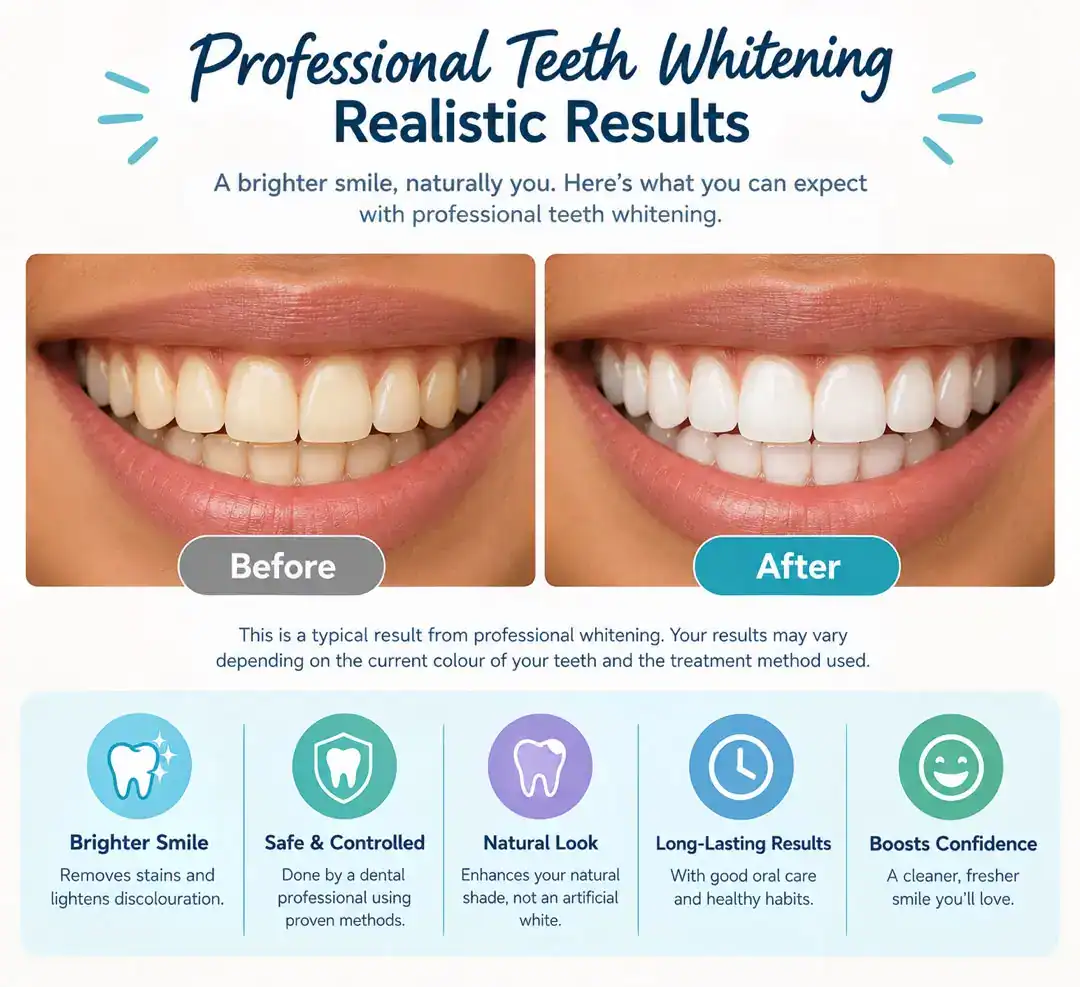
The Best Teeth Whitening Options for Yellow Teeth
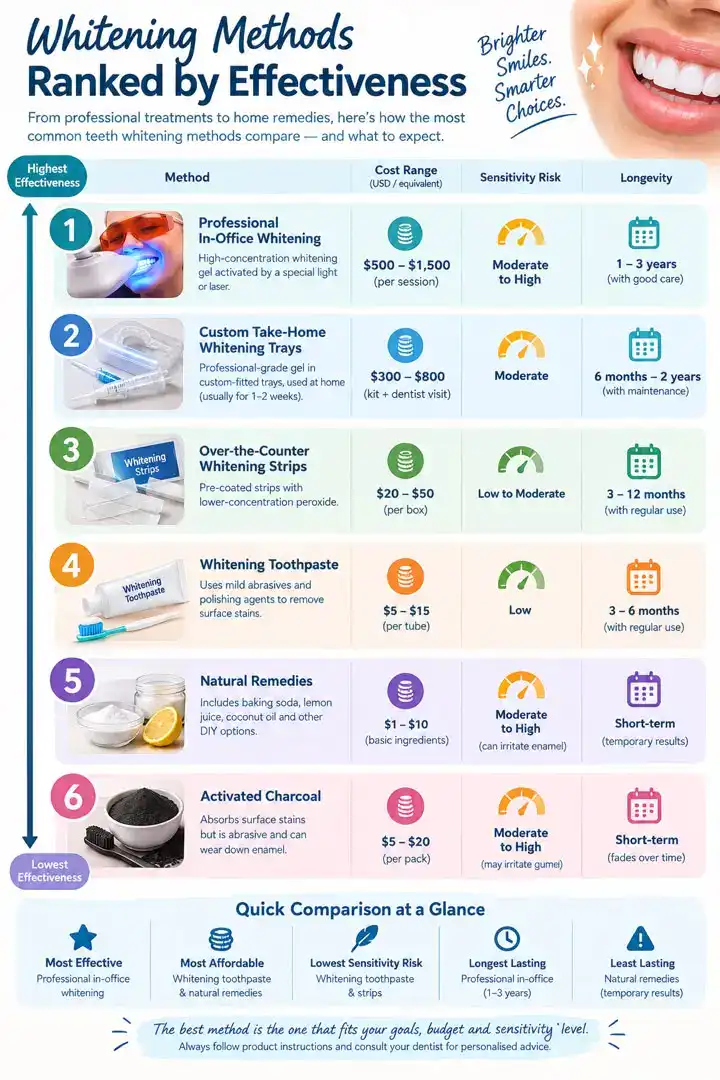
Professional In-Office Whitening
It’s very high. This is one of the fastest and most effective whitening treatments. Best for surface stains, age-related yellowing, and people who want quick results before a special event. Not suitable for severe tetracycline staining, people with untreated tooth decay or gum disease, and individuals with very sensitive teeth unless the treatment is adjusted. The Cost is High. It usually lasts 6–12 months with proper care and maintenance.
Custom Whitening Trays (Prescribed by a Dentist)
It’s very effective and often comparable to in-office whitening when used consistently. Best for people who want professional-level results while whitening their teeth at home. It usually lasts 6–12 months.
Whitening Toothpaste
Whitening toothpastes work by gently polishing the teeth and removing surface stains. Some also contain low levels of whitening ingredients or optical brighteners that help teeth appear brighter. It is good for removing surface stains and maintaining whitening results. Best for everyday use, preventing new stains, and maintaining a brighter smile after whitening treatment.
Home Remedies That Actually Help
- Baking Soda
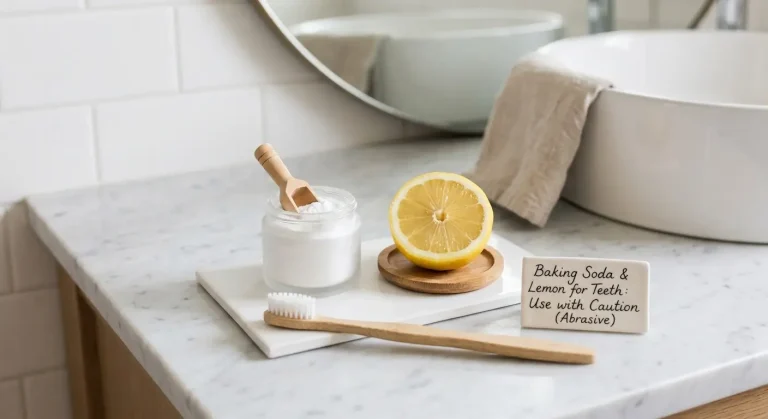
Baking soda, also known as sodium bicarbonate, is one of the few home remedies that has scientific support. It is a mild abrasive that helps remove surface stains from the teeth. The American Dental Association (ADA) considers baking soda-containing toothpastes safe and effective for everyday use. While some people brush directly with baking soda, toothpaste formulations are usually a better choice because they are designed to clean teeth safely and effectively. Research published in the Journal of the American Dental Association has shown that toothpastes containing baking soda can help remove surface stains and improve the appearance of teeth.
See our complete guide on baking soda for teeth whitening for a deeper look at the evidence.
- Oil Pulling
Oil pulling involves swishing coconut oil or sesame oil around the mouth for several minutes. This practice has been used for many years in traditional medicine. Some studies suggest it may help reduce plaque and bacteria in the mouth, which could indirectly help keep teeth cleaner. However, there is very little evidence showing that oil pulling can significantly whiten teeth. While it may support oral hygiene, it should not replace brushing, flossing, or professional dental care.
- Drinking Water After Staining Foods and Drinks
One of the easiest ways to reduce staining is to drink water after consuming coffee, tea, red wine, or other dark-coloured foods and drinks. Water helps wash away pigments before they have time to stick to the teeth. This habit will not remove existing stains, but it can help slow down the formation of new stains and keep your teeth looking cleaner for longer.
How to Prevent Yellow Teeth
- Brush Twice a Day
Brush your teeth for at least two minutes, twice daily. Electric toothbrushes are often more effective at removing plaque, but a manual toothbrush can work just as well when used properly.
- Floss Every Day
Flossing removes plaque and food particles from between the teeth, where toothbrushes cannot reach. This helps prevent staining, tooth decay, and gum disease.
- Rinse With Water After Staining Foods and Drinks
After drinking coffee, tea, red wine, or other staining beverages, rinse your mouth with water. It helps wash away pigments before they settle on the teeth.
- Use a Straw When Possible
Using a straw for dark-coloured drinks reduces contact between the liquid and your teeth, helping to reduce staining.
- Quit Smoking
Tobacco is one of the biggest causes of stubborn tooth stains. Stopping smoking can significantly reduce future staining and improve overall oral health.
- Visit Your Dentist Regularly
Professional cleanings every 6–12 months help remove tartar and surface stains before they become difficult to treat.
- Use Fluoride Toothpaste
Fluoride helps strengthen enamel and protect teeth from acid damage and staining. Both the NHS and the American Dental Association recommend fluoride toothpaste as part of a healthy oral care routine.
Best Toothpaste for Yellow Teeth
If your goal is to remove everyday stains and maintain a brighter smile, Optifresh Pro White Toothpaste can help. It is designed to remove surface stains and support a cleaner, brighter-looking smile when used regularly.
If your teeth are sensitive, especially after whitening treatments, Optifresh Sensitive Toothpaste is a better option. It is formulated to provide gentle cleaning while helping reduce discomfort.
Good daily oral hygiene is the foundation of healthy-looking teeth. Optifresh Natural Oil Toothpaste supports everyday brushing and helps keep teeth clean as part of a regular oral care routine.
If fresh breath is also a priority, Optifresh Maximum Fresh Toothpaste helps keep your mouth feeling clean and refreshed while supporting your daily oral hygiene routine.
[→ Internal link: See our full guide — [LINK TO WHITENING TOOTHPASTE ARTICLE] — for what the evidence says about whitening toothpastes.]
How Long Does It Take to Whiten Yellow Teeth?
| Method | When You May Start Seeing Results |
|---|---|
| Professional cleaning (scale and polish) | Immediate results during the appointment |
| Professional in-office whitening | Same day; some people see noticeable results after one session |
| Custom whitening trays from a dentist | Usually within 1–2 weeks of daily use |
| Over-the-counter whitening strips | Around 10–14 days |
| Whitening toothpaste | Usually 4–6 weeks of regular use |
| Home remedies such as baking soda | Several weeks or months, with only mild improvement in surface stains |
Conclusion
Yellow teeth are very common, and in many cases they can be improved with the right approach. The first step is understanding why your teeth have become yellow. The cause of the discolouration will determine which treatment is most likely to work for you. Surface stains from food, drinks, and smoking are often easier to treat than deep internal staining caused by ageing, medications, or dental conditions. For mild staining, a good whitening toothpaste, regular dental cleanings, and healthy oral care habits can make a noticeable difference. For deeper or more stubborn yellowing, professional whitening treatments offered by a dentist usually provide the best results.