

How Best Whitening Toothpaste Works: The Main Mechanisms
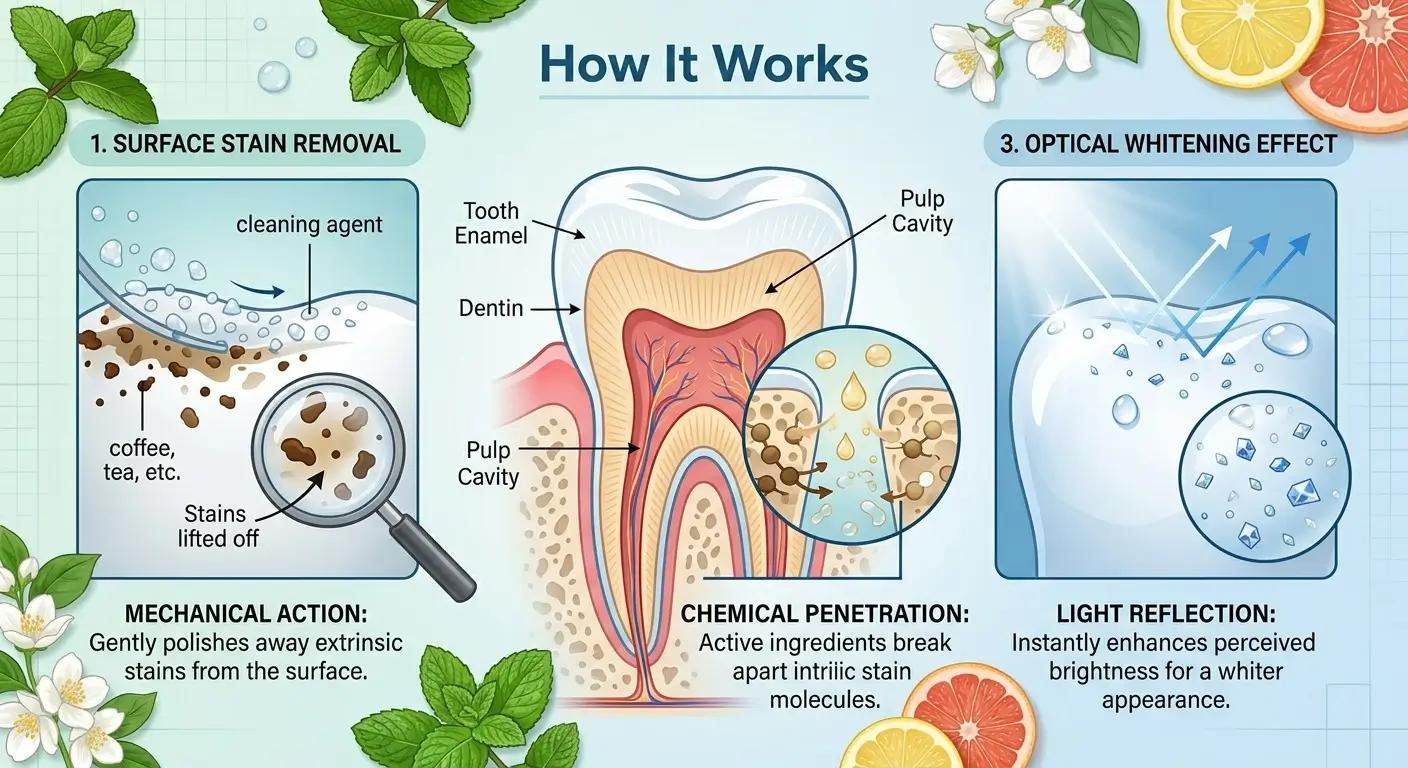
Most whitening toothpastes work through one of three mechanisms, although some use a combination of them. Understanding how a product works can help you know what results to expect.
Mechanical Abrasives: Surface Stain Removal
Every toothpaste contains some level of abrasive ingredient to help clean the tooth surface during brushing. In whitening toothpastes, these ingredients are designed to remove chromogens, pigmented molecules from food, drinks, and tobacco that build up on and just beneath the enamel surface.
Common abrasive ingredients include:
- Hydrated silica: One of the most widely used whitening abrasives in modern toothpastes. It contains fine particles that polish the tooth surface without the harshness associated with older formulations.
- Calcium carbonate: A milder option often found in more natural or sensitivity-focused products.
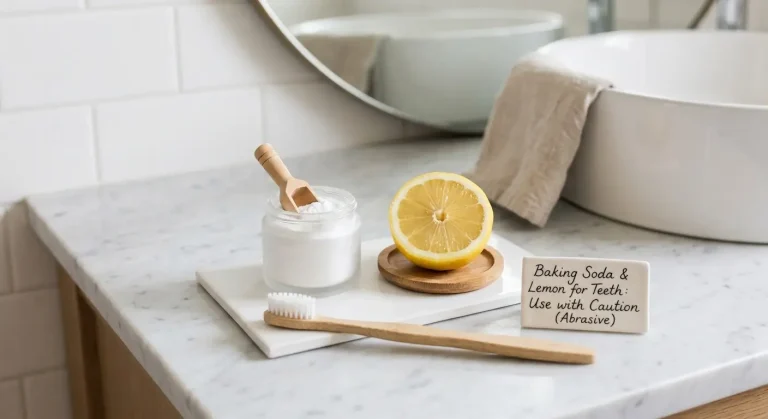
- Sodium bicarbonate (baking soda): It’s an ingredient with low abrasivity and good evidence for removing surface stains. It is used in dedicated baking soda toothpastes and combination formulas.
Chemical Bleaching Agents: Deeper Stain Breakdown
Some whitening toothpastes also contain low concentrations of peroxide compounds, usually hydrogen peroxide or carbamide peroxide. These ingredients provide a mild bleaching effect beyond surface stain removal. Peroxide molecules can penetrate the enamel and reach the dentine layer beneath it. There, they oxidise chromogen molecules that abrasives cannot reach, breaking them down and helping to lighten the appearance of the teeth.
For a full breakdown of how hydrogen peroxide whitens teeth
Optical Illusion Modifiers: The Instant-Brightness Effect
Blue covarine is a pigment that adheres to the tooth surface immediately after brushing. Because blue and yellow are complementary colours, the pigment can make teeth appear less yellow. It works on a similar principle to purple shampoos, which help reduce the appearance of yellow tones in blonde hair. This effect is real but temporary. It fades within hours as the blue covarine wears off through eating and drinking. Some people find it a useful confidence boost, while others prefer products that produce longer-lasting changes. Understanding how it works helps you distinguish the immediate brightness after brushing from actual whitening.
The RDA Scale: Is Your Toothpaste Too Abrasive?
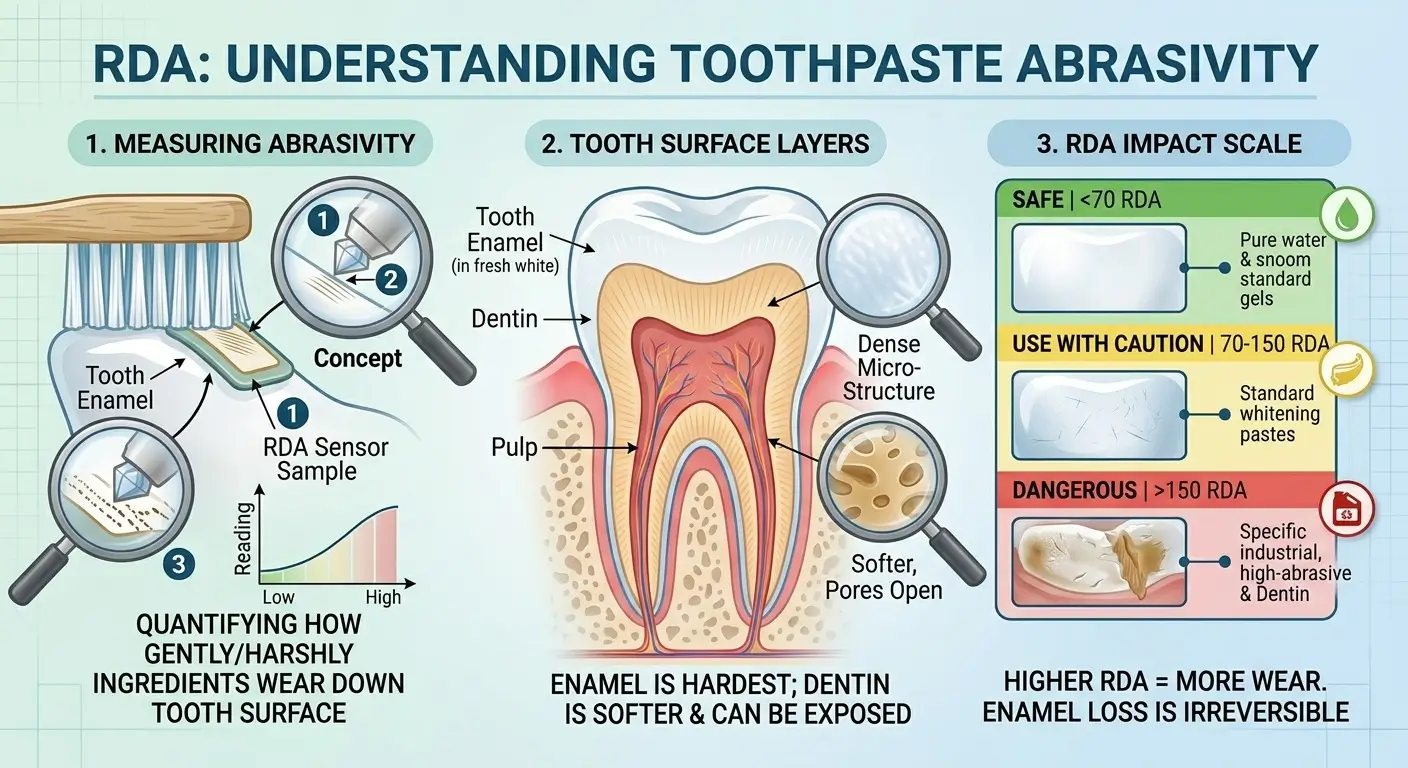
This is one of the most important parts of the whitening toothpaste discussion when it comes to long-term enamel health. It is also an area that much product marketing tends to overlook.
What RDA Means
RDA stands for Relative Dentine Abrasivity. It is a standardised index used to measure how abrasive a toothpaste is to tooth surfaces. The test measures the amount of dentine worn away by a toothpaste under controlled laboratory conditions. The American Dental Association uses the RDA scale as part of its safety evaluation process for the ADA Seal of Acceptance. Products carrying the Seal must meet specific safety requirements.
RDA values broadly indicate the abrasivity of toothpaste:
| RDA Range | Abrasivity Level | Common Use |
|---|---|---|
| 0–70 | Low | Sensitive teeth, children’s toothpaste, and daily long-term use |
| 70–100 | Medium | Standard everyday toothpaste |
| 100–150 | Higher | Many whitening toothpastes |
| 150–250 | Upper end | Maximum threshold; approach with care |
The Charcoal Toothpaste Warning
Charcoal toothpastes deserve special attention because they are widely marketed as natural whitening products, yet they may risk enamel damage. Many charcoal products don’t list their RDA values, making it hard for consumers to assess their abrasiveness. Laboratory analyses of charcoal toothpastes have found that some have RDA values in the higher range. The shape and hardness of charcoal particles may also make them more damaging to enamel than conventional abrasives. Again, many charcoal toothpastes do not contain fluoride, meaning they lack this key ingredient for cavity protection. The American Dental Association has stated that there is currently insufficient evidence to support the safety and effectiveness claims made for charcoal dental products.
What to Look for When Choosing a Whitening Toothpaste
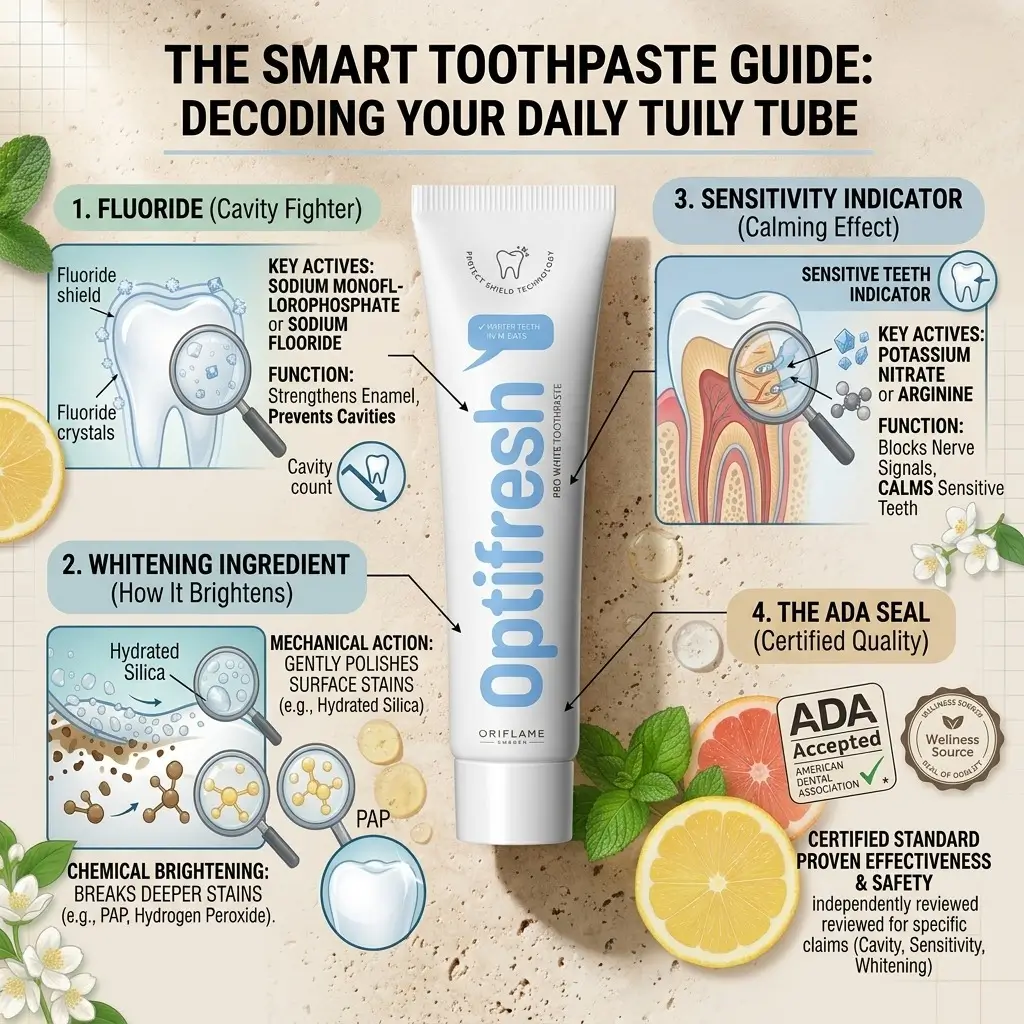
With hundreds of whitening toothpastes out there, knowing how to read the label is more useful than relying on the claims printed on the front of the package. Products carrying the ADA Seal of Acceptance have been independently evaluated by the American Dental Association (ADA) for safety and the specific claims made about them. For whitening toothpaste, the evaluation depends on the claims being assessed and the evidence provided to support them. This does not mean that products carrying the Seal are automatically the right choice for everyone. However, it provides a meaningful level of independent verification that goes beyond the manufacturer’s own marketing claims.
If you already experience tooth sensitivity, or you plan to use a whitening toothpaste with higher abrasivity, look for the following ingredients:
- Potassium nitrate: Helps reduce tooth sensitivity by affecting the way nerves respond to stimuli. With consistent use, it may help reduce sensitivity over time.
- Stannous fluoride: Provides fluoride’s cavity protection and may also help reduce tooth sensitivity. It is increasingly used in modern toothpaste formulas designed for sensitive teeth.
Fluoride remains one of the most well-established ingredients in consumer dental care for preventing cavities and protecting enamel. It supports enamel remineralisation, the process through which minerals such as calcium and phosphate are restored to enamel after acid exposure. Choose a whitening toothpaste that also contains fluoride. Giving up fluoride protection in exchange for whitening benefits is not a worthwhile trade-off.
Top Whitening Toothpaste Categories and What They Suit
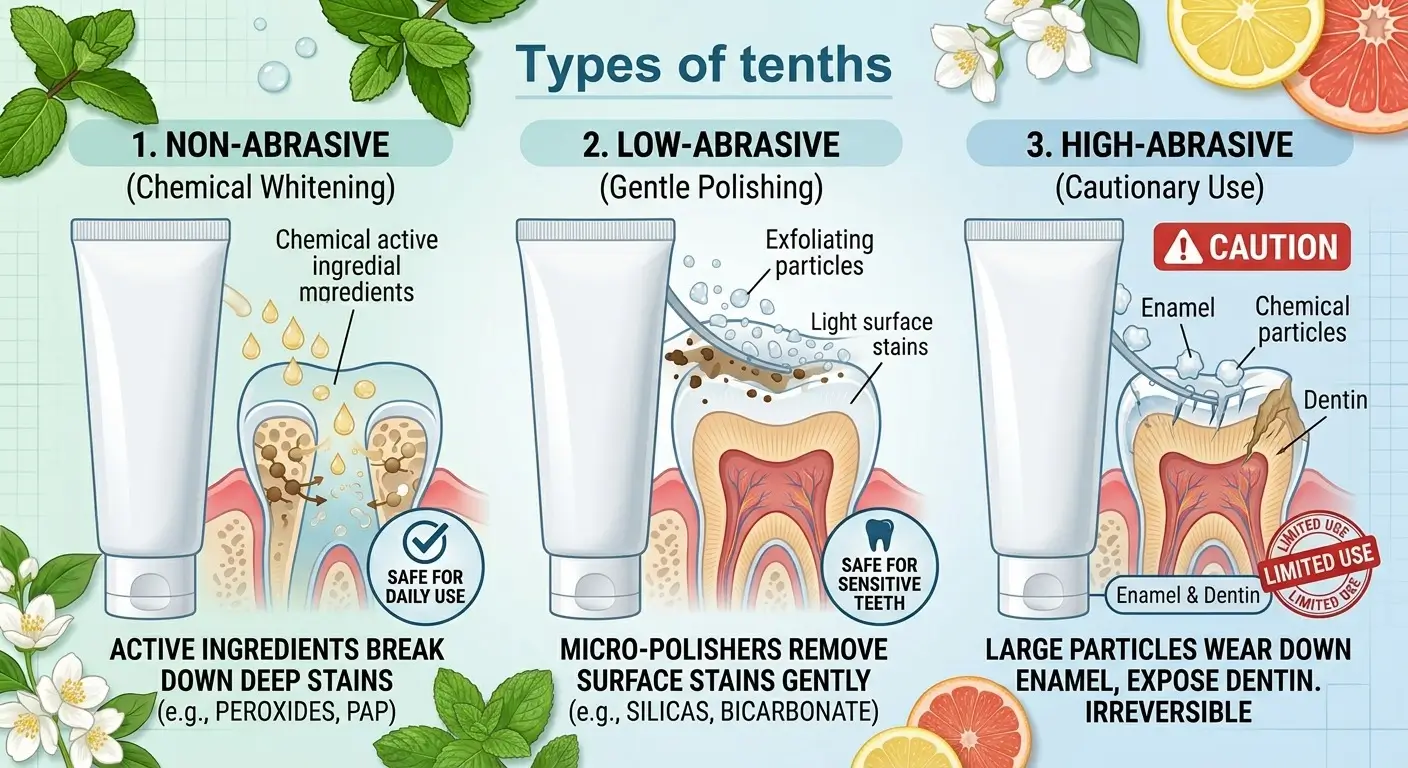
No single whitening toothpaste is the best choice for everyone. The right product depends on your starting point, including the amount of staining you have, whether you experience sensitivity, and your daily brushing habits.
Hydrogen Peroxide Plus Fluoride
For people with mild to moderate surface staining who want effective stain removal alongside some mild bleaching, a toothpaste that combines hydrogen peroxide and fluoride may be a suitable option. Products in the Colgate Optic White range and Optifresh Pro White Toothpaste are examples of this category. They combine abrasive stain removal with peroxide bleaching in some formulations while maintaining fluoride protection. These products suit people who regularly drink coffee or tea and want to prevent stains from building up while addressing existing discolouration.
Gentle Abrasives Plus Sensitivity Blockers
For people who experience sharp sensitivity to hot or cold foods and drinks, whether it existed before whitening or developed after using whitening products, a lower-abrasivity formula containing potassium nitrate or stannous fluoride may be more appropriate. Sensodyne ProNamel Gentle Whitening and Optifresh Sensitive Toothpaste are examples of products in this category. They focus on enamel protection and sensitivity relief alongside surface stain removal, making them potential options for people with sensitive teeth who need a daily toothpaste.
Baking Soda Plus Peroxide
For people who prefer a simpler formulation or a budget-friendly option with supporting evidence, baking soda-based whitening toothpastes can help remove surface stains. Arm & Hammer Advance White is an example. It combines the polishing action of sodium bicarbonate with hydrogen peroxide in some formulations. The combination has been studied, and certain products in this range carry the ADA Seal of Acceptance for stain removal.
Whitening Toothpaste vs Professional Whitening Options
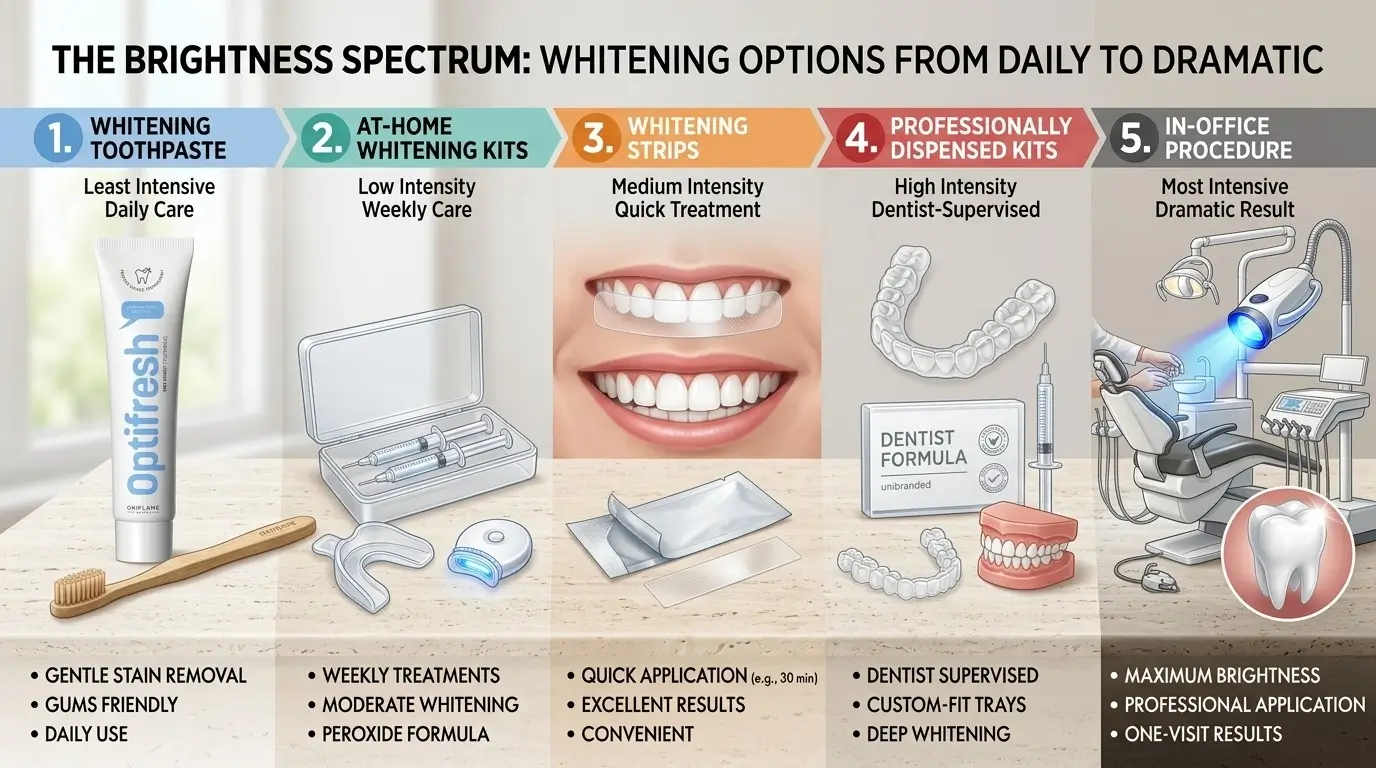
See a full overview of all whitening options on HOME TEETH WHITENING.
Can Whitening Toothpaste Whiten Yellow Teeth?
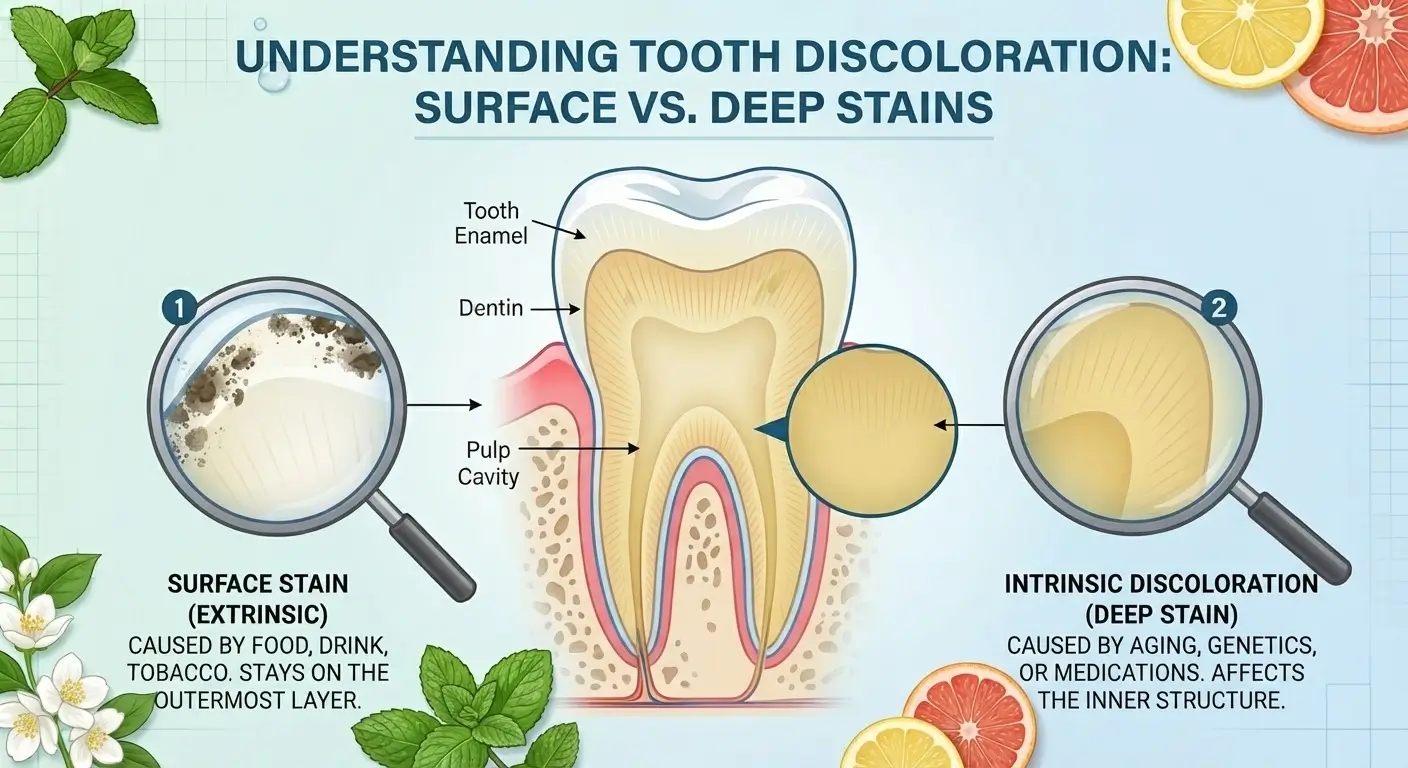
Surface stains from food and drinks, such as coffee, tea, red wine, and tobacco, can respond well to the stain-removing and mild bleaching action of whitening toothpastes. If your teeth were brighter a year ago but have gradually become duller due to everyday habits, using whitening toothpaste consistently produces visible improvement over several weeks. Natural yellowing caused by ageing is different. As we get older, enamel naturally becomes thinner, allowing more of the yellowish dentine underneath to show through. Whitening toothpaste cannot reverse this change through surface cleaning alone. Toothpastes containing low concentrations of peroxide may provide some improvement, but this type of yellowing may respond better to professional peroxide bleaching. Genetic tooth colour is another factor. Some people naturally have more translucent enamel, which allows more of the underlying dentine colour to show through.
How to Use Whitening Toothpaste Safely
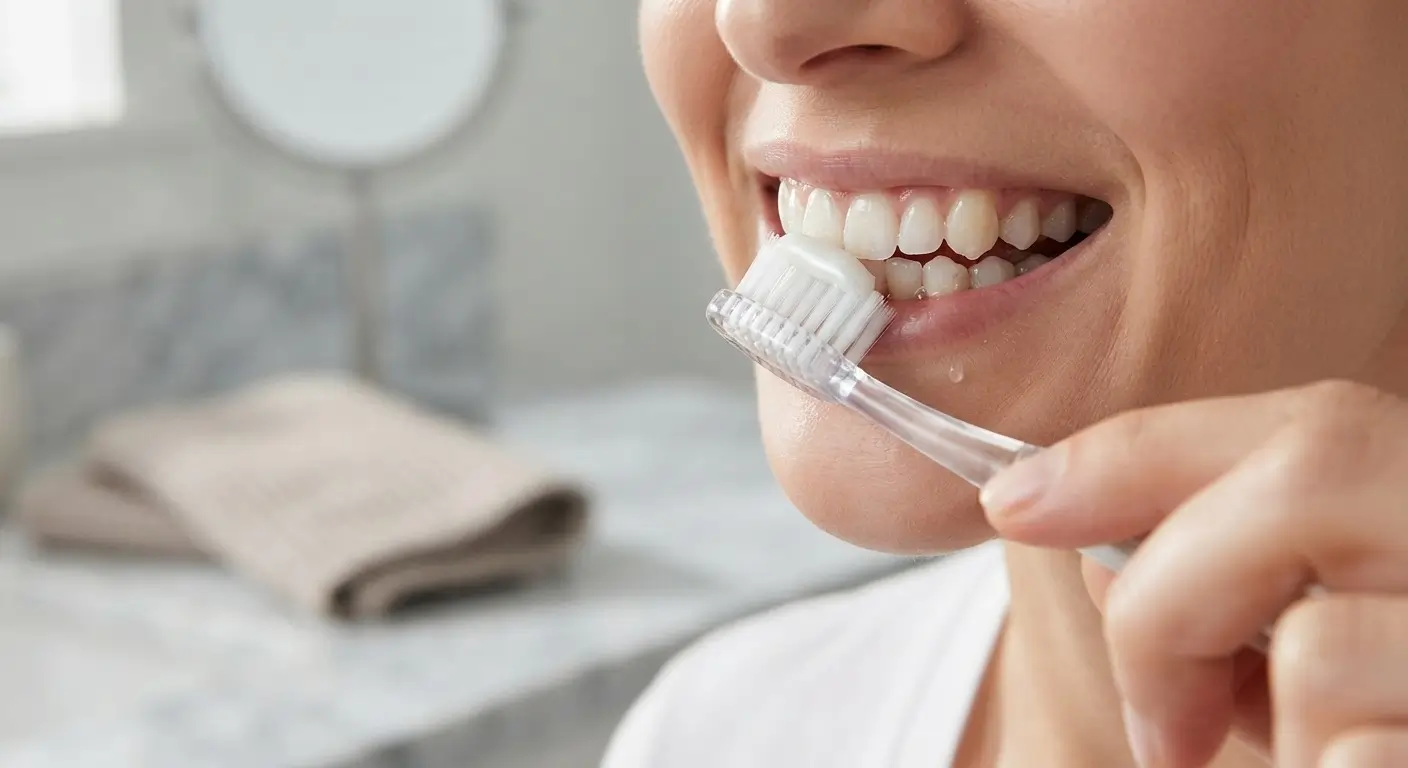
- Brush twice daily for approximately two minutes. This is the standard recommendation from the ADA and NHS. Brushing more frequently with an abrasive whitening toothpaste increases cumulative exposure to abrasion without necessarily providing a corresponding improvement in whitening.
- Use a soft-bristled toothbrush. This is particularly important. The NHS and ADA recommend soft bristles because brushing too aggressively with harder bristles can increase wear on tooth surfaces and gum tissue. A soft-bristled brush used with the correct technique can clean teeth effectively, while a hard-bristled brush combined with whitening toothpaste may contribute to gradual wear.
- Apply gentle pressure. The toothpaste helps clean your teeth; your job is to guide the brush rather than scrub forcefully. Brushing harder does not necessarily clean better or whiten teeth faster. Instead, it can increase wear on enamel and gum tissue. Hold your toothbrush with a light grip rather than gripping it tightly in your fist.
- Allow 2–6 weeks before assessing results. Removing surface stains takes time. Noticeable improvement in brightness may require consistent daily use over several weeks rather than a few days. This is a general expectation, not a guarantee. Results vary depending on your starting point, the amount of staining, and your individual enamel characteristics. If you do not notice improvement after 6–8 weeks, consider whether a professional dental assessment would be helpful.
- Rinse with water, but do not brush immediately after consuming acidic foods or drinks. If you have recently consumed acidic food or drink, wait at least 30 minutes before brushing. Acid can temporarily soften the tooth surface, and brushing immediately afterwards may increase wear. Rinse your mouth with water first.
What Dentists Recommend
For maintaining a surface-stain-free smile: Dentists generally support whitening toothpastes, particularly those with the ADA Seal of Acceptance, appropriate RDA values, and fluoride, as part of a regular oral hygiene routine. These products can help prevent surface stains from building up between professional dental cleanings.
For a significant change in tooth colour: If your goal is to lighten the underlying colour of your teeth rather than simply remove surface stains, dentists may recommend professional whitening or dentist-prescribed home whitening tray systems instead of relying on toothpaste alone. The concentration of the whitening agent and the length of contact with the teeth differ considerably.
For unusual discolouration: If your teeth change colour suddenly, the discolouration is uneven, only one or a few teeth are affected, or you have other symptoms, arrange a dental check-up rather than relying on a whitening product. Discolouration can sometimes indicate a dental problem, such as early tooth decay, a damaged or non-vital tooth nerve, or gum disease. These conditions need assessment before cosmetic whitening.
For sensitive teeth: Dentists often advise people with significant sensitivity, gum recession, enamel erosion, or a history of dental trauma to choose whitening toothpaste carefully. Some may need to avoid more abrasive products and confirm the most suitable option with their dentist.
The Best Whitening Toothpaste Options for Your Routine: The Optifresh Range
Optifresh Pro White Toothpaste: Best for Everyday Brightness and Surface Stain Removal
If you regularly drink coffee, tea, or wine and want to prevent surface stains from building up, Optifresh Pro White Toothpaste is a suitable option for your daily routine. It is formulated to help remove surface stains through consistent, twice-daily brushing and support a brighter-looking smile over time.
This toothpaste suits you if:
- Your teeth have gradually become duller because of everyday eating and drinking.
- You want to maintain the results of professional whitening or a whitening strip treatment.
- You want a daily whitening toothpaste that helps remove surface stains.
Optifresh Sensitive Toothpaste: Best for Sensitive Teeth
Tooth sensitivity does not mean you have to give up on a brighter smile. Optifresh Sensitive Toothpaste is intended for people who experience sharp pain or discomfort when exposed to hot, cold, or sweet foods and drinks. This sensitivity may be related to exposed dentine, receding gums, or previous whitening treatments.
This toothpaste may suit you if:
- You experience discomfort when drinking cold water or eating ice cream.
- Previous whitening toothpastes have made your sensitivity worse.
- You want to maintain your daily oral care routine without unnecessary discomfort.
Optifresh Natural Oil Toothpaste: Best for Natural Daily Oral Care
If you prefer naturally inspired ingredients in your daily routine, Optifresh Natural Oil Toothpaste offers an option that incorporates natural oil ingredients into everyday brushing. It is intended to support oral hygiene, healthy gums, and clean teeth for people who prefer to avoid certain synthetic additives.
This toothpaste suits you if:
- You prefer naturally inspired ingredients in your personal care products.
- You want a toothpaste to use as part of your everyday oral care routine.
- You are combining your regular oral care routine with a targeted whitening treatment.
Optifresh Maximum Fresh Toothpaste: Best for Fresh Breath and Daily Oral Care
A bright smile and fresh breath can go hand in hand. Optifresh Maximum Fresh Toothpaste is designed to provide a fresh feeling alongside daily plaque control, making it an option for people who want to maintain their oral hygiene with one product. Foods and drinks such as coffee, tea, and strongly flavoured or spiced foods can affect breath and contribute to changes in the appearance of teeth. Choosing a toothpaste that supports daily cleaning and fresh breath can help you maintain a more complete oral care routine.
This toothpaste suits you if:
- Fresh breath is as important to you as maintaining a brighter smile.
- You want daily plaque control as part of your oral care routine.
- You want a complete oral care experience in one product.
Conclusion
Whitening toothpaste has a useful place in a daily oral hygiene routine, not because it produces miraculous results, but because it can do what it is designed to do: help remove surface stains and maintain tooth brightness over time. The key is to choose a product that suits your situation. If you drink coffee twice a day and your teeth have gradually become duller, a fluoride whitening toothpaste with suitable abrasivity may be a sensible daily choice. If your teeth are yellow because of ageing or genetics, the same toothpaste is unlikely to produce the change you want. Speaking with a dentist is a better next step than simply switching brands.