


Teeth Whitening Guide: Safe Methods, Costs & Results
Teeth whitening is the process of making your natural teeth look lighter by reducing or removing stains. Before choosing any whitening method, it’s important to understand what teeth whitening can and cannot do.
Most teeth whitening products work in one of two ways:
Bleaching:
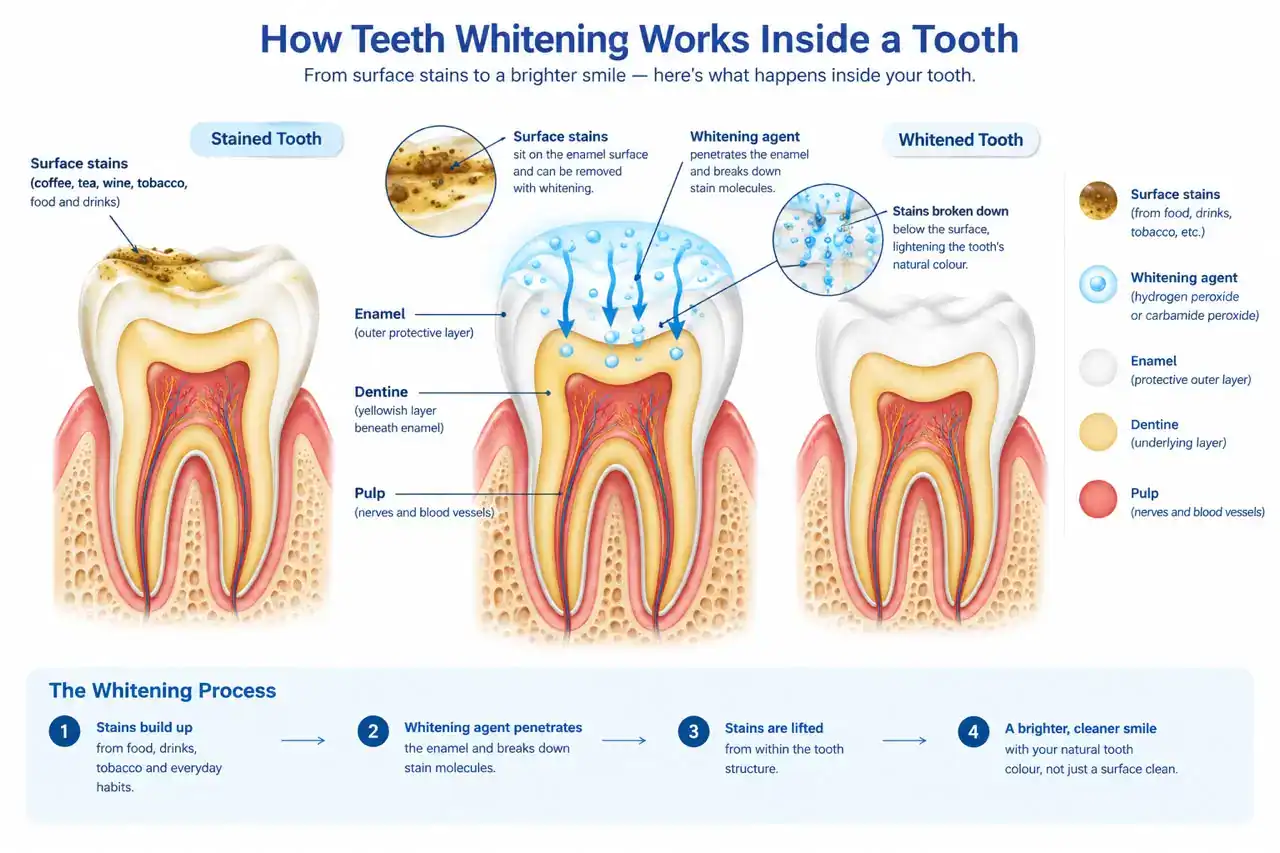
This method uses peroxide-based ingredients, usually hydrogen peroxide or carbamide peroxide, to penetrate the enamel and break down stain particles inside the tooth. This helps lighten the tooth’s natural colour, not just the surface.
Surface Cleaning (Whitening Toothpastes and Polishes):
These products use mild abrasives or special ingredients to remove surface stains caused by coffee, tea, wine, tobacco, and certain foods. They can make teeth look cleaner and brighter, but they do not change the tooth’s natural colour.
According to the American Dental Association (ADA), tooth bleaching specifically refers to products that contain peroxide and are designed to lighten the actual shade of the teeth. Teeth whitening, on the other hand, is a broader term that includes both bleaching and removing surface stains.
The most effective teeth whitening treatments are usually professional whitening procedures performed by a dentist and custom-made whitening trays prescribed by a dental professional. However, at-home options such as whitening strips and peroxide-based whitening gels can also provide noticeable results when used correctly and consistently. It’s also important to know that teeth whitening works best on natural tooth enamel and surface stains. It does not change the colour of dental restorations such as crowns, veneers, fillings, or bonding.
Why Teeth Become Yellow
Teeth are not naturally bright white. Under the enamel is a layer called dentine, which has a naturally yellow colour. Because enamel is slightly transparent, the colour of the dentine can show through. How white or yellow your teeth appear depends on the thickness of your enamel and several other factors. However, when teeth become more yellow than normal, there is usually a specific reason behind it.
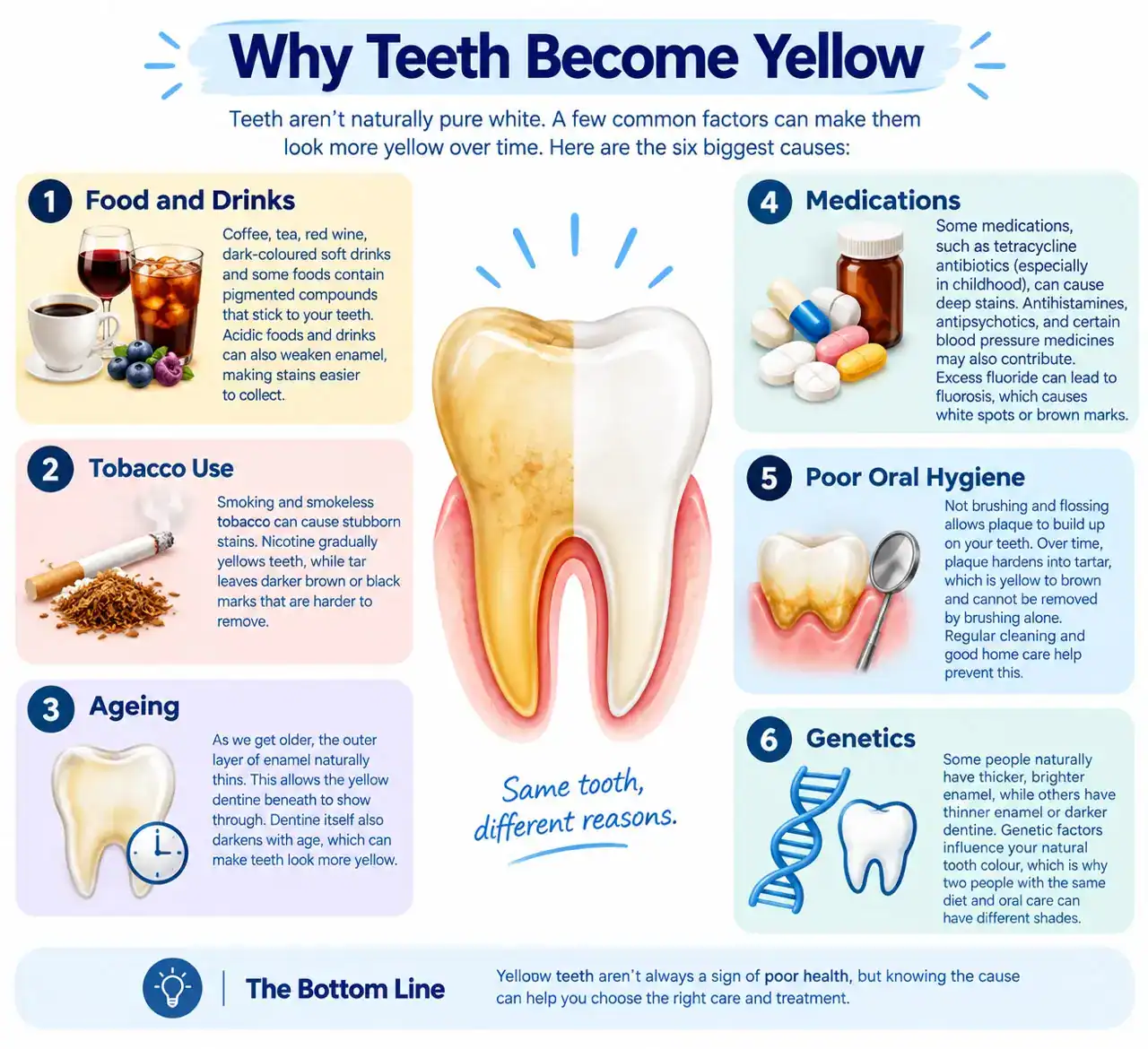
One of the most common causes of yellow teeth is what we eat and drink. Coffee, tea, red wine, and dark-coloured soft drinks contain coloured compounds that can stick to the surface of the teeth and cause staining over time. Tea can sometimes stain teeth even more than coffee because it contains tannins, which help stains cling to enamel. Acidic foods and drinks can also weaken enamel temporarily, making it easier for stains to develop. As we get older, the outer layer of enamel naturally becomes thinner due to years of chewing and wear. When this happens, the yellow dentine underneath becomes more visible. At the same time, dentine naturally darkens with age. This type of yellowing comes from inside the tooth rather than from surface stains, so whitening treatments are usually needed to improve it. Some medications can affect the colour of your teeth. For example, tetracycline antibiotics taken during childhood, while teeth are still developing, can cause deep grey, brown, or striped stains that are difficult to treat. Certain antihistamines, antipsychotic medications, and blood pressure medicines may also contribute to tooth discolouration. In addition, excessive fluoride exposure during childhood can cause a condition called fluorosis, which may result in white spots, brown marks, or pitted enamel. Not brushing and flossing properly allows plaque to build up on the teeth. Over time, plaque hardens into tartar, which can appear yellow or brown. Tartar cannot be removed by brushing alone and usually requires professional dental cleaning. Good daily oral hygiene and regular dental check-ups can help prevent this problem. Sometimes yellow teeth are simply due to genetics. Some people naturally have thicker, brighter enamel, while others have thinner enamel or darker dentine. This is one reason why two people with similar diets and oral care habits can still have very different tooth colours.
Can Yellow Teeth Become White Again?
Surface stains from food and drinks are the easiest type of staining to treat. Whitening toothpastes, whitening strips, whitening gels, and professional whitening treatments can often produce noticeable improvements. Whitening products can help lighten teeth that have become yellow with age. Results are often good, although it may not be possible to achieve the same brightness seen in younger teeth because enamel naturally becomes thinner over time. Tobacco stains can often be improved with whitening treatments. However, the longer and heavier the tobacco use, the more difficult the stains may be to remove. Severe cases may require professional treatment. Tetracycline stains are the most difficult stains to treat because they are deep inside the tooth structure. Whitening can sometimes improve their appearance, but severe cases often require veneers or dental bonding for better results.
The success of whitening depends on the severity of the fluorosis. Mild cases may respond well to whitening, while moderate or severe cases may require cosmetic dental treatment. Whitening products only work on natural teeth. They do not change the colour of crowns, veneers, fillings, or bonding materials. If you whiten your natural teeth, these restorations may no longer match the surrounding teeth.
The Best Teeth Whitening Methods
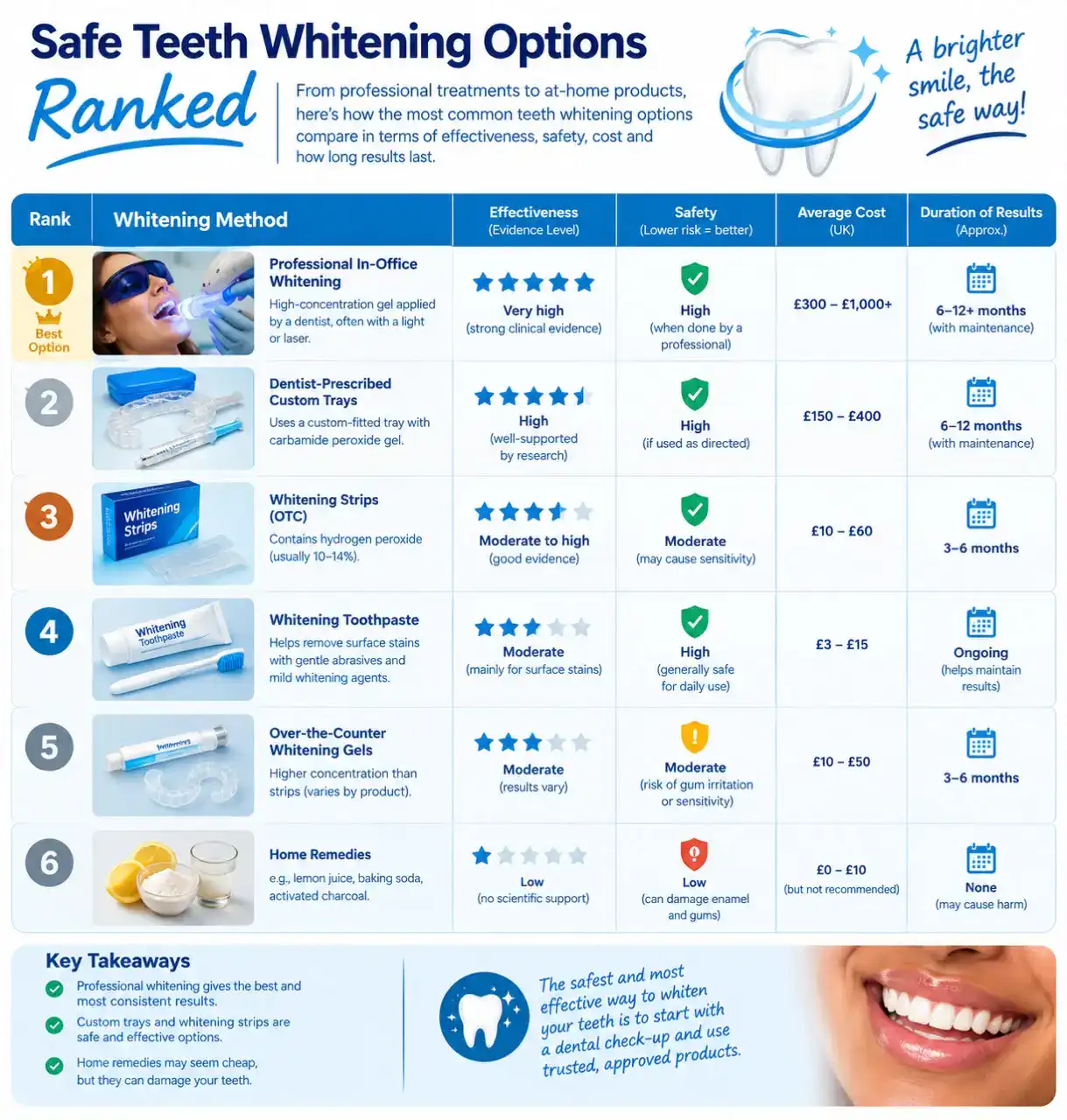
- Whitening Toothpaste
Whitening toothpastes mainly work by removing surface stains. They contain gentle polishing ingredients such as silica or calcium carbonate that help clean and brighten the surface of the teeth. Some formulas also contain small amounts of hydrogen peroxide or special ingredients that create a temporary whitening effect. Studies show that whitening toothpastes are effective at removing surface stains and helping prevent new stains from forming. However, they do not significantly change the natural colour of the tooth itself. According to the Mayo Clinic, whitening toothpastes may lighten teeth by about one shade when used consistently.
- Whitening Strips
Whitening strips are one of the most popular at-home whitening options. They usually contain hydrogen peroxide and are placed directly on the teeth for a specific period each day, often for 10 to 14 days. Research shows that whitening strips can noticeably lighten teeth when used correctly. Many people see improvements of two to four shades after completing a treatment course.
- Whitening Gels with Custom Trays
Custom whitening trays are made by a dentist to fit your teeth perfectly. The trays are filled with whitening gel and worn for several hours a day or overnight. This is one of the most effective and well-studied home whitening methods. Because the trays fit properly, the whitening gel stays in close contact with the teeth while reducing irritation to the gums. The American Dental Association (ADA) considers dentist-supervised tray whitening to be both effective and safe.
- Professional In-Office Whitening
Professional whitening is performed by a dentist using high-strength whitening products. Protective barriers are placed on the gums, and the whitening gel is carefully applied and monitored throughout the procedure. Professional whitening usually delivers the fastest and most noticeable results. Many people see significant improvement after a single appointment.
- LED Whitening Systems
Many home whitening kits now include LED lights. These systems combine a whitening gel with a light device that claims to speed up the whitening process. Research on LED whitening is mixed. While some professional treatments use light technology, studies suggest that the whitening effect mainly comes from the peroxide gel rather than the light itself.
At-Home vs Professional Teeth Whitening
There are several ways to whiten your teeth, from affordable at-home products to professional treatments performed by a dentist. The best option depends on your budget, the level of whitening you want, and whether you have sensitive teeth.
At-home whitening products, such as whitening strips and over-the-counter whitening gels, are usually the most affordable option. They can produce noticeable results, often lightening teeth by two to four shades after consistent use for about 10 to 14 days. However, they may cause some sensitivity and usually require patience to see results.
Custom whitening trays provided by a dentist offer stronger whitening results because they use higher-strength whitening gels and are designed to fit your teeth perfectly. They typically produce better and more even results than over-the-counter products and can lighten teeth by four to eight shades over one to two weeks.
Professional in-office whitening provides the fastest results. A dentist applies a high-strength whitening gel under controlled conditions, often producing dramatic improvements in a single appointment. While this option is the most expensive, it is ideal for people who want quick and noticeable results.
Does Teeth Whitening Hurt?
Some people experience temporary sensitivity, especially during treatment or within the first 24 to 48 hours afterward. However, this discomfort is usually mild and goes away on its own. Most whitening products contain peroxide-based ingredients that temporarily make the enamel more porous. This can expose the tiny channels inside the tooth, allowing sensations from hot, cold, or sweet foods to reach the nerve more easily. As a result, some people may experience a short, sharp sensitivity, particularly when drinking cold water or eating ice cream.
Whitening products can also irritate the gums if the whitening gel comes into contact with soft tissue. Symptoms may include:
- Mild redness
- Temporary soreness
- White patches on the gums
Custom whitening trays reduce this risk because they are designed to fit your teeth precisely. If you use whitening strips, make sure they do not overlap onto your gum line.
You may be more likely to experience discomfort if you already have:
- Naturally sensitive teeth
- Exposed tooth roots
- Thin enamel
- Existing dental sensitivity
The NHS recommends speaking with a dentist before whitening your teeth if you already struggle with tooth sensitivity.
How to Reduce Whitening Sensitivity
- Using a toothpaste designed for sensitive teeth for one to two weeks before whitening
- Taking over-the-counter pain relief if needed
- Spacing out whitening treatments instead of using them daily
- Avoiding very hot or very cold foods and drinks during treatment
Is Teeth Whitening Safe?
For most healthy adults, teeth whitening is considered safe when used correctly and according to the manufacturer’s instructions. Research shows that peroxide-based whitening products do not significantly damage enamel when used as directed. Studies have found no major changes in enamel strength or surface texture when whitening products are used properly.
Problems usually occur when people:
- Use whitening products too often
- Leave products on longer than recommended
- Use very strong whitening products without professional supervision
A very rare complication associated with high-concentration professional whitening treatments is a condition called external root resorption, where part of the tooth root begins to break down.
Who Should Avoid or Delay Teeth Whitening?
- Pregnant or breastfeeding
- Under 18 years old
- Experiencing severe tooth sensitivity
- Living with untreated cavities
- Living with active gum disease
- Wearing multiple crowns, veneers, or fillings that may not match after whitening
In many countries, regulations control the amount of hydrogen peroxide that can be used in whitening products sold directly to consumers. Because of these safety rules, some of the strongest whitening products are only available through dental professionals. The American Dental Association (ADA) and other dental organisations guide safe whitening practices and approved product concentrations.
How Long Does Teeth Whitening Last?
One thing many people do not realise is that teeth whitening is not permanent. How long your results last depends on your habits, your diet, and the whitening method you choose.
Typical Results by Whitening Method
- Whitening toothpaste: Helps maintain brightness but does not provide long-lasting whitening on its own.
- Whitening strips: Results typically last about 3 to 6 months.
- Custom whitening trays: Results often last 6 to 12 months.
- Professional in-office whitening: Results may last 6 to 12 months or longer with proper maintenance.
What Causes Teeth to Become Stained Again?
- Drinking coffee regularly
- Drinking tea
- Drinking red wine
- Smoking or tobacco use
- Poor oral hygiene
- Natural differences in how quickly stains develop
Most dentists recommend occasional touch-up treatments rather than expecting one whitening treatment to last forever. Maintaining good oral hygiene and reducing exposure to staining foods and drinks can help keep your smile brighter for longer.
Common Teeth Whitening Myths
There is a lot of misinformation online about teeth whitening. Some popular home remedies are ineffective, while others can actually damage your teeth.
- Myth: Lemon Juice or Apple Cider Vinegar Whitens Teeth
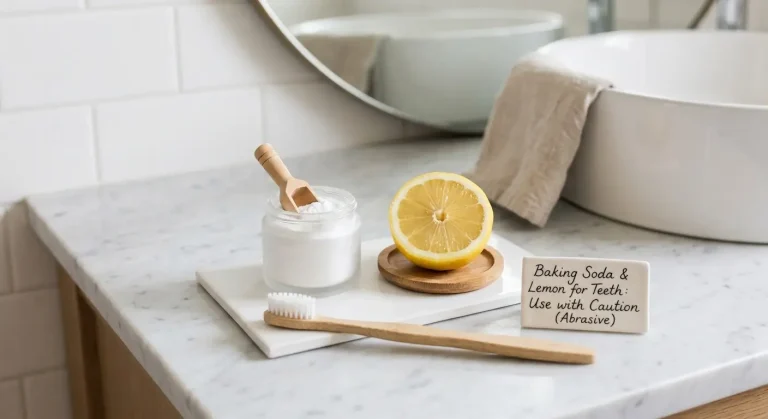
This is one of the most harmful whitening myths. Lemon juice and apple cider vinegar are highly acidic. While they may temporarily make teeth appear cleaner, they do so by wearing away enamel. Once enamel is lost, it cannot grow back naturally. For this reason, dentists do not recommend using acidic substances to whiten teeth.
- Myth: Activated Charcoal Whitens Teeth
Activated charcoal toothpastes are often marketed as natural whitening solutions. However, the American Dental Association (ADA) states that there is currently not enough evidence to confirm that charcoal is safe or effective for whitening teeth. Some studies suggest that charcoal products may be abrasive and could wear away enamel over time.
- Myth: Banana Peels Whiten Teeth
This claim is popular on social media, but no scientific evidence supports it. Rubbing banana peels on your teeth will not whiten them.
- Myth: Baking Soda Doesn’t Work
Baking soda is a gentle abrasive that can help remove surface stains from teeth. It will not bleach teeth like peroxide-based products, but it can help improve their appearance by polishing away stains. This is one reason why many whitening toothpastes include baking soda as an ingredient. However, baking soda should not be viewed as a replacement for professional or peroxide-based whitening treatments if your goal is significant whitening.
See our guide on BAKING SODA FOR TEETH WHITENING for a full evidence review, See our guide on HYDROGEN PEROXIDE FOR TEETH WHITENING for how hydrogen peroxide works and its safe use.
What Is the Safest Way to Whiten Teeth?
1. Visit a dentist first
Before whitening your teeth, make sure you don’t have untreated cavities, gum disease, or severe tooth sensitivity. A dentist can also tell you whether whitening is likely to work well for your teeth.
2. Choose dentist-recommended or ADA-approved products
When buying whitening products, look for those recommended by dentists or carrying the ADA Seal of Acceptance. These products have been tested for safety and effectiveness.
3. Follow the instructions carefully
Using more product than recommended or leaving it on your teeth longer won’t make your teeth whiter faster. Instead, it can increase sensitivity and irritate your gums.
4. Use a toothpaste for sensitive teeth
If you’re worried about sensitivity, start using a sensitivity toothpaste before whitening and continue during treatment. Ingredients such as potassium nitrate and stannous fluoride can help reduce discomfort.
5. Avoid highly acidic foods and drinks
Foods and drinks that are very acidic can temporarily weaken your enamel. During whitening treatment, it’s best to limit things like soft drinks, citrus juices, and other acidic beverages.
6. Give your teeth a break between whitening treatments
Doing whitening treatments too often can increase sensitivity and may not give you better results. Allow your teeth time to recover before starting another whitening cycle.
Toothpaste alone won’t whiten teeth the way professional treatments do, but the right toothpaste can help keep your teeth looking cleaner, brighter, and healthier.
Optifresh Pro White Toothpaste
Optifresh Pro White Toothpaste
Optifresh Pro White is designed for people who want a brighter-looking smile. It helps remove everyday surface stains caused by coffee, tea, food, and drinks. Used regularly, it can help maintain whitening results and reduce the build-up of new stains.
Optifresh Sensitive Toothpaste
Optifresh Sensitive Toothpaste
If you have sensitive teeth, this is the better option. It helps reduce discomfort caused by cold drinks, hot foods, or whitening treatments while still supporting good oral hygiene.
Optifresh Natural Oil Toothpaste
Optifresh Natural Oil Toothpaste
A healthy smile starts with clean teeth. Optifresh Natural Oil helps support daily oral care by removing plaque and keeping your mouth fresh and clean.
Optifresh Maximum Fresh Toothpaste
Optifresh Maximum Fresh Toothpaste
This toothpaste focuses on long-lasting freshness while supporting your daily brushing routine. Fresh breath and clean teeth help your smile look and feel its best.
Conclusion
Teeth whitening can be very effective, but the best option depends on your teeth, your budget, and the results you’re hoping to achieve. Professional whitening offers the fastest and most noticeable results. Custom whitening trays provide a good balance between cost and effectiveness, while whitening strips are a convenient option for people who want to whiten their teeth at home. Instead of focusing on getting the whitest teeth possible, focus on keeping your teeth healthy. Good oral hygiene, regular dental check-ups, and safe whitening methods can help you achieve a brighter smile that lasts.