


Stretch Mark Causes: Biology, Hormones, and Risk Factors Explained
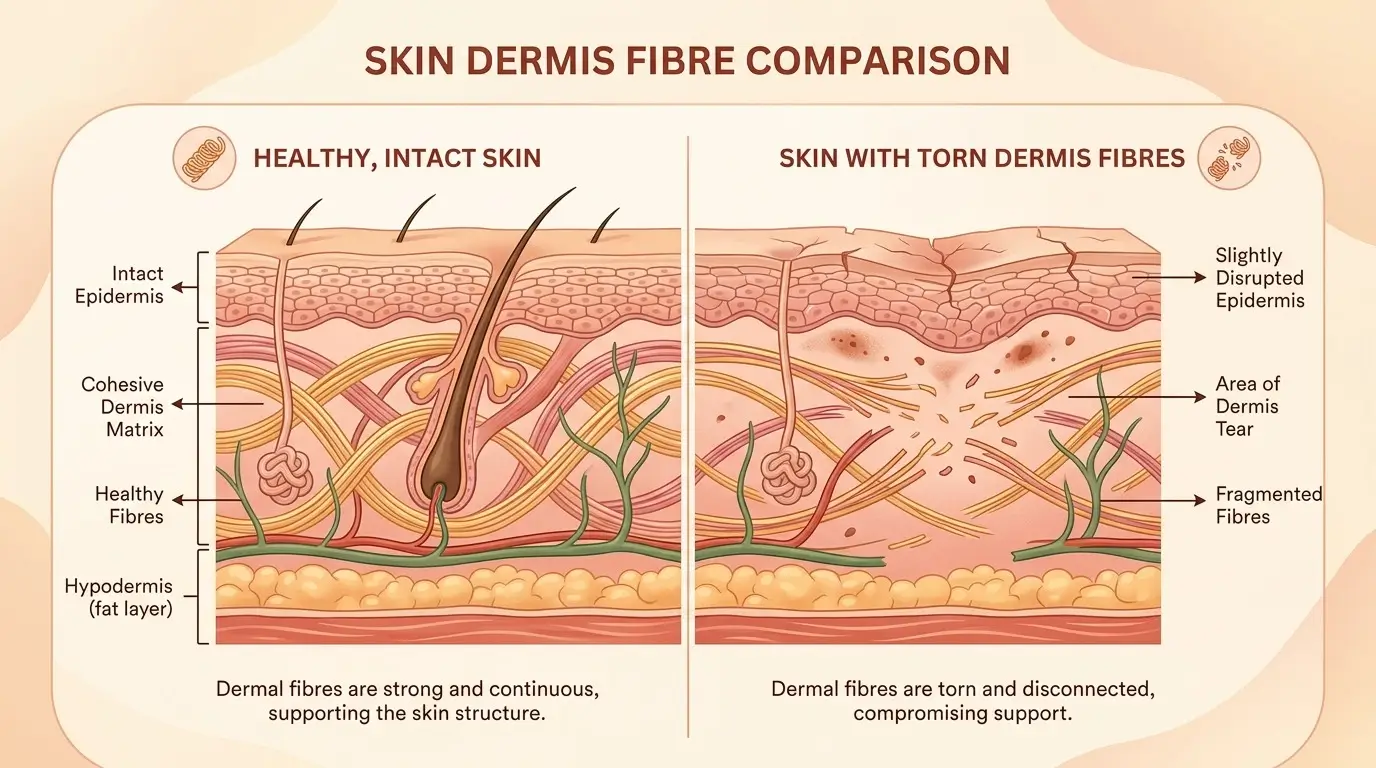
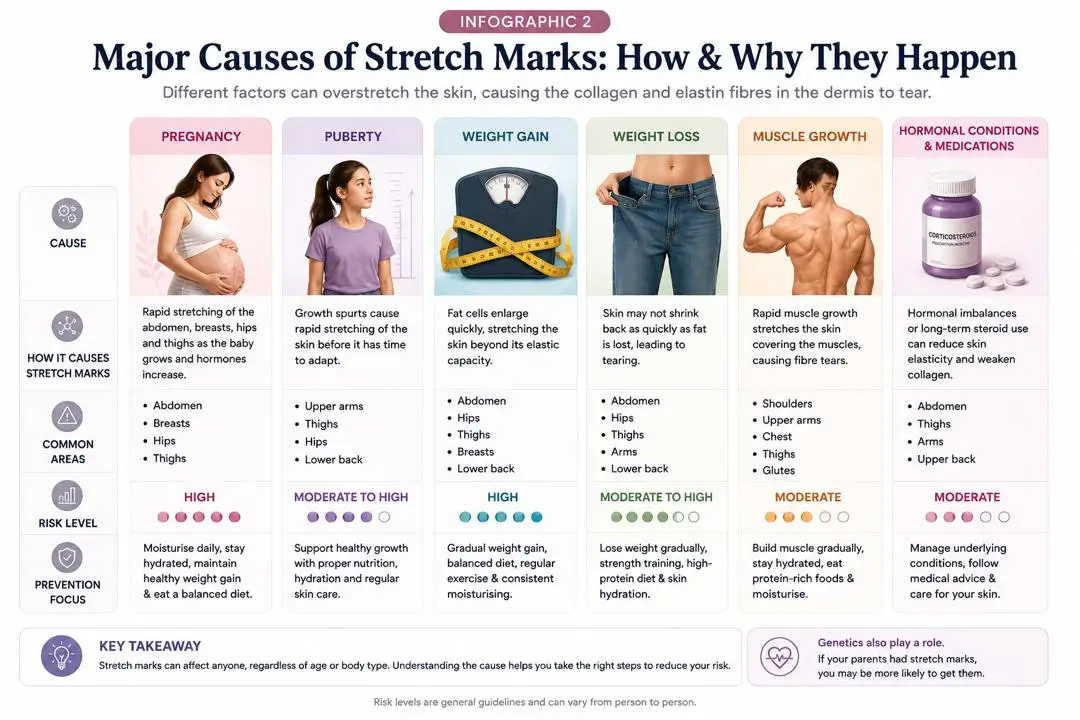
Stretch marks develop when the skin is stretched faster than the collagen and elastin fibres in the dermis can adapt, causing them to tear. The most common causes include pregnancy, puberty, growth spurts, rapid weight gain or loss, muscle building, long-term corticosteroid use, and genetic predisposition. Hormonal changes can also weaken skin fibres, increasing the risk.

Stretch marks are called striae distensae in medical literature. They are not simply surface marks or damage to the outer layer of skin. They are the visible result of tearing within the dermis, the middle layer of skin, positioned between the outer epidermis and the deeper hypodermis. The dermis is largely composed of collagen and elastin fibres. These fibres give skin its strength, structure, and ability to bounce back after being stretched. When those fibres are torn because the skin is being stretched faster than they can accommodate, stretch marks form. At first, they appear as red, pink, or purple raised lines. This colouration comes from the blood vessels visible through the damaged tissue. Over months and years, those vessels contract and the marks flatten and fade to white or silver.
See our pillar guide on Stretch Marks: Causes, Types, Prevention & Treatments for a complete overview.
See our guide on Red Stretch Marks vs White Stretch Marks for a detailed comparison of early and mature marks.
Why Stretch Marks Develop
- How Collagen and Elastin Are Involved
To understand stretch marks, you need to understand two structural proteins: collagen and elastin.
Collagen is the most abundant protein in your body. In the skin, it forms a dense network of fibres that provides tensile strength, the ability to resist stretching forces without tearing. Think of it as the scaffolding that holds the skin’s structure together.
Elastin gives skin its elasticity, the ability to stretch and then return to its original shape, much like a rubber band. Healthy skin can stretch a considerable amount before sustaining damage, largely because of well-maintained elastin.
Fibroblasts, the cells responsible for producing both collagen and elastin, are active throughout life, constantly repairing and renewing the skin’s connective tissue framework. The problem arises when the skin is stretched faster than fibroblasts can produce new collagen and elastin to compensate. When this happens, the existing fibres in the dermis are literally pulled apart. The resulting tear is what becomes a stretch mark.
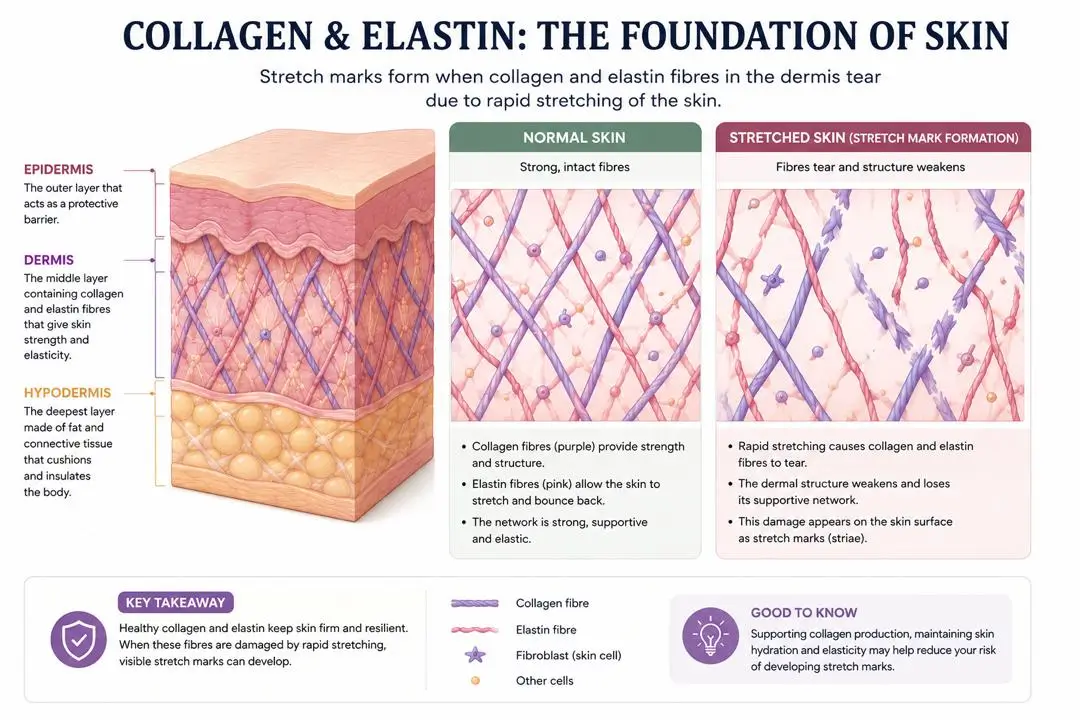
This is also why stretch marks behave similarly to scars. Once the dermis tears and heals with fibrous scar-like tissue, the mark becomes permanent to some degree, though its appearance often improves significantly over time. According to the American Academy of Dermatology, when skin stretches or shrinks rapidly, the abrupt change can cause the collagen and elastin that support the skin to rupture, leading to stretch marks as the skin heals.
- The Role of Cortisol
Cortisol is a steroid hormone produced by the adrenal glands. Among its many functions, it helps regulate the inflammatory response. However, elevated cortisol levels also suppress fibroblast activity and interfere with collagen synthesis. In simple terms, high cortisol weakens the skin’s structural network, making it more vulnerable to tearing when stretched. This is why conditions that cause chronically elevated cortisol, such as Cushing’s syndrome, dramatically increase the risk of stretch marks. It is also why long-term use of corticosteroid medications, which mimic cortisol’s effects, is a known risk factor.
The Most Common Causes of Stretch Marks
- Pregnancy Stretch Marks
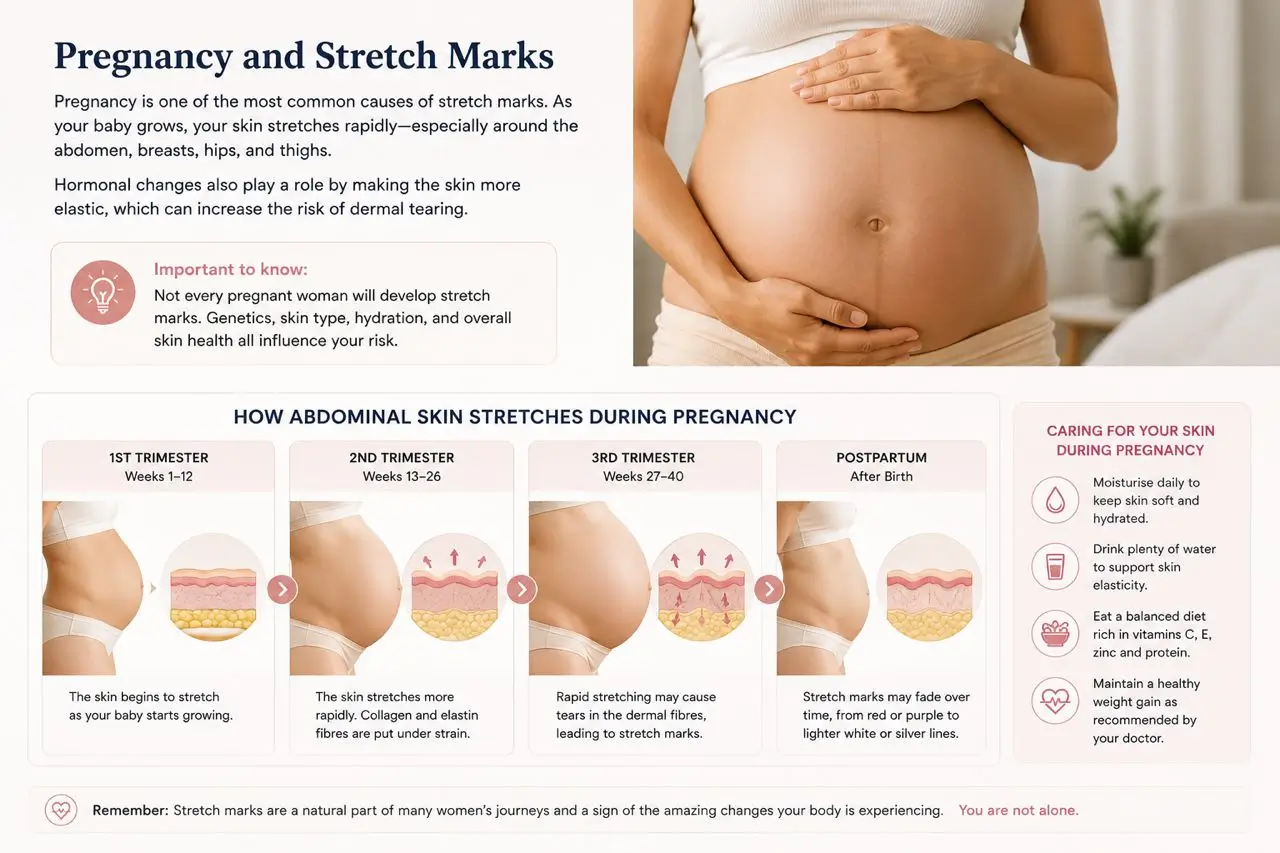
Pregnancy is the most common single cause of stretch marks in women worldwide. As the uterus grows to accommodate a developing baby, the skin on the abdomen stretches significantly and does so over a relatively short period of months. The third trimester is typically when stretching is most rapid, and this is when most pregnancy stretch marks appear. But the abdomen is not the only area affected. As the breasts enlarge in preparation for feeding, stretch marks can develop there, too. The hips and thighs often expand during pregnancy as well, making those areas susceptible. During pregnancy, elevated levels of hormones, particularly relaxin, help loosen ligaments and connective tissue to prepare the body for childbirth. This loosening effect also affects the structural fibres of the skin, making them less resistant to tearing. Research suggests that between 50 and 90 percent of pregnant women develop stretch marks. Factors that increase risk during pregnancy include:
- Carrying multiple babies (twins, triplets)
- Having a higher BMI before pregnancy
- Gaining weight rapidly during pregnancy
- Being younger (teenage pregnancy)
- Having a family history of stretch marks
The NHS notes that stretch marks that develop during pregnancy often fade significantly after birth but rarely disappear entirely without treatment.
See our dedicated guide on Pregnancy Stretch Marks for trimester-by-trimester guidance.
- Stretch Marks in Teenagers
Puberty is a surprisingly common and frequently underdiscussed cause of stretch marks. During adolescence, the body goes through rapid growth spurts. In boys, height, shoulder width, and muscle mass can all increase significantly over a short period. In girls, the hips widen, breasts develop, and overall body composition changes. In both cases, the skin may not be able to keep pace with the rate of change, and stretch marks are the result.
Common locations in teenagers:
- Boys: Back, outer thighs, shoulders, upper arms
- Girls: Hips, inner thighs, buttocks, breasts
These marks are entirely normal and not a sign of any health problem. They are also one of the most emotionally affecting causes because teenagers are often already self-conscious about their changing bodies. Teenage stretch marks do tend to fade more noticeably over time than marks that develop in adulthood, partly because younger skin has greater regenerative capacity. Encouraging good skincare habits early may support this natural fading process.
- Rapid Weight Gain
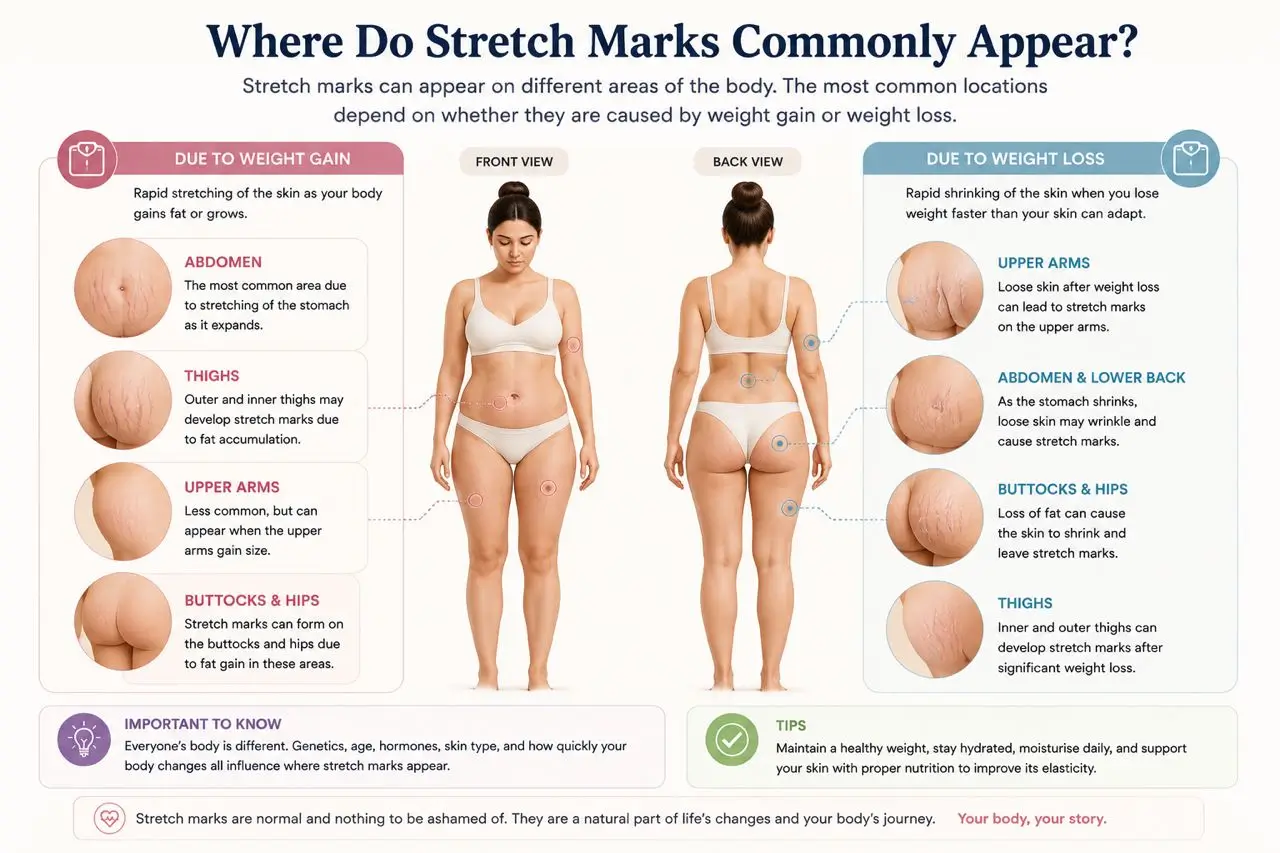
When body weight increases significantly over a short period, the skin must stretch to cover the additional volume. This is mechanically very similar to pregnancy; the skin is being expanded rapidly, and the dermis fibres may not be able to accommodate the rate of change without tearing.
Stretch marks from weight gain commonly appear on the:
- Abdomen and stomach
- Hips and buttocks
- Thighs
- Upper arms
- Breasts
The key factor is not the amount of weight gained, but the speed at which it happens. Gradual, steady weight gain gives the skin more time to adapt, while rapid weight gain, particularly over weeks or a few months, dramatically increases stretch mark risk.
- Stretch Marks After Weight Loss
This surprises many people, but losing weight rapidly can also cause stretch marks or make existing ones more visible. When body fat is lost quickly, the skin may not have time to contract at the same pace. This can lead to looser skin with a crepey or lined texture, and stretch marks in the newly loosened areas can become more visible. This is particularly common after very rapid weight loss through crash dieting, bariatric surgery, or extremely intense exercise programmes. Gradual weight loss, with consistent skin moisturisation and nutrition support, gives the skin the best opportunity to adapt.
- Bodybuilding and Muscle Growth
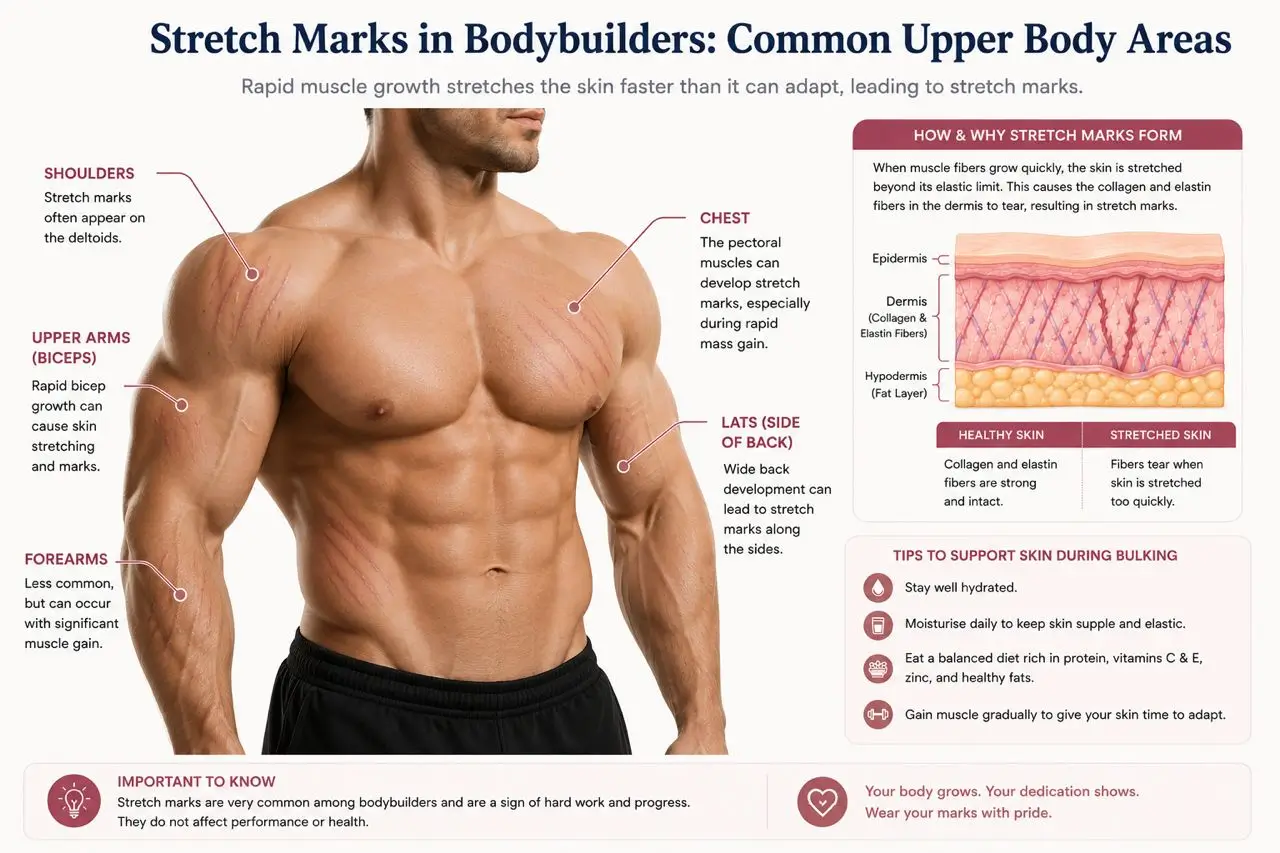
Stretch marks are very common among people who train intensively for muscle growth, and they are particularly prevalent in those who go through aggressive bulking phases. This is most pronounced in areas where large muscle groups grow quickly, such as the biceps, pectorals, quadriceps, and shoulders. If the rate of muscle growth exceeds the skin’s ability to expand without tearing, stretch marks result. These marks are often referred to informally as “gym stretch marks.” They are a badge of progress in some communities, and rightly so; they indicate significant muscle development.
Common locations include:
- Outer upper arms (biceps)
- Inner arms and armpits (where the bicep meets the chest)
- Chest and pectorals
- Shoulders and upper back
- Inner and outer thighs
A more measured approach to muscle building- slower, more controlled bulking phases- may reduce the risk, though it cannot eliminate it for people with a genetic predisposition.
- Genetics
Genetics is one of the most significant and underappreciated factors in stretch mark susceptibility. Some people develop stretch marks at the slightest growth or weight change. Others go through pregnancy, puberty, and years of active sport without a single visible mark. Much of this difference comes down to inherited traits that determine:
- The baseline elasticity of your skin
- How efficiently your fibroblasts produce collagen and elastin
- How your skin responds to hormonal changes
- How quickly your dermis can repair itself
Research indicates that genetic factors may account for a substantial proportion of stretch mark risk. A study referenced by the National Institutes of Health (NIH) found that a maternal history of stretch marks was among the strongest predictors of whether a woman would develop them during pregnancy. If your genetics predispose you to stretch marks, this does not mean prevention strategies are useless, but it does mean you should set realistic expectations. Good skincare practices may help reduce severity, but they are unlikely to fully counteract a strong genetic tendency.
- Hormonal Conditions and Imbalances
While hormones are always involved to some degree in stretch mark formation, certain hormonal conditions significantly elevate risk.
Cushing’s Syndrome: Cushing’s syndrome, caused by prolonged elevated cortisol levels, either from the body overproducing it or from prolonged corticosteroid medication, is strongly associated with stretch marks. The marks associated with Cushing’s are often wider, more prominent, and appear in unusual locations (such as the abdomen, flanks, and under the arms). The Cleveland Clinic notes that stretch marks in unusual locations, or that appear without an obvious physical cause, may sometimes indicate an underlying hormonal condition and are worth investigating.
Marfan Syndrome: This genetic disorder affects the body’s connective tissue, including the collagen network in the skin. People with Marfan syndrome often develop stretch marks as a direct consequence of their connective tissue being structurally weaker than average.
Ehlers-Danlos Syndrome: Another connective tissue disorder, Ehlers-Danlos syndrome causes hyper-elastic skin that is more vulnerable to tearing and scarring, making stretch marks a common feature.
- Long-Term Corticosteroid Use
Corticosteroid medications, including topical steroid creams, oral steroids, and inhaled steroids, used over extended periods, are a well-documented cause of stretch marks. These medications mimic the effect of cortisol in the body. While they are often essential and life-changing for managing conditions like asthma, eczema, and autoimmune disorders, their long-term use can reduce skin elasticity by suppressing collagen production. Topical steroid creams applied to the skin for long periods are particularly associated with stretch mark formation in the areas where they are applied. This is more likely with high-potency steroids used on thin-skinned areas such as the thighs, underarms, or inner arms. If you are using corticosteroids and are concerned about stretch marks, speak to your prescribing doctor. Never stop or reduce a prescribed medication without medical guidance, but your doctor may be able to suggest alternatives, lower-potency options, or a managed reduction plan.
Risk Factors for Stretch Marks
| Risk Factor | Risk Level | Notes |
|---|---|---|
| Pregnancy | High | Risk increases with multiple pregnancies and higher weight gain |
| Family history of stretch marks | High | Strong genetic link; maternal history is especially significant |
| Being female | High | Women are more frequently affected, though men are not immune |
| Adolescence/puberty | High | Rapid growth spurts make this a high-risk period |
| Rapid weight gain or loss | High | Speed of change is a key variable |
| Long-term corticosteroid use | Moderate–High | Depends on potency, duration, and application site |
| Low pre-pregnancy BMI | Moderate | Less subcutaneous fat may offer less cushioning |
| Higher pre-pregnancy BMI | Moderate | Correlated with more significant abdominal expansion |
| Intensive bodybuilding | Moderate | Particularly during aggressive bulking phases |
| Cushing’s syndrome or Marfan syndrome | Moderate–High | Underlying connective tissue vulnerability |
| Chronic stress | Low–Moderate | Via cortisol elevation; rarely a standalone cause |
| Nutritional deficiencies | Low–Moderate | Vitamin C, zinc, and protein deficiencies may reduce collagen production |
Can Stretch Marks Be Prevented?
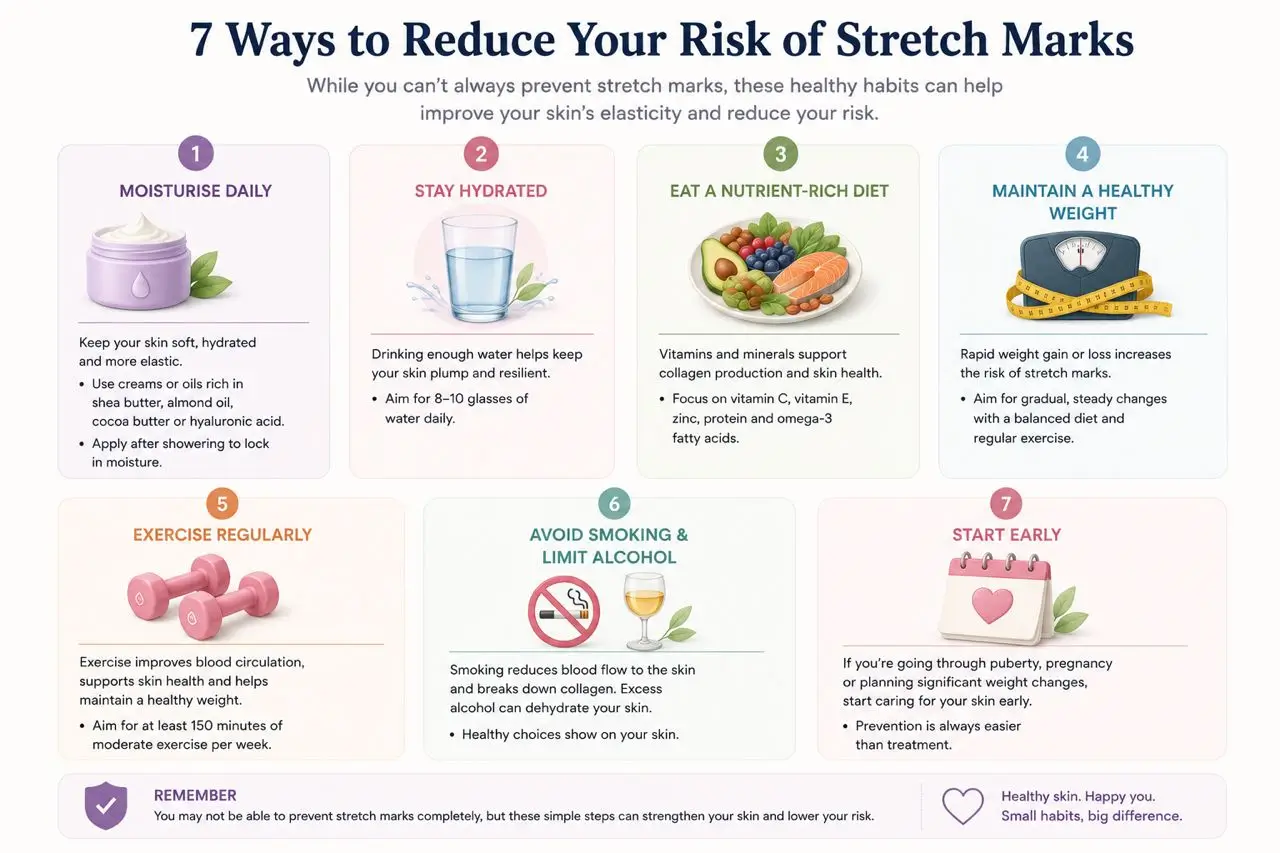
This is one of the most searched questions on this topic, and the honest answer is: partially, in some cases. Complete prevention is not always possible, especially if you have a genetic predisposition. But evidence-informed habits can meaningfully reduce your risk or limit how severe any marks that do develop will be.
See our full guide on Stretch Marks Prevention for a comprehensive prevention plan.
Evidence-Based Prevention Tips
- Moisturise Consistently, Starting Early
Hydrated skin has greater elasticity than dry skin. Regular application of a good moisturiser to areas at risk, such as the abdomen, thighs, hips, and breasts, may help the skin remain supple and more resilient to stretching. The keyword is consistency. Occasional application is unlikely to make much difference. Daily moisturising, beginning before stretching occurs, such as from the first trimester of pregnancy rather than the third, gives the best chance of supporting skin health during a period of change.
If you are looking for a practical option, the Body Edition Anti-Stretch Mark Body Concentrate is formulated to help moisturise the skin and support its elasticity as part of a daily routine. It will not prevent stretch marks in every case; no product can, but regular use as part of a consistent skincare habit is a reasonable and accessible approach.
See our product page: Body Edition Anti-Stretch Mark Body Concentrate
- Use a Nourishing Body Oil
Body oils complement moisturisers well, particularly for people who prefer a lighter texture or want to add a second step to their routine. Massaging oil into the skin also improves local circulation, which may support skin health in the area.
The Love Nature Nourishing Body Face & Hair Oil With Organic Avocado Oil is a gentle, vitamin E-rich option suitable for use during pregnancy and for daily body care. Avocado oil has some early research suggesting potential benefits for skin hydration during pregnancy, and regular massage with a nourishing oil is a low-risk, supportive habit. Neither this oil nor any other will guarantee prevention of stretch marks, but as part of an overall approach to skin health, it is a sensible addition to your routine.
See our guide on Best Oil for Stretch Marks for a comparison of the most evidence-supported options.
- Maintain a Stable Rate of Weight Change
The speed of change matters far more than the amount of change. Slow, steady weight gain or loss gives the skin time to adapt; rapid changes do not. If you are actively trying to gain muscle, build in controlled bulking phases rather than aggressive bulk-and-cut cycles. If you are trying to lose weight, aim for gradual loss rather than crash dieting.
- Stay Hydrated
Skin that is well-hydrated at a cellular level tends to be more elastic and resilient. While drinking water alone won’t prevent stretch marks, it forms part of the overall picture of skin health. General guidance from major health organisations suggests aiming for around 6–8 glasses of water per day for adults, adjusted for your size and activity level.
- Eat for Skin Health
Several nutrients have a direct role in collagen and elastin production:
- Vitamin C is essential for collagen synthesis. Found in citrus fruits, strawberries, peppers, and broccoli.
- Zinc supports wound healing and skin repair. Found in nuts, seeds, legumes, and lean meats.
- Protein is the building block of collagen and elastin. Found in all complete protein sources.
- Vitamin E is an antioxidant that supports skin barrier function. Found in nuts, seeds, and avocado.
- Omega-3 fatty acids support skin membrane integrity. Found in oily fish, walnuts, and flaxseeds.
A balanced, varied diet rich in these nutrients supports the skin from the inside, which is a complement to, not a replacement for, topical skincare.
- Manage Corticosteroid Use Carefully
If you use topical steroid creams, use them only as directed and avoid applying them to large areas of skin for extended periods. If you are on long-term systemic corticosteroids, discuss the risk of skin changes with your doctor and ask whether regular skin moisturisation is recommended. Never reduce or stop corticosteroid treatment without medical guidance.
- Start Prevention Early
This applies especially to pregnancy. Many women begin thinking about stretch mark prevention only when the marks start appearing, often in the third trimester. By that point, the skin is already under significant stress. Starting a consistent moisturising routine from the first trimester, when the skin is not yet under its maximum stretch, gives preventive measures the best opportunity to make a difference.
Common Myths About Stretch Mark Causes
Myth: Stretch marks are caused by dry skin. Fact: Dry skin may reduce elasticity slightly, but stretch marks are caused by rapid physical stretching. Someone with perfectly moisturised skin can still develop stretch marks if their skin is stretched quickly enough.
Myth: Only overweight people get stretch marks. Fact: Stretch marks can develop on anyone regardless of weight. Slim teenagers, fit athletes, and healthy-weight pregnant women all commonly develop them. Body weight is not the defining factor; rate of change is.
Myth: Stretch marks only happen during pregnancy. Fact: Pregnancy is one of many causes. Puberty, muscle building, weight gain, weight loss, and medication can all cause stretch marks independently of pregnancy.
Myth: Drinking more water will get rid of stretch marks. Fact: Hydration supports skin health and may contribute to prevention, but it cannot remove existing stretch marks. These are a form of dermal scarring, and water consumption does not reverse them.
Myth: Stretch marks only affect women. Fact: Men develop stretch marks too, and it is very common among male teenagers and bodybuilders. The stigma around male stretch marks means they are underreported, not that they are uncommon.
Myth: If your parents didn’t get stretch marks, you won’t either. Fact: Genetics increases or decreases the likelihood, but it does not determine the outcome with certainty. Environmental factors, rate of growth, and hormonal status all interact with genetic predisposition.
When to See a Dermatologist
Most stretch marks are harmless and do not require medical attention. However, there are some situations where it is sensible to consult a healthcare professional.
Speak to your doctor or dermatologist if:
- Stretch marks appear suddenly with no obvious cause, not related to pregnancy, puberty, or weight change
- They are accompanied by unexplained weight gain, particularly around the abdomen and face
- They appear in unusual locations or patterns
- They are accompanied by other skin changes, fatigue, or other unexplained symptoms, which could indicate a hormonal condition such as Cushing’s syndrome
- You are concerned about their appearance and want to discuss clinical treatment options
The Mayo Clinic notes that sudden, widespread, or unusual stretch marks should always be evaluated by a healthcare provider to rule out underlying medical causes.
See our pillar guide on Stretch Marks: Causes, Types, Prevention & Treatments for the complete overview. → See our guide on How to Remove Stretch Marks for treatment options explained in detail.
Conclusion
Stretch marks are an extremely common, completely natural response to rapid changes in the body. They are not a reflection of neglect, poor health, or a failure of willpower. They are the body’s biology responding to the demands placed on it. Understanding the real causes, from the biology of collagen and elastin to the role of hormones, genetics, and lifestyle, puts you in a much better position to manage your skin health with realistic expectations. While complete prevention is not always possible, consistent moisturising, thoughtful nutrition, and a measured approach to body change can all support the skin’s resilience. And for marks that do develop, there is a range of evidence-based treatments worth exploring.
If you want the full picture, from prevention to treatment options to what dermatologists actually recommend, explore our complete guide to stretch marks below.
Stretch Marks: The Complete Guide → Stretch Marks Treatment: What Works and What Doesn’t → Best Cream for Stretch Marks → How to Fade Stretch Marks Naturally