



Stretch Marks on Thighs, Breasts, Arms, & Buttocks: Causes & Remedies
Stretch marks appear in these areas because they are prone to rapid growth, weight changes, pregnancy, puberty, and muscle development. When the skin in any of these areas stretches faster than its collagen and elastin fibres can adapt, the fibres tear, creating the marks. While they cannot always be prevented, early skincare and healthy lifestyle habits may help reduce their severity.
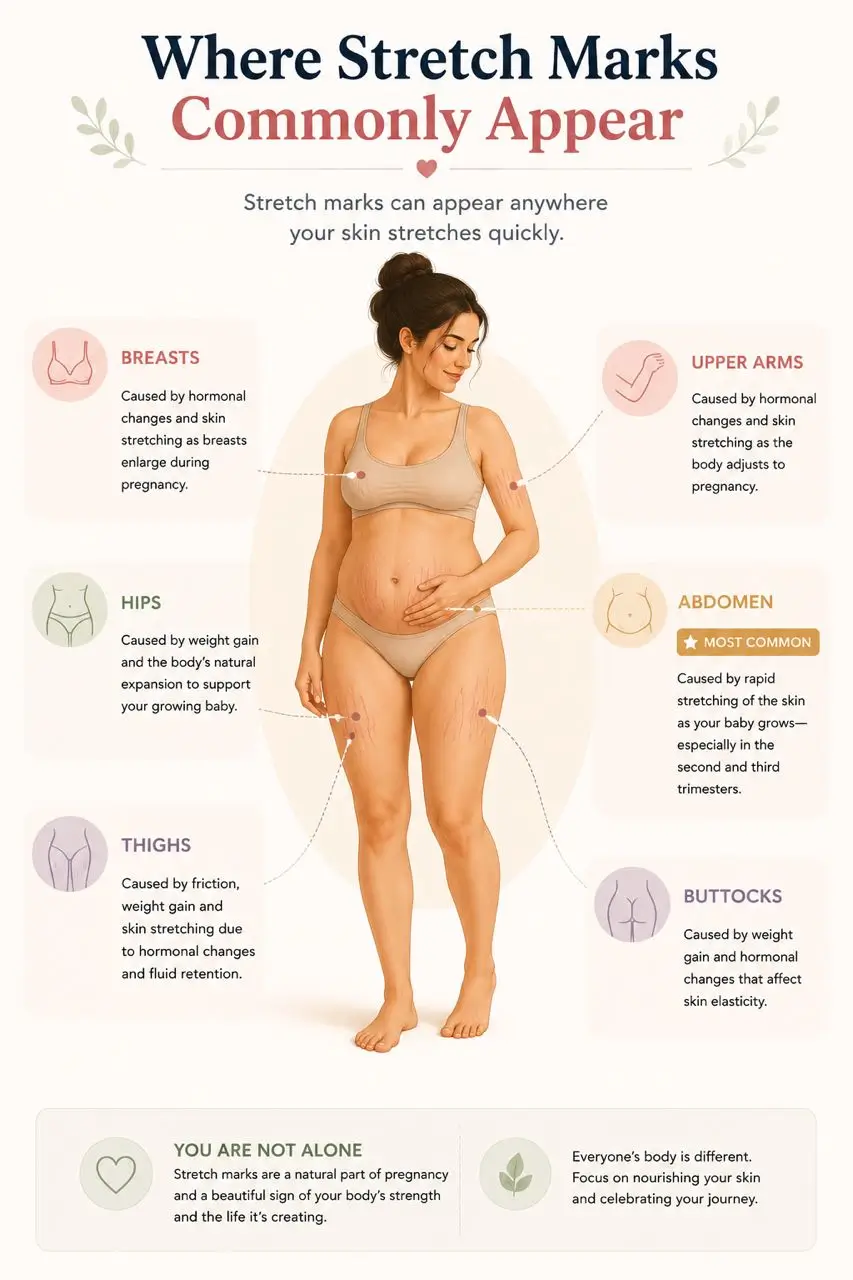
Why Do Stretch Marks Appear in Certain Body Areas?
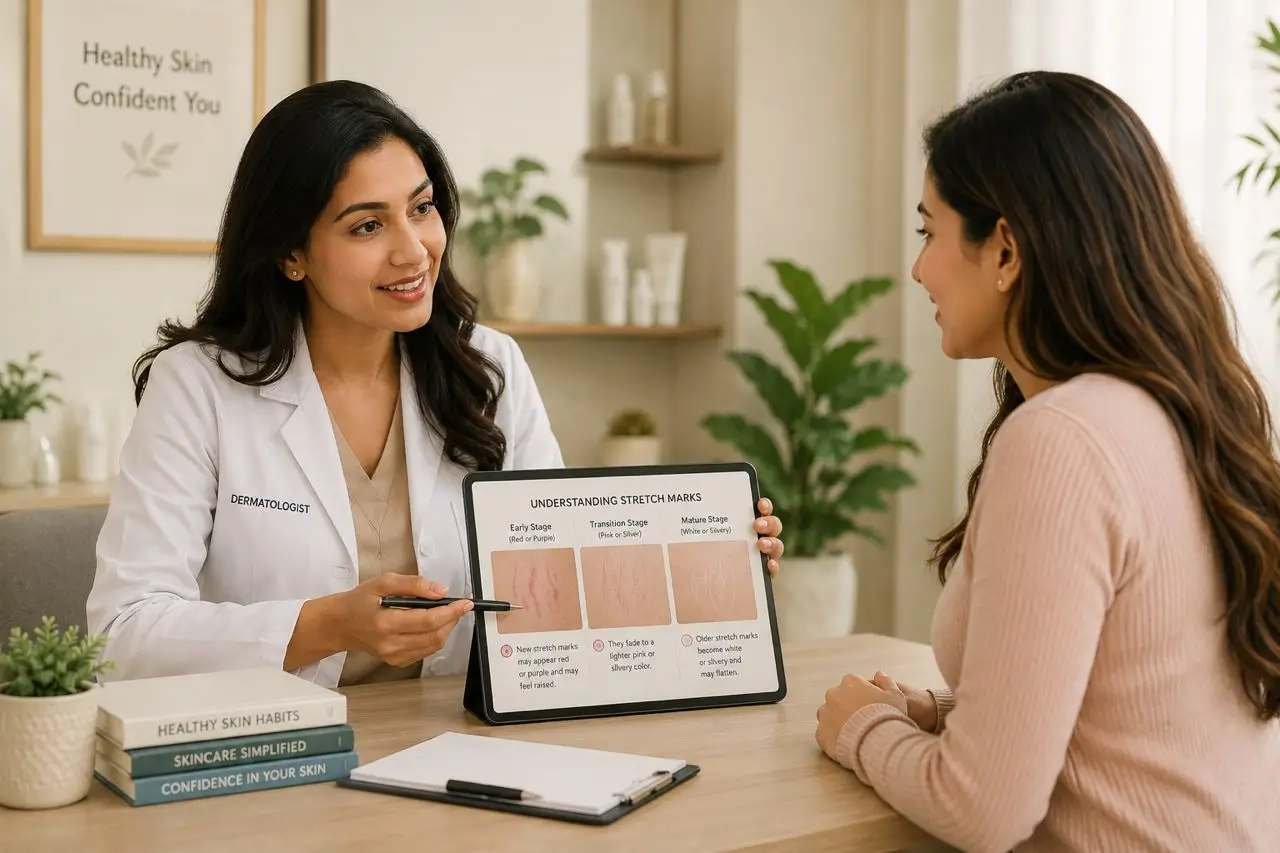
Stretch marks do not appear randomly. They form where the skin is under the greatest physical strain, and that strain is almost always tied to one of a relatively small number of biological processes. Stretch marks, clinically known as striae distensae, form when the skin stretches faster than its collagen and elastin fibres in the dermis, the middle skin layer, can accommodate. When those fibres tear, the body responds with an inflammatory repair process. The initial result is a raised, red, or purple mark. Over time, the tissue settles, and the marks fade toward silver or white.
The reason different people get marks in different locations comes down to where their bodies change most rapidly and how their individual skin handles that change.
Key contributing factors:
- The rate of growth or change, the speed of change, matters more than the extent. Rapid stretching over weeks or months is more likely to cause tearing than gradual stretching over years.
- The hormonal environment directly affects skin resilience. Cortisol suppresses fibroblast activity, the cells that produce collagen. Oestrogen fluctuations affect hydration and barrier function. Relaxin during pregnancy loosens connective tissue across the body. All of these factors make the skin more vulnerable to tearing during periods of hormonal change.
- Genetics, individual variation in collagen density, skin elasticity, and fibroblast efficiency determine how resilient a person’s skin is to stretching. This is one of the strongest predictors of whether someone will develop stretch marks, regardless of location.
- Body composition and fat distribution, where your body stores fat, where muscle develops, and where hormonal changes concentrate physical change, all determine which areas experience the most strain.
See our complete guide on What Causes Stretch Marks? for a full biological and risk factor breakdown.
Stretch Marks on the Thighs
Thigh stretch marks are among the most common and one of the most frequently searched locations. They tend to appear on the inner thighs, outer thighs, or both, and can extend toward the hips and buttocks.
Why do stretch marks develop on the thighs?
- Weight gain: the thighs are one of the primary areas where body fat is stored, particularly in women. Rapid weight gain stretches the skin over the thigh area faster than it can accommodate, leading to stretch marks on the inner and outer thighs.
- Puberty is probably the most common cause of thigh stretch marks in teenagers. During puberty, both boys and girls experience rapid growth in height and changes in body composition. In girls, the hips widen, and fat is distributed to the thighs and buttocks. In boys, muscle mass increases in the lower body. Either process can stretch the skin beyond the point at which the dermis can handle without tearing.
- During pregnancy, as the body prepares for birth and overall body mass increases, the thighs often expand. Stretch marks on the inner and outer thighs are common during and after pregnancy, sometimes appearing in the second or third trimester.
- Muscle growth, particularly in the quadriceps (front of the thigh) and hamstrings (back), can rapidly stretch the overlying skin. This is common in athletes and gym-goers who are in intense training phases.
Treatment and prevention of thigh stretch marks
- Moisturise consistently by applying a good moisturiser or body oil to the inner and outer thighs daily, ideally after bathing on damp skin, and massage in firmly. This keeps the skin supple and supports its resilience during periods of change.
- Start early if you are going through puberty, gaining weight, or pregnant; begin moisturising the thighs before stretch marks appear. Prevention is more effective than treatment.
- Consider retinoid treatment for red marks if your thigh stretch marks are still in the red or pink phase; a retinol-containing product applied consistently may help reduce their appearance. Avoid retinoids during pregnancy.
- For white marks, clinical treatment, microneedling, or fractional laser produces the best results on established marks. A dermatologist can advise on suitability.
See our guide on Red Stretch Marks vs White Stretch Marks for a breakdown of treatment response by stage.
Stretch Marks on the Breasts
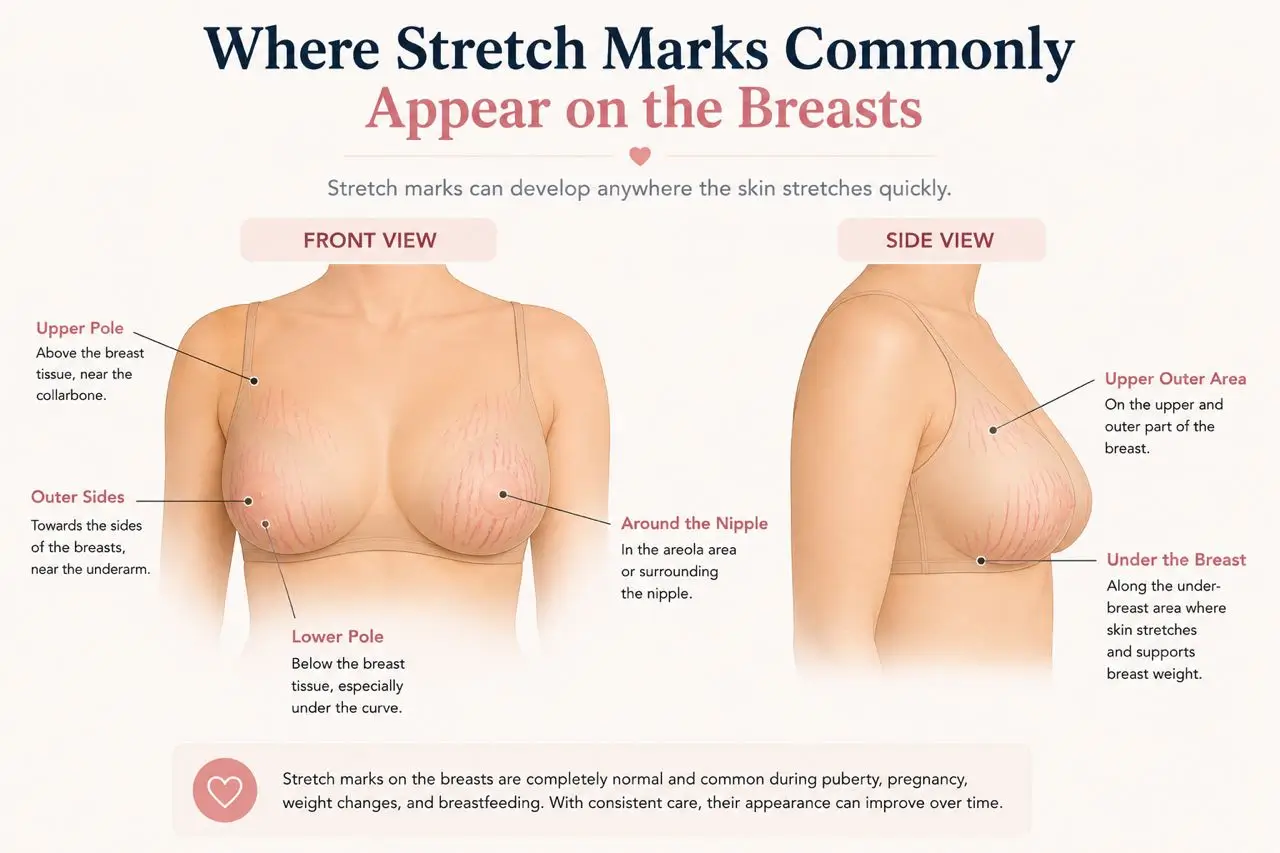
Stretch marks on the breasts are extremely common and frequently underdiscussed. Many people feel surprised or embarrassed by them, not realising how widespread they are. The breasts are one of the most stretch-mark-prone areas of the body precisely because they change so significantly at multiple life stages, often rapidly, and in response to hormones that also reduce skin resilience.
Why do stretch marks develop on the breasts?
- Puberty breast development begins in early puberty, typically between ages 8–13, and the speed of growth during this phase frequently exceeds the skin’s ability to adapt. Stretch marks on the sides, underside, and sometimes across the front of the breast are common in teenage girls and are entirely normal.
- Pregnancy breasts often increase by two or more cup sizes during pregnancy and early lactation. This growth can begin in the first trimester and continue through to birth and beyond. The hormonal environment of pregnancy, particularly elevated relaxin, also reduces skin resilience, making breast stretch marks particularly common. They may appear on the outer, lower, and upper surfaces of the breast.
- Breastfeeding, continued engorgement, and milk production keep the breast tissue in an enlarged state for months or years, and rapid changes in size, particularly when milk supply fluctuates or weaning begins, can cause additional marks to develop.
- Hormonal changes during the menstrual cycle cause fluctuations in breast size for many women. Over the years, repeated cycles of expansion and contraction can contribute to subtle changes. More significant hormonal shifts, such as starting or stopping hormonal contraception, can cause breast changes that lead to stretch marks.
- Weight changes, significant weight gain or loss, affect breast size and can contribute to stretch marks in this area.
Caring for breast stretch marks
- Daily moisturising of the breast, particularly during puberty and pregnancy, is the most practical preventive measure. Apply cream or oil to the entire breast and surrounding skin, including the underside and sides.
- During pregnancy and breastfeeding, choose pregnancy-safe products and avoid retinoids and fragranced products that may irritate sensitive nipple skin.
- After breastfeeding is complete, retinol and prescription tretinoin become appropriate options for red or transitional marks. A dermatologist can advise on application and safety.
Stretch Marks on the Arms
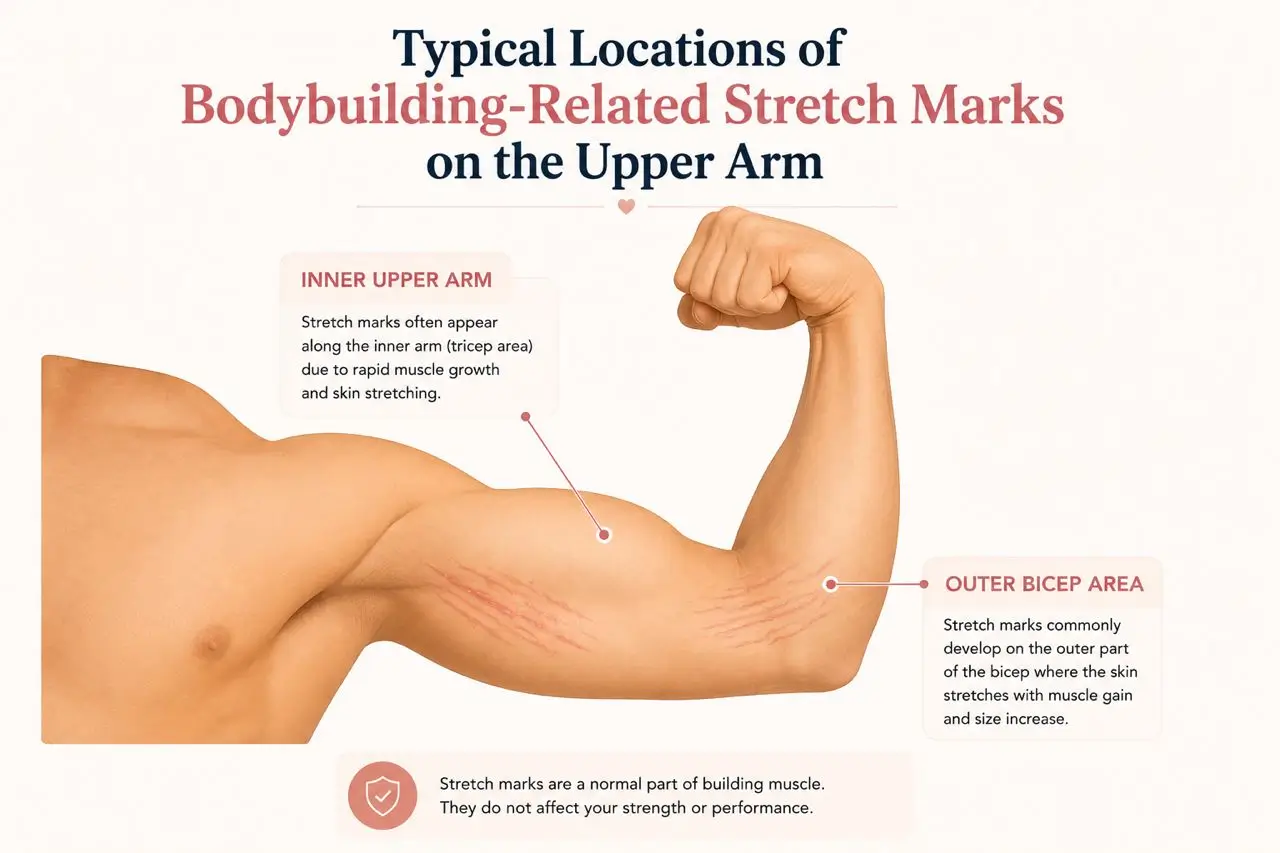
Arm stretch marks tend to be less discussed than those on the abdomen or thighs, but they are particularly common among athletes, bodybuilders, and teenagers going through puberty.
Why do stretch marks develop on the arms?
- Muscle building and bodybuilding are the most common causes in adults. When bicep, tricep, and shoulder muscles grow rapidly, particularly during aggressive bulking phases, the skin overlying those muscles must expand to accommodate the increased volume. If muscle growth outpaces the skin’s ability to adapt, stretch marks form. They typically appear on the outer upper arm (bicep), the inner arm near the armpit where the bicep meets the chest, and sometimes on the shoulder.
- Puberty in teenage boys, arm muscle mass increases significantly during puberty. Rapid upper arm growth is a very common cause of stretch marks in adolescent males, often appearing on the outer upper arm and inner arm.
- Weight changes significant weight gain can cause stretch marks on the upper arms and inner arms as the skin over the area stretches. Weight loss can make existing marks more visible as the skin loosens.
Caring for arm stretch marks
- For those in active muscle-building phases, a slower, more controlled approach to muscle gain, a gradual caloric surplus rather than aggressive bulking gives the skin more time to adapt, though it cannot guarantee prevention.
- Daily moisturising of the upper arms, particularly during intensive training, supports skin suppleness and barrier function.
- Retinoid products applied to red arm stretch marks during active phases can help limit their long-term appearance.
Stretch Marks on the Buttocks
Buttock stretch marks are another frequently experienced but rarely discussed variation, and they are particularly common during puberty, pregnancy, and periods of significant weight change.
Why do stretch marks develop on the buttocks?
- Puberty in girls, the buttocks enlarge and round during puberty as fat is distributed to the lower body. This growth can be rapid enough to cause stretch marks across the outer buttocks and upper thighs. In boys, muscle development in the gluteal region during puberty can have the same effect.
- Weight gain in the buttocks is a primary fat storage area, and rapid weight gain stretches the overlying skin. Marks typically appear across the upper and outer buttocks.
- Pregnancy, as the body’s overall weight increases and fat redistributes during pregnancy, the buttocks commonly develop stretch marks alongside the abdomen and thighs.
- Muscle growth in people who train the glutes specifically through squats, deadlifts, hip thrusts, rapid muscle growth in this area can lead to stretch marks in the same way as any other muscle group.
- Genetics and hormones: individual fat distribution is heavily genetically determined, as is skin elasticity. People who store more fat in the lower body are, by definition, more likely to develop stretch marks in the buttocks and thighs than in other areas.
Caring for buttock stretch marks
- Moisturise the buttocks regularly as part of a daily body care routine; this area is often neglected in skincare routines despite being one of the more stretch-mark-prone zones.
- Start moisturising early if you are in a period of change, puberty, pregnancy, or weight gain.
- Retinoid products applied to red marks can be effective. For established white marks, clinical treatment is more appropriate.
Why Do Some People Get Stretch Marks in One Area but Not Another?
- Genetics, the single strongest determinant of stretch mark susceptibility. Inherited characteristics determine baseline skin elasticity, collagen density, and fibroblast efficiency. Some people’s skin can accommodate rapid stretching with minimal tearing; others develop marks at relatively modest rates of change. This varies by body area as well as overall, which is why someone might develop thigh marks without abdominal marks, or vice versa.
- Rate and location of physical change, where your body grows or gains weight during a given life stage, determine where the skin is under most strain. A teenager who gains height primarily in the torso will have different stretch mark patterns from one who gains it primarily in the legs.
- Hormone sensitivity: the skin in different body areas has different sensitivity to the hormones that affect collagen production and skin resilience. Areas with more hormonal receptor activity may respond more strongly to the cortisol-driven suppression of fibroblast activity.
- Fat distribution patterns are largely genetically determined. People who carry more fat in the lower body experience more skin stretching in the thighs and buttocks; those who carry more centrally experience more abdominal strain.
- Areas of rapid change that have previously been stretched may have a different elasticity than areas that have not. A woman who experienced thigh stretch marks during puberty may have slightly different skin characteristics in those areas going forward.
How to Care for Stretch Marks Wherever They Appear
The principles of stretch mark care apply regardless of where on the body the marks are. The location influences which specific products and techniques are most practical, but the underlying approach is consistent.
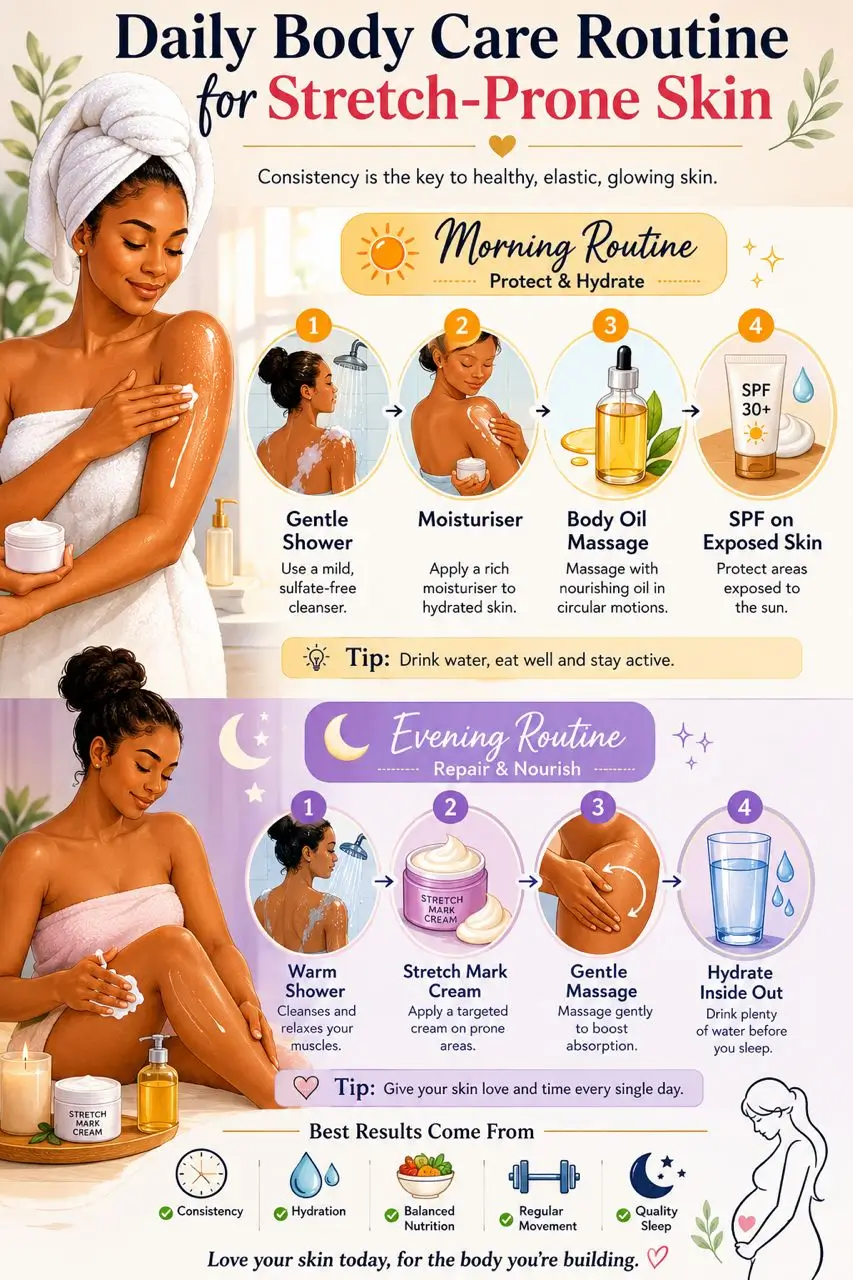
- Moisturise consistently and early
The most important habit is consistency. Apply moisturiser or body cream to stretch-prone areas daily, ideally twice a day, and do so before marks appear if you are in a period of body change. The skin that enters a period of rapid stretching well-hydrated and well-supported is more resilient than skin that is dry and neglected. Look for products containing evidence-backed ingredients: hyaluronic acid (deep hydration), Centella asiatica (collagen support), peptides (collagen signalling), and shea butter or other emollients (barrier support and softness).
The Body Edition Anti-Stretch Mark Body Concentrate offers a daily moisturising option with skin-nourishing ingredients suited to use across all stretch-prone body areas: abdomen, thighs, breasts, arms, and buttocks. Applied as part of a consistent morning or evening routine, it supports the kind of sustained skin hydration that underpins skin resilience. It will not remove existing stretch marks, but as a daily skincare foundation, it is a practical and accessible choice.
See our guide on the Best Stretch Mark Cream for a full ingredient comparison.
- Use a nourishing body oil for a massage
A daily body oil massage adds a layer of benefit that moisturisers alone cannot fully replicate; the massage stimulates blood flow and lymphatic drainage in the treated area, which independently supports tissue health. This is particularly relevant for the thighs and buttocks, where lymphatic circulation can be sluggish.
The Love Nature Nourishing Body, Face & Hair Oil with Organic Avocado Oil is a nourishing daily option that works well for all stretch-prone body areas. Rich in oleic acid, vitamins A, D, and E, and plant sterols with mild anti-inflammatory properties, it provides genuine skin conditioning as part of a massage routine. Massaged into the thighs, breasts, upper arms, or buttocks for 1–2 minutes after bathing, it supports ongoing skin hydration and softness.
See our guide on Best Oil for Stretch Marks for a full evidence-based comparison.
- Apply SPF to exposed areas
For stretch marks on the upper arms or thighs that may be exposed to sunlight, particularly in summer, UV exposure is worth managing. The skin surrounding stretch marks tans normally; the scar tissue of the mark does not. This increases the visual contrast, making marks more noticeable. Apply a broad-spectrum SPF to exposed marked skin.
- Support skin from within
Nutrition plays a genuine supporting role. Vitamin C is essential for collagen synthesis. Zinc supports wound repair. Protein provides the amino acid building blocks for collagen and elastin. Omega-3 fatty acids reduce inflammation and support skin membrane integrity. A balanced diet providing these nutrients supports skin resilience across the body.
- Manage the rate of change where possible
For those in active muscle-building phases, a measured approach to gaining muscle, a controlled caloric surplus rather than aggressive bulking, gives the skin on the arms, shoulders, and thighs more time to adapt. For those managing weight, gradual change is more skin-friendly than rapid fluctuation.
See our complete guide on Natural Remedies for Stretch Marks for more on evidence-based home care.
When Should You See a Dermatologist?
- Sudden, widespread, or unexplained stretch marks
If stretch marks appear across multiple body areas simultaneously without an obvious physical cause, not related to pregnancy, puberty, weight change, or intensive training, speak to your GP. In rare cases, widespread sudden stretch marks can indicate an underlying hormonal condition such as Cushing’s syndrome caused by chronically elevated cortisol levels, which requires medical assessment.
- Stretch marks associated with other symptoms
If you notice stretch marks alongside unexplained weight gain, particularly around the face and abdomen, increased fatigue, skin thinning elsewhere, or other changes, these should be evaluated by a healthcare provider.
- Long-term corticosteroid use
If you use prescription topical steroid creams and have noticed stretch marks in the areas of application, discuss this with the prescribing doctor. Never reduce or stop prescribed medication without medical advice, but your doctor may be able to suggest lower-potency alternatives or application strategies.
- Wanting clinical treatment for cosmetic improvement
If you want to pursue clinical options, such as microneedling, laser therapy, or prescription retinoids, a dermatologist consultation is the appropriate starting point. They can assess the stage, location, and characteristics of your specific marks and recommend the most appropriate treatment.
The American Academy of Dermatology recommends seeking dermatological assessment for anyone wanting to explore clinical stretch mark treatment, to ensure the right approach is selected for the individual’s skin type, skin tone, and the specific characteristics of their marks.
The Cleveland Clinic adds that clinical options for stretch mark treatment have improved considerably in recent years, and a dermatologist can provide a realistic assessment of what is achievable.
Key Takeaways
- Stretch marks on the thighs, breasts, arms, and buttocks are among the most common locations, and they reflect well-understood biological processes, not personal failings.
- Thigh and buttock marks are typically caused by puberty, weight changes, or pregnancy. Breast marks are particularly common during puberty and pregnancy. Upper arm marks are common in teenagers and bodybuilders.
- The location of stretch marks reflects where the body has changed most rapidly; it does not determine severity or permanent appearance.
- Red and pink stretch marks are newer and more responsive to treatment. White marks require more targeted clinical intervention.
- Consistent daily moisturising, beginning before marks appear if possible, is the most practical and accessible prevention strategy, regardless of location.
- Nutrition, hydration, a gradual pace of body change, and sun protection all contribute to the overall skin health environment.
- For established marks not responding to topical care, or for those wanting clinical improvement, a dermatologist can advise on the most appropriate approach for each body area.
- Sudden, unexplained stretch marks in unusual locations should be discussed with a healthcare provider.
Conclusion
Stretch marks on the thighs, breasts, arms, and buttocks are some of the most common skin changes people experience, and some of the least talked about. Part of what makes them distressing for so many people is the surprise of finding them somewhere unexpected, without a clear explanation for why they appeared. Puberty, pregnancy, muscle growth, and weight change all do this in different places and at different life stages. Genetics determines how susceptible your specific skin is to tearing when that happens.
Consistent daily moisturising, started early, maintained through periods of change, gives your skin the best support available. Appropriate clinical treatment, when the time is right, can improve the appearance of marks that have already formed. And understanding what is happening at each stage helps you make sensible, informed decisions about your skin rather than being misled by products promising what they cannot deliver.
Stretch Marks: Complete Guide → How to Remove Stretch Marks: Post-Pregnancy Treatment Options → Red Stretch Marks vs White Stretch Marks: What Stage Are Yours? → Best Stretch Mark Cream → Best Oil for Stretch Marks → Natural Remedies for Stretch Marks → Stretch Marks During Pregnancy