


Do Stretch Mark Creams Really Work? What Science Says
Stretch mark creams can improve skin hydration and may meaningfully reduce the appearance of newer stretch marks when used consistently with evidence-backed ingredients. No cream can completely remove stretch marks; they are a form of dermal scarring beyond the reach of topical products alone. Creams containing retinoids, where appropriate, hyaluronic acid, and Centella asiatica have the strongest scientific support.
Can Stretch Mark Creams Actually Remove Stretch Marks?
Stretch marks form within the dermis, the middle layer of skin, positioned beneath the epidermis, which you can see and touch. They are caused by the tearing of collagen and elastin fibres in that layer when the skin stretches rapidly. The resulting marks are, structurally, a form of internal scarring. Creams, however well formulated, interact primarily with the epidermis and the uppermost layers of the dermis. They cannot penetrate deeply enough to fully reverse the structural damage that stretch marks represent. This is not a failure of formulation; it is basic skin biology.
What creams can do.
- Maintain the skin’s moisture levels, which improves texture, softness, and the visual appearance of marks
- Deliver active ingredients that stimulate some collagen remodelling in the upper dermis
- Reduce the redness, itchiness, and tightness of newer stretch marks
- Support the skin’s natural repair environment
- When used consistently from the beginning of a period of body change, potentially limit how severe new marks become
Many stretch mark cream studies are small, manufacturer-funded, and measure outcomes like “skin hydration improved” or “skin elasticity score increased”, which are true and relevant, but are not the same as measuring whether stretch marks have been reduced or removed. Headline claims are often extrapolated far beyond what the underlying study actually showed. The American Academy of Dermatology is clear that no cream can eliminate stretch marks, but that consistent use of certain ingredients can make them less noticeable over time.
See our pillar guide on Stretch Marks: Causes, Types, Prevention & Treatments for the complete overview.
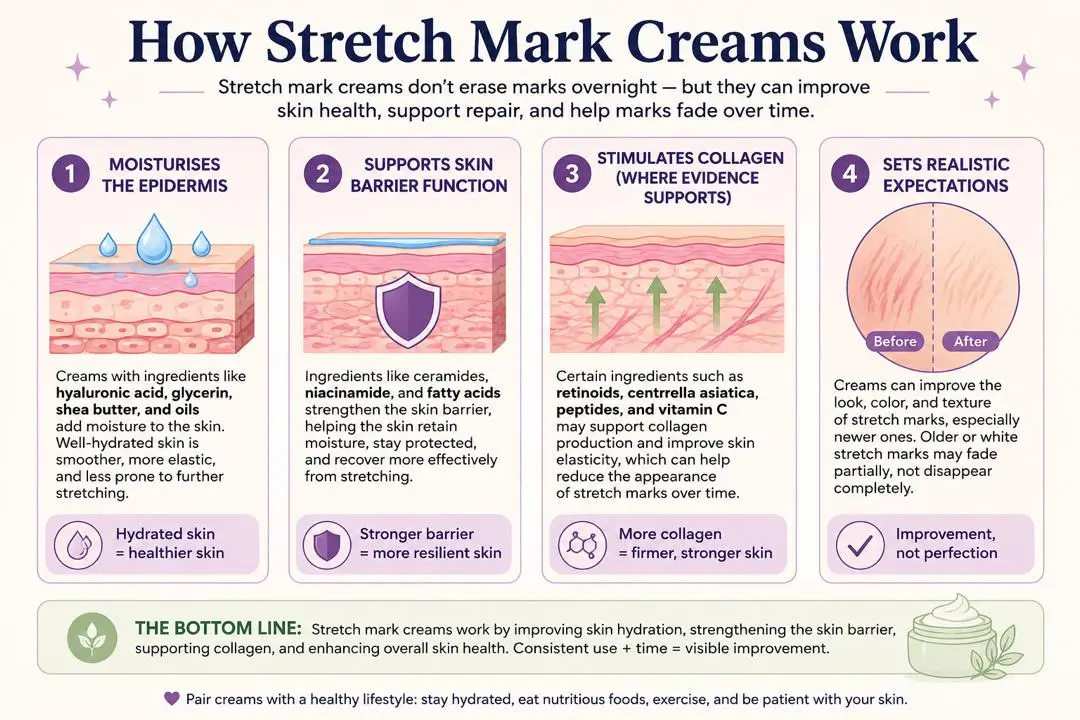
How Stretch Mark Creams Work
- Hydration
The most fundamental mechanism, and the one that applies to virtually all stretch mark creams, regardless of their active ingredients. Well-hydrated skin is more elastic and more resilient. Consistently hydrated skin around stretch marks appears smoother and more uniform in tone than dry, taut skin. Hydrating ingredients, particularly hyaluronic acid, glycerine, and emollients like shea butter, make a genuine cosmetic difference even without directly addressing the dermis.
- Skin barrier support
A healthy skin barrier retains moisture more effectively and protects against environmental damage. Ingredients like ceramides, fatty acids, and niacinamide strengthen the barrier, keeping the skin in better overall condition. In the context of stretch marks, this is a supporting function; it maintains the quality of the surrounding skin, which influences how marks appear in contrast.
- Collagen stimulation
This is where creams can genuinely interact with stretch mark biology at a more targeted level. Ingredients like retinoids, vitamin C, and peptides stimulate fibroblast activity and collagen production in the upper dermis. For red stretch marks, where the tissue is still biologically active, this additional stimulus can make a meaningful difference to how the marks develop and fade. For white stretch marks, the tissue is more dormant, and the effect is more limited.
- Skin tone improvement
Ingredients that support more even melanin distribution, niacinamide and vitamin C, can help reduce the colour contrast between stretch mark tissue and surrounding skin, making marks less visually prominent.
Ingredients With the Strongest Scientific Evidence
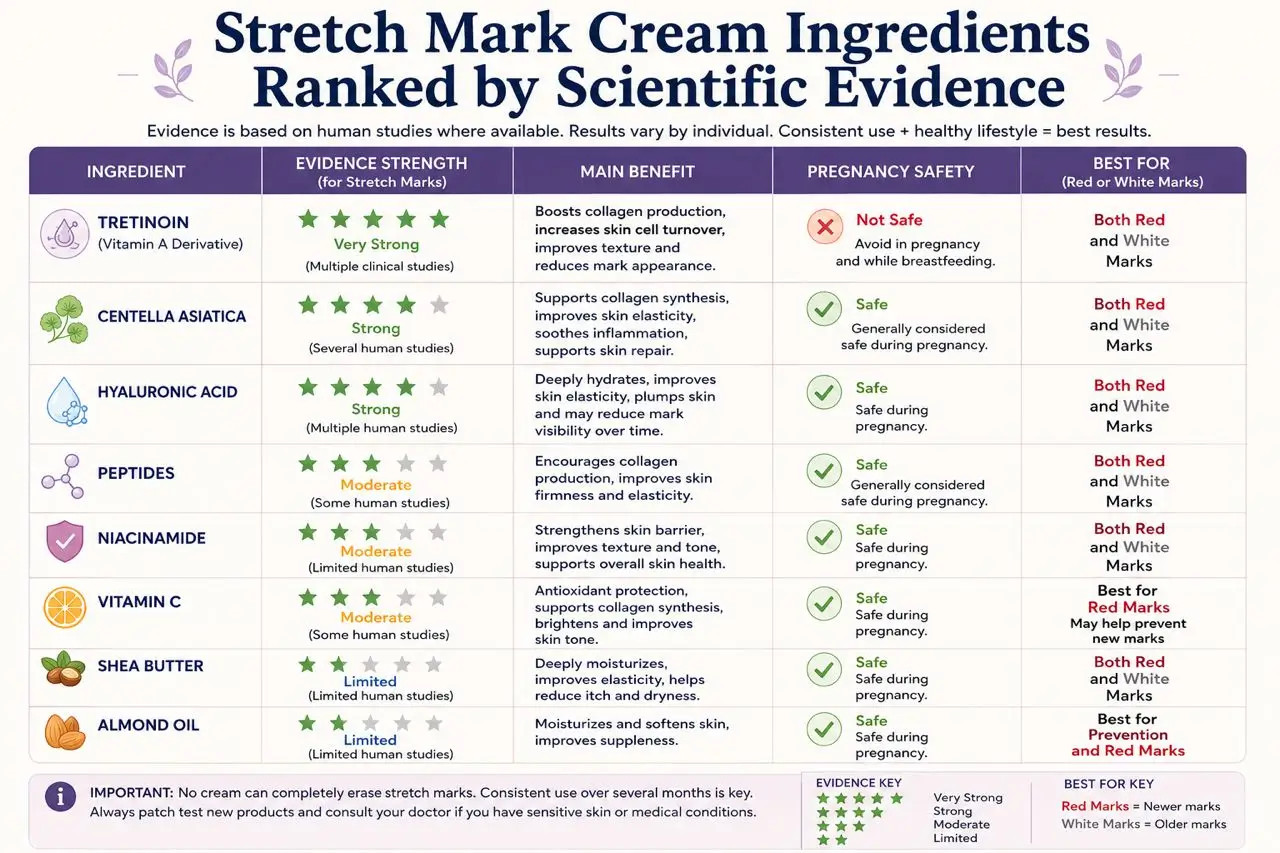
- Hyaluronic Acid
Hyaluronic acid is one of the most effective moisturising ingredients in skincare, and it is an important one in stretch mark formulations specifically. Hyaluronic acid is a glycosaminoglycan that occurs naturally in the body, where it maintains hydration in the skin, joints, and connective tissue. Applied topically, it draws water into the skin and holds it there; it can bind up to 1,000 times its weight in water. This dramatically improves skin plumpness, elasticity, and surface texture.
Beyond moisturisation, some research suggests that hyaluronic acid may have a role in stimulating collagen synthesis and fibroblast activity, which would make it relevant to stretch mark biology at a slightly deeper level than pure hydration. Strong for hydration and skin elasticity support. Moderate for direct stretch mark improvement. Safe during pregnancy. An excellent ingredient to look for in pregnancy-safe formulations.
- Centella Asiatica (Cica)
Centella asiatica, also known as cica, gotu kola, or tiger grass, has become one of the more scientifically interesting ingredients in stretch mark skincare. Centella contains active triterpenoid compounds, asiaticoside, madecassoside, asiatic acid, and madecassic acid, which have been shown in clinical studies to stimulate collagen and fibronectin production, support wound healing, and reduce inflammation. It has a well-established history in wound care and scar treatment.
Importantly, some clinical studies have evaluated centella formulations specifically for stretch mark prevention in pregnant women, with positive results compared to control groups. A study referenced by the National Institutes of Health found that a formulation containing Centella asiatica extract was significantly more effective than placebo in reducing the development of stretch marks during pregnancy.
- Retinoids (Retinol and Tretinoin)
Retinoids are vitamin A derivatives, and they represent the most evidence-backed topical treatment category for stretch marks. Retinoids bind to nuclear receptors in skin cells and increase the rate of cell turnover, while also stimulating fibroblasts to increase their production of new collagen. In the dermis, this remodelling effect can meaningfully improve the texture, depth, and colour of stretch marks, particularly red and early marks where the tissue is still active.
Tretinoin has the strongest evidence. Clinical studies have demonstrated that tretinoin applied consistently over 3–6 months can reduce the length and width of red stretch marks and improve their pigmentation.
Retinol works through the same pathway but more slowly, as it must be converted to active retinoic acid by enzymes in the skin. It is a worthwhile active ingredient in a stretch mark cream, particularly for those who cannot access prescription treatment.
All retinoids, including retinol, tretinoin, retinaldehyde, and retinyl palmitate, must be avoided during pregnancy and breastfeeding. Vitamin A derivatives in excess carry teratogenic risk. If you are pregnant, choose a retinoid-free formulation and return to retinol products only after breastfeeding is complete. This is not precautionary advice; it is a firm clinical recommendation. The Mayo Clinic lists tretinoin among the topical treatments with the best evidence for improving stretch mark appearance, particularly when applied early.
- Vitamin C (Ascorbic Acid)
Vitamin C is an essential cofactor in the body’s collagen synthesis process, meaning that without adequate vitamin C, the body simply cannot produce collagen effectively. This is fundamental biochemistry with direct relevance to stretch mark care. Applied topically, vitamin C in stable forms such as ascorbyl glucoside or sodium ascorbyl phosphate can stimulate collagen production in the skin, reduce inflammation, and improve skin tone by inhibiting excess melanin production. For stretch marks, this combination of collagen support and pigmentation improvement is meaningfully relevant, particularly for marks with colour irregularity. Evidence for vitamin C specifically for stretch marks is moderate rather than strong; most of the research focuses on its broader skin effects, but the biological rationale is well-supported.
- Peptides
Peptides are short chains of amino acids that act as signalling molecules in the skin, communicating to fibroblasts that repair and collagen synthesis are needed. Various peptides have been studied for their skin-remodelling effects. In stretch mark formulations, they contribute to overall collagen support and may help improve the firmness and texture of the skin around marks over time. Evidence is growing and is generally supportive, though research specific to stretch marks is less extensive than for broader skin ageing applications.
- Moisturising and Barrier Ingredients
Several ingredients deserve mention for their genuine moisturising and barrier-supporting roles, even though they do not directly stimulate collagen or address the dermis:
- Ceramides restore and maintain the skin’s lipid barrier; important for overall skin health and moisture retention
- Niacinamide supports the skin barrier, improves skin tone, and has mild anti-inflammatory properties
- Glycerine a humectant that draws moisture into the skin, a reliable hydration ingredient
- Squalane lightweight emollient; good for barrier support without heaviness
Ingredients With Limited Evidence
Some ingredients appear in stretch mark products regularly, often prominently, but have limited or weak clinical evidence for stretch mark reduction specifically. They are not harmful, and most are good moisturisers, but expectations for them should be tempered.
- Cocoa butter an excellent emollient and one of the most historically popular stretch mark ingredients. A well-designed clinical trial found no significant difference in stretch mark development between pregnant women using a cocoa butter cream and those using a plain unscented moisturiser. Its moisturising value is real; its specific effect on stretch marks is not well-established.
- Shea butter a rich, deeply nourishing emollient that is excellent at maintaining skin softness and barrier function. Evidence for specific stretch mark reduction is limited. A worthwhile hydrating base ingredient but not a treatment in itself.
- Coconut oil a good emollient with proven moisturising properties. No credible evidence that it specifically reduces stretch marks. Moderately comedogenic for some people. Supportive but not active.
- Almond oil has the most interesting early evidence among natural oils, from a small clinical trial showing reduced stretch mark development in pregnant women who massaged with it. The benefit may be from the massage as much as the oil itself. A reasonable choice for a daily oil routine; limited as a cream ingredient.
- Avocado oil. rich in oleic acid and vitamins; good moisturiser with mild anti-inflammatory properties. Limited dedicated stretch mark evidence, but a nourishing choice as a carrier or complementary product.
- Vitamin E (tocopherol) a well-known antioxidant with a long association with scar care that the clinical evidence does not strongly support. It contributes as part of a formulation but should not be the headline ingredient in a stretch mark cream.
Are Stretch Mark Creams Better for Red or White Stretch Marks?
Red and purple stretch marks are newer. The tissue in the dermis is still biologically active, fibroblasts are still working, blood vessels are present, and the skin’s repair processes are ongoing. This means active ingredients in creams, such as retinoids, Centella asiatica, and vitamin C, have more to work with. The additional stimulus from topical treatment amplifies an existing biological process. White stretch marks have matured into stable, scar-like tissue. Fibroblast activity has decreased. Blood vessels have contracted. The tissue is less responsive to topical stimuli. Creams can maintain skin health and comfort around white marks, and some gradual improvement in texture is possible over a long period of consistent use, but significant visual improvement of established white marks from topical products alone is unlikely.
For white stretch marks, clinical procedures, particularly fractional laser and microneedling, produce better results than cream-based approaches. A dermatologist can advise on what is appropriate. Start your stretch mark cream routine early, ideally during the red or pink phase, or even before marks appear during a period of body change. Consistent topical care during the active phase gives the best chance of meaningfully influencing long-term appearance.
See our guide on Red Stretch Marks vs White Stretch Marks for a detailed breakdown of treatment response by stage. → See our guide on Stretch Marks During Pregnancy for pregnancy-specific timing advice.
Choosing the Right Stretch Mark Cream
1. Prioritise ingredients over brand and price
The most important factor in choosing a stretch mark cream is not the price or the packaging, but the ingredient list.
- Retinol or tretinoin (if not pregnant)
- Hyaluronic acid
- Centella asiatica
- Peptides
- Vitamin C (in stable form)
- Ceramides or niacinamide as supporting ingredients
Avoid products where the key selling ingredients are things like cocoa butter or coconut oil listed first; these are moisturisers, not treatments. Good emollients belong in the formulation, but should not be its foundation.
2. Check pregnancy safety
If you are pregnant or breastfeeding, this is non-negotiable: avoid all retinoids and focus on Centella asiatica, hyaluronic acid, peptides, shea butter, and vitamin E. Retinoids must be avoided during pregnancy and breastfeeding without exception.
3. Consider fragrance
Heavily fragranced formulations can irritate skin that is already sensitive from stretching and inflammation. Choose fragrance-free or very lightly scented options if your skin is reactive or if you are using the cream on sensitive areas during pregnancy.
4. Match to your skin type
Very dry skin benefits from richer, more emollient formulations with shea butter or cocoa butter in the base. Normal or combination skin may find lighter, hyaluronic acid-forward formulations more comfortable for daily use.
5. Commit to consistency
This is the most important factor of all, and it has nothing to do with the product itself. A good stretch mark cream used every other day is less effective than a mediocre one used daily for months. Consistency of application, over an extended period, matters more than which specific product you choose.
6. Is expensive better?
Not necessarily. Price does not correlate with evidence. Some premium products contain genuinely evidence-backed ingredients in effective concentrations. Others are beautifully packaged moisturisers with ingredients of limited relevance to stretch marks. Read the label, not the marketing copy.
See our guide on the Best Stretch Mark Cream for a full ingredient comparison and buying framework.
What Dermatologists Say About Stretch Mark Creams
Dermatologists generally take a pragmatic, measured view of stretch mark creams. The consensus across the American Academy of Dermatology, Mayo Clinic, Cleveland Clinic, and NHS guidance reflects several consistent themes:
Improvement, not removal. No dermatologist will tell you that a cream removes stretch marks. The achievable goal is a meaningful improvement in appearance, particularly for newer marks with appropriate active ingredients.
Consistency is paramount. Dermatologists consistently emphasise that sporadic use produces no meaningful results. Daily application over months is what allows topical treatments to accumulate any meaningful effect.
Timing matters. The earlier treatment begins, the better. Red marks during or shortly after a period of rapid body change are where topical creams can make the most difference. Waiting until marks are fully mature and white significantly reduces what any cream can achieve.
Evidence-backed ingredients. Dermatologists point to tretinoin (prescription), retinol, hyaluronic acid, and Centella asiatica as the ingredients with the most support. They are generally sceptical of products that rely primarily on popular emollient ingredients with limited specific evidence.
No dermatologist recommends creams as the sole approach for anyone with significant or established stretch marks. Clinical procedures, laser, microneedling, and prescription retinoids are recommended when topical care reaches its limits. The Cleveland Clinic notes that while creams play a supportive role, clinical treatments produce significantly better outcomes for established stretch marks, and a dermatologist can help determine when that step is appropriate. The NHS reinforces that over-the-counter creams may help keep skin supple and hydrated but cannot fully prevent or remove stretch marks.
The Body Edition Anti-Stretch Mark Body Concentrate
A daily moisturising cream formulated to support skin hydration and elasticity as part of a consistent stretch mark skincare routine. The cream has a rich but not heavy texture that absorbs into the skin relatively quickly, leaving it feeling soft and conditioned rather than greasy or residue-heavy. It is comfortable to use on all the commonly affected areas: abdomen, thighs, breasts, hips, and arms.
As a daily moisturiser for stretch-prone skin, it performs well. Applied to slightly damp skin after bathing, the ideal application method, it hydrates effectively and helps maintain skin softness throughout the day. The moisturising effect is noticeable from early in use. The formulation includes moisturising and skin-nourishing ingredients designed to support skin condition and elasticity. Like all topical creams, it interacts primarily with the epidermis and upper dermis and should be understood as a skincare support tool rather than a clinical treatment.
The Body Edition Anti-Stretch Mark Body Concentrate is suited to anyone looking for a daily moisturising product to include in a stretch mark skincare routine, whether during pregnancy, postpartum, during periods of weight or body change, or as a daily maintenance step for existing marks. It is accessible and easy to incorporate into an established routine.
How to use it for best results:
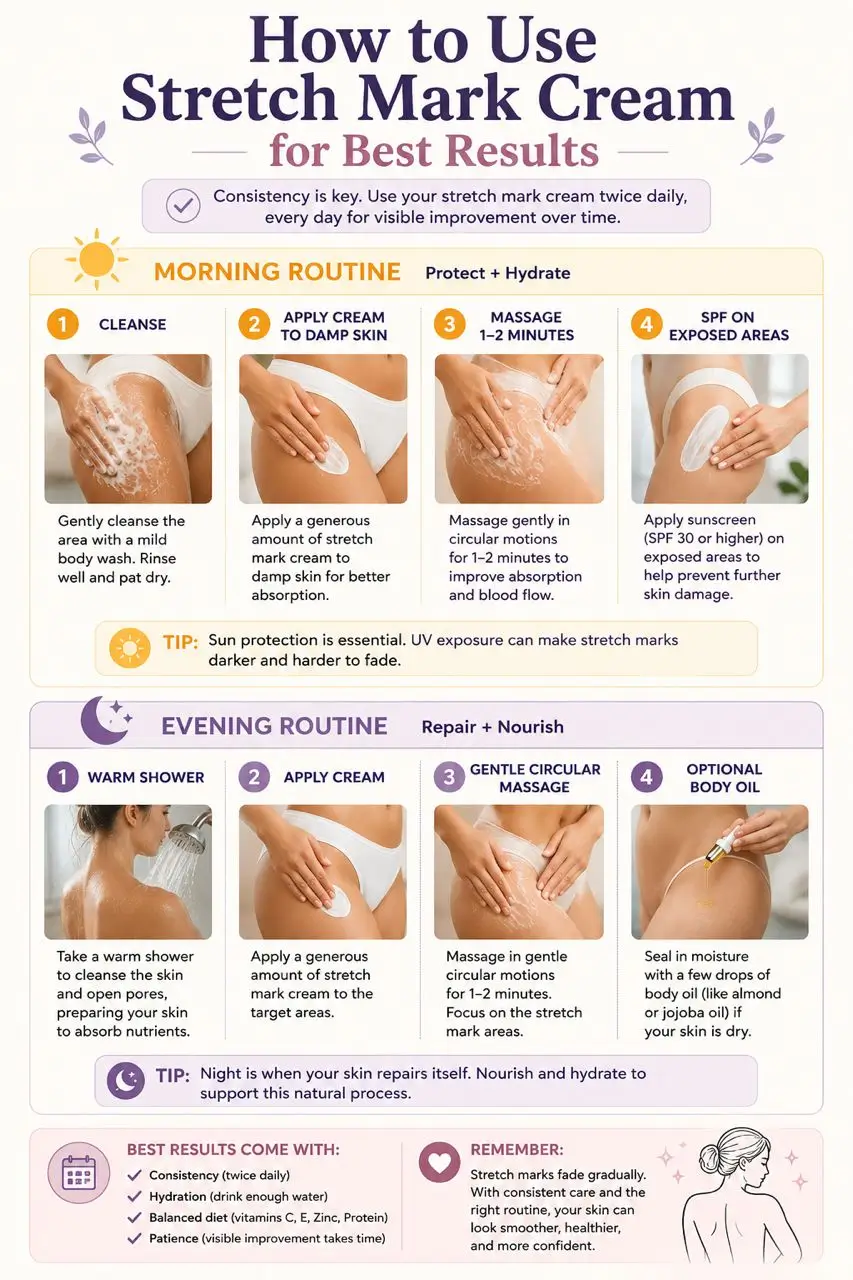
Apply daily, ideally twice a day, morning and evening. After bathing, pat the skin dry, leaving it slightly damp. Apply a generous amount to the abdomen, thighs, breasts, hips, or arms, wherever you are experiencing or wanting to prevent stretch marks, and massage in firmly using circular motions for 1–2 minutes per area. The massage step is important: it stimulates blood flow and helps product absorption, and has an independent benefit for skin tissue health.
Used consistently as part of a daily routine, the Body Edition Anti-Stretch Mark Body Concentrate can contribute to well-hydrated, soft, supple skin, the foundation of good stretch mark care. It will not remove stretch marks independently. Combined with other supportive habits, good nutrition, a nourishing body oil for massage, and adequate hydration, it forms a practical everyday skincare approach for stretch-prone skin.
For those using a body oil alongside this cream, the Love Nature Nourishing Body, Face & Hair Oil with Organic Avocado Oil works well as a complementary morning massage step. Apply the oil in the morning for nourishment and the cream in the evening for targeted moisturisation and any active ingredients.
See our dedicated guide on Best Oil for Stretch Marks for a comparison of complementary oil options. → See our full buying guide on the Best Stretch Mark Cream.
When Creams May Not Be Enough
There comes a point in stretch mark management where topical care, however consistent and well-chosen, reaches its limits. Recognising that point is important for making sensible decisions about the next step.
Creams are unlikely to be sufficient for:
- Established white stretch marks that have been present for more than a year or two, the tissue is too stable, and the dermis too dormant for topical products to produce significant change
- Deep or wide stretch marks where the texture change is pronounced
- Anyone who wants more rapid or substantial improvement than topical care can produce over many months
- Cases where significant emotional distress is related to stretch marks, professional guidance is warranted, and clinical results are meaningfully better
Clinical options worth exploring:
- Microneedling is effective for both red and white marks, is well-tolerated across skin tones, and builds collagen through controlled micro-injury
- Fractional CO₂ laser is most effective for texture and colour improvement, particularly in white marks; it requires multiple sessions
- Pulsed dye laser is particularly effective for red marks; it targets active blood vessels
- Prescription tretinoin more potent than over-the-counter retinol; requires a dermatology consultation; not suitable during pregnancy or breastfeeding
A dermatologist can assess your marks, your skin type and tone, your treatment history, and your goals, and recommend the combination most likely to produce meaningful improvement for your specific situation.
See our guide on How to Remove Stretch Marks for a full clinical treatment breakdown. → See our guide on Stretch Marks on Thighs, Breasts, Arms and Buttocks for location-specific considerations.
Key Takeaways
- Stretch mark creams cannot remove stretch marks; they are structural changes within the dermis that topical products cannot fully reach or reverse.
- What creams can do: improve hydration and skin texture, deliver active ingredients to the upper dermis, support the skin’s natural repair environment, and help limit severity when used preventively.
- Ingredients with the strongest evidence: retinoids not during pregnancy, hyaluronic acid, Centella asiatica, vitamin C, and peptides.
- Popular ingredients like cocoa butter and coconut oil are good moisturisers but have limited specific evidence for stretch mark reduction.
- Red marks respond better to creams than white marks. Start treatment early.
- Consistency matters more than product choice; daily use over months produces better results than sporadic use of any cream.
- Price does not correlate with evidence. Read ingredient lists, not marketing copy.
- For established white marks, clinical treatments, microneedling, and laser produce better results than cream alone.
- Avoid all retinoids during pregnancy and breastfeeding. This applies to all forms of vitamin A derivatives.
Conclusion
The best stretch mark creams improve skin hydration, deliver evidence-backed active ingredients to the skin, and can meaningfully contribute to how stretch marks appear and fade over time. They cannot remove dermal scarring. They cannot replicate the results of clinical procedures. And they cannot overcome very strong genetics or very old, stable marks without significant additional help. What they can do, when chosen well, used consistently, and started at the right time, is make a real difference to how your skin looks and feels during and after a period of rapid change. That is genuinely valuable, as long as the expectation is “meaningful improvement” rather than “complete removal.”
Stretch Marks: Complete Guide → How to Remove Stretch Marks: Post-Pregnancy Treatment Options → Red Stretch Marks vs White Stretch Marks: What Stage Are Yours? → Best Stretch Mark Cream → Best Oil for Stretch Marks → Natural Remedies for Stretch Marks → Stretch Marks During Pregnancy