


How to Prevent Stretch Marks: Proven Methods (Dermatologist-Approved)
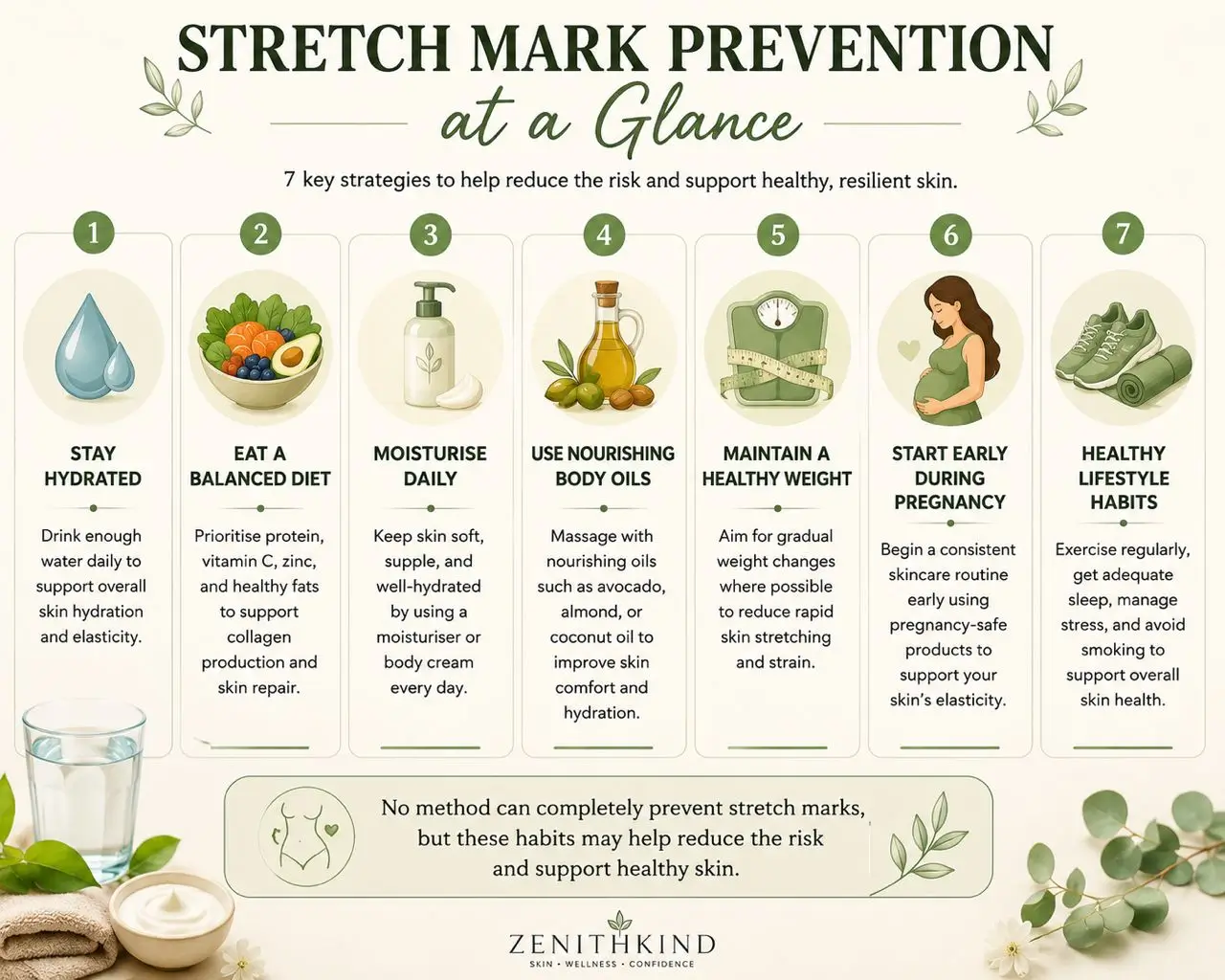
Stretch marks cannot always be completely prevented; genetics and hormones play a significant role. However, maintaining gradual weight changes, keeping the skin consistently moisturized, eating a diet that supports collagen production, and massaging the skin regularly may reduce their severity or delay their onset. Starting early gives these habits the best chance to work.
What Causes Stretch Marks?
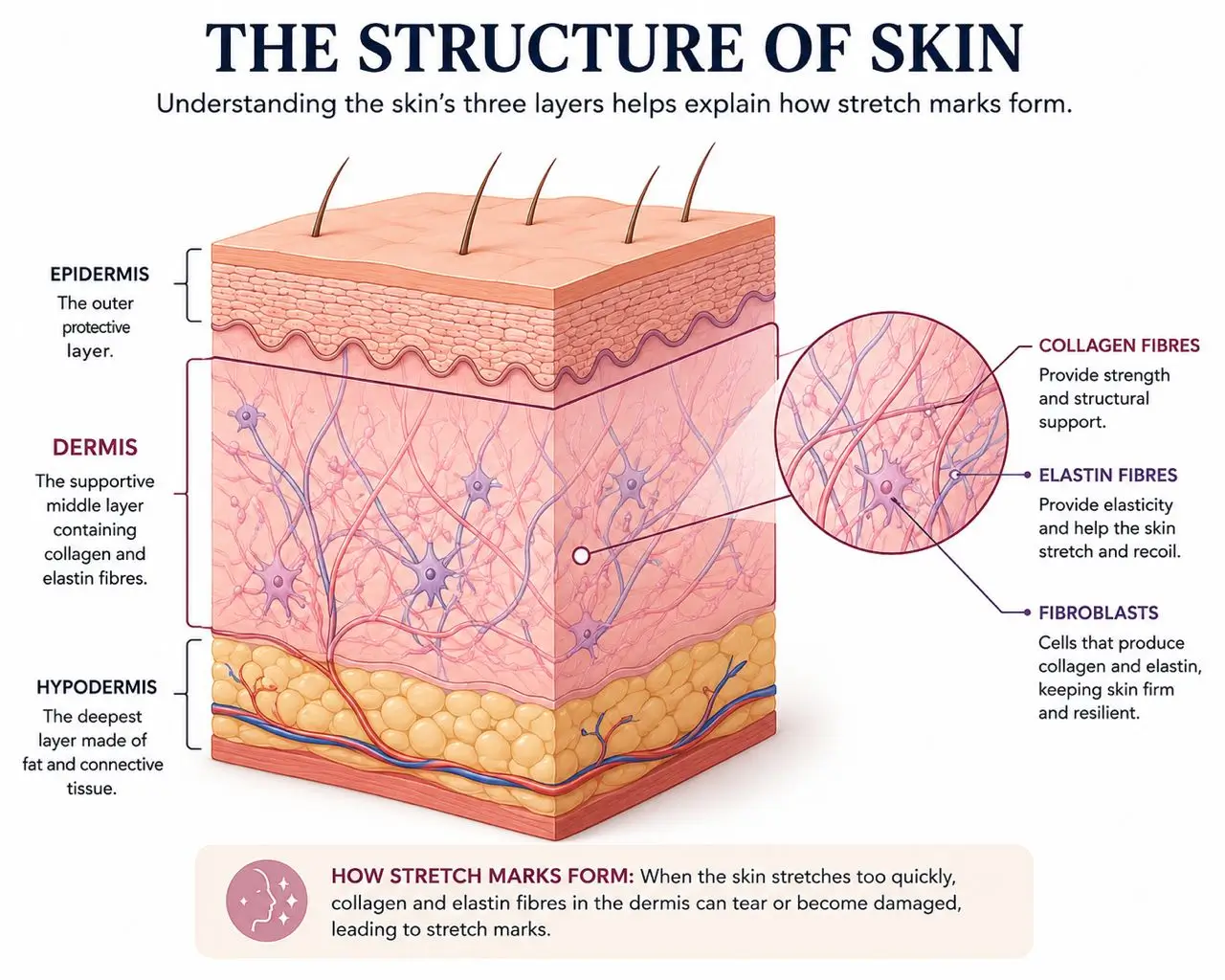
Stretch marks, clinically known as striae distensae, develop when the skin stretches faster than its internal structural fibres can adapt. The key players are collagen and elastin: two proteins in the dermis, the middle layer of skin, that give skin its strength and flexibility. When the skin is stretched rapidly, whether by pregnancy, a growth spurt, weight gain, or muscle building, these fibres can tear. The body responds with an inflammatory healing process, laying down new but structurally different collagen. The result is a stretch mark: a visible scar within the dermis, appearing first as a red or purple streak, then fading to silver or white over time.
Elevated cortisol, which rises during stress, pregnancy, and when corticosteroid medications are used, suppresses the activity of fibroblasts, the cells that produce collagen and elastin. This makes the skin’s structural network less resilient during precisely the periods when it is under the most strain. Some people’s skin is inherently more elastic and collagen-rich than others’. If your parents developed stretch marks, your risk is meaningfully higher. If they did not, you may still develop them, but the likelihood is somewhat lower.
See our guide on Red Stretch Marks vs White Stretch Marks to understand the biology of how stretch marks change over time.
Can Stretch Marks Really Be Prevented?
The scientific consensus is: risk reduction is possible; guaranteed prevention is not. The most comprehensive reviews of the evidence, including those published in dermatology journals, conclude that no single product or approach has been shown to completely prevent stretch marks in all individuals. The variability in outcomes is too high, and genetics too influential, for any guaranteed claim to hold. What the evidence does support is that several interventions, particularly consistent moisturizing combined with massage, and certain active ingredients, may reduce the severity or frequency of stretch marks when used consistently during high-risk periods.
The American Academy of Dermatology takes a similar position, acknowledging that while some measures may reduce the risk of stretch marks, complete prevention is not reliably achievable and is heavily influenced by individual biology.
Who Is Most Likely to Develop Stretch Marks?
- Pregnant women, particularly in the third trimester when foetal growth is most rapid. Between 50–90% of pregnant women develop stretch marks. Those carrying multiples, gaining weight rapidly, or with a family history are at higher risk.
- Teenagers going through puberty, rapid height growth, and changes in body composition stretch the skin quickly. Breast, hip, thigh, and shoulder/upper arm marks are common in adolescents.
- For people gaining weight rapidly, the rate of change matters more than the amount. Rapid weight gain stretches the skin faster than fibroblasts can produce compensatory collagen.
- For athletes and bodybuilders, fast muscle growth, particularly in the biceps, chest, shoulders, and thighs, can stretch overlying skin beyond its capacity. Aggressive bulking phases are a common trigger.
- People losing weight rapidly: counterintuitively, rapid weight loss can also contribute, as the skin may not contract at the same rate that volume is lost.
- People on long-term corticosteroid therapy: corticosteroids suppress collagen synthesis in the skin, reducing its resilience. Topical steroids applied over large areas for extended periods are a known risk factor.
- Those with a family history: if stretch marks run in your family, your own risk is significantly higher. This is one of the factors you have the least control over, which is why managing the factors you can control matters more.
Evidence-Based Ways to Help Prevent Stretch Marks
- Maintain Gradual, Steady Weight Changes
The single most practical preventive measure for anyone whose weight or muscle mass is changing is the rate of change. Stretch marks form because the skin cannot adapt quickly enough to rapid expansion. A gradual rate of change, gaining muscle slowly during training, managing pregnancy weight gain within recommended guidelines, or losing weight steadily rather than dramatically, gives the skin more time to remodel and adapt.
Appropriate gestational weight gain, for example, is important for foetal development. It means that where you have control over the pace, as in muscle building or weight management outside pregnancy, slowing that pace benefits your skin. If you are actively building muscle, consider longer, more moderate bulking phases rather than aggressive caloric surpluses. If you are managing your weight, aim for the gradual end of the recommended weight loss rates.
- Stay Well Hydrated
Adequate hydration supports skin elasticity at a cellular level. Well-hydrated skin has a more functional dermis, maintaining the suppleness and resilience of the collagen and elastin network. Chronically dehydrated skin tends to be less elastic and more prone to damage from stretching. While hydration alone cannot prevent stretch marks, it is a foundational element of the overall skin health environment.
Aim for 6–8 glasses of water daily, adjusted for body weight, activity level, and climate. Increase intake during pregnancy and intensive exercise. Herbal teas and water-rich foods, such as cucumber, melon, and leafy greens, contribute to overall hydration.
- Eat Nutrients That Support Skin Health
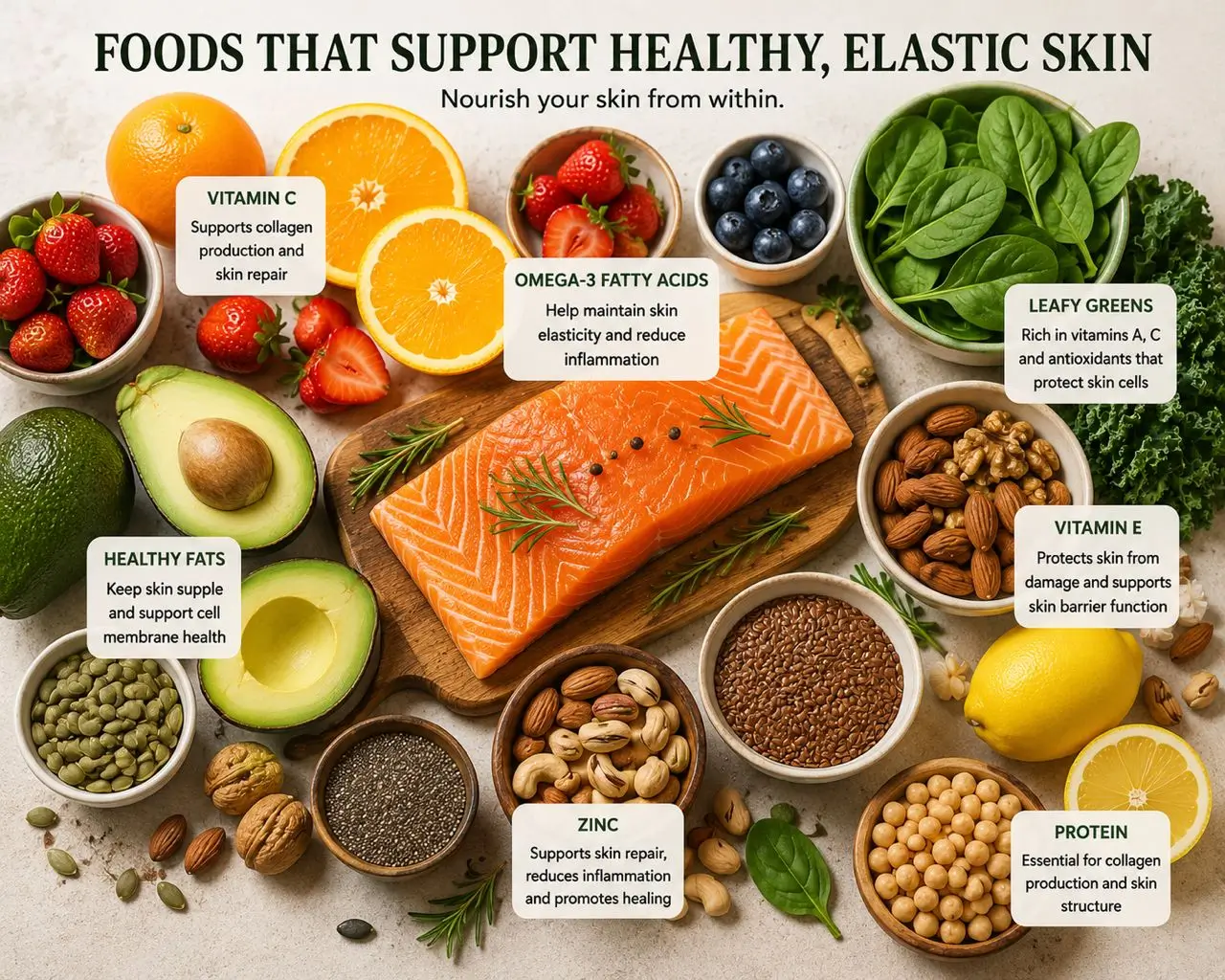
The skin’s ability to produce and maintain collagen and elastin is directly influenced by nutritional status. Deficiencies in key nutrients reduce the structural quality of the dermis, and that matters for stretch mark risk.
Vitamin C, an essential cofactor in collagen synthesis. Without adequate vitamin C, the body cannot produce collagen effectively. Found in: citrus fruits, strawberries, kiwi, red peppers, broccoli. Aim for adequate daily intake, particularly during pregnancy.
Protein, collagen, and elastin are proteins. Adequate protein intake provides the amino acid building blocks the skin needs for structural maintenance. Found in: meat, fish, eggs, dairy, legumes, tofu, nuts and seeds.
Vitamin E, a fat-soluble antioxidant that protects skin cells from oxidative damage and supports the healing environment. Found in: almonds, sunflower seeds, avocado, olive oil.
Zinc supports fibroblast activity, wound healing, and the enzymatic processes involved in collagen production. Found in: pumpkin seeds, chickpeas, cashews, lean meat, shellfish.
Omega-3 fatty acids reduce inflammation and support skin membrane integrity and hydration. Found in: oily fish (salmon, mackerel, sardines), walnuts, flaxseeds, chia seeds.
Copper, an often-overlooked cofactor in the enzymes that cross-link collagen and elastin fibres, making them structurally stronger. Found in: nuts, seeds, shellfish, wholegrains.
- Moisturise Consistently
Consistent skin moisturization is the most widely recommended preventive measure in dermatology and the most accessible. Hydrated skin has more elasticity than dry skin. Consistently moisturized skin may accommodate stretching more gracefully, reducing the severity of any marks that do form. Moisturizing also maintains the skin’s barrier function, supporting the overall health of the dermis layer beneath.
Stretch marks form in the dermis, beneath the epidermis, where moisturizers interact. No topical product can prevent the fibre tearing that causes stretch marks when the skin is placed under rapid, significant strain. What moisturizers can do is support the best possible skin condition going into a period of change. Start as early as possible, ideally before any visible change occurs. For pregnancy, this means moisturizing from the first trimester. For bodybuilding, begin moisturizing as soon as you enter an active growth phase.
See our guide on Do Stretch Mark Creams Really Work? for a detailed evidence breakdown.
- Massage the Skin
Daily massage of stretch-prone areas is one of the most underrated elements of a prevention routine. Massage stimulates local blood circulation, which brings oxygen and nutrients to the skin tissue. It supports lymphatic drainage. And mechanical stimulation of the dermis may encourage fibroblast activity, the cells responsible for producing collagen. Studies on massage for scar tissue suggest it can improve tissue pliability and remodeling over time.
- Use Body Oils
Body oils support skin hydration, deliver nourishing fatty acids and vitamins to the skin, and serve as an effective vehicle for the massage step.
Avocado oil, rich in oleic acid, vitamins A, D, and E, and plant sterols. Has mild anti-inflammatory properties and penetrates the skin well. A good all-purpose choice for daily body massage.
Almond oil has the most specific clinical evidence among natural oils in a stretch mark context, from the randomized trial mentioned above. Rich in vitamin E and oleic acid. Lightweight and fast-absorbing.
Coconut oil, a good moisturizer with emollient properties. Moderate comedogenicity for some people. Works well as an evening application or for those with dry skin.
Shea butter is technically a butter but is often used similarly to an oil. Deeply nourishing. Rich in fatty acids and vitamin E. Excellent for very dry skin.
Cocoa butter is popular and pleasant to use, a good moisturizer. Evidence that it specifically reduces stretch mark formation is limited; a clinical trial found no significant advantage over plain moisturizer.
See our guide on Best Oils for Stretch Marks for a full evidence-based comparison. → See our guide on Natural Remedies for Stretch Marks for a broader review of home care evidence.
- Use Stretch Mark Creams With Active Ingredients
Hyaluronic acid draws moisture deep into the skin and may support collagen synthesis. Safe during pregnancy. One of the most evidence-supported ingredients for skin hydration and elasticity.
Centella asiatica (Cica), stimulates collagen and fibronectin production. Has been studied specifically in pregnancy stretch mark prevention, with positive results. Generally considered safe during pregnancy.
Peptides, amino acid chains that signal fibroblasts to produce new collagen. Supportive of the skin’s structural maintenance. Generally safe during pregnancy.
Ceramides restore and maintain the skin’s lipid barrier. Support overall skin health and moisture retention.
Retinoids (retinol, tretinoin) with important caveats. Retinoids are among the most evidence-backed topical ingredients for skin remodeling and collagen production. However, they are not safe during pregnancy or breastfeeding and must be avoided during these periods.
See our full guide on Do Stretch Mark Creams Really Work? for a complete ingredient breakdown.
Stretch Mark Prevention During Pregnancy
Pregnancy is the period when stretch mark prevention is most sought after, and where the evidence on preventive care is also most developed.
The key principles:
- Start in the first trimester. Most women begin thinking about stretch mark prevention in the third trimester when marks have already started appearing. Starting consistent moisturizing from early in the first trimester, before the skin is under significant strain, gives preventive care its best chance.
- Choose pregnancy-safe products. During pregnancy and breastfeeding, avoid all retinoids, retinol, tretinoin, retinaldehyde, and retinyl palmitate. These vitamin A derivatives are not safe during pregnancy, regardless of concentration. Focus instead on hyaluronic acid, Centella asiatica, shea butter, cocoa butter, peptides, and vitamin E.
- Follow healthy weight gain guidelines. Gestational weight gain recommendations vary by pre-pregnancy BMI. Gaining within those guidelines, and doing so gradually, reduces the rate of abdominal skin stretching, lowering the mechanical strain that causes marks.
- Maintain adequate nutrition. The skin’s collagen-producing capacity depends on adequate vitamin C, zinc, protein, and omega-3 intake. A balanced pregnancy diet supports skin resilience as well as foetal development.
- Massage daily. Apply a body oil or cream to the abdomen, breasts, hips, and thighs daily, with deliberate massage. The evidence for massage in pregnancy is the most direct of any single prevention strategy.
- Stay hydrated. Pregnancy increases fluid requirements. Adequate hydration supports skin elasticity from the inside; add water-rich foods to your diet alongside adequate daily water intake.
See our complete guide on Stretch Marks During Pregnancy: Prevention and Safe Treatment Options.

Lifestyle Habits That Support Healthy Skin
- Exercise
Regular cardiovascular exercise promotes circulation, delivering oxygen and nutrients to skin tissue. It also supports healthy weight management and hormonal balance. During pregnancy, exercise appropriate to your trimester, always with medical clearance, supports overall health, including skin condition.
- Sleep
Skin undergoes much of its repair and regeneration during sleep. Adequate sleep, 7–9 hours for most adults, supports the overnight collagen production and cellular repair that maintain dermal quality. Consistently poor sleep is associated with reduced skin elasticity and barrier function.
- Stress management
Chronic psychological stress elevates cortisol, the hormone that suppresses fibroblast activity and reduces skin resilience. While stress alone is rarely a primary cause of stretch marks, it can be a contributing factor in combination with other risk factors. Regular stress management, exercise, adequate sleep, and mindfulness practices support the hormonal environment in which skin health is maintained.
- Smoking
Smoking impairs collagen production, reduces skin circulation, and accelerates skin ageing. Among its many negative effects on skin health, reduced collagen synthesis directly affects skin resilience. If you smoke, quitting is one of the most meaningful things you can do for your skin’s overall health and healing capacity.
- Balanced diet
As discussed in the nutrition section, a varied diet providing adequate protein, vitamin C, zinc, vitamin E, and omega-3 fatty acids supports the collagen and elastin network that determines skin resilience. Avoiding crash diets, which deprive the skin of the nutrients it needs and often lead to rapid weight changes, also reduces stretch mark risk.
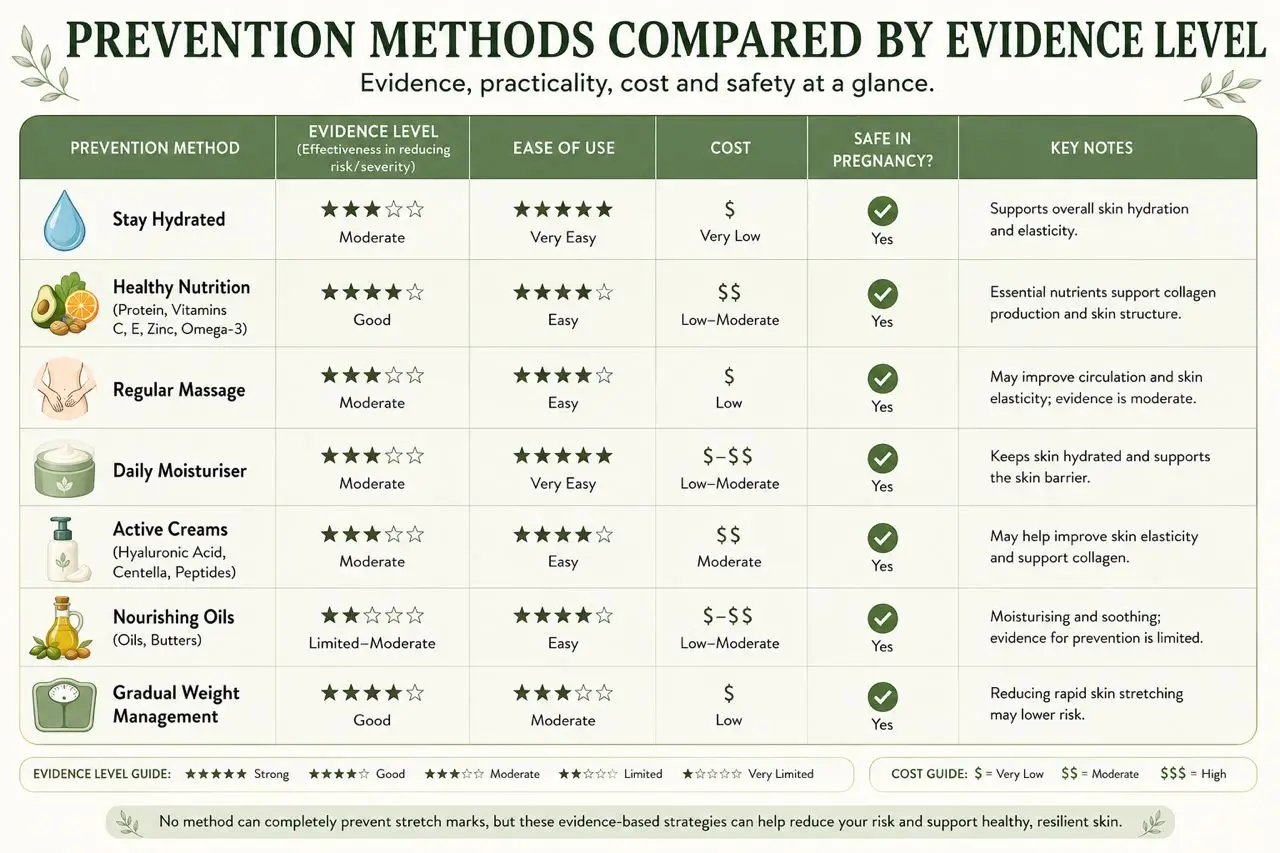
| Prevention Method | Evidence Level | Safe in Pregnancy? | Cost | Ease of Use |
|---|---|---|---|---|
| Gradual weight management | Strong (indirect) | Yes | Free | Moderate |
| Adequate hydration | Moderate (indirect) | Yes | Free | Easy |
| Skin-supportive nutrition | Strong (indirect) | Yes | Low | Easy–Moderate |
| Consistent moisturising | Moderate | Yes | Low | Easy |
| Daily massage | Moderate | Yes (gentle) | Free | Easy |
| Body oils (almond, avocado) | Limited–Moderate | Yes | Low–Moderate | Easy |
| Hyaluronic acid cream | Moderate–Strong | Yes | Low–Moderate | Easy |
| Centella asiatica cream | Moderate | Yes | Low–Moderate | Easy |
| Retinoids | Strong (not preventive use) | No | Moderate | Easy |
| Cocoa/shea butter | Limited | Yes | Low | Easy |
Prevention Myths Worth Addressing
“Drinking more water will prevent stretch marks.” Adequate hydration supports skin elasticity, but water alone cannot prevent stretch marks. The primary causes, rapid stretching and genetics, are not resolved by hydration. It is one contributing factor among many.
“An expensive cream will guarantee prevention.” No cream can guarantee stretch mark prevention, regardless of price. Expensive formulations are not inherently more effective than well-chosen affordable ones. Evidence-backed ingredients matter; marketing claims and price tags do not.
“Natural oils erase existing stretch marks.” No natural oil can remove established stretch marks. They are structural changes within the dermis. Oils support skin hydration and massage routines, which is genuinely helpful, but “erasing” marks is not achievable with any oil.
“Only pregnant women get stretch marks.” Teenagers, bodybuilders, people experiencing weight changes, and individuals on corticosteroid medications all commonly develop stretch marks. Pregnancy is one trigger among several.
“Thin people don’t get stretch marks.” Body weight is not the determining factor. Rate of change is. A person of any weight can develop stretch marks if they gain or lose weight rapidly, build muscle quickly, or go through a growth spurt.
“If your mother didn’t get stretch marks, you won’t either.” Genetics influences susceptibility, but it does not determine outcome with certainty. Environmental factors, hormonal changes, and rate of change all interact with genetic predisposition. No family history is a protective factor, not a guarantee.
Prevention Checklist
- Begin moisturising affected areas daily from the start of the at-risk period
- Apply moisturiser or oil to damp skin after bathing
- Spend 1–2 minutes massaging each area using circular motions
- Drink adequate water throughout the day
- Eat a balanced diet including vitamin C, protein, zinc, and omega-3s
- Manage the rate of weight or muscle change where possible
- Use a product with evidence-backed active ingredients, hyaluronic acid, and centella asiatica
- Avoid retinoids during pregnancy and breastfeeding
- Protect skin from excessive UV exposure
- Get adequate sleep and manage stress where possible
Sometimes, despite doing everything right, starting early, moisturizing daily, eating well, and managing weight gain carefully, stretch marks develop anyway. It is a reflection of the limits of what prevention can achieve in the face of strong genetic predisposition and the hormonal environment that pregnancy or puberty creates. Stretch marks are one of the most common skin changes humans experience. If stretch marks develop, the most useful thing you can do is treat them early, while they are still in the red or pink phase. Red stretch marks are biologically active tissue that responds better to topical treatment, including retinoids, post-pregnancy and breastfeeding, and centella asiatica-containing formulations, than older white marks. Established white stretch marks require more targeted clinical intervention, microneedling, or fractional laser, to produce meaningful improvement.
See our guide on Red Stretch Marks vs White Stretch Marks to understand the difference in treatment response. → See our guide on stretch mark treatment options for a full breakdown of clinical approaches.
The NHS reassures that stretch marks are harmless and that, for those who wish to address them, a range of treatment options is available through dermatology.
Key Takeaways
- Stretch mark prevention cannot be guaranteed; genetics and hormones play significant roles that skincare cannot fully override.
- Risk reduction is achievable through consistent moisturising, gradual weight management, skin-supportive nutrition, regular massage, and well-chosen topical products.
- Starting preventive habits early, before the skin comes under strain, gives them the best opportunity to make a difference.
- Hyaluronic acid and Centella asiatica have the strongest evidence among topical ingredients for prevention. Avoid retinoids during pregnancy and breastfeeding.
- Massage contributes independently of whatever product is applied, making it a deliberate, daily step.
- Lifestyle factors, sleep, nutrition, hydration, stress management, and avoiding smoking all contribute to the skin health environment.
- If stretch marks develop despite prevention efforts, that is not a failure. Focus on early treatment during the red phase for the best outcomes.
Conclusion
Prevention is not a guarantee. It never has been, and any product or programme that claims otherwise is overpromising. But prevention as risk reduction, consistent, evidence-informed habits that give your skin the best possible chance, is genuinely achievable and genuinely worthwhile. A daily moisturizing and massage routine, started early and maintained consistently, is one of the most practical things you can do for your skin during any period of rapid change.