

Does Coconut Oil for Stretch Marks Work? (Benefits & Best Uses)
Coconut oil is an effective moisturiser that can keep skin soft, hydrated, and comfortable, which is a genuine contribution to stretch mark skincare. However, current evidence does not support the claim that coconut oil significantly reduces or removes stretch marks. It works best as a daily moisturising and massage step, supporting skin health rather than directly treating stretch marks.
What Is Coconut Oil?
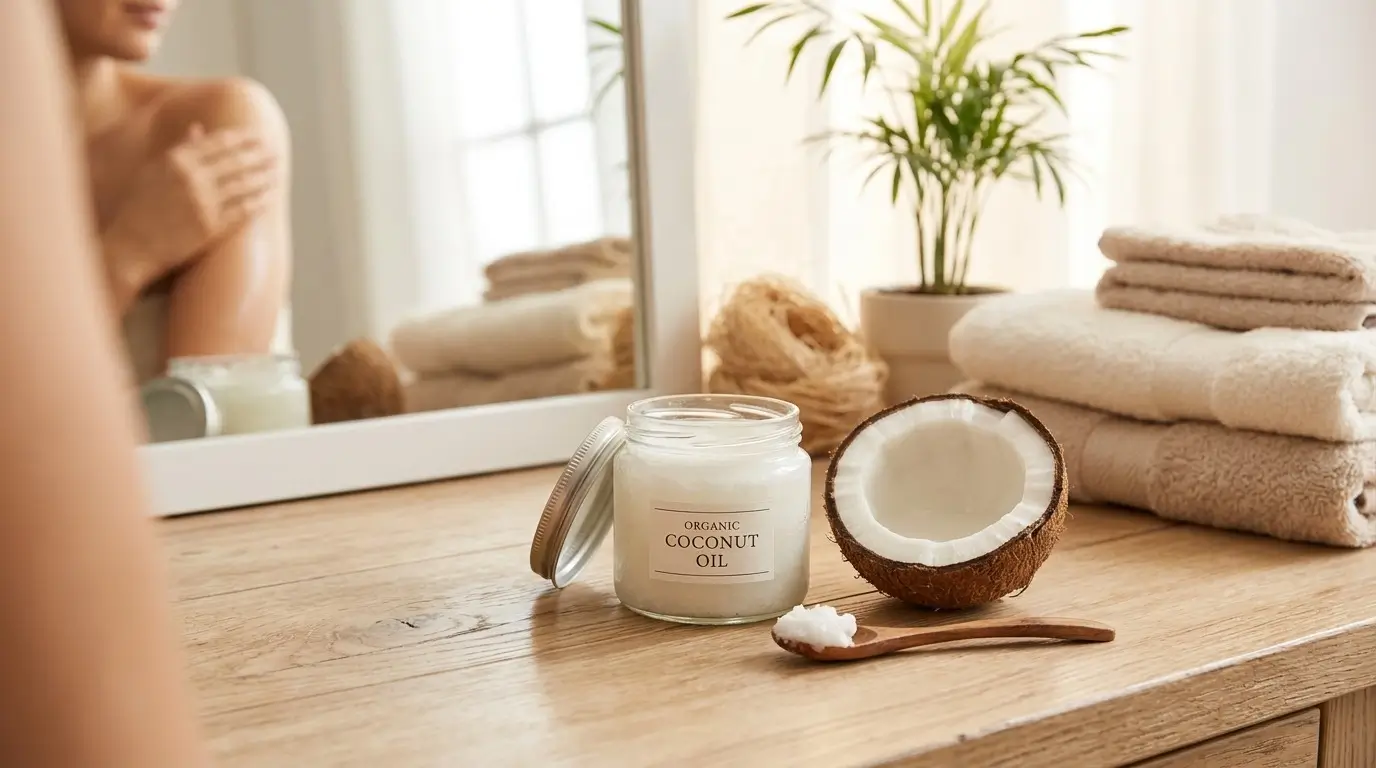
Coconut oil is extracted from the flesh, called copra, of the Cocos nucifera fruit. It is one of the few plant oils that are solid at room temperature; its high saturated fat content keeps it firm below around 24°C, distinguishing it texturally from most liquid plant oils.
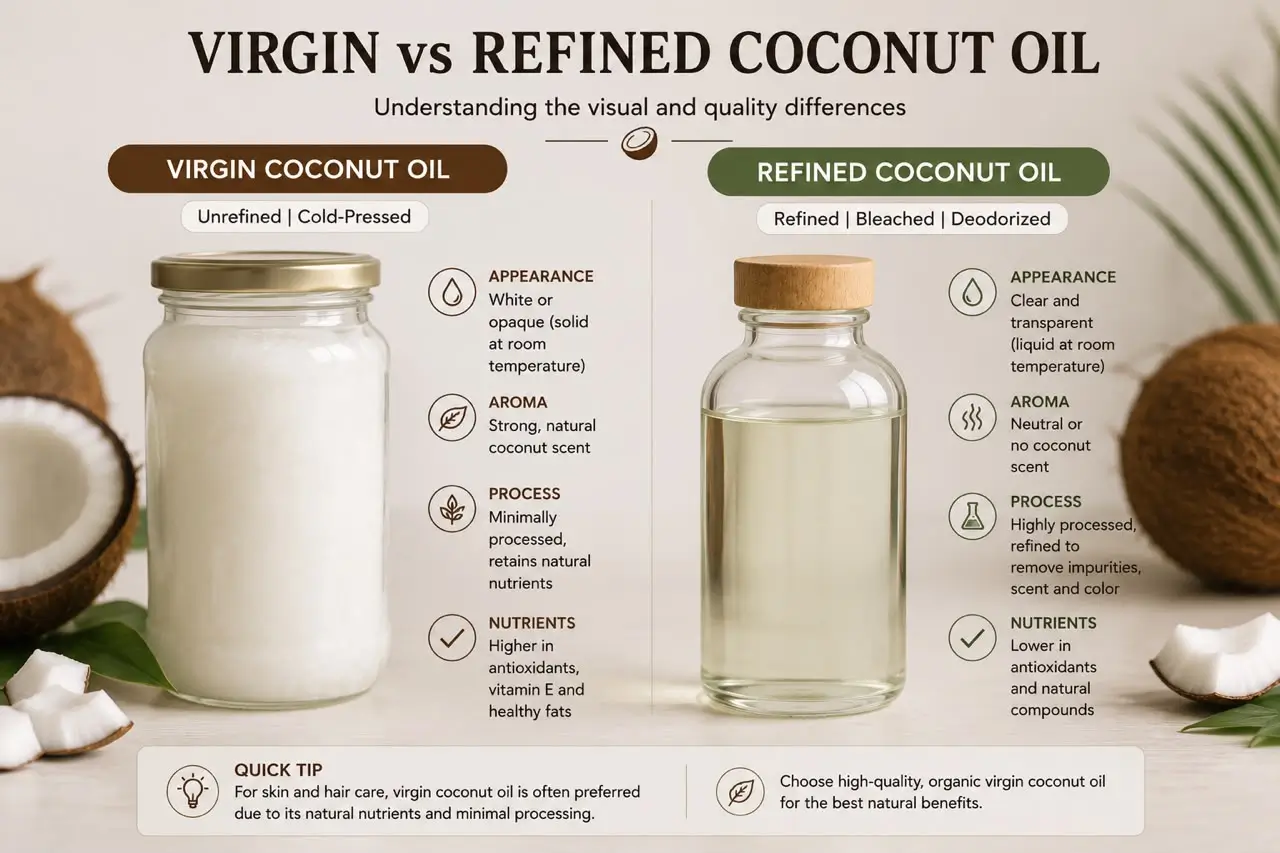
Virgin (or extra virgin) coconut oil is cold-pressed from fresh coconut flesh without heat or chemical processing. It retains its natural coconut scent, its white colour, and the full spectrum of its naturally occurring compounds, including antioxidant polyphenols and vitamin E.
Refined coconut oil has been processed to remove its scent and colour, producing a more shelf-stable, neutral-smelling product. This processing removes some of the polyphenols and antioxidants present in virgin oil, though the primary fatty acid composition remains similar.
For skincare, virgin coconut oil is generally preferred; it retains more of its naturally occurring bioactive compounds.
Key components:
- Lauric acid, the dominant fatty acid in coconut oil, comprises approximately 47–50% of its fat content. Lauric acid has demonstrated antimicrobial properties and is a solid emollient that helps the skin retain moisture. It is also found in breast milk and has a well-established safety profile.
- Caprylic acid and capric acid, medium-chain fatty acids with antimicrobial and skin-conditioning properties.
- Vitamin E (tocopherols), antioxidant that protects skin cells from oxidative damage and supports the skin’s healing environment.
- Polyphenols, present in virgin coconut oil, are antioxidant compounds that contribute to anti-inflammatory activity and cell protection.
- Myristic acid and palmitic acid are saturated fatty acids that contribute to the emollient and skin-softening properties of coconut oil.
How Stretch Marks Develop
Stretch marks form within the dermis, the middle layer of skin, when the skin stretches faster than its structural proteins can adapt. The key structures are collagen and elastin: fibres produced by cells called fibroblasts that give skin its tensile strength and elasticity. When the rate of skin expansion, during pregnancy, puberty, rapid weight gain, or intensive muscle building, exceeds the rate at which fibroblasts can produce new collagen, the fibres tear. The body heals this damage, but the repair tissue has a different structure, producing the streaks visible as stretch marks.
Early stretch marks are red or purple, reflecting active blood vessels and the inflammatory healing response. Over time, those vessels contract and marks fade toward silver and white, settling into stable, scar-like tissue. Because stretch marks are structural changes within the dermis, no ingredient, including coconut oil, can reach deep enough to fully reverse them.
See our guide on Red Stretch Marks vs White Stretch Marks for a complete breakdown of the biological difference between stretch mark stages and what it means for treatment.
Can Coconut Oil Help Stretch Marks?
The most frequently cited clinical evidence for coconut oil on skin comes from a 2010 study published in Dermatitis, which found that virgin coconut oil significantly improved skin hydration and skin barrier function when applied to subjects with dry skin. This is a genuine and relevant finding: hydrated skin with a functional barrier is more resilient and better-maintained. However, studies specifically evaluating coconut oil for stretch mark reduction are limited. No high-quality, independent clinical trial has demonstrated that coconut oil significantly reduces the appearance of stretch marks.
Research on oleic acid, a fatty acid that coconut oil contains in smaller quantities than avocado or almond oil, has raised some questions about its effect on skin barrier function with extended use. A study in Acta Paediatrica found that oleic acid application could disrupt the skin barrier in some contexts. Coconut oil’s primary fatty acid, lauric acid, does not raise the same concern, but it is worth noting that not all oils are equally barrier-friendly.
What coconut oil genuinely contributes to stretch mark care:
- Moisturisation: Coconut oil is a genuine emollient that softens the skin and helps it retain moisture. Hydrated skin has better texture and tends to show stretch marks less starkly.
- Skin comfort: The itchiness and tightness that accompany new stretch marks can be soothed by regular moisturising, and coconut oil provides this.
- Massage vehicle: Used as the medium for daily skin massage, coconut oil enables the circulation-stimulating and tissue-supporting benefits of massage, which exist independently of the oil used.
- Barrier support: Lauric acid helps maintain the skin’s surface barrier, reducing transepidermal water loss.
Coconut oil does not contain the collagen-stimulating ingredients, such as retinoids, Centella asiatica, vitamin C, or the evidence-backed active compounds that produce measurable stretch mark improvement. Its medium-chain fatty acids are primarily on the skin surface; they do not penetrate deeply enough to influence the dermis, where stretch marks reside.
The American Academy of Dermatology notes that while regular moisturisation is a reasonable supportive habit for stretch mark-prone skin, no topical ingredient, including natural oils, has been shown to remove or significantly reduce stretch marks.
Skin Benefits of Coconut Oil
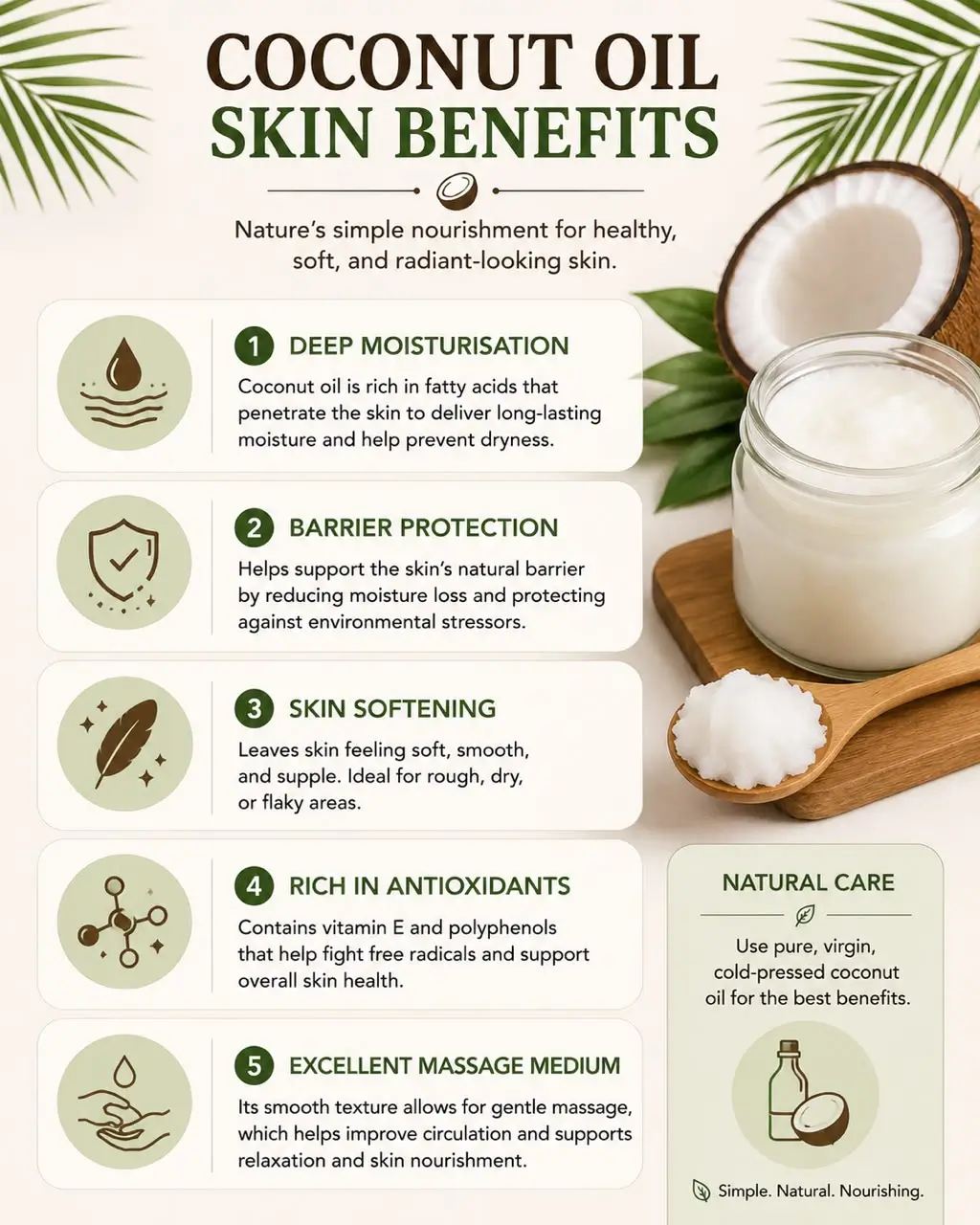
- Moisturisation
Coconut oil is a reliable emollient. Applied to the skin, its saturated fatty acids create a lipid layer that slows transepidermal water loss, the process by which the skin loses moisture to the environment. This occlusive effect keeps the skin’s surface hydrated, soft, and less prone to the dryness that can exacerbate the visual appearance of stretch marks.
- Barrier Protection
Lauric acid and other medium-chain fatty acids in coconut oil help reinforce the skin’s surface barrier. While not as comprehensively barrier-supportive as ceramide-rich formulations, coconut oil provides meaningful surface protection.
- Softening Dry Skin
Coconut oil is particularly effective at softening very dry or rough skin. For areas prone to dryness and tightness, such as the abdomen during pregnancy and the thighs during growth phases, it provides a notable improvement in skin texture and comfort.
- Antimicrobial Properties
Lauric acid has demonstrated antimicrobial and antifungal properties in laboratory studies. While this is not directly relevant to stretch mark care, it makes coconut oil a sensible body moisturiser for general skin health.
- Antioxidant Activity
Virgin coconut oil contains polyphenol antioxidants that protect skin cells from oxidative damage. Oxidative stress degrades collagen quality over time, so antioxidant protection is a genuine long-term skin health benefit.
- Massage Benefits
Any oil used in a daily massage routine benefits from the circulation-stimulating, lymphatic-draining, and tissue-pliability-supporting effects of massage itself. Coconut oil’s texture, which melts readily in warm hands, makes it a pleasant massage medium.
Coconut Oil for Red Stretch Marks
Red stretch marks are newly formed and biologically active, making them the best stage to support with consistent topical care.
At this stage, coconut oil can:
- Maintain the skin’s hydration and surface softness through the active healing phase
- Soothe the itch and tightness that frequently accompany new marks
- Provide a comfortable vehicle for daily massage, which independently supports local circulation and tissue health
What it will not do is stimulate the collagen remodelling that retinoids or clinical procedures achieve. Used alongside a cream containing Centella asiatica, hyaluronic acid, or retinol, if not pregnant, coconut oil’s moisturising contribution has a clear supporting role.
See our guide on Red Stretch Marks vs White Stretch Marks for a detailed treatment guide by stage.
Coconut Oil for White Stretch Marks
White stretch marks have settled into stable, scar-like tissue. Blood vessels have contracted, fibroblast activity has reduced, and the tissue no longer responds significantly to the anti-inflammatory signals that coconut oil’s components might offer.
At this stage:
- Coconut oil maintains skin hydration and softness around the marks
- It may improve the surface texture slightly over a long period of very consistent use
- It does not stimulate meaningful collagen remodelling in mature scar tissue
For significant visible improvement of white stretch marks, clinical procedures, particularly fractional CO₂ laser and radiofrequency microneedling, are the most appropriate options. Coconut oil can complement these treatments as part of a daily maintenance routine, but cannot substitute for them.
See our guide on Stretch Mark Treatment Options for clinical options for white marks.
Virgin vs Refined Coconut Oil: Which Is Better for Skin?
| Feature | Virgin Coconut Oil | Refined Coconut Oil |
|---|---|---|
| Extraction | Cold-pressed from fresh flesh | Processed/bleached/deodorised |
| Scent | Natural coconut fragrance | Neutral/odourless |
| Colour | White (solid) / clear (melted) | Clear to very pale |
| Polyphenols | Retained | Reduced in processing |
| Vitamin E | Retained | Partially reduced |
| Shelf life | Shorter | Longer |
| Skin benefit | Higher nutrient content | Comparable emollient, fewer antioxidants |
| Best for | Skincare where nutrition matters | Those who prefer a neutral scent |
How to Use Coconut Oil for Stretch Marks
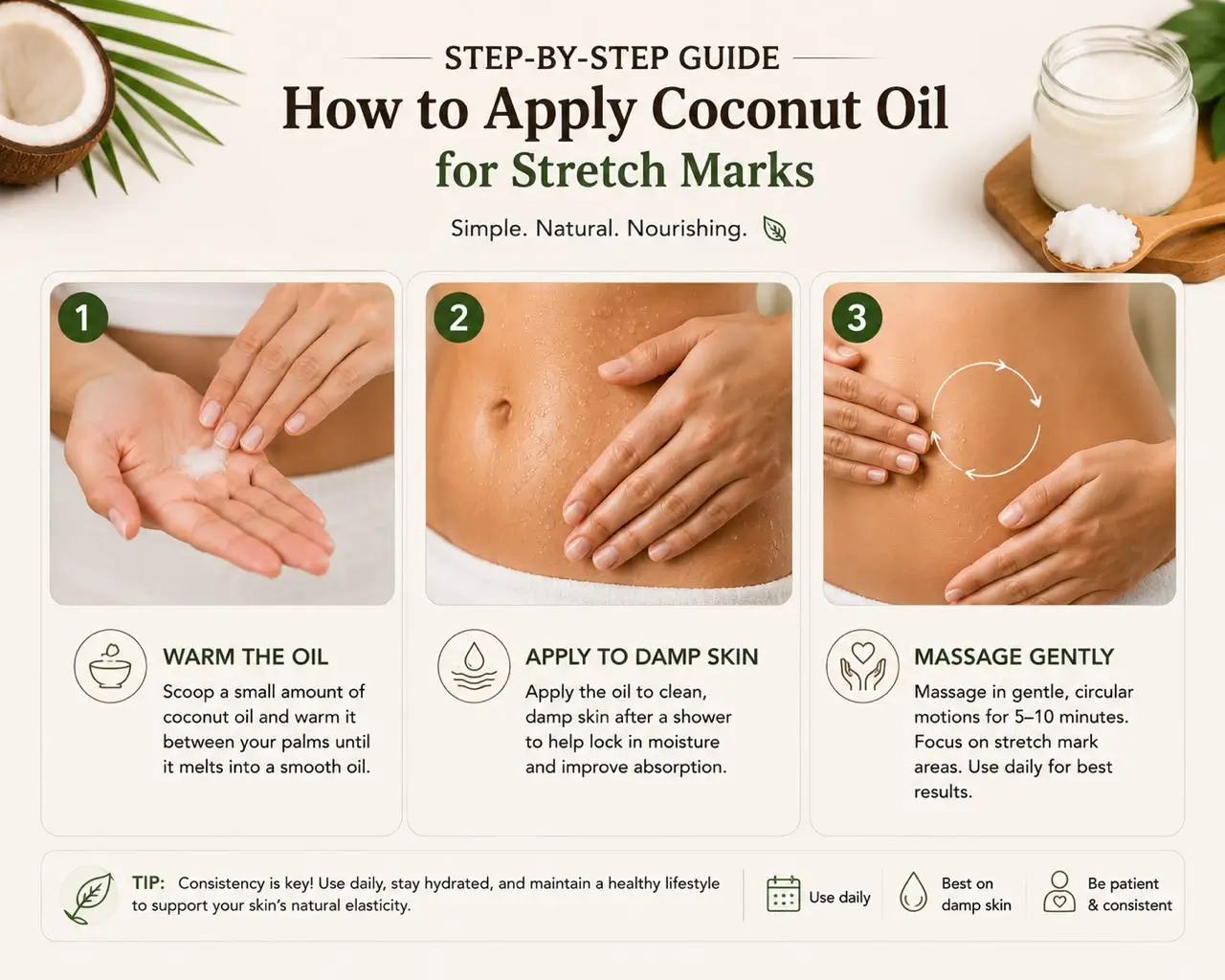
The most effective time to apply coconut oil is immediately after a shower or bath, while the skin is still slightly damp. At room temperature, coconut oil is solid; warm a small amount between your palms until it melts. It will do so at skin temperature within seconds. Apply to the stretch mark area while the skin is slightly damp, as this seals in moisture more effectively than applying to dry skin.
Spend 1–2 minutes massaging the oil into each stretch mark area using firm, circular motions. The massage is not merely for absorption; it stimulates local blood flow, supports lymphatic drainage, and may contribute to tissue pliability over time. Studies on scar massage support its role in improving tissue quality. Make the massage deliberate rather than perfunctory. Daily use, once or twice per day, is ideal. Consistency over weeks and months is far more important than the amount applied on any single occasion.
Coconut Oil During Pregnancy
Coconut oil is generally considered safe for use during pregnancy. It contains no retinoids or other ingredients that are contraindicated during this period, and its moisturising properties make it a practical daily skin care option for the abdomen, breasts, hips, and thighs.
- Use topical coconut oil, not coconut oil supplements, which have different safety considerations
- Perform a patch test before applying over large areas, as skin can be more reactive during pregnancy
- Choose virgin, cold-pressed coconut oil with minimal processing and no added fragrances
- For maximum skin benefit during pregnancy, combine coconut oil with a pregnancy-safe active cream, such as hyaluronic acid and Centella asiatica, rather than relying on the oil alone
See our complete pregnancy skincare guide on Stretch Marks During Pregnancy: Prevention and Safe Treatment Options.
Coconut Oil vs Other Natural Oils for Stretch Marks
| Oil | Evidence for Stretch Marks | Key Skin Benefit | Pregnancy Safe | Texture |
|---|---|---|---|---|
| Coconut oil | Limited | Moisturising, barrier, antimicrobial | Yes | Rich, solid at room temp |
| Avocado oil | Limited (growing) | Deep hydration, anti-inflammatory, vitamin E | Yes | Medium-rich, absorbs well |
| Almond oil | Limited–Moderate | Vitamin E, skin softness, massage vehicle | Yes | Lightweight, fast-absorbing |
| Rosehip oil | Limited | Natural vitamin A precursors, essential fatty acids | Generally yes | Lightweight, dries quickly |
| Shea butter | Limited | Deep moisturisation, barrier | Yes | Very rich, thick |
| Cocoa butter | Very limited | General moisturising | Yes | Rich, pleasant scent |
| Aloe vera gel | Limited | Soothing, hydration, anti-inflammatory | Yes | Light, cooling |
Coconut oil vs almond oil: Almond oil is lighter, absorbs more quickly, and has the most specific clinical evidence for stretch marks, from a pregnancy study. It is generally the preferred choice for those wanting the lightest texture. Coconut oil’s heavier, more occlusive character makes it better suited to very dry skin or evening application.
Coconut oil vs shea butter: Both are rich emollients with similar levels of specific stretch-mark evidence. Shea butter is richer and more occlusive; coconut oil absorbs somewhat more readily. A practical routine might use coconut oil for daytime application and shea butter for evening deep moisturisation.
See our guide on Avocado Oil for Stretch Marks for a detailed comparison. → See our guide on Aloe Vera for Stretch Marks for the evidence on another popular natural option.
Choosing a Good Coconut Oil for Stretch Marks
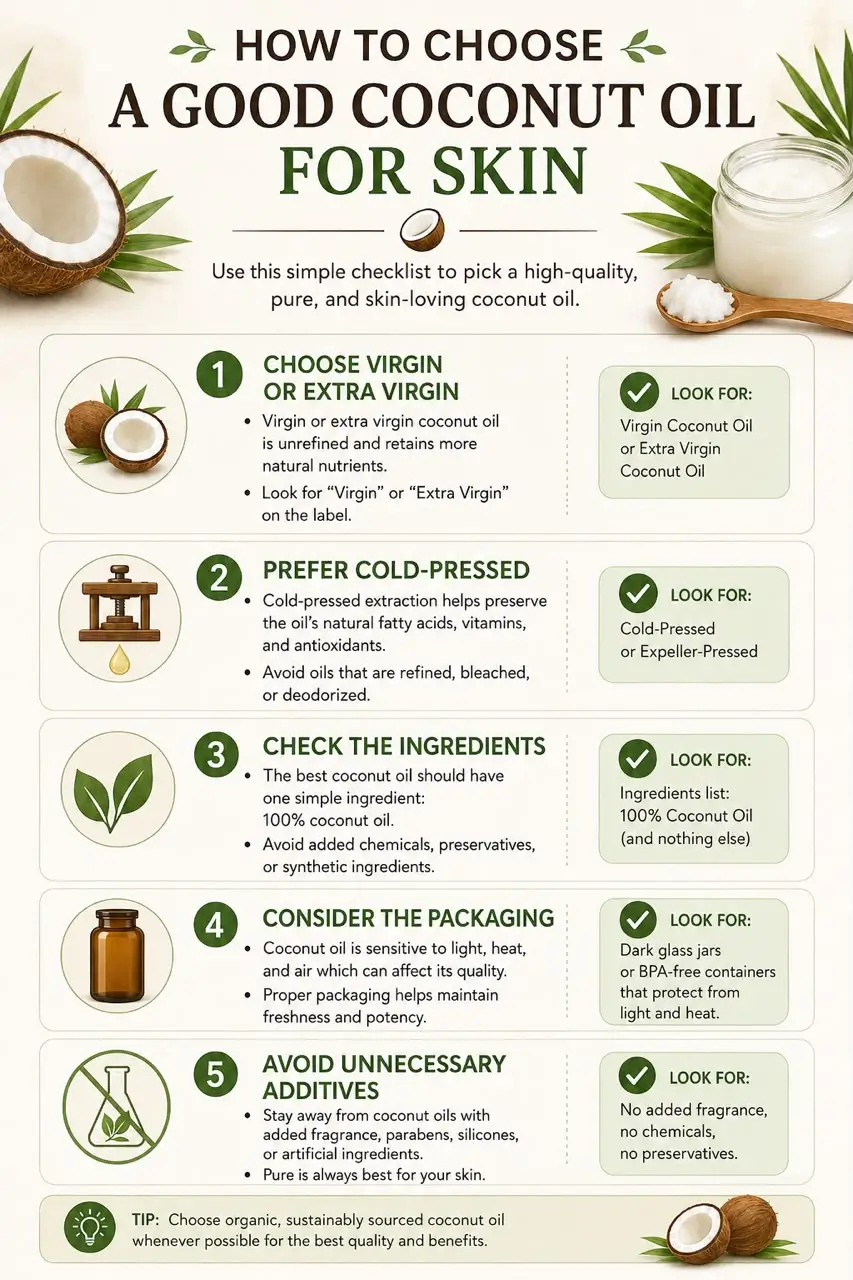
- Virgin or extra virgin: The label should say “virgin” or “extra virgin,” indicating cold-pressed extraction from fresh flesh, retaining the maximum nutrient content.
- Cold-pressed: Ensures minimal heat processing, preserving vitamins and polyphenols.
- Minimal ingredients: The ingredient list should be one item: Cocos nucifera (coconut) oil. Avoid products blended with synthetic fragrances, mineral oils, or unnecessary additives.
- Packaging: Opaque or dark glass packaging protects the oil from light degradation. Coconut oil has a reasonably long shelf life, 2 years typically, but should be stored away from sunlight and heat.
- Food-grade vs cosmetic-grade: Both are generally safe for skin use. Cosmetic-grade coconut oil may have been tested more specifically for skin application; food-grade virgin coconut oil used topically is equally safe for most people.
Recommended Stretch Mark Body Oil Routine
Coconut oil is a practical and accessible daily moisturiser, and incorporating it consistently into a body care routine is a sensible starting point. However, for stretch-prone skin that needs a slightly richer nutritional profile alongside its moisturising base, a well-formulated body oil can offer additional support.
The Love Nature Nourishing Body, Face & Hair Oil with Organic Avocado Oil is a complementary option worth considering alongside or instead of coconut oil, depending on your preferences. Avocado oil’s oleic acid penetration, phytosterol anti-inflammatory content, and vitamin profile provide a broader range of skin-nourishing benefits than coconut oil’s primarily surface-emollient action. Used as the vehicle for a daily massage routine, applied to slightly damp skin after bathing, with 1–2 minutes of firm circular massage per area, it maintains skin hydration and softness through the day. As with coconut oil, it does not remove stretch marks and should not be expected to. It is a nourishing daily skincare step within a realistic, consistent routine.
Daily Stretch Mark Skincare Routine
Morning
- Gentle shower, warm water, non-stripping body wash
- Pat dry, leave skin slightly damp
- Warm coconut oil or avocado oil in palms and apply to stretch mark areas, massage for 1–2 minutes using circular motions
- Follow with SPF on any exposed, stretch-marked skin
Evening
- A warm shower helps relax the skin and improve product absorption
- Apply an active cream with hyaluronic acid, centella asiatica, or retinol (if not pregnant) to damp skin
- Layer coconut oil on top as a final nourishing, occlusive step, and massage for 1–2 minutes
- Drink water before bed
Lifestyle support
- Eat for skin health: vitamin C, protein, zinc, omega-3 fatty acids
- Stay hydrated throughout the day
- Sleep adequately; skin repairs itself overnight
- Avoid smoking, which reduces collagen production and skin healing
See our complete prevention framework, How to Prevent Stretch Marks.
Key Takeaways
- Coconut oil is a genuine, evidence-supported skin moisturiser; it improves hydration, softens dry skin, and provides light barrier support.
- It does not remove stretch marks; no topical oil can. Stretch marks are structural changes within the dermis beyond the reach of surface application.
- Virgin cold-pressed coconut oil is preferable to refined for skincare, as it retains more of its naturally occurring antioxidants and polyphenols.
- It is generally safe for topical use during pregnancy, contains no contraindicated ingredients, and is suitable for daily application to stretch-prone areas.
- It is moderately comedogenic for some people; if congestion appears in areas of application, switch to almond or avocado oil.
- Used consistently as a daily massage vehicle, coconut oil contributes to skin health and comfort, which play a meaningful supporting role in stretch mark care.
- For significant visible improvement, particularly of white stretch marks, clinical treatments, such as laser and microneedling, are needed. Coconut oil cannot substitute for these.
- Coconut oil is best thought of as a comfortable, accessible foundation for a daily routine, not a treatment in itself.
Source References
- American Academy of Dermatology (AAD): General reference for stretch mark treatment evidence.
- Mayo Clinic: General reference for skincare safety and ingredient guidance.
- National Center for Complementary and Integrative Health (NCCIH): Referenced for evidence standards on natural ingredients.
Conclusion
Coconut oil has earned its place in natural skincare as a moisturiser. Its emollient properties, barrier-supporting lauric acid content, and antioxidant activity from polyphenols in virgin oil make it a genuinely useful daily skin care ingredient. What it has not earned is its reputation as a stretch mark treatment. The evidence for significant visible stretch mark improvement from coconut oil alone is limited. Marketing and popular advice have outpaced the science considerably on this point.
Stretch Mark Treatment Options: What Really Works → Aloe Vera for Stretch Marks → Avocado Oil for Stretch Marks → Stretch Marks During Pregnancy → Red Stretch Marks vs White Stretch Marks