

Can Stretch Marks Be Removed Permanently? The Honest Science
In most cases, no, stretch marks cannot be completely and permanently removed. They are a form of scarring within the dermis, the middle layer of skin, and no current treatment can fully restore the original tissue. However, evidence-based treatments such as laser therapy, microneedling, and retinoids can produce significant, long-lasting improvement, particularly when stretch marks are treated early. Before addressing whether stretch marks can be permanently removed, it helps to understand exactly what they are, because their structure is precisely why removal is so difficult. Stretch marks, known medically as striae distensae, are not surface marks. They are not a discolouration of the outer skin, like a tan line or a bruise. They are structural changes within the dermis: the middle layer of skin, positioned beneath the epidermis, which you can see and touch. The dermis is made largely of collagen and elastin fibres, which give skin its strength and ability to stretch without tearing. When the skin is stretched faster than these fibres can adapt, during pregnancy, puberty, rapid weight gain, or muscle growth, the fibres tear. The body responds with an inflammatory healing process, laying down new collagen through specialised cells called fibroblasts.
The problem is that this repaired collagen is structurally different from the original. It is laid down in a disorganised pattern rather than the basket-weave arrangement of healthy skin. The result is tissue that lacks normal pigmentation, has altered texture, and behaves more like scar tissue than intact skin. This is the core reason why stretch marks are so resistant to complete removal is because they are not on the surface of the skin. They are within it, and the tissue that forms there after healing is fundamentally different from what was there before.
See our pillar guide, Stretch Marks: Causes, Types, Prevention & Treatments, for the complete overview.
Why Stretch Marks Are Considered Permanent Skin Changes
When you cut your skin, the body heals the wound by producing fibrous scar tissue that is visibly different from the surrounding skin. With time and the right care, many scars fade considerably. But the original skin architecture in that area is permanently altered. The scar tissue never fully converts back to normal skin. Stretch marks work the same way, with one additional complexity: they affect a much larger area of the dermis than a typical small wound, making comprehensive remodelling even more challenging. This is why the dermatological consensus, reflected by organisations including the American Academy of Dermatology, is that while stretch marks can be significantly improved, complete permanent removal is not reliably achievable with current treatments. That said, “not fully removable” does not mean “untreatable.” The distinction between permanent removal and significant, lasting improvement is important, and for many people, the latter is a more than satisfying outcome.
Can Stretch Marks Disappear On Their Own?
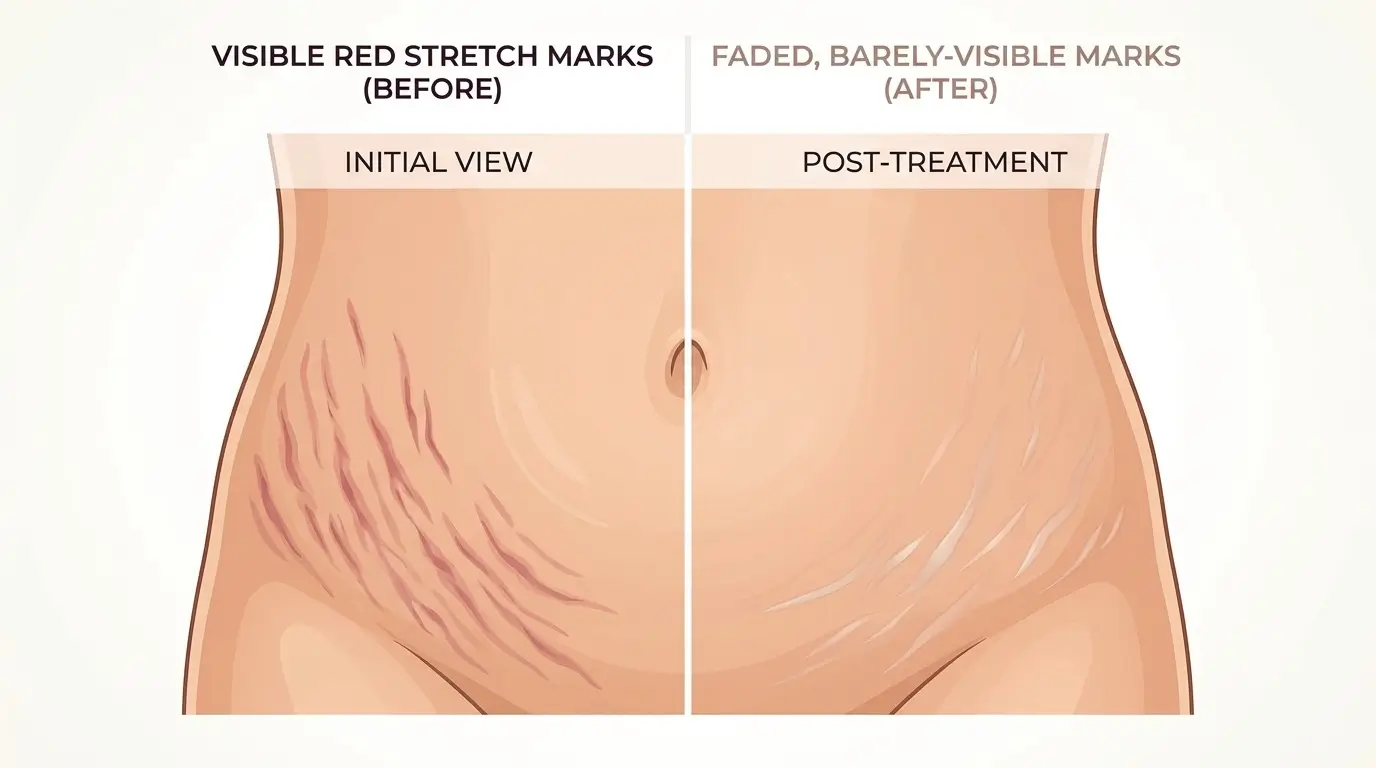
Stretch marks do tend to fade naturally over time. The process follows a predictable pattern:
- Early stage: Red, pink, or purple raised lines; the tissue is inflamed and active
- Transitional stage: The colour softens to pink, then silvery-pink as inflammation subsides
- Mature stage: Silvery-white or grey lines; the tissue has settled into a stable scar-like state
This fading process happens as the blood vessels that initially gave the marks their colour constrict, and as the skin around the marks continues to produce melanin normally. The result is that older stretch marks tend to be far less visible than new ones. However, this is the underlying structural change in the dermis that remains. The marks may become so faded that they are barely noticeable in everyday life, but they have not been erased. Under certain lighting, or when examining the skin closely, they are still there.
Why some stretch marks fade more noticeably than others:
- Skin tone: lighter marks contrast less on lighter skin
- Teenage skin has a greater regenerative capacity; young stretch marks often fade more
- Location: areas with better circulation may support more natural remodelling
- Genetics: individual variation in skin healing capacity
Natural fading can produce meaningful improvement over months and years. For some people, especially those who develop stretch marks during adolescence, the fading can be so complete that the marks are essentially invisible. For many others, they remain visible, just less so than when first formed.
Can Red Stretch Marks Be Removed?
Red and purple stretch marks, known clinically as striae rubrae, are the newest. The tissue is still in an active, inflammatory phase. Blood vessels are present. Fibroblasts are still working. The area is metabolically responsive. This means treatments aimed at stimulating collagen remodelling, retinoids, laser, and microneedling have the most to work with at this stage. The treatment window here is genuinely significant: results from early intervention can be dramatic compared to treating the same marks months or years later.
Can old white stretch marks be treated? Yes, but with more modest expectations. White stretch marks (striae albae) are mature. The tissue has settled. Blood vessels have contracted. The area is less metabolically active, more like mature scar tissue than an active wound. Clinical treatments can still produce improvement in white stretch marks. Fractional laser and microneedling, in particular, can stimulate some degree of collagen remodelling even in mature tissue. But results are typically more gradual, more modest, and require more treatment sessions than for red marks.
See our detailed comparison on Red Stretch Marks vs White Stretch Marks, for a full breakdown of treatment approaches by stage.
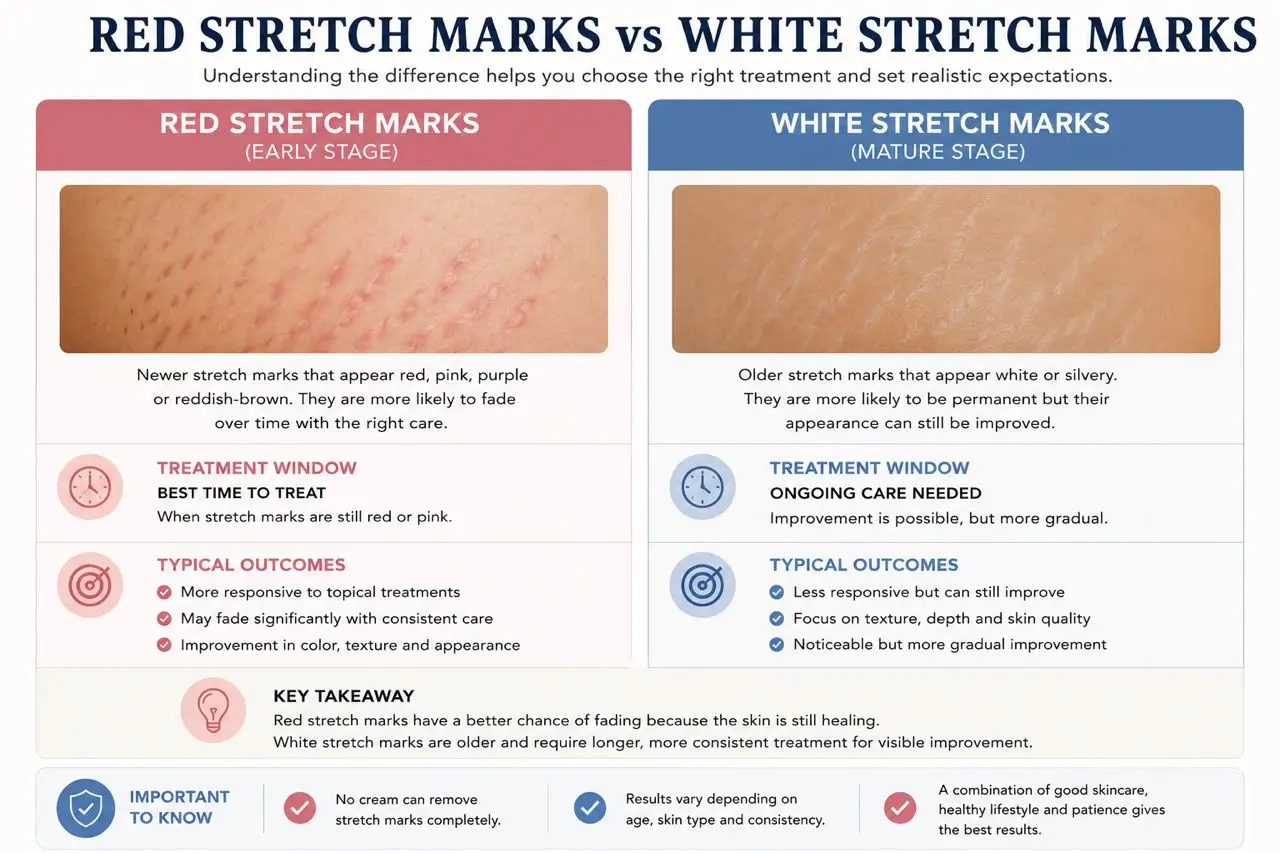
| Stretch Mark Type | Easier to Treat? | Best Treatment Options |
|---|---|---|
| Red / purple (striae rubrae) | Yes, tissue is active and responsive | Tretinoin, pulsed dye laser, microneedling, retinol creams |
| Pink/transitional | Moderately | Microneedling, fractional laser, retinoids |
| White/silver (striae albae) | Harder, tissue is stable, scar-like | Fractional CO₂ laser, microneedling, RF microneedling |
| Dark in deeper skin tones | Moderate pigmentation adds complexity | Excimer laser, fractional laser with care for skin tone |
Medical Treatments with the Strongest Evidence
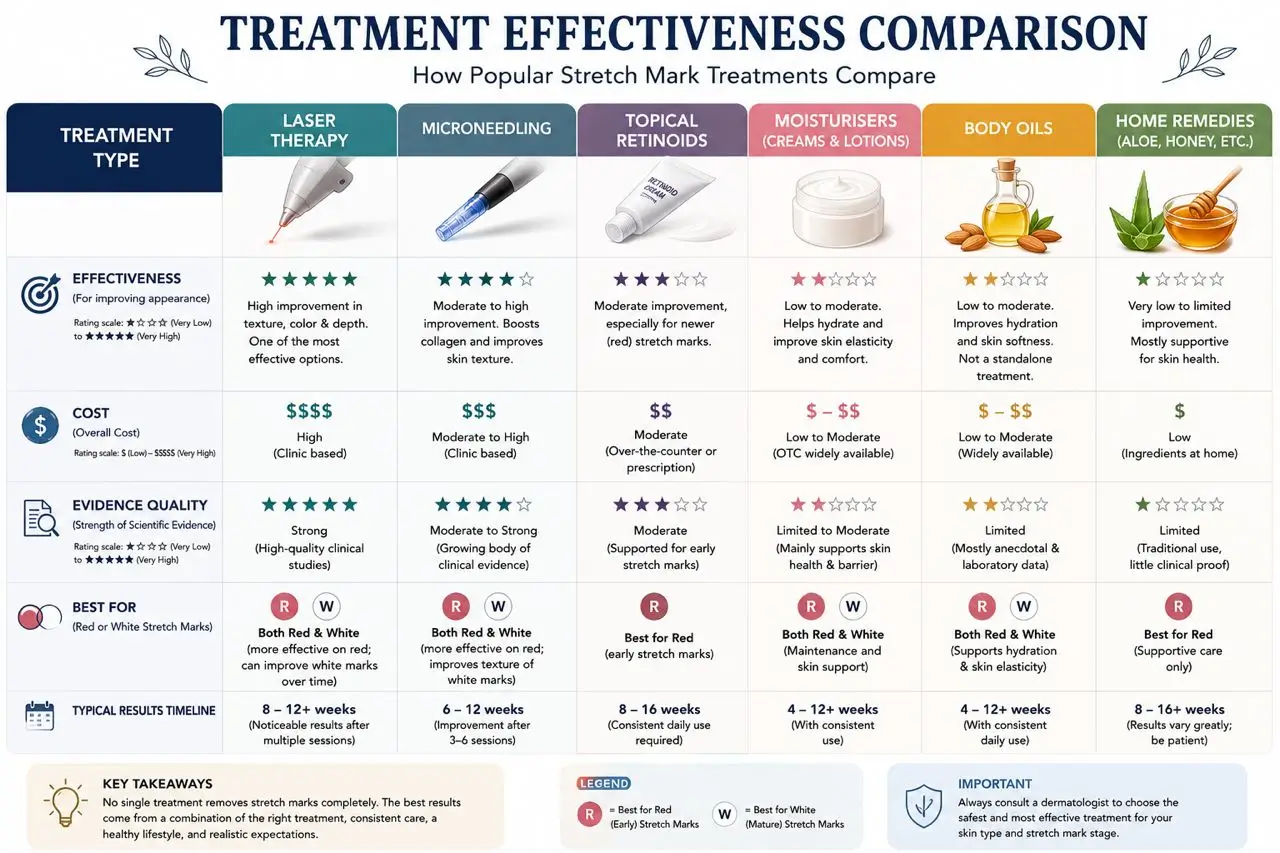
- Fractional Laser Therapy
Fractional laser is currently one of the most effective clinical options for stretch marks, and one of the few treatments with meaningful evidence for both red and white marks. Fractional lasers (both ablative CO₂ and non-ablative types) deliver energy to the skin in a grid of microscopic columns, creating zones of controlled micro-injury in the dermis. This triggers a significant healing and remodelling response, stimulating fibroblasts to produce new collagen in the treated area. The surrounding untreated skin helps accelerate recovery.
Multiple peer-reviewed studies have demonstrated that fractional laser can improve the texture, depth, and colour of stretch marks, with results that persist over time. It does not reverse the stretch marks permanently in the sense of restoring original skin architecture, but the improvement is often substantial and long-lasting.
Practical considerations:
- Multiple sessions are usually needed, typically 3–5
- Results build progressively over 3–6 months as new collagen matures
- Temporary redness and sensitivity follow each session
- Some skin types, particularly darker tones, carry a higher risk of pigmentation changes; always consult a practitioner experienced with your skin
- Cost is significant; prices vary widely by location and clinic
The collagen remodelling stimulated by laser treatment can produce lasting improvement — but “permanent” is not quite the right word. The treated skin does not return to its original pre-stretch-mark state, and natural ageing continues to affect skin quality over time. The results achieved through treatment can be maintained with good skincare habits, but further sessions may be beneficial over time. The Cleveland Clinic identifies fractional laser as one of the most effective professional options for stretch marks currently available.
- Microneedling
Microneedling is one of the most versatile clinical treatments for stretch marks, with a growing body of evidence and a few important advantages over laser therapy. A device with fine needles creates thousands of controlled micro-punctures in the skin, triggering the skin’s natural healing response. This stimulates fibroblast activity and new collagen and elastin production. Over a series of sessions, the treated skin gradually remodels, improving texture, reducing depth, and softening colour. Microneedling tends to work across a wider range of skin tones than some laser treatments, making it a particularly useful option for people with darker skin who are concerned about laser-induced pigmentation changes. Notably, microneedling has shown meaningful improvement even in mature white stretch marks, making it one of the better options for older marks where many other treatments have a limited effect.
Radiofrequency microneedling (RF microneedling): Combining microneedling with radiofrequency energy delivers heat to the deeper dermis alongside the mechanical stimulation. Research suggests this combination may produce greater collagen remodelling than either treatment alone.
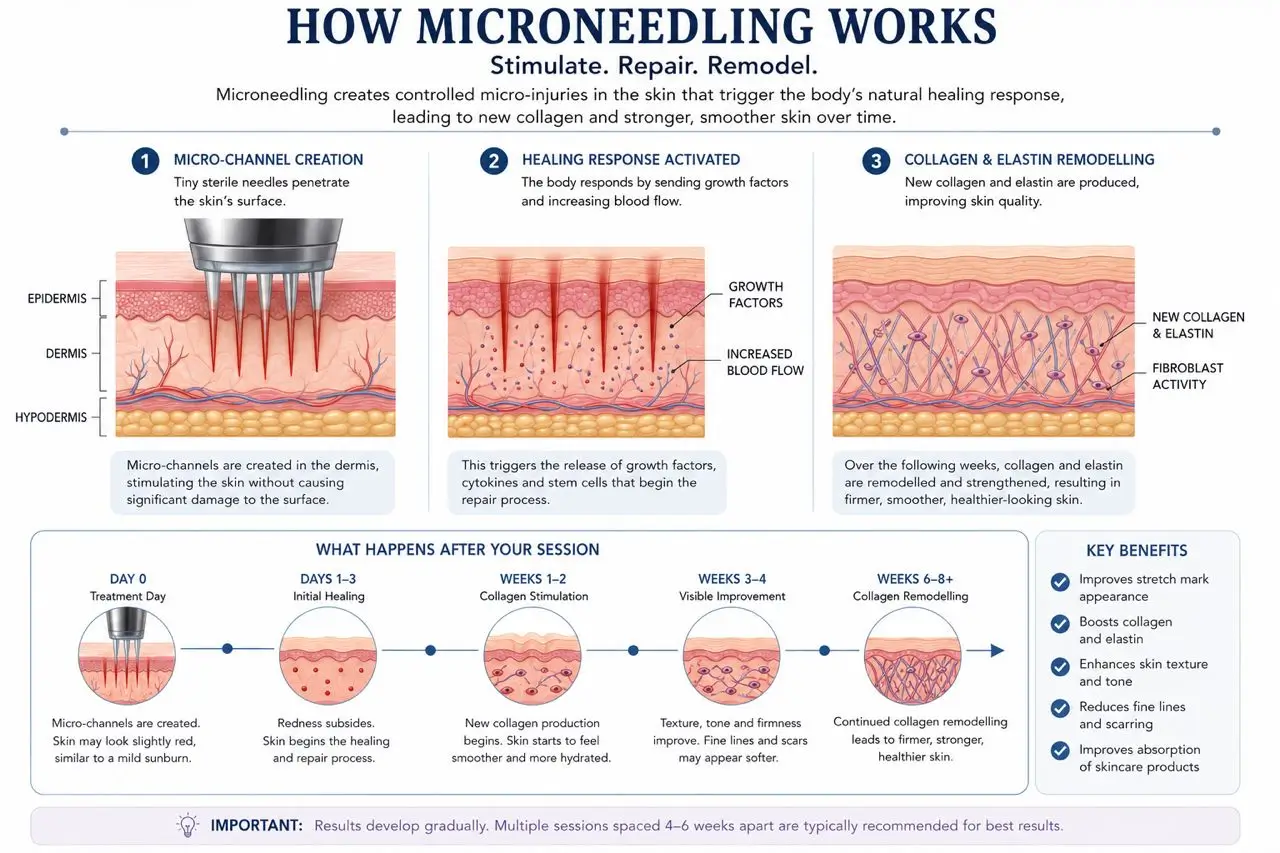
- Radiofrequency (RF) Therapy
Standalone radiofrequency treatments use energy waves to heat the deeper layers of the dermis without damaging the surface. This thermal stimulus triggers collagen and elastin production and can contribute to skin firming and texture improvement. Evidence for RF as a standalone stretch mark treatment is still developing, but early studies are promising. It is generally well-tolerated across skin types and can complement laser or microneedling in a combined treatment plan.
- Retinoid Creams (Tretinoin and Retinol)
For those who prefer topical treatment before pursuing clinical procedures, or who want to complement clinical treatment at home, retinoids are the most evidence-backed option.
Tretinoin (prescription-only) has the strongest evidence among topical treatments. Studies have demonstrated that it can stimulate collagen production in the dermis, improve the texture and colour of red stretch marks, and reduce their length and width when used consistently over several months.
Retinol works through the same pathway but more slowly, as it must be converted to active retinoic acid in the skin. It is a meaningful ingredient in a stretch mark cream for non-pregnant adults. Retinoids, in all forms, are not safe during pregnancy or breastfeeding. Anyone pregnant or nursing must avoid all retinoid products and should consult their doctor before use. The Mayo Clinic includes retinoids among the topical treatments with the best clinical evidence for improving the appearance of stretch marks.
Treatment Summary Table
| Treatment | Can Remove Completely? | Evidence | Typical Improvement |
|---|---|---|---|
| Fractional CO₂ laser | No | Strong | Significant, colour, texture, depth |
| Pulsed dye laser | No | Strong red marks | Colour and texture improvement |
| Microneedling | No | Moderate–Strong | Texture, colour, depth, and both mark types |
| RF microneedling | No | Moderate | As above, potentially enhanced |
| Tretinoin cream | No | Moderate–Strong | Colour and texture are best on red marks |
| Retinol cream | No | Moderate | Gradual texture and colour improvement |
| Moisturising cream | No | Limited for removal | Texture, softness, hydration |
| Body oils | No | Limited | Hydration, skin softness, comfort |
| Home remedies, aloe, shea, cocoa | No | Very limited | Moisturisation and comfort only |
| Tanning | No | None | None, may worsen appearance |
Home Remedies: What They Can and Cannot Do
Home remedies are extremely popular for stretch marks, partly because they are accessible, and partly because they feel lower-stakes than clinical procedures. No home remedy can permanently remove stretch marks. Stretch marks are dermis-level structural changes, and nothing applied to the surface of the skin can reverse them. What home remedies can do is support skin health, comfort, and hydration, which have indirect and genuine value, particularly for preventing severity and maintaining skin quality over time.
- Aloe Vera
Aloe vera has established wound-healing, anti-inflammatory, and moisturising properties. It contains polysaccharides and glycoproteins that support skin repair. Evidence specifically for reducing stretch marks is limited, but it is a safe and soothing option that may help with the itch and tightness of new marks.
- Shea Butter
Shea butter is a rich emollient containing fatty acids and triterpene alcohols. It is an excellent moisturiser and skin barrier supporter. Evidence for specific stretch mark reduction is limited, but its role in keeping skin hydrated and supple is well-established. A genuinely good base ingredient in a daily routine.
- Coconut Oil
Coconut oil is a popular emollient with lauric acid and good moisturising properties. Evidence for stretch mark removal is essentially absent. It can be a useful moisturiser for some people, though it is comedogenic and may not suit all skin types. Does coconut oil remove stretch marks? No. It moisturises skin, which is valuable in itself, but it has no mechanism for reaching or remodelling the dermis.
- Avocado oil
Avocado oil is a nutrient-rich plant oil known for its high content of healthy fatty acids, vitamin E, and antioxidants. It is widely used in skincare to help moisturise, soften, and nourish dry skin. Although it has not been proven to remove stretch marks, regular use as part of a daily skincare routine may help maintain skin hydration and support overall skin health, making it a useful addition to a balanced stretch mark care routine.
See our full evidence review, Natural Remedies for Stretch Marks.
- Almond Oil
Sweet almond oil has some early evidence supporting its use during pregnancy; a small randomised controlled trial found lower stretch mark development in women who were massaged with almond oil compared to those who received no treatment or massage alone. Whether the benefit was from the oil, the massage, or a combination is unclear. It is a well-tolerated, vitamin E-rich option worth incorporating into a pregnancy moisturising routine.
- Cocoa Butter
Perhaps the most popularly used ingredient in stretch mark care, cocoa butter has a limited evidence base specifically for stretch mark improvement. A well-designed clinical trial found no significant difference between cocoa butter and placebo in reducing pregnancy stretch marks. It remains a good moisturiser, but its reputation as a stretch mark treatment outstrips the evidence.
- Vitamin E
Vitamin E is a powerful antioxidant that supports skin barrier function and has long been associated with scar care. Evidence for vitamin E independently reducing stretch marks is weak. Its value is as a supportive ingredient within a broader formulation rather than as a standalone treatment.
Stretch Mark Creams: Realistic Expectations
No cream can permanently remove stretch marks. This includes every product currently on the market, regardless of price, marketing language, or celebrity endorsement.
What good stretch mark creams can realistically offer:
- Sustained skin hydration, which supports elasticity and comfort
- Delivery of active ingredients, retinol, Centella asiatica, peptides, hyaluronic acid, to the upper dermis
- Texture and colour improvement over time, particularly for red marks with consistent use
- Support for skin health during periods of rapid change, potentially limiting how severe new marks become
The Body Edition Anti-Stretch Mark Body Concentrate is formulated to help moisturise the skin and support its elasticity as part of a daily routine. Used consistently, particularly during pregnancy, post-partum recovery, or periods of weight or body change, it contributes to a broader skin-health approach. It will not permanently remove stretch marks, but as part of a consistent routine, it supports the skin in the ways topical products genuinely can.
For complementary daily hydration, the Love Nature Nourishing Body Face & Hair Oil With Organic Avocado Oil is a nourishing option, particularly useful when massaged into the skin in the evening, where it helps maintain softness and comfort. Its vitamin E content supports the skin barrier, and the massage routine itself provides benefits.
See our full guide on the Best Stretch Mark Cream for a breakdown of the ingredients that matter. See our product page: Body Edition Anti-Stretch Mark Body Concentrate
Lifestyle Habits That Support Healthier Skin
Clinical treatments and good skincare products work best when supported by broader healthy habits. These do not reverse existing stretch marks, but they create a better environment for whatever treatment approach you pursue.
Nutrition for collagen support:
- Vitamin C essential cofactor for collagen synthesis; found in citrus, peppers, strawberries, and broccoli
- Zinc supports fibroblast activity and wound repair; found in nuts, seeds, legumes, and meat
- Protein the building block of collagen and elastin; adequate intake supports skin structure
- Omega-3 fatty acids support skin membrane integrity and reduce inflammation
Adequate water intake supports skin elasticity from the inside. Dehydrated skin is less resilient and less able to support the repair processes that help marks fade. Regular cardiovascular exercise promotes circulation, which supports tissue health and skin repair. It does not directly remove stretch marks, but it contributes to the overall skin environment.
Treatments That Make Unrealistic Promises
The stretch mark treatment market has more than its share of misleading claims. Here are the patterns to recognise and avoid.
- “Permanently removes stretch marks.” No current treatment does this completely. Any product claiming permanent removal is overstating what is scientifically possible.
- “Results in 7 days.” Collagen remodelling, the mechanism by which stretch marks improve, takes months. Any claim of dramatic results within days is not credible.
- “Clinically proven to erase stretch marks.” Check what study is being cited, by whom, and whether it has been independently peer-reviewed. Many manufacturer-funded studies are designed to show improvement in skin moisturisation or texture, not actual stretch mark removal.
- Body wraps and contouring treatments. These may temporarily tighten the skin’s surface through dehydration or lymphatic drainage. Any change to the stretch mark appearance is superficial and temporary.
- Dietary supplements marketed as stretch mark cures. No oral supplement has been clinically demonstrated to remove stretch marks. Nutrition supports skin health generally, which has indirect value, but this is categorically different from a targeted stretch mark treatment.
- Tanning: As noted above, tanning makes stretch marks more visible, not less. It also increases skin cancer risk with no compensating benefit to stretch marks.
Do Stretch Marks Come Back After Treatment?
The collagen remodelling produced by clinical treatments like laser or microneedling is genuine; the new collagen does not disappear. In that sense, the improvement is real and lasting.
However, two caveats apply:
- The underlying predisposition remains. If you are genetically susceptible to stretch marks, or if you go through another period of rapid body change, such as another pregnancy, significant weight gain, or continued muscle building, new stretch marks can develop, including in or near previously treated areas.
- Ageing affects the treated tissue. Skin naturally loses collagen and elasticity with age. Areas treated for stretch marks are not immune to this process. Maintaining skin health through good nutrition, hydration, sun protection, and skincare will help preserve treatment results over time.
So, the results of good treatment are real and lasting, but they are not a guarantee against future stretch marks, and they benefit from ongoing skin care. The NHS offers similar reassurance: stretch marks are harmless, but for those seeking improvement, professional treatments can produce meaningful and lasting change when performed by a qualified practitioner.
When Should You See a Dermatologist?
Most stretch marks can be managed at home with consistent topical care, particularly if your goal is modest improvement or maintenance. But there are circumstances where a dermatologist consultation is genuinely valuable.
Consider seeing a dermatologist if:
- You want to explore clinical treatments, such as laser, microneedling, and prescription retinoids
- Your stretch marks are causing significant emotional distress or affecting your confidence
- You have older white stretch marks that have not responded to topical care
- Stretch marks appeared suddenly without an obvious cause, not pregnancy, puberty, or weight change
- You want a professional assessment of which treatments are most appropriate for your skin type, skin tone, and stretch mark stage
A dermatologist can assess your specific situation, the age, type, and location of your marks, your skin tone, and your goals, and develop a tailored plan that gives you the best realistic outcome.
See our guide on Stretch Marks Treatment for a comprehensive breakdown of all clinical options.
Conclusion
Stretch marks are one of the most treatable forms of skin scarring. With the right approach, started at the right time, results can be genuinely remarkable, particularly for red marks treated early with clinical or topical retinoid therapy. White marks are harder, but far from hopeless, and fractional laser and microneedling have made meaningful improvement accessible even for mature marks. Realigning expectations from “permanent removal” to “significant, lasting improvement” is not settling. It is the difference between being guided by marketing and being guided by science. And it is what allows you to approach treatment with clarity, choose options that genuinely work, and be satisfied, rather than disappointed, with the real achievable results.
Explore the guides below for more on specific treatments, products, and approaches.
How to Remove Stretch Marks: What Really Works → Best Stretch Mark Cream: Ingredients That Actually Matter → Stretch Marks Treatment: All Options Explained → Pregnancy Stretch Marks: Prevention and Care → Best Stretch Mark Oil