

Does Avocado Oil for Stretch Marks Work? (Benefits & How to Use)
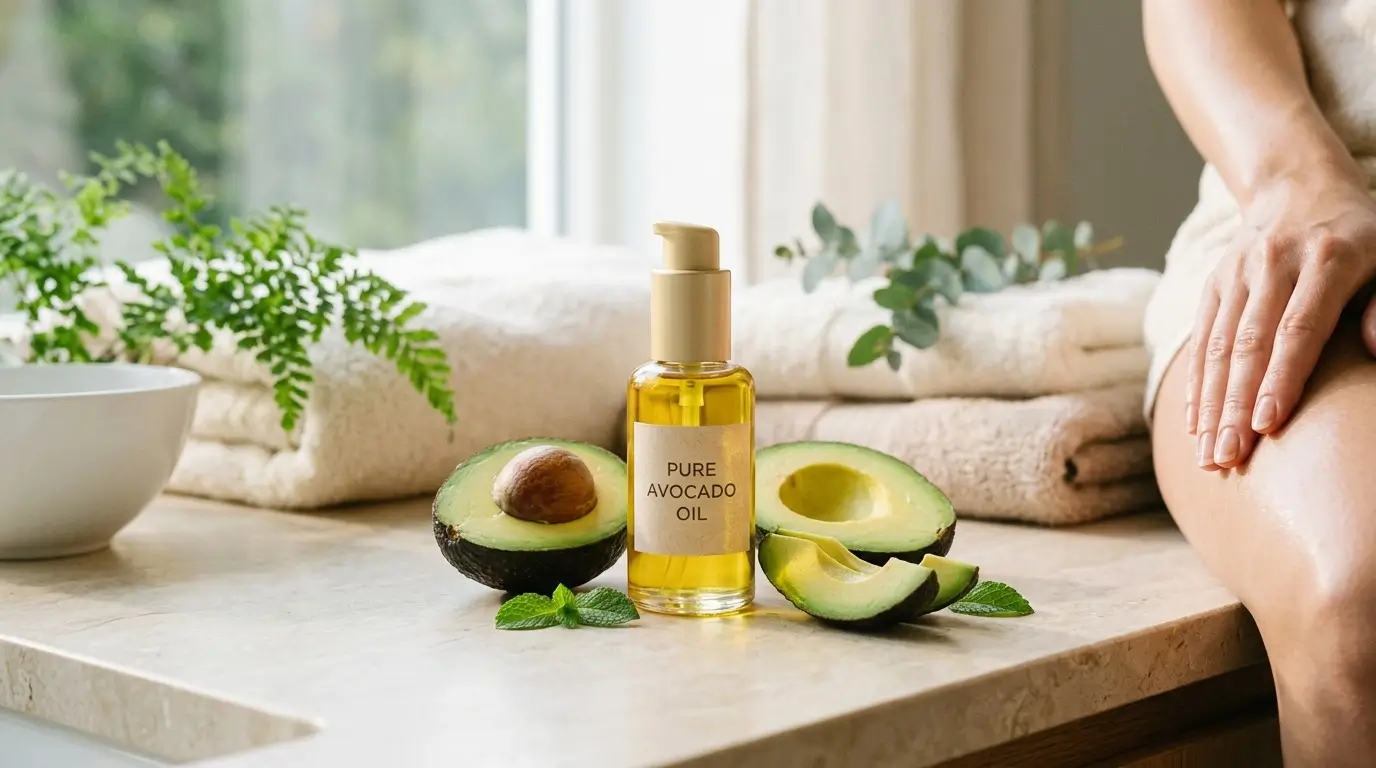
Avocado oil cannot remove stretch marks, but it supports skin health during and after periods of rapid body change. Rich in oleic acid, vitamins A, D, and E, and plant sterols, it deeply moisturises the skin, supports the barrier, and works well as a massage oil. Consistent use may help keep skin soft and supple, which is valuable both for prevention and as part of ongoing stretch mark care.
What Is Avocado Oil?
Avocado oil is extracted from the flesh, not the seed, of the Persea americana fruit. This gives it a somewhat different fatty acid profile and nutrient composition from oils like almond or coconut.
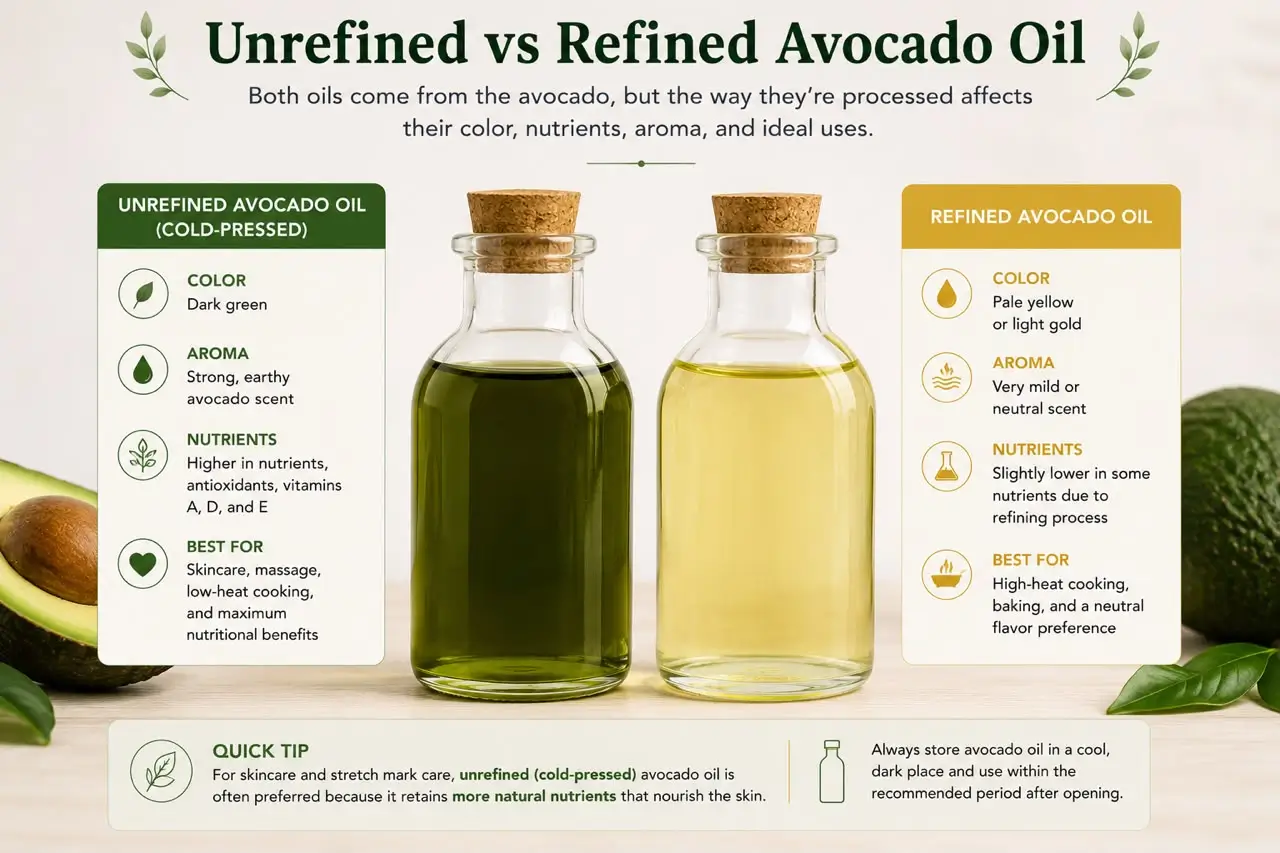
Cold-pressed (unrefined) avocado oil is extracted mechanically without heat, retaining its natural dark green colour, characteristic mild avocado scent, and the full spectrum of its phytonutrients. This is the most nutrient-rich form.
Refined avocado oil has been processed to remove colour, scent, and some of the natural compounds. It becomes a pale yellow or almost colourless oil with a lighter texture and a more neutral smell. It is more shelf-stable but loses some bioactive components.
For skincare applications, cold-pressed avocado oil is generally preferred; it retains more of the nutrients that support skin health.
Avocado oil is one of the richest plant sources of oleic acid, a monounsaturated omega-9 fatty acid that comprises approximately 60–70% of its fatty acid content. Oleic acid penetrates the skin well and supports hydration at the level of the upper dermis, not just the surface.
Other notable components include:
Linoleic acid (omega-6) is an essential fatty acid that is a component of the skin’s own lipid barrier. Topical application helps replenish the barrier, particularly in dry or damaged skin.
Palmitoleic acid, a fatty acid that occurs naturally in the skin, has some research support for wound healing.
Vitamin E (tocopherols), a fat-soluble antioxidant that protects skin cells from oxidative damage and supports the healing environment. Avocado oil is a rich natural source.
Vitamin A (beta-carotene), a precursor to vitamin A that contributes to skin cell turnover and repair. The bright green colour of unrefined avocado oil is partly due to its carotenoid content.
Vitamin D, a fat-soluble vitamin that plays a role in skin immune function and repair.
Phytosterols, particularly beta-sitosterol, campesterol, and stigmasterol. These plant sterols have anti-inflammatory properties, support collagen synthesis, and may help with scar remodelling.
Lecithin, a phospholipid that helps emulsify oils and water in the skin, supports moisture retention.
Chlorophylls, present in unrefined oil, contribute antioxidant properties.
How Stretch Marks Form
Stretch marks develop when the skin stretches faster than its structural proteins can accommodate. In the dermis, the middle layer of skin, a network of collagen and elastin fibres gives skin its tensile strength and elasticity. These fibres are produced by cells called fibroblasts, which work continuously to maintain and repair the skin’s architecture.
When the skin stretches rapidly, during pregnancy, puberty, rapid weight gain, or intensive muscle building, the demand for new structural fibres outpaces what fibroblasts can supply. The existing fibres tear. The body heals this damage with repair collagen, but this collagen lacks the organised structure of the original, resulting in the linear, scar-like marks that appear as red or purple initially, then fade toward silver and white over time. Because stretch marks exist within the dermis, beneath the epidermis that topical products interact with, no oil, cream, or gel can fully reverse them. What topical ingredients can do is support the skin’s health, hydration, and resilience, which is genuinely valuable in prevention and in ongoing care.
See our guide on Red Stretch Marks vs White Stretch Marks for a full breakdown of how stretch mark biology changes over time and what each stage means for treatment.
Can Avocado Oil Help Stretch Marks?
Dedicated clinical trials specifically evaluating avocado oil for stretch mark treatment are limited, as they are for most natural oils in this context. The evidence is stronger for avocado oil’s general skin health benefits than for specific stretch mark reduction. A study published in Dermatology Research and Practice found that a formulation containing avocado oil improved wound healing and skin repair in a clinical context, demonstrating that its fatty acid and phytosterol content has genuine skin-repair relevance. Research on oleic acid, avocado oil’s primary fatty acid, shows it penetrates the skin to the upper dermis level, providing hydration at a slightly deeper level than surface-only emollients.
The phytosterol content of avocado oil, particularly beta-sitosterol, has some evidence for anti-inflammatory effects and may support collagen synthesis pathways, a mechanism relevant to stretch mark biology, though not proven to produce significant visible stretch mark improvement in isolation.
Avocado oil does not have clinical evidence showing it removes or significantly reduces stretch marks as a standalone treatment. What it does have evidence for is:
- Deep, sustained skin moisturisation
- Skin barrier support through its fatty acid and phytosterol content
- Anti-inflammatory properties that may support skin comfort
- Potential support for skin elasticity through consistent hydration
- Good absorption into the upper layers of the skin (oleic acid)
These are genuine and meaningful contributions to stretch mark care, particularly as part of a daily routine where hydration, barrier support, and massage are the goals.
Benefits of Avocado Oil for Skin
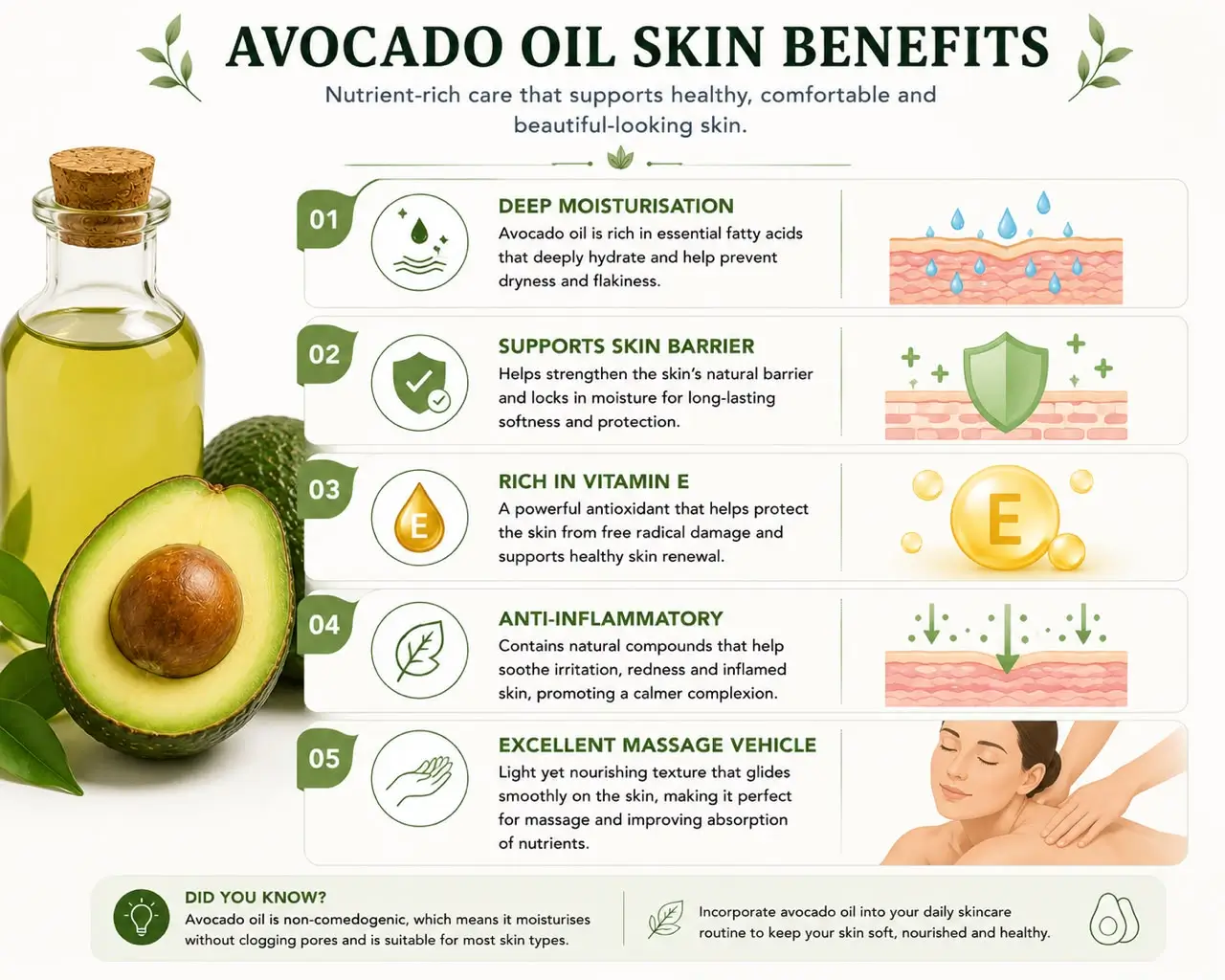
- Deep Moisturisation
Avocado oil’s high oleic acid content gives it excellent penetrating ability compared to many plant oils. Rather than simply sitting on the skin’s surface, oleic acid is absorbed into the lipid layers of the skin, providing moisturisation that persists beyond simple surface emolliency. The result is skin that feels genuinely nourished rather than just temporarily coated.
- Skin Barrier Support
Linoleic acid, phytosterols, and lecithin all contribute to the integrity of the skin’s lipid barrier, the outer layer that prevents water loss and keeps environmental irritants out. A well-maintained skin barrier means skin retains moisture more effectively, feels less tight and dry, and is generally more resilient.
- Vitamin E Antioxidant Protection
Vitamin E protects skin cells from oxidative damage caused by UV exposure and environmental stressors. Over time, oxidative stress degrades collagen quality and accelerates skin ageing, so antioxidant protection is a legitimate long-term contributor to skin health. Avocado oil’s natural vitamin E content makes it a useful daily skin protectant.
- Anti-Inflammatory Properties
The phytosterols in avocado oil, beta-sitosterol in particular, have demonstrated anti-inflammatory activity. For new, red stretch marks where inflammation is active, an oil with anti-inflammatory properties may help reduce associated redness and discomfort.
Avocado Oil for Red Stretch Marks
Red and purple stretch marks are the newest and most biologically active stage. The tissue is still inflammatory, blood vessels are present, and the skin’s repair processes are underway. This is the stage where consistent topical care, including a daily oil massage routine, is most likely to contribute to better long-term outcomes.
How avocado oil supports red stretch marks:
- Sustained hydration: Helps maintain skin suppleness and barrier integrity during the active healing phase
- Anti-inflammatory fatty acids and sterols: May reduce the redness and irritation associated with new marks
- Massage delivery: Provides an effective medium for the daily massage that independently supports tissue health and lymphatic circulation
- Vitamin E delivery: Antioxidant protection during the inflammatory phase
Consistent daily use of avocado oil on red stretch marks, particularly when combined with massage and a well-chosen cream with active ingredients, can support a better skin environment and may contribute to more comfortable, better-maintained skin through the active phase. It is one useful component, not a standalone treatment.
See our guide on Red Stretch Marks vs White Stretch Marks to understand why the stage of stretch marks matters for treatment choices.
Avocado Oil for White Stretch Marks
White stretch marks have settled into stable, scar-like tissue. The inflammatory phase is long over. Blood vessels have contracted. Fibroblast activity has significantly reduced. The structural repair collagen is in place, disorganised but stable.
At this stage, avocado oil’s contribution shifts from active support to maintenance:
- Keeps the skin around and over marks hydrated and soft
- Reduces the visual contrast slightly by maintaining the moisture plumpness of the surrounding skin
- Provides a pleasant daily skincare routine that maintains overall skin condition
Avocado oil cannot stimulate the kind of collagen remodelling that clinical procedures, fractional laser, radiofrequency microneedling, or prescription retinoids can. For significant visible improvement of established white marks, these clinical options produce results that no topical oil can replicate.
See our guide on Stretch Mark Treatment Options for clinical approaches to white stretch marks.
How to Use Avocado Oil for Stretch Marks
The best time to apply avocado oil is immediately after a shower or bath, while the skin is still slightly damp. Damp skin absorbs oil more effectively than completely dry skin, and the oil helps seal in residual moisture. Pat the skin gently dry first, leaving it slightly damp rather than fully dry.
Warm a small amount of avocado oil between your palms before applying; it absorbs better at skin temperature. Apply to the stretch mark area and spend 1–2 minutes massaging it in using firm, circular motions. Apply enough pressure to feel the tissue respond without causing discomfort. This massage step is not optional; it stimulates blood flow, supports lymphatic drainage, and may improve tissue pliability over time.
Apply avocado oil after your morning shower as the nourishing oil step. Follow with SPF on any stretch-marked skin that will be exposed to sunlight. UV exposure tans surrounding skin without tanning scar tissue, increasing the visual contrast.
Apply avocado oil in the evening after bathing, followed by a stretch mark cream with active ingredients: hyaluronic acid, Centella asiatica, and peptides. The oil can be applied before the cream for sealing hydration, or after it as a final nourishing step. Experiment with which layering works best for your skin.

Avocado Oil During Pregnancy
Avocado oil is generally considered safe for use during pregnancy; it is a natural plant oil with no known contraindications for external application. Pregnancy brings significant constraints on which ingredients can be used for stretch mark care, most notably the complete prohibition on retinoids in all forms. Avocado oil offers a rich, genuinely nourishing option that does not raise safety concerns. Its vitamin E content, oleic acid, and anti-inflammatory sterols all support skin health during a period when the abdomen and other areas are under significant stretching stress.
Apply avocado oil to the abdomen, breasts, hips, thighs, and buttocks daily from the first trimester. The earlier consistent moisturising begins, the better; starting before the skin is under maximum strain is more effective than starting in the third trimester when marks are already forming. During pregnancy, pair avocado oil with a cream or gel containing hyaluronic acid and Centella asiatica, both of which are safe during pregnancy and add active-ingredient benefits that avocado oil alone does not provide.
See our complete pregnancy skincare guide on Stretch Marks During Pregnancy: Prevention and Safe Treatment Options.
Avocado Oil vs Other Stretch Mark Oils
How does avocado oil compare to the other natural oils commonly used for stretch marks?
| Oil | Evidence for Stretch Marks | Key Skin Benefit | Pregnancy Safe | Texture |
|---|---|---|---|---|
| Avocado oil | Limited (growing) | Deep hydration, anti-inflammatory, vitamin E | Yes | Medium-rich, absorbs well |
| Almond oil | Limited–Moderate | Vitamin E, skin softness, massage vehicle | Yes | Lightweight, fast-absorbing |
| Rosehip oil | Limited | Natural vitamin A precursors, fatty acids | Generally yes | Lightweight, dries quickly |
| Coconut oil | Limited | General emollient, moisture sealing | Yes | Rich, slow-absorbing |
| Shea butter | Limited | Deep moisturisation, barrier support | Yes | Very rich, thick |
| Cocoa butter | Very limited | General moisturising | Yes | Rich, pleasant scent |
| Aloe vera gel | Limited | Soothing, hydration, anti-inflammatory | Yes | Light, cooling |
See our full comparison on Best Oils for Stretch Marks for an evidence-based ranking of natural oils. → See our guide on Aloe Vera for Stretch Marks for a detailed evidence review of another popular natural option.
Choosing a High-Quality Avocado Oil
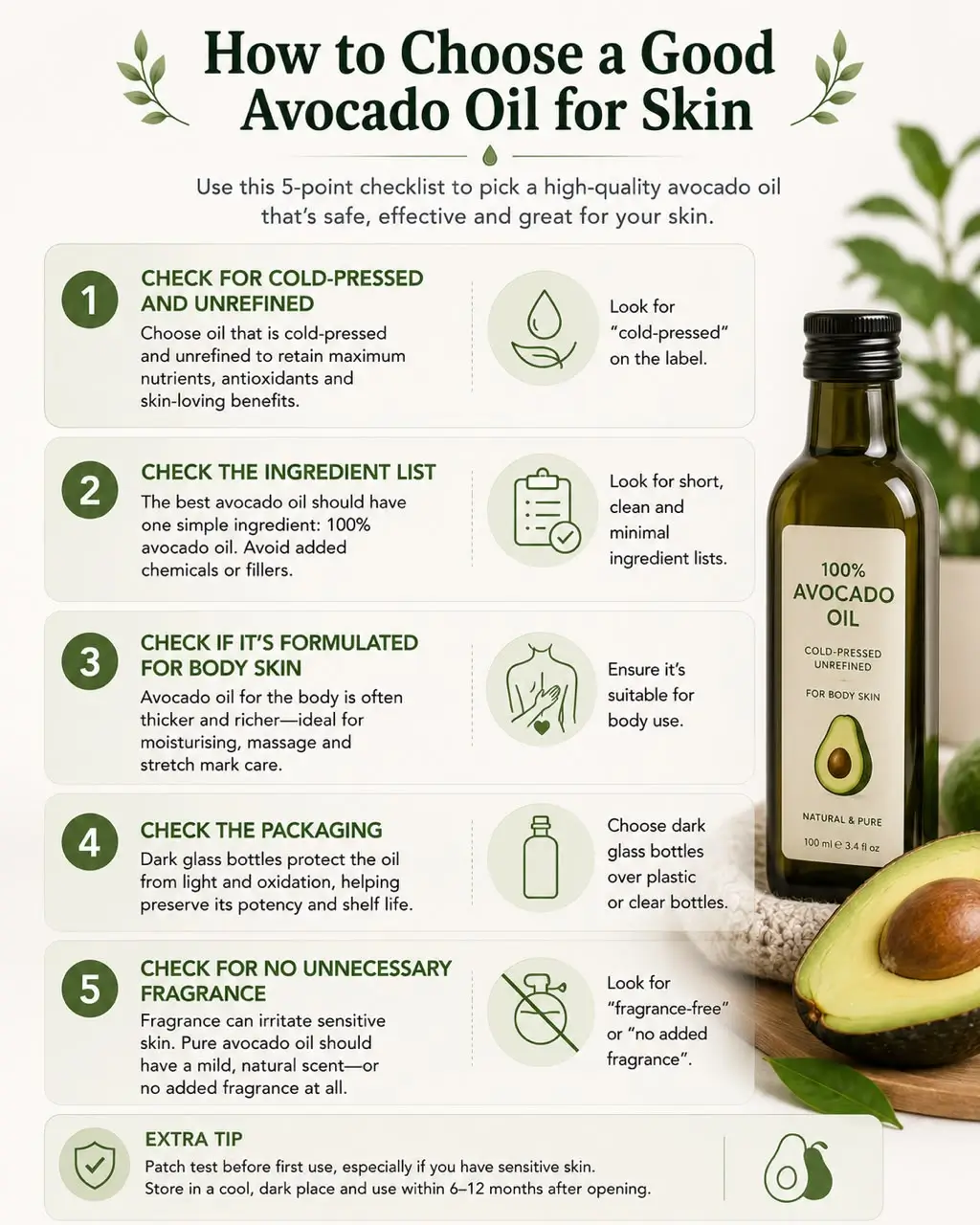
Cold-pressed / unrefined: Look for “cold-pressed” or “unrefined” on the label. These retain the full spectrum of nutrients, vitamins, phytosterols, and antioxidants that make avocado oil valuable for skin. Refined oils are more shelf-stable but lose key bioactive components.
Pure oil, no unnecessary additives: The ingredient list should ideally be just Persea gratissima (avocado) oil. Avoid products with unnecessary fragrance, mineral oil diluents, or artificial preservatives if using for daily body care.
Appropriate for body use: Some avocado oils are primarily marketed as food-grade or for hair care. These may be fine for skin, but choosing one specifically formulated for body skincare ensures the packaging, texture, and any accompanying ingredients are suited to that purpose.
Packaging: Glass or opaque bottles protect the oil from light degradation better than clear plastic. Avocado oil has a reasonable shelf life, typically 12–18 months, but should be stored away from direct sunlight and heat.
Scent: Pure cold-pressed avocado oil has a mild, characteristic scent; some people find it pleasant; others prefer something more neutral. Refined avocado oil is nearly scentless if that is a preference.
Recommended Avocado Oil for Daily Stretch Mark Care
For anyone looking for a well-formulated daily body oil to incorporate into a stretch mark skincare routine, Love Nature Nourishing Body, Face & Hair Oil with Organic Avocado Oil provides an accessible, versatile option. Formulated with organic avocado oil as its key ingredient, it is designed for daily body use and offers:
- Deep skin moisturisation to help maintain skin softness and suppleness
- Support for the skin’s natural moisture barrier
- A texture that absorbs well, not too heavy for daytime use, nourishing enough for evening application
- Suitability for use alongside a dedicated stretch mark cream as part of a complete daily routine
Key Takeaways
- Avocado oil is one of the more nutrient-rich plant oils available for skin care, with oleic acid, vitamins A, D, and E, phytosterols, and anti-inflammatory properties.
- It does not remove stretch marks; stretch marks are structural changes within the dermis that topical oils cannot reach or reverse.
- Its genuine contributions to stretch mark care are: deep skin hydration, barrier support, anti-inflammatory action, and serving as a nourishing massage vehicle.
- Cold-pressed avocado oil retains more skin-beneficial nutrients than refined versions.
- It is generally safe for topical use during pregnancy, a good choice for the daily moisturising routine when retinoids must be avoided.
- Avocado oil works best as part of a layered routine, combined with an active stretch mark cream, rather than as a standalone treatment.
- Consistency over months, not days, is what produces meaningful improvement in skin texture and hydration around stretch marks.
- For established white stretch marks, clinical treatments, laser, and microneedling produce far more significant improvement than any topical oil.
Source References
- American Academy of Dermatology (AAD): General reference for stretch mark biology and topical treatment.
- Mayo Clinic: General reference for skin health and ingredient safety.
- National Center for Complementary and Integrative Health (NCCIH): Referenced for evidence standards on natural ingredients.
Conclusion
Avocado oil is a genuinely excellent one for daily skin care. Its nutritional richness, depth of penetration, anti-inflammatory properties, and suitability across life stages, including pregnancy, make it one of the better natural oils to build a stretch mark skincare routine around. Applied daily with deliberate massage, it keeps skin hydrated, nourished, and as resilient as topical care can achieve.
Avocado oil will not erase or significantly reduce existing stretch marks. It will help maintain comfortable, well-conditioned skin, which is the foundation of any effective stretch mark management approach and the environment in which natural fading happens at its best.
Explore the guides below to build a complete, evidence-based routine around what avocado oil can genuinely offer.
Stretch Mark Treatment Options: What Really Works → Do Stretch Mark Creams Really Work? → Aloe Vera for Stretch Marks → Stretch Marks During Pregnancy → Red Stretch Marks vs White Stretch Marks