

Does Almond Oil for Stretch Marks Work? Science & Best Uses
Sweet almond oil is a nourishing plant oil rich in vitamin E, oleic acid, and linoleic acid. When used with daily massage during pregnancy, one small clinical study found that it may reduce stretch mark development. However, evidence is limited and mixed; no study shows almond oil alone significantly removes existing stretch marks. Its value is primarily through skin hydration and the benefit of the massage routine it supports.
What Is Almond Oil?
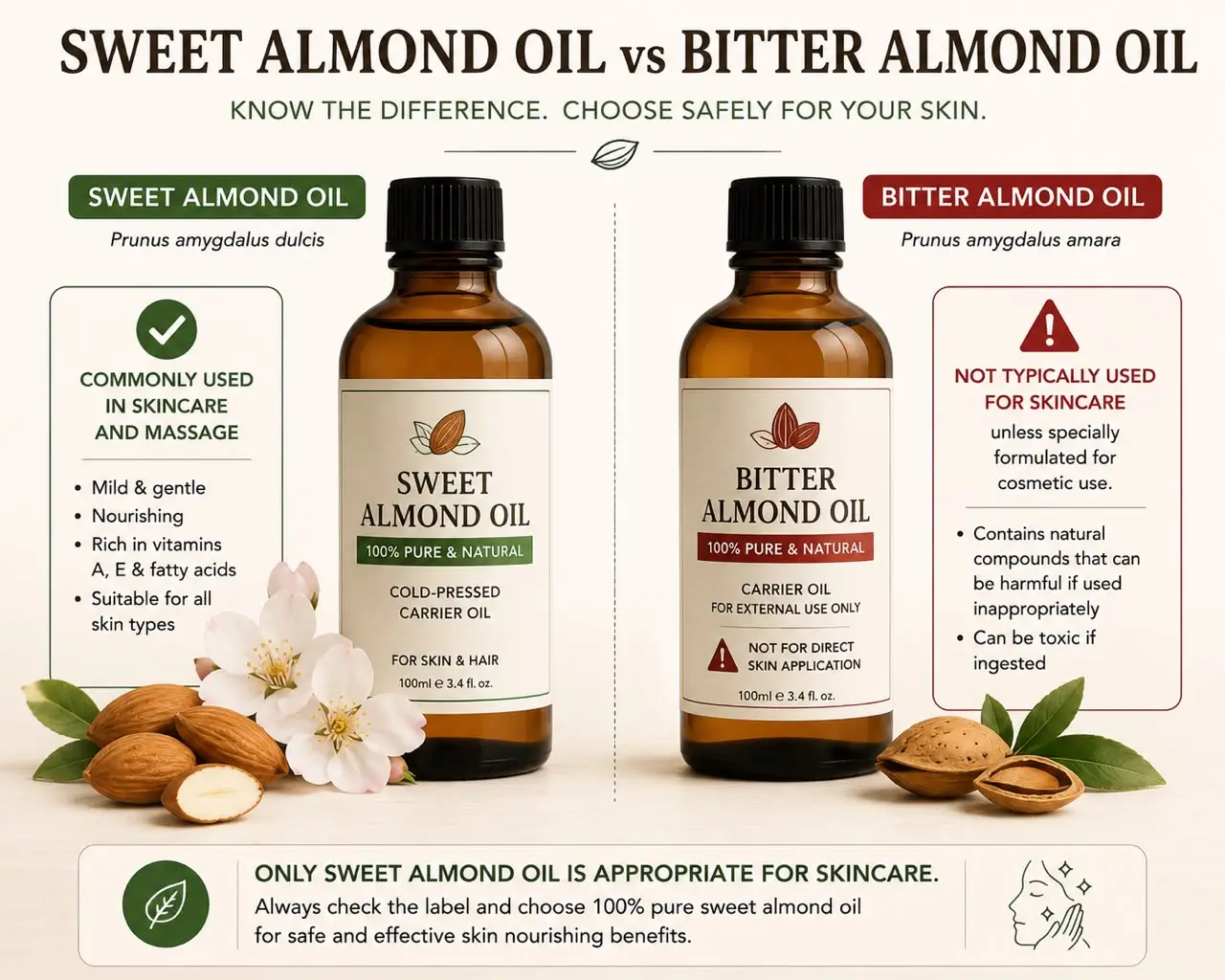
Almond oil is pressed from the seeds of the Prunus dulcis tree, the almond tree. Two very different versions exist, and distinguishing between them is important:
Sweet Almond Oil
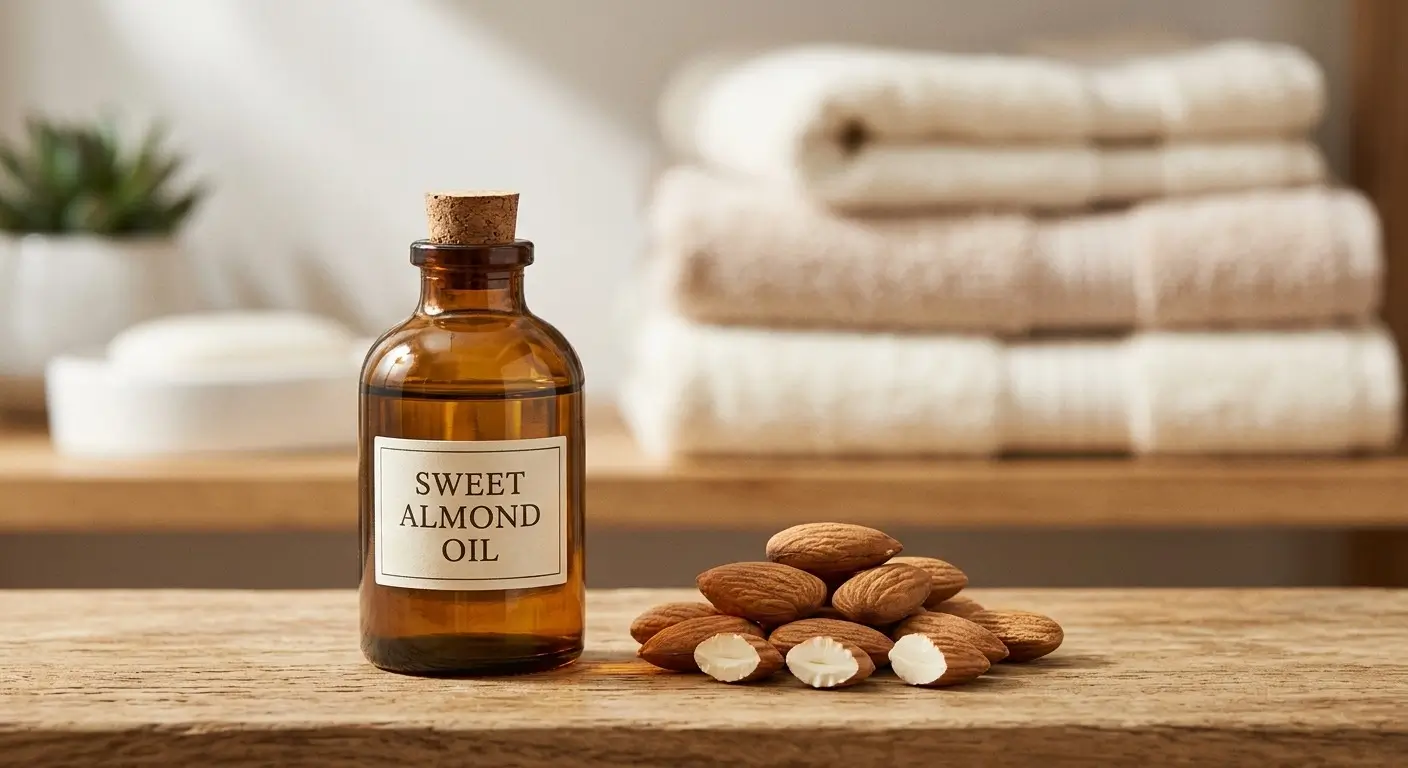
Sweet almond oil, extracted from the edible almond variety, is the form universally used in skincare. It has a pale golden colour, a mild characteristic scent, and a lightweight texture that makes it well-suited to daily body use. It is cold-pressed from dried sweet almond kernels, preserving its full nutritional profile.
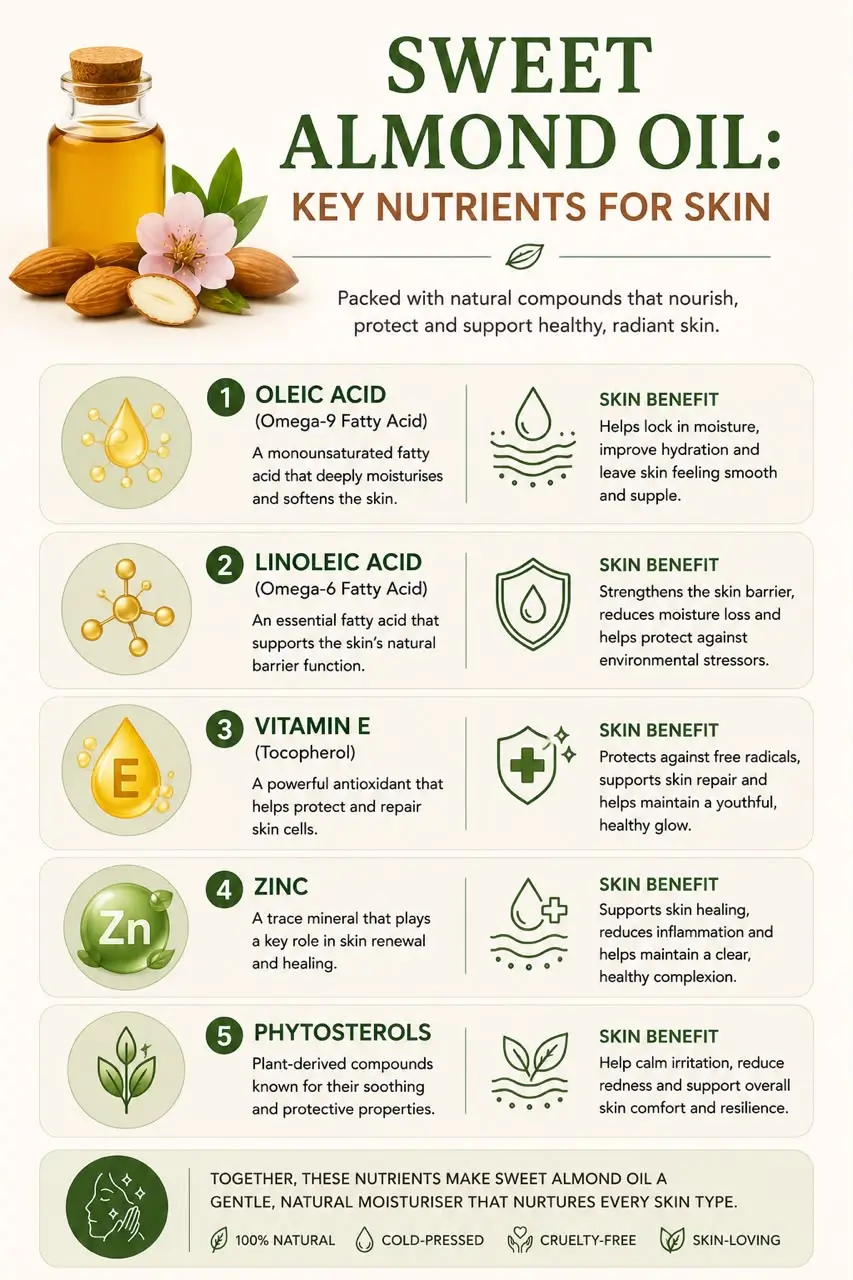
Nutritional composition of sweet almond oil:
- Oleic acid (omega-9) comprises approximately 62–70% of sweet almond oil’s fatty acid content. A monounsaturated fatty acid that penetrates the skin well and provides sustained moisturisation at the upper dermis level.
- Linoleic acid (omega-6) is an essential fatty acid and a component of the skin’s own lipid barrier. Topical application helps maintain barrier integrity, reducing moisture loss.
- Vitamin E (tocopherols) and sweet almond oil are particularly rich natural sources of vitamin E. Tocopherols protect skin cells from oxidative damage and support the skin’s healing environment.
- Vitamin A (as retinol precursors), present in small amounts, contributes to supporting skin cell turnover.
- Zinc is a trace mineral involved in wound repair and fibroblast activity.
- Phytosterols are plant sterols with mild anti-inflammatory properties that support the skin barrier.
Bitter Almond Oil
Bitter almond oil is extracted from a different variety of the almond species and must not be confused with sweet almond oil for skincare purposes. In its unprocessed form, bitter almond oil contains amygdalin, a compound that releases hydrogen cyanide when metabolised. Bitter almond essential oil, the concentrated aromatic oil, is toxic and should not be applied to the skin without specific cosmetic processing. Well-processed, certified cosmetic-grade bitter almond oil is available and safe, but it is not the oil commonly sold and used for stretch mark or pregnancy skin care.
How Stretch Marks Develop
Stretch marks form within the dermis, the middle layer of skin, when the skin stretches faster than its structural proteins can adapt. Collagen provides the dermis with tensile strength; elastin gives it flexibility. Both are produced continuously by fibroblasts. When the rate of skin expansion, during pregnancy, growth spurts, rapid weight gain, or muscle building, exceeds what fibroblasts can supply, the collagen and elastin fibres tear. The inflammatory healing process that follows produces the reddish lines we recognise as new stretch marks; as that response resolves, the marks fade toward silver and white. Because stretch marks exist within the dermis, beneath the epidermis that topical products primarily interact with, no oil can reverse the structural changes they represent. What care can do is support the skin’s hydration, barrier function, and repair environment, which is where almond oil’s role begins.
See our guide on Red Stretch Marks vs White Stretch Marks for a full breakdown of the biological difference between stretch mark stages.
Can Almond Oil Help Stretch Marks?
A randomised controlled trial published in the Journal of Nursing & Midwifery Research evaluated the effect of sweet almond oil on stretch mark development in pregnant women. Participants were divided into groups: those who massaged with sweet almond oil, those who received a massage without oil, and a control group receiving no treatment. The group that used almond oil massage showed significantly fewer stretch marks than the control group. Notably, the massage-only group also showed fewer stretch marks than the control, suggesting that massage itself contributes to the benefit independently of the oil. This is the most frequently cited evidence for almond oil’s role in stretch mark prevention, and it is more methodologically sound than most natural remedy evidence in this area.
The important caveats:
- The study was small and has not been independently replicated in large-scale trials
- The contribution of the oil versus the massage was not fully isolated
- The study measured the prevention of new marks during pregnancy, not the reduction of existing ones
- Applying findings from one specific pregnancy population to all stretch mark contexts requires caution
The National Center for Complementary and Integrative Health (NCCIH) maintains that evidence for plant oils as specific treatments for skin conditions such as stretch marks generally requires larger, higher-quality studies before firm conclusions can be drawn. Almond oil has stronger preliminary evidence than most natural oils for preventing stretch marks during pregnancy. Evidence for the treatment of existing marks is limited. Its primary contribution is through sustained skin hydration and the benefits of the massage routine it supports.
Benefits of Almond Oil for Skin
- Deep Moisturisation
Sweet almond oil’s oleic acid content allows it to penetrate beyond the very surface of the skin, providing moisturisation at the upper dermis level. The result is sustained softness and hydration that persist beyond simple surface emolliency.
- Vitamin E Richness
Almond oil is one of the richest natural sources of vitamin E among commonly used skincare oils. Vitamin E’s antioxidant properties protect skin cells from oxidative damage, relevant both for general skin health and for the inflammatory environment around new stretch marks.
- Skin Barrier Support
Linoleic acid, present at approximately 20–30% of almond oil’s fatty acid content, is a component of the skin’s own lipid barrier. Topical application helps replenish this barrier, reducing transepidermal water loss and maintaining the skin’s ability to stay hydrated between applications.
- Lightweight Texture for Massage
Sweet almond oil has a particularly practical texture for daily body massage, light enough to spread easily and absorb without leaving an uncomfortable greasy residue, but nourishing enough to leave the skin genuinely conditioned. This makes it well-suited to the kind of consistent daily massage routine that the clinical evidence supports.
- Zinc Content
Almond oil contains small amounts of zinc, a trace mineral involved in fibroblast activity and wound repair. While the contribution from topical application is modest, it is a relevant micronutrient in the context of skin repair.
Almond Oil for Red Stretch Marks
Red and purple stretch marks are the newest, most biologically active stage. The dermis tissue has active fibroblasts, blood vessels, and an ongoing inflammatory response.
At this stage, almond oil’s contributions are most relevant:
- Sustained hydration through oleic acid penetration into the upper dermis
- Antioxidant support from vitamin E during the inflammatory phase
- Massage delivery: the circulation-stimulating effect of massage is particularly valuable when the tissue is still active and responsive
- Skin comfort, reducing the tightness and itch that often accompany new marks
See our guide on Red Stretch Marks vs White Stretch Marks for why early treatment matters and which options produce the best results at this stage.
Almond Oil for White Stretch Marks
White stretch marks have fully matured. Blood vessels have contracted, fibroblast activity has reduced, and the tissue has settled into stable scar-like architecture. The inflammatory phase that made red marks responsive to anti-inflammatory and moisturising ingredients is over.
At this stage, almond oil:
- Maintains skin hydration and softness around the marks
- Provides a pleasant daily routine that keeps the skin generally well-conditioned
- Does not stimulate meaningful collagen remodelling in dormant scar tissue
For significant visible improvement of white stretch marks, clinical procedures, fractional laser, and radiofrequency microneedling in particular, produce results that almond oil alone cannot approach. Almond oil can complement these treatments as a daily maintenance step, but should not be expected to substitute for them.
See our guide on Stretch Mark Treatment Options for clinical approaches to white marks.
Sweet Almond Oil vs Bitter Almond Oil
| Feature | Sweet Almond Oil | Bitter Almond Oil |
|---|---|---|
| Species/variety | Prunus amygdalus dulcis | Prunus amygdalus amara |
| Edible | Yes | No (in unprocessed form) |
| Raw safety | Safe | Contains amygdalin; toxic when unprocessed |
| Cosmetic use | Universally safe | Only when specifically processed/certified for cosmetic use |
| Skincare label | Prunus amygdalus dulcis oil | Should specify cosmetic-grade processing |
| Stretch mark use | Yes, standard choice | Not appropriate unless a certified cosmetic product |
How to Use Almond Oil for Stretch Marks
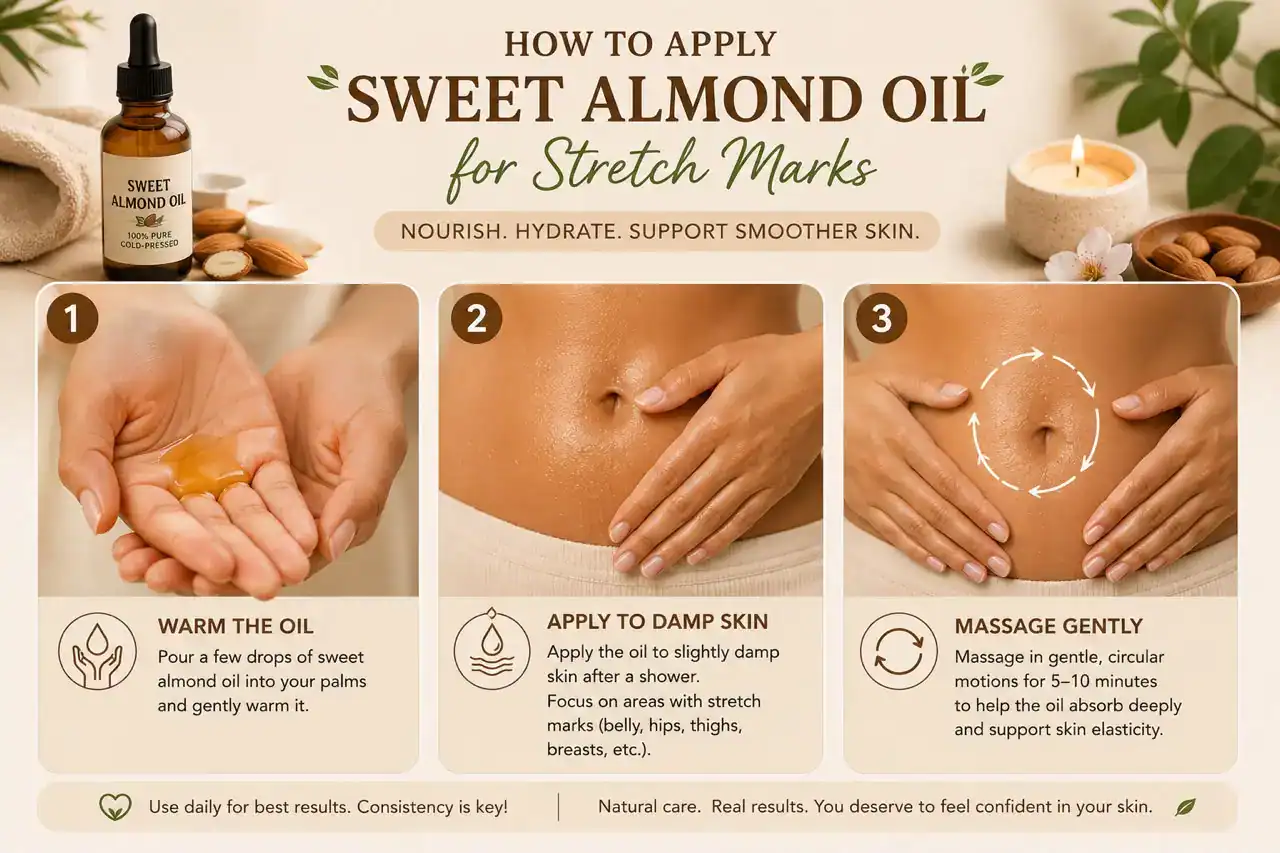
Apply sweet almond oil immediately after a shower or bath, while the skin is still slightly damp. Almond oil’s lightweight texture absorbs particularly well on damp skin, and the oil seals in residual moisture more effectively than application to completely dry skin. Spend 1–2 minutes massaging the oil into each stretch mark area using firm, circular motions. The clinical study showing almond oil’s benefit included a massage protocol; the massage is not incidental to the result; it is part of it. Apply enough pressure to feel the tissue respond, but not so much that it’s uncomfortable. For the abdomen during pregnancy, apply gentle pressure.
Almond Oil During Pregnancy
Sweet almond oil is the natural oil with the most specific clinical evidence for use during pregnancy in the context of stretch marks, which is why it is particularly well-placed for this period. Sweet almond oil is generally considered safe during pregnancy. It contains no retinoids, no concentrated essential oils, and no ingredients with known pregnancy contraindications. The randomised controlled trial discussed earlier specifically involved pregnant women and found that almond oil massage from early pregnancy reduced stretch mark development. Starting the routine in the first trimester, before visible stretching occurs, is more effective than beginning in the third trimester.
Practical guidance for pregnancy:
- Use pure, cold-pressed sweet almond oil, confirmed by its INCI name on the label
- Perform a patch test before beginning, as skin reactivity can be heightened during pregnancy
- Massage gently over the abdomen, breasts, hips, and thighs, the areas most prone to stretch mark development
- Combine with a pregnancy-safe active cream, such as hyaluronic acid or Centella asiatica, for more comprehensive daily skin care
- Confirm with your midwife if you have any concerns about specific ingredients
See our comprehensive pregnancy skincare guide on Stretch Marks During Pregnancy: Prevention and Safe Treatment Options.
Almond Oil vs Other Natural Oils for Stretch Marks
| Oil | Clinical Evidence for Stretch Marks | Key Skin Benefit | Pregnancy Safe | Texture |
|---|---|---|---|---|
| Almond oil | Limited–Moderate (pregnancy RCT) | Vitamin E, lightweight massage oil | Yes* | Lightweight, fast-absorbing |
| Avocado oil | Limited (growing) | Deep hydration, phytosterols, vitamin E | Yes | Medium-rich, absorbs well |
| Rosehip oil | Limited | Natural vitamin A precursors, linoleic acid | Generally yes | Lightweight, quick-drying |
| Coconut oil | Limited | Emollient, barrier, antimicrobial | Yes | Rich, occlusive |
| Shea butter | Limited | Deep moisturisation, barrier support | Yes | Very rich, thick |
| Cocoa butter | Very limited | General moisturising | Yes | Rich |
| Aloe vera gel | Limited | Soothing, anti-inflammatory, hydration | Yes | Light, cooling |
Almond vs avocado: Both are strong, lightweight-to-medium oils with good evidence profiles. Almond oil has more specific stretch mark clinical evidence, including the pregnancy RCT; avocado oil has a richer phytosterol and anti-inflammatory profile. Many people use both almond oil in the morning for its lightness and avocado oil in the evening for deeper nourishment.
Almond vs coconut: Almond oil is significantly lighter and less comedogenic, making it better suited to daytime use and to people with congestion-prone skin. Coconut oil is more occlusive, making it a better choice for very dry skin or as a final evening seal. Almond has the most specific clinical evidence for stretch marks.
Almond vs rosehip: Rosehip’s natural vitamin A precursors give it potential collagen-remodelling interest, but clinical evidence is limited. Almond oil’s vitamin E richness and specific pregnancy evidence give it a clearer rationale for stretch mark use.
See our comparison on Avocado Oil for Stretch Marks. → See our comparison on Coconut Oil for Stretch Marks. → See our comparison on Aloe Vera for Stretch Marks.
Choosing a Good Almond Oil
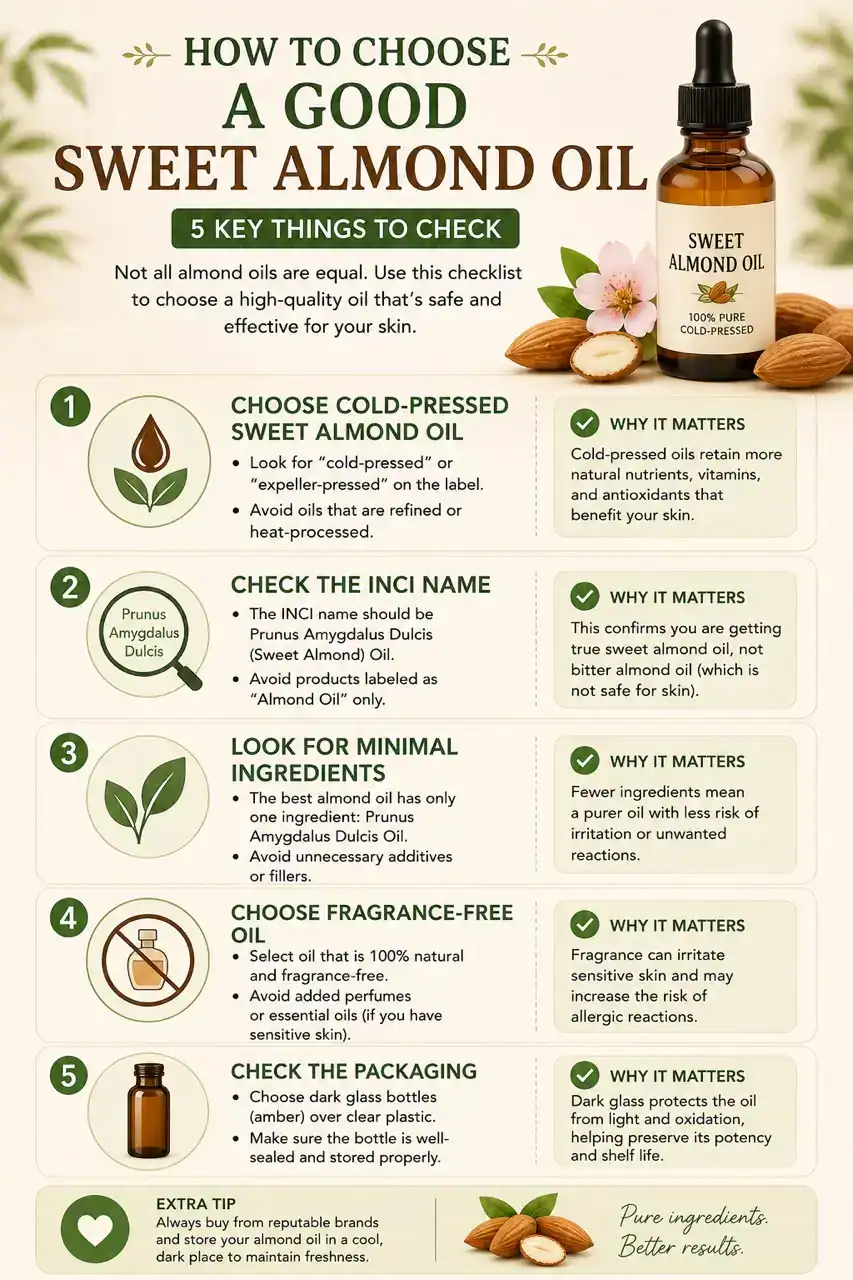
- Cold-pressed: Look for “cold-pressed” on the label; this ensures the oil was extracted without heat, preserving its vitamin E content and fatty acid profile.
- Sweet almond oil confirmed: Check the INCI name: Prunus amygdalus dulcis oil. This confirms sweet almond oil, not bitter.
- Minimal ingredients: The product should ideally contain just almond oil, possibly with a natural vitamin E preservative (tocopherol). Avoid products with unnecessary fragrance, synthetic additives, or large numbers of additional ingredients.
- Fragrance-free is preferable, particularly for pregnancy use or use on sensitive skin. Almond oil has a mild, pleasant natural scent; no added fragrance is needed.
- Appropriate packaging: Glass or opaque packaging protects the oil from light degradation. Almond oil has a shelf life of approximately 12–24 months; store away from sunlight and heat.
- Certified skincare or cosmetic grade: For body use, choose a product explicitly formulated and labelled for skincare rather than food use. This ensures appropriate quality control for topical application.
Recommended Daily Body Oil Routine
For those who want a versatile daily body oil that complements a stretch mark routine without requiring multiple separate products, The Love Nature Nourishing Body, Face & Hair Oil with Organic Avocado Oil is a well-suited option to consider alongside sweet almond oil. While pure almond oil is an excellent morning massage oil, lightweight, fast-absorbing, and evidence-informed for pregnancy use, avocado oil’s deeper nourishment and anti-inflammatory phytosterol content make it a good complement for evening application. Together, they provide a morning-and-evening oil routine that covers the range of benefits both ingredients offer. The Love Nature Avocado Oil can be used as the evening oil step after applying an active cream, providing deep moisturisation, barrier support, and a nourishing massage medium.
See our complete guide on Best Oils for Stretch Marks for a full evidence comparison.
Conclusion
Sweet almond oil occupies a genuinely distinctive position among natural oils for stretch mark care, not because it removes marks, but because it is the one natural oil with even a small amount of clinical evidence from a stretch mark-specific study. When combined with its genuinely excellent vitamin E content, lightweight texture, and suitability as a daily massage oil during pregnancy, it is one of the better-reasoned natural choices for people seeking an accessible, evidence-informed daily routine. Use it consistently, with deliberate massage, starting before stretch marks appear if possible. Pair it with a cream that provides what oil alone cannot: collagen-stimulating or deeply hydrating active ingredients. And hold realistic expectations: almond oil’s role is to support skin health and hydration, not to treat or eliminate the structural changes that stretch marks represent.
Stretch Mark Treatment Options: What Really Works → Aloe Vera for Stretch Marks → Avocado Oil for Stretch Marks → Coconut Oil for Stretch Marks → Stretch Marks During Pregnancy → Red Stretch Marks vs White Stretch Marks